Why a Siamese Cat Owner Buys More Scratching Posts
If you’re a Siamese cat owner, you know the struggle: you bring home a beautiful new scratching post, your feline overlord gives it a sniff, a good scratch, and then, seemingly in the blink of an eye, it’s a shredded mess. It can feel like you're constantly buying replacements, wondering if your Siamese has a secret mission to destroy every sisal-wrapped surface in your home. This guide is here to explain why your Siamese cat goes through scratching posts faster than a summer popsicle and how you can manage this perfectly normal, albeit expensive, behavior.
The Instinctive Drive Behind Siamese Cat Scratching
Let’s be honest, cats scratch. All cats. It’s not just a cute habit; it’s deeply ingrained behavior that’s absolutely essential for their physical and mental well-being. But with a Siamese, everything feels a little more intense, doesn't it? Their vibrant personalities often mean their natural instincts are expressed with an extra dose of enthusiasm, and scratching is no exception.
Why Scratching is Non-Negotiable for a Siamese
Think of scratching as a multi-purpose tool for your Siamese. First and foremost, it’s about nail health. Those sharp claws need regular maintenance, and scratching helps remove the outer, dead layers of the nail, revealing the new, sharper claw underneath. Without proper scratching surfaces, those claws can become overgrown, painful, and even lead to infections. It’s like us needing to clip our nails; it's just how cats keep their digits in tip-top condition.
Beyond nail care, scratching is a fantastic full-body stretch. Have you ever watched your Siamese really dig into a post, extending their entire body, arching their back, and stretching their paws? It’s a feline yoga session, releasing tension and keeping their muscles limber. Given the lean, athletic build of most Siamese cats, they often enjoy a good, vigorous stretch, and a sturdy scratching post allows them to do just that. If they can’t get that satisfying stretch, they might look for alternatives, and that's usually your sofa or favorite armchair. Providing a range of surfaces is key, and you might find some great ideas in Which Scratching Post a Siamese Cat Uses.
Lastly, scratching is a crucial form of communication and stress relief. Cats use scratching to mark their territory visually and with scent. Each paw pad contains scent glands, depositing unique pheromones onto the surface as they scratch. These scent messages communicate "I was here, this is mine, and I'm feeling pretty good about it!" to other cats (and to themselves). For a highly social and sometimes anxious breed like the Siamese, this act of marking can be incredibly reassuring and a way to manage their environment.
Scent Marking and Territorial Claims
Siamese cats are known for their strong personalities and their tendency to be quite vocal about their feelings and their territory. This assertive nature extends to their scratching habits, making scent marking a very prominent aspect of their behavior. When your Siamese digs their claws into a scratching post, they're not just sharpening their nails; they're essentially leaving a "calling card" for themselves and any other cat in the vicinity.
The pheromones released from the scent glands in their paws are invisible to us, but they're a rich source of information for your cat. These chemical messages can signal confidence, presence, and ownership. For a Siamese, who often craves attention and interaction, establishing their presence throughout the home is vital. If a particular scratching post is in a high-traffic area, or near a window where they watch the world go by, it becomes an even more important billboard for their personal advertisements. This constant reinforcement of their territory means they'll return to these spots again and again, contributing to the wear and tear.
In multi-cat households, this territorial aspect can be even more pronounced. Each Siamese might feel the need to "re-mark" a communal scratching post, leading to faster degradation of the material. They're not being malicious; they're simply reinforcing their place within the feline hierarchy and ensuring their scent is dominant. Understanding this primal drive helps us appreciate why a single, flimsy scratching post just won't cut it for these magnificent creatures.
The Siamese Cat's Specific Preferences and Needs
It's not enough to just provide a scratching post; you need to provide the right kind of scratching post for a Siamese cat. They have distinct preferences when it comes to material, orientation, and stability, and ignoring these can lead to your furniture becoming the unintended scratching zone. This is often why owners find themselves constantly replacing posts that just aren't up to the task.
Material Matters: Why Texture and Durability Are Key
Have you ever noticed how quickly some scratching posts turn into a pile of confetti under the enthusiastic paws of your Siamese? That's because not all materials are created equal, especially when dealing with a cat that truly commits to its scratching. Siamese cats often prefer a surface that offers resistance, something they can really sink their claws into and shred to get that satisfying tactile feedback.
Sisal rope is often considered the gold standard for good reason. Its tightly woven texture provides excellent resistance, allowing your Siamese to get a thorough nail exfoliation and muscle stretch. However, even sisal can eventually fray and unravel, especially with a dedicated scratcher. Lower quality sisal or loosely woven options will wear out much faster, forcing you back to the pet store more frequently. Another popular material is corrugated cardboard. While incredibly appealing to many cats due to its shreddable nature, it's also highly consumable. A zealous Siamese can go through a cardboard scratcher in a week, sometimes less, which quickly adds up. When you're constantly replacing these, it certainly feels like you're buying more scratching posts than you ever anticipated! When looking for durable options, online retailers like Chewy often have a wide array of choices with customer reviews that can help you gauge how well a particular product holds up against vigorous use.
Carpet-wrapped posts can be a hit or miss. While some cats enjoy the texture, it can also confuse them, making them think that all carpeted surfaces (like your living room rug) are acceptable scratching zones. Untreated wood, on the other hand, can be incredibly durable and offers a very natural scratching experience. Some Siamese cats adore the rough, unyielding surface, but it might take some encouragement for others to switch from their beloved sisal. The key is finding what your individual Siamese responds to best and then investing in the most durable version of that material you can find.
Vertical vs. Horizontal: The Best Angles for a Siamese Workout
Just like people have preferred ways to stretch, cats have their favorite scratching orientations. Your Siamese likely enjoys both vertical and horizontal scratching, and providing options for both is essential to prevent them from seeking out inappropriate surfaces.
Vertical scratching posts, especially tall ones, cater to your Siamese cat's need for a full-body stretch. Their long, lithe bodies are built for reaching and extending, and a sturdy, tall post allows them to stretch out their entire spine, shoulders, and legs while raking their claws downwards. If a vertical post is too short or wobbly, it won't provide the satisfying stability or length they need, and they'll likely ignore it in favor of a doorframe or the side of your sofa – surfaces that do offer that secure, full-stretch experience. Consider a cat tree with integrated sisal posts to satisfy their climbing and scratching needs simultaneously.
Horizontal scratchers, such as cardboard mats or flat sisal pads, appeal to a different set of muscles and provide a different kind of sensation. Cats often use horizontal surfaces when lying down or as a quick, casual scratch. They might also gravitate towards these if they're mimicking natural outdoor behaviors like scratching logs or the ground. A good rule of thumb for any cat, but especially an active Siamese, is to have at least one vertical and one horizontal scratching option available in different areas of the house. This variety ensures all their scratching needs are met, reducing the likelihood of them improvising on your household items. You'll be amazed at How Much Play a Siamese Cat Needs to understand their energy levels!
Sturdiness and Stability: No Wobble Allowed
This is perhaps one of the most critical, yet often overlooked, aspects of a good scratching post for a Siamese. Imagine trying to get a good stretch or workout on something that tips over or wobbles every time you apply pressure. It's frustrating, right? The same goes for your Siamese. Their enthusiastic scratching requires a post that can stand up to their full force and weight.
Siamese cats, with their lean muscle and boundless energy, tend to really go for it when they scratch. If a post is lightweight, has a small base, or is poorly constructed, it will sway, rock, or even topple over when they launch into their scratching routine. This isn't just annoying for your cat; it can actually be scary. A cat startled by a falling post is unlikely to use it again, associating it with a negative experience. They'll quickly learn that your expensive, wobbly new post is unreliable and turn their attention to stable alternatives like the sturdy leg of your dining table or the solid frame of your bed.
Investing in a scratching post with a wide, heavy base and robust construction is paramount. Look for posts that are made from solid wood or dense particle board for the core, and ensure the sisal or other material is securely attached. A post that feels solid and doesn't budge under pressure will be much more inviting and satisfying for your Siamese. They need to feel completely secure to fully engage their claws and bodies, allowing them to stretch and mark their territory with confidence. A truly stable post might cost a bit more upfront, but it will last longer and be used more consistently, ultimately saving you money and protecting your furniture in the long run.
Managing the Scratching Post Demand
So, you understand why your Siamese is a scratching post devourer. Now, what can you actually do about it, besides constantly emptying your wallet? It's all about strategic planning, smart purchasing, and understanding that this isn't a behavior to eliminate, but rather one to redirect and manage.
Strategic Placement and Abundance
One of the biggest mistakes owners make is placing a single scratching post in an out-of-the-way corner, hoping their cat will magically gravitate towards it. For a Siamese, who craves interaction and has strong territorial instincts, this simply won't work. Think about where your cat already likes to scratch (even if it's inappropriate), or where they spend a lot of their time. These are prime locations for new posts.
Do they love to stretch their back by the sofa? Put a sturdy, vertical scratching post right next to the armrest. Do they wake up from a nap and immediately need a good scratch? Place a horizontal scratcher near their favorite napping spot. Cats often scratch as they wake up or after a period of rest to stretch and mark their awakening. Placing posts near windows or doorways, where they might feel the need to mark their territory against unseen "intruders," can also be highly effective. The "more the merrier" approach truly applies here; having several scratching options throughout your home increases the chances they'll choose an appropriate one.
You can also make new, appropriate scratching posts more appealing by using attractants. A sprinkle of fresh catnip can do wonders to entice them to a new post, or a quick spray of a feline pheromone product like Feliway can help them feel more comfortable and encourage scent marking on the designated surface. Don't underestimate the power of positive reinforcement either; praise and treats when they use the post can solidify the good habit. Without enough appropriate outlets, a bored Siamese can quickly become a destructive one, as you can read more about in What a Siamese Cat Destroys.
Investing in Durable, Cat-Approved Materials
The initial sticker shock of a high-quality scratching post can be off-putting, leading many owners to opt for cheaper, flimsier alternatives. However, this often turns into a false economy, especially with a Siamese. That inexpensive cardboard scratcher might be a hit for a week, but when you're buying a new one every few days, the costs quickly add up, not to mention the environmental impact of constant disposal.
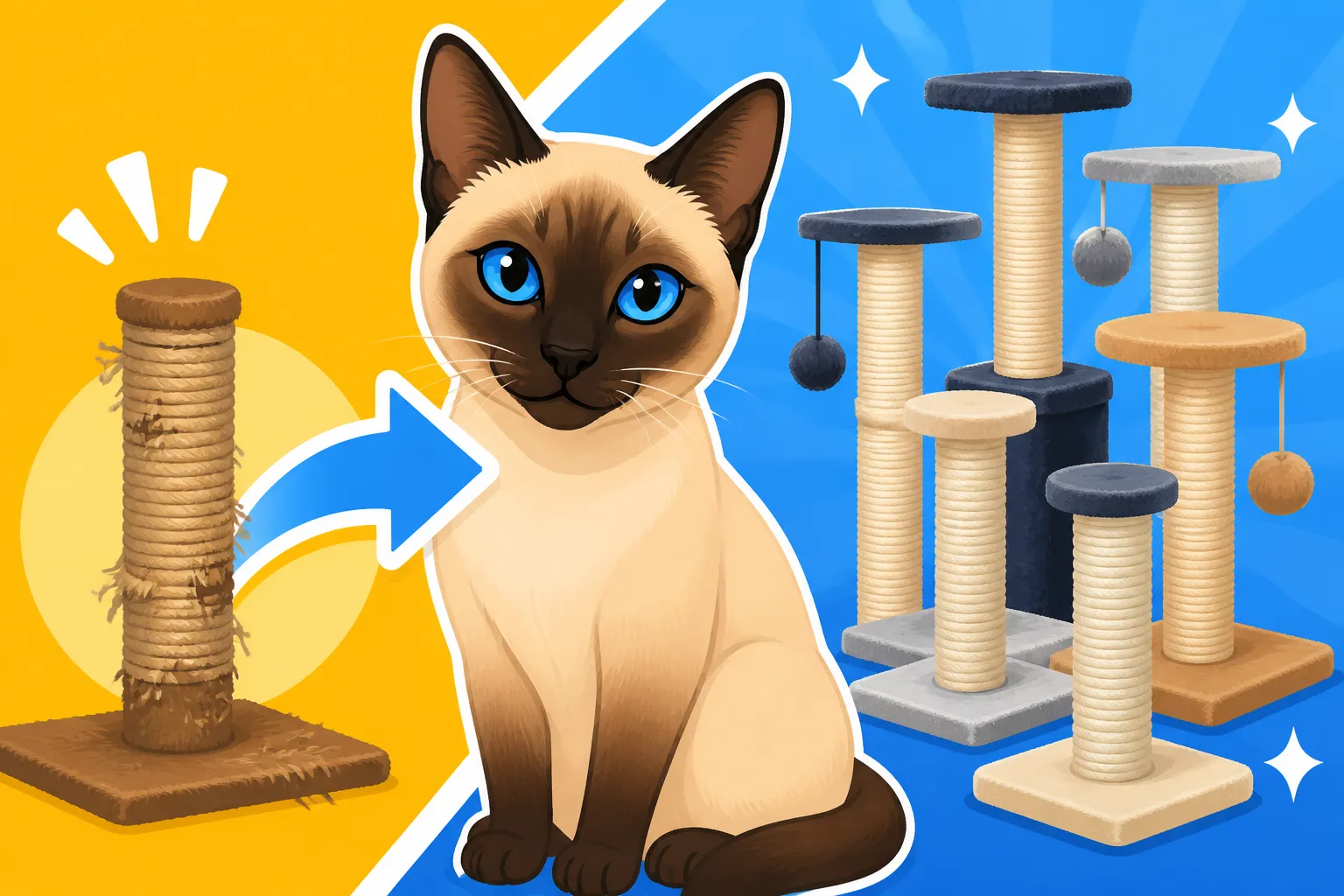
When selecting scratching posts, prioritize durability and quality. Look for posts wrapped in tightly woven sisal rope or sisal fabric, which offer superior longevity compared to carpet or loosely wrapped alternatives. Posts made with solid wood or heavy, dense bases are crucial for stability, as discussed earlier. Some innovative designs even feature replaceable sisal panels or ropes, allowing you to refresh the scratching surface without buying an entirely new post, which is a fantastic long-term investment.
Don't be afraid to experiment with different textures. While sisal is popular, some Siamese cats might prefer a rough, untreated wooden post or even a densely woven fabric scratcher. Observe your cat's existing preferences. Do they try to scratch rough upholstery? A sisal post might be best. Do they occasionally try to dig into a wooden table leg? A wood scratcher could be ideal. Retailers like Chewy offer a vast selection, and reading customer reviews, particularly from other Siamese owners, can provide invaluable insight into how well a product stands up to heavy use. Remember, the goal isn't just to buy a scratching post, but to buy the right scratching post that will actually last and be consistently used. Which Scratching Post a Siamese Cat Uses can give you more specific examples.
Regular Maintenance and Replacement Schedules
Even the most durable scratching post won't last forever. Like any well-loved item, they experience wear and tear. For a Siamese, who will relentlessly work on their favorite scratching spot, this means you need to be proactive about maintenance and replacement. Waiting until a post is completely shredded and ignored before replacing it is like waiting until your car runs out of gas before filling up – you’ll be stranded.
Signs a scratching post needs attention include frayed and unraveling material that no longer offers good resistance, a wobbly base that has come loose, or a general lack of interest from your cat. If the post looks like a disaster zone, your Siamese might decide it's no longer appealing or effective and seek out other surfaces. For sisal posts, you can sometimes extend their life by re-wrapping the worn sections with new sisal rope, which is a cost-effective DIY solution. For cardboard scratchers, establish a regular replacement schedule – perhaps every week or two, depending on your cat's usage – rather than waiting until it's a disintegrated mess.
Think of scratching posts as essential tools in your Siamese's daily routine. Just as you replace worn-out shoes or a blunt kitchen knife, these items need to be kept in good working order to serve their purpose. Regularly inspecting and replacing worn posts ensures your Siamese always has an inviting and functional outlet for their natural scratching instincts. By anticipating their needs and providing fresh, appealing options, you can keep their claws off your furniture and maintain a harmonious home.
Disclaimer
This article is for general informational purposes only and does not constitute professional advice. Laws, prices and regulations vary by location and change over time. Consult a qualified professional for guidance on your specific situation.