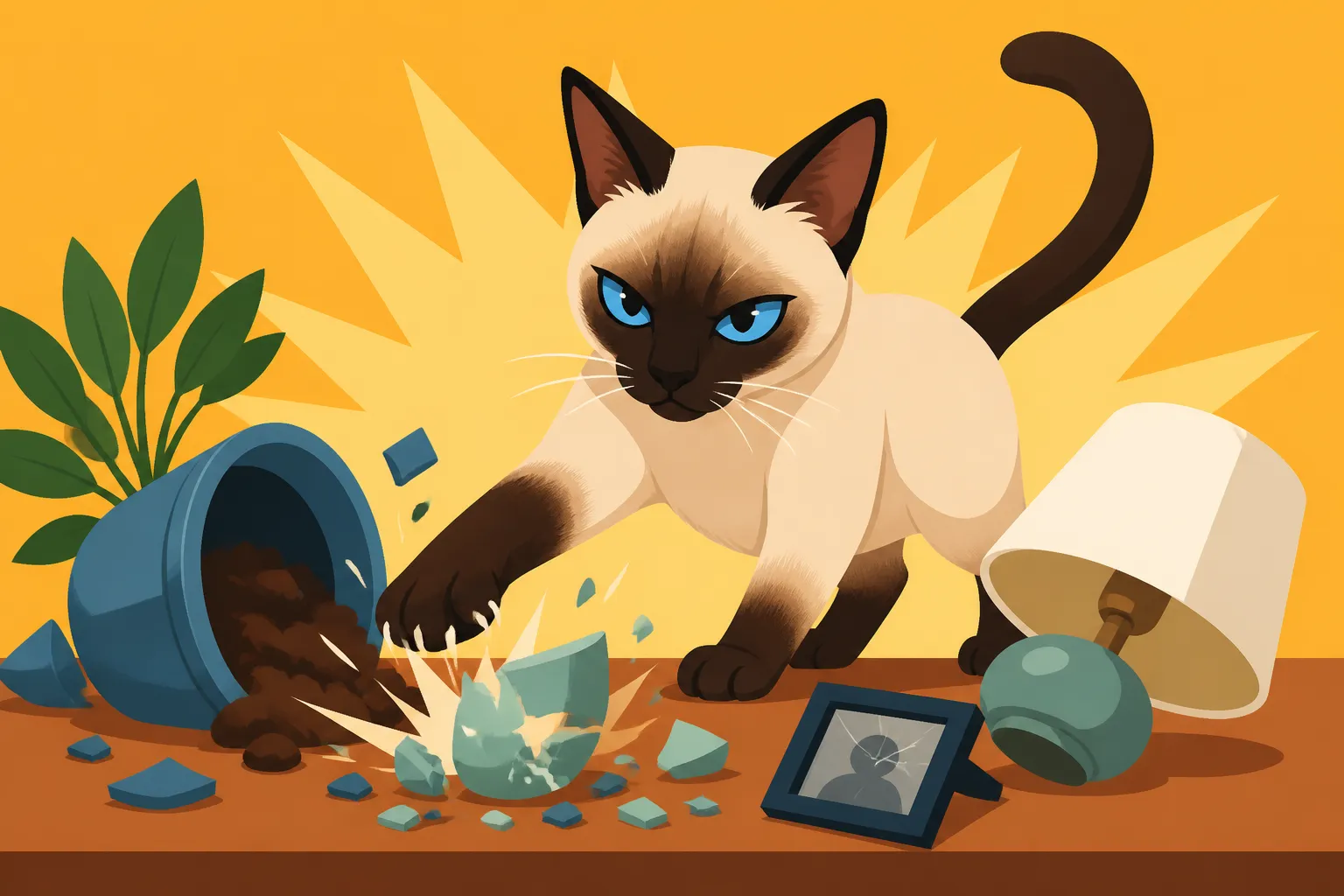
What a Bored Siamese Cat Destroys
It’s a scene all too familiar for many Siamese cat owners: you walk through the door, ready to relax after a long day, only to be greeted by a torn blanket, a knocked-over vase, or perhaps a suspicious trail of shredded paper leading to a newly unspooled toilet roll. It’s easy to feel frustrated, even a little targeted, but the truth is, your clever Siamese isn't trying to be malicious. More often than not, this chaos is a cry for help – a clear sign of boredom. This guide will help you understand why your Siamese cat might be redecorating your home in ways you didn't approve of, and, more importantly, what you can do about it.
Understanding the Siamese Cat's High-Energy Nature
Siamese cats are not your average couch potato felines. They are renowned for their intelligence, their incredibly social personalities, and their boundless energy. When these fundamental needs aren't met, destructive behaviors often emerge as an outlet for their pent-up mental and physical vitality. It’s not just a personality quirk; it’s deeply ingrained in who they are as a breed.
The Intellect Behind the Antics
Let's be real, Siamese cats are brainy. They’re problem-solvers, explorers, and incredibly curious creatures. They learn quickly, remember well, and have an almost dog-like ability to understand routines and even certain words. This high intelligence is a double-edged sword: it makes them fascinating companions, but it also means they get bored fast. A cat with a sharp mind that isn't regularly stimulated is a recipe for trouble.
Imagine being stuck in a room with nothing to do, nowhere to explore, and no new puzzles to solve. You’d start looking for ways to entertain yourself, wouldn’t you? Your Siamese feels the same way. If their environment doesn't offer enough challenges, they will create their own. This might involve figuring out how to open cabinets, scaling bookshelves to reach interesting objects, or systematically disassembling anything that provides even a momentary distraction. Their mental gears are always turning, and if you don't give them a productive channel, they'll find a destructive one.
The Drive for Interaction and Attention
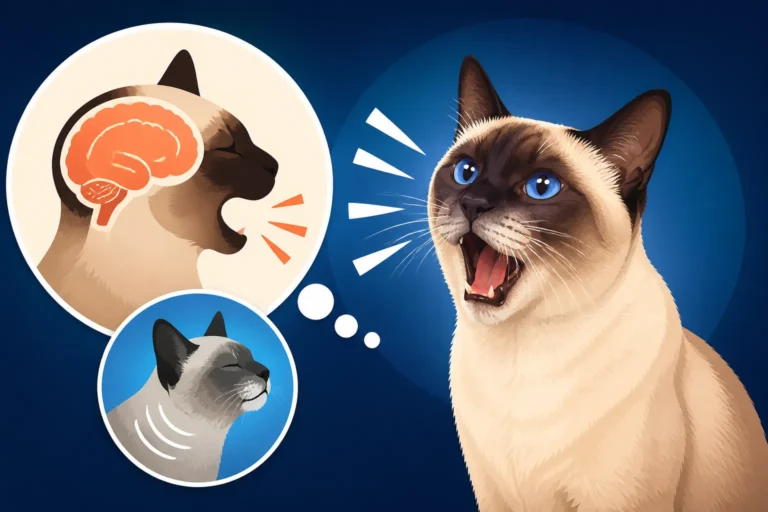
Siamese cats are famous for being incredibly vocal and social. They are often described as "people cats" because they form deep bonds with their human companions and thrive on interaction. They crave attention, conversation, and active participation in family life. This isn’t a cat you can just leave to its own devices all day and expect it to be content.
When a Siamese cat feels ignored or undersocialized, that emotional need can manifest as behavioral issues. They might start shredding things not just out of boredom, but as a way to get a reaction from you, any reaction at all. The act of tearing up your mail or knocking your favorite photo frame off the mantle might be their way of saying, "Hey! Look at me! I exist and I need you!" They thrive on a routine that includes plenty of playtime, cuddling, and even "conversations" with their humans. Neglecting this crucial aspect of their care can lead to anxiety, frustration, and ultimately, destructive habits. A Siamese Cat Will Not Be Ignored, and that's often the root of the problem.
Common Targets of Bored Siamese Cat Destruction
When a Siamese cat decides to get creative out of boredom, almost anything in your home can become a target. However, there are certain items that seem to hold a particular fascination, often leading to predictable patterns of destruction.
Fabric and Upholstery: The Chewing and Shredding Impulse
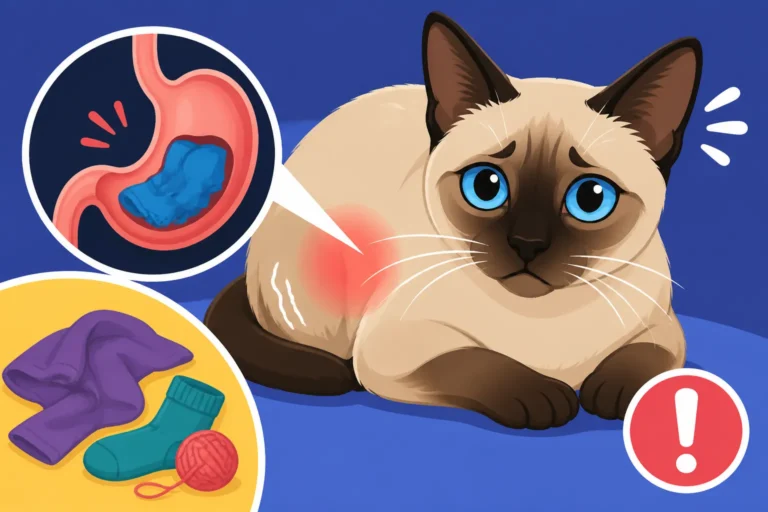
One of the most common and frustrating destructive behaviors in Siamese cats is the obsession with fabrics. Blankets, sweaters, curtains, and even your favorite sofa can become victims of their chewing and shredding impulses. This behavior is often linked to a trait known as pica or, more specifically, wool sucking. While the exact causes can vary, it's often a comfort mechanism that can be exacerbated by boredom, stress, or early weaning. For some Siamese, it's almost an addictive habit, a way to self-soothe when under-stimulated. Why a Siamese Cat Sucks Wool is a question many owners grapple with.
They might not just suck; they might actively shred. You could walk into your living room to find the corner of your rug frayed, a throw pillow disemboweled, or even the fringe of your curtains reduced to threads. Your laundry basket, full of tempting soft items, becomes an irresistible treasure trove for a bored Siamese. They're not being vindictive; they're simply following a deep-seated instinct to chew, tear, and mouth soft objects, and if there's nothing appropriate to redirect that energy, your household textiles will pay the price. You might be surprised at Which Fabrics a Siamese Cat Goes For – often it’s wool, fleece, or soft synthetics.
Household Items: The Knock-Over and Steal Game
Siamese cats are incredibly agile and possess a mischievous curiosity that can turn your home into their personal playground. They love exploring high places and tight spaces, and anything within reach on a shelf, counter, or table becomes fair game. Their long, slender bodies and powerful legs make them excellent climbers and jumpers, meaning no surface is truly safe from their investigative paws.
This often leads to the infamous "knock-over" game. A prized figurine, a stack of books, or even your phone left too close to the edge of a table can suddenly become a gravity experiment. They seem to delight in the clatter and the subsequent attention it garners. Beyond knocking things over, Siamese cats are also notorious "thieves." Small, shiny, or interesting objects like pens, hair ties, jewelry, or even bottle caps can disappear into their secret stashes. What a Bored Siamese Cat Knocks Off the Shelf can range from delicate trinkets to sturdy coffee mugs, and Why a Siamese Cat Steals Small Objects is often tied to their innate hunting instinct and desire for interactive play. These items provide a novel texture, a challenge to carry, or simply the thrill of the chase if you try to retrieve them.
Plants and Wires: Dangerous Chewing Habits
While less about pure destruction and more about curiosity, chewing on plants and electrical wires is a significant concern for Siamese cat owners, and it's often rooted in boredom. Cats, particularly curious and under-stimulated ones, will explore their world with their mouths. A houseplant might offer an interesting texture or taste, and a dangling wire can mimic a snake or a toy, inviting a playful bite.
However, these habits come with serious risks. Many common houseplants are toxic to cats, ranging from causing mild gastrointestinal upset to severe organ damage or even death. Similarly, chewing on electrical cords poses a grave danger of electrocution or burns. If your Siamese is engaging in these behaviors, it’s a strong indicator that they lack appropriate and safe outlets for their chewing instincts and need more engaging stimulation. This isn't just a nuisance; it's a safety hazard that needs immediate intervention and cat-proofing of your home.
Recognizing the Signs of Boredom-Induced Mayhem
It's easy to get angry or frustrated when your Siamese cat has turned your living room into a disaster zone. But before you label them "naughty," it's crucial to understand that their behavior is usually a symptom of an underlying need that isn't being met. Recognizing the signs of boredom-induced mayhem is the first step toward finding a solution.
Beyond "Being Naughty": Behavioral Cues
Destructive behavior in a Siamese cat is rarely about spite or disobedience. It’s almost always a form of communication. When they're not getting enough mental or physical exercise, they become restless, and that restlessness needs an outlet. You might notice other subtle cues that your cat is struggling with boredom or anxiety before the destruction even begins. They might become excessively vocal, meowing more than usual, particularly at you, or pacing restlessly.
They might also start over-grooming, licking themselves excessively to the point of creating bald patches, a condition known as psychogenic alopecia. This is a common stress response, often tied to a lack of mental stimulation or companionship. What Psychogenic Alopecia Does to a Siamese Cat is heartbreaking to witness, and often, it goes hand-in-hand with other destructive behaviors. Why a Stressed Siamese Cat Licks Itself Bald is often because grooming releases endorphins, providing a temporary sense of calm. Look for patterns: does the destruction happen more when you've been away for longer periods, or when their usual play routine has been disrupted? These patterns are key to understanding the root cause, rather than just reacting to the outcome.
The "Aftermath" as a Communication Tool
When you arrive home to a scene of destruction, your initial reaction might be to confront your cat, perhaps even raising your voice. However, your Siamese isn't capable of associating your anger with an act that happened hours ago. What they will learn is that your arrival sometimes means unpredictable, negative attention. Instead of feeling "guilty," they might become anxious or even associate your return with a tense atmosphere.
The "aftermath" serves as a communication tool, but not in the way we often interpret it. It's a clear, albeit messy, signal that your cat's environment or routine isn't meeting their needs. They are communicating their frustration, anxiety, or unmet desire for engagement. Rather than scolding, which is ineffective and can damage your bond, it’s far more productive to interpret the destruction as a problem to be solved, focusing on how to enrich their lives rather than punishing them for a natural, albeit inconvenient, coping mechanism.
Strategies to Combat Boredom and Redirect Destructive Behaviors
The good news is that Siamese cats are incredibly intelligent and responsive, meaning that with consistent effort and the right approach, you can successfully combat boredom and redirect their destructive tendencies. The key is providing ample appropriate outlets for their energy and curiosity.
Increasing Playtime and Mental Engagement
This is probably the most critical strategy for a bored Siamese cat. These cats need lots of interactive play. We're not talking about just leaving a few toys on the floor; we mean active, engaged play sessions with you. Think laser pointers (ending with a physical toy catch to satisfy their hunting instinct), feather wands, and fishing pole toys that allow them to chase, pounce, and "kill" their prey. Aim for at least two 15-20 minute sessions a day, and more if you can manage it. Consistency is key.
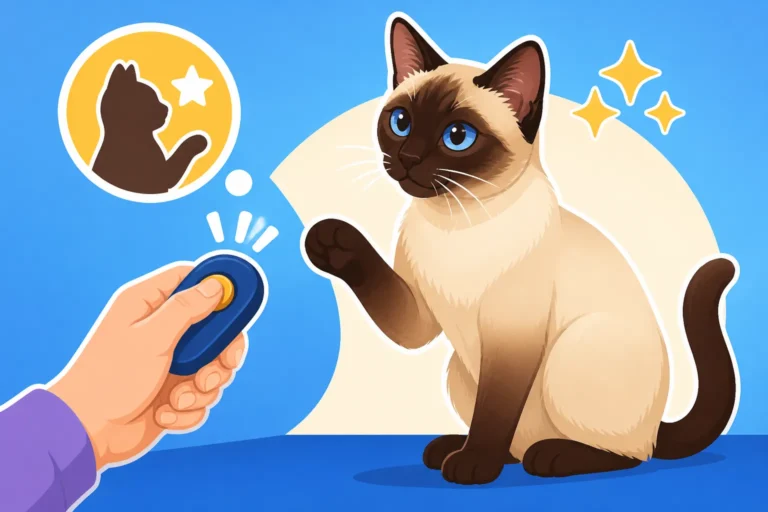
Beyond physical play, How Much Play a Siamese Cat Needs is immense, but mental stimulation is equally important. Puzzle feeders are fantastic for this; instead of simply eating their meals, your cat has to "work" for their food, solving a small problem to get a treat. You can find a great variety of these on Amazon. Whether a Puzzle Feeder Occupies a Siamese Cat depends on the complexity and novelty, so rotate them regularly. Clicker training is another excellent way to engage their intelligent minds. Siamese cats are highly trainable and can learn tricks like "sit," "stay," "fetch," and even walk on a leash. How to Clicker Train a Siamese Cat involves positive reinforcement and short, fun sessions that challenge their intellect and strengthen your bond. Which Toys a Siamese Cat Actually Plays With are often interactive and mimic prey.
Environmental Enrichment and Vertical Space
Siamese cats love to climb, observe, and explore. Providing ample environmental enrichment means giving them opportunities to do this safely indoors. Think vertical space: tall cat trees, shelves, and window perches. These elevated vantage points allow them to survey their territory, feel secure, and satisfy their natural instinct to climb. A cat tree taller than you might seem excessive, but for a Siamese, it's a multi-story mansion! You can find many durable and engaging cat trees on Amazon that cater to their climbing prowess.
Consider installing cat shelves on your walls, creating a feline highway around your living space. How High a Siamese Cat Climbs is impressive, so utilize that verticality. A secure catio (a cat patio) is also a phenomenal way to provide safe outdoor stimulation, allowing them to experience fresh air, sights, and sounds without the dangers of roaming freely. Whether a Siamese Cat Enjoys a Catio is often a resounding yes, as it combines their love for exploration with safety. If a catio isn't possible, a sturdy window perch with a view of a bird feeder can provide hours of passive entertainment.
Companion Animals: A Consideration for Social Cats
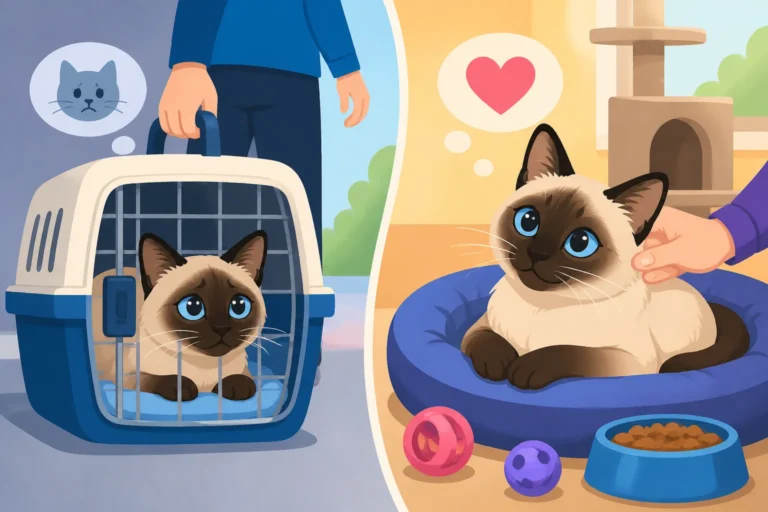
Given their highly social nature, a single Siamese cat in a home where their humans are often away can become desperately lonely and bored. For many Siamese, a companion animal can be a game-changer. A Siamese Cat Should Not Live Alone is often true, particularly for those whose owners work long hours. Another cat, especially another Siamese or a similarly active, social breed, can provide constant companionship, play, and mutual grooming, drastically reducing boredom and separation anxiety. When a Siamese Cat Needs a Second Cat is often when they exhibit signs of loneliness or destructive behaviors despite your best efforts.
However, introducing a second cat needs to be done carefully and thoughtfully. It’s not a guaranteed fix, and personality clashes can occur. You'll want to consider Which Companion Suits a Siamese Cat – generally, a cat with a similar energy level and playful disposition is best. While two Siamese cats can certainly be louder and more energetic together, the benefits of companionship often outweigh the minor drawbacks, as they can entertain each other. Whether Two Siamese Cats Are Louder is a fair question, but two happy, engaged cats are far better than one stressed, destructive one. Ensure you have enough resources (litter boxes, food bowls, scratching posts) to accommodate both.
Damage Control and Prevention Tips
Even with the best enrichment strategies, a determined Siamese cat might occasionally find a new "project." Implementing some practical damage control and prevention tips can help protect your home and keep your cat safe while you work on long-term behavioral changes.
Securing Your Home and Valuables
The first step in prevention is to cat-proof your home. Just like baby-proofing for toddlers, you need to anticipate where your cat might get into trouble and remove the temptation. Put away any breakable or valuable items that are within paw's reach. If your cat likes to counter surf, clear off kitchen counters when not in use. Consider childproof latches on cabinets that hold tempting items or chemicals.
For those dangerous chewing habits, tackle plants and wires head-on. Relocate toxic houseplants to areas your cat absolutely cannot access, or better yet, remove them from your home entirely and opt for cat-safe alternatives. Secure electrical cords by tucking them away, using cord protectors, or investing in cable management solutions. You can find various cable covers and protectors on Amazon. Remember, prevention is key to both protecting your belongings and ensuring your cat's safety. How to Cat Proof a Home for a Siamese Cat involves thinking like a feline explorer.
Durable Alternatives and Designated "Chew" Zones
Since chewing, clawing, and shredding are natural instincts for cats, the goal isn't to stop the behavior entirely, but to redirect it to appropriate outlets. Provide a variety of durable scratching posts and pads in different materials (sisal, cardboard, carpet) and orientations (vertical, horizontal). Place them strategically in areas where your cat tends to scratch, especially near furniture.
For cats prone to wool sucking or fabric chewing, offer designated, cat-safe chew toys. There are durable rubber or silicone toys designed for cats that can withstand chewing. Some cats enjoy toys infused with catnip that provide both olfactory and oral stimulation. When you see your Siamese engaging in an undesirable behavior, gently redirect them to an appropriate toy or scratching post, and then praise them enthusiastically when they use it. Consistency and positive reinforcement are crucial in teaching them what is acceptable to destroy (their toys!) and what is not.
| Destructive Behavior | Potential Boredom Trigger | Quick Solution | Long-Term Strategy |
|---|---|---|---|
| Shredding Fabrics | Lack of oral/tactile stimulation | Redirect to cat-safe chew toys; remove tempting items (e.g., put away laundry) | More interactive play; puzzle feeders; consider a companion cat. |
| Knocking Items Off | Need for mental stimulation, attention | Clear surfaces; secure valuables; engage with wand toys | Increase vertical space (cat trees); regular trick training; designated "cat zones." |
| Chewing Wires/Plants | Curiosity, lack of appropriate chews | Hide/cover wires; remove toxic plants; offer safe chew toys | Supervised outdoor time (catio); consistent playtime; explore new textures safely. |
| Excessive Vocalizing | Loneliness, demand for attention | Engage in conversation (briefly); offer immediate playtime | Structured playtime; positive reinforcement for quiet behavior; consider companion. |
| Over-grooming | Stress, anxiety, under-stimulation | Increase gentle petting; provide safe hideaways | Consistent routine; calming pheromones; vet check (to rule out medical issues); increased engagement. |
Disclaimer
This article is for general informational purposes only and does not constitute professional advice. Laws, prices and regulations vary by location and change over time. Consult a qualified professional for guidance on your specific situation.