Whether a Siamese Cat Drinks Enough Water
One of the silent worries many Siamese cat parents carry is whether their wonderfully vocal and active companions are actually drinking enough water. It’s a valid concern, because cats, by their very nature, aren’t always the most enthusiastic drinkers, and if your Siamese isn't getting adequate hydration, it can lead to a host of health issues that are often difficult to spot until they become serious. This guide will walk you through understanding your Siamese cat's hydration needs, how to monitor their water intake effectively, and practical ways to encourage them to drink more.
The Critical Importance of Hydration for Your Siamese Cat
It's easy to overlook something as seemingly simple as water intake, but for our feline friends, especially a breed as prone to certain health nuances as the Siamese, it's absolutely paramount. We often focus on food, exercise, and cuddles, but hydration underpins nearly every bodily function. When a cat isn't drinking enough, their whole system can struggle.
Why Siamese Cats Have Unique Hydration Needs
While all cats generally share a low thirst drive due to their evolutionary history as desert dwellers who got most of their moisture from prey, Siamese cats often have a few characteristics that make their hydration even more crucial. For one, their high energy levels mean they might be burning through more water through respiration and activity than a less active breed. Think about how much they zip around the house, play, and engage in their famously chatty conversations – all of that takes energy and, by extension, fluid.
Beyond their boundless energy, Siamese cats, like many purebreds, can be predisposed to certain health conditions that can be exacerbated by dehydration or require good hydration for management. Kidney issues, for example, are a concern for many older cats, and keeping their kidneys well-flushed with ample water intake is a significant preventative measure. Their lean, muscular bodies also tend to have a higher metabolic rate, meaning their internal processes are constantly working hard, requiring a steady supply of fresh water. You might be interested in reading How Healthy the Siamese Cat Actually Is to understand more about their general health profile.
The Dangers of Dehydration for Feline Health
Dehydration is a sneaky enemy because its early signs can be subtle, but its effects are far-reaching and serious. When your Siamese cat isn't properly hydrated, every organ system in their body is impacted. Their kidneys, which filter waste products from the blood, have to work harder, increasing the risk of kidney disease or accelerating its progression. This is especially relevant if you consider conditions like What Systemic Amyloidosis Does to a Siamese Cat's Kidneys, where healthy kidney function is already compromised.
Beyond kidney health, dehydration can lead to constipation, making your cat uncomfortable and potentially causing further health complications. It can also make them feel lethargic, suppress their appetite, and weaken their immune system, making them more susceptible to other illnesses. In severe cases, dehydration can be life-threatening, causing organ damage or failure. It's a chain reaction, and water is the crucial link that keeps everything flowing smoothly.
How to Tell if Your Siamese Cat is Getting Enough Water
Knowing the signs of good hydration versus the red flags of dehydration is essential for any Siamese cat owner. Cats are masters at hiding illness, so it's up to us to be vigilant and understand what to look for.
Recognising the Signs of Good Hydration
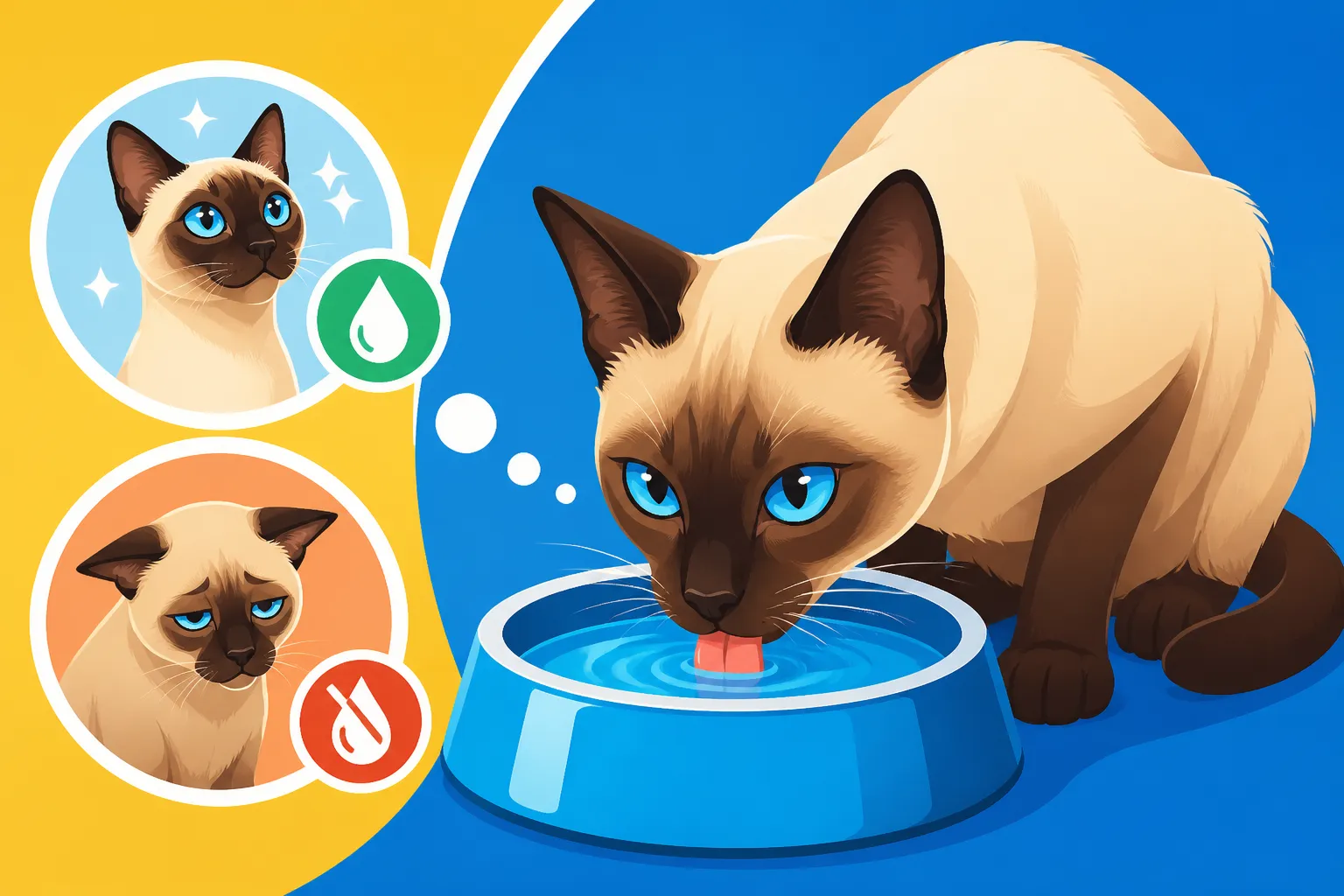
A well-hydrated Siamese cat will usually have a good appetite and energy levels consistent with their age and temperament. Their gums will be moist and pink, not sticky or pale. When you gently pinch the skin on their back between their shoulder blades and release it, it should snap back almost immediately. This is called the "skin turgor test," and it's a quick indicator of elasticity and hydration. Their eyes should be bright and clear, not sunken or dull.
Another key indicator is their urine. A well-hydrated cat will produce a good volume of light yellow urine. If the urine is consistently dark yellow and strong-smelling, it can be a sign they need more fluids. Pay attention to how often they visit the litter box – a consistent pattern of urination usually indicates adequate fluid intake. Of course, excessive urination can also be a sign of problems like kidney disease or diabetes, so always observe the context. Signs a Siamese Cat's Kidneys Are Failing From Amyloid could be an important read in this context.
Spotting the Subtle Red Flags of Dehydration
Cats are incredibly stoic, so by the time obvious signs of dehydration appear, it can be quite advanced. Subtle signs might include a slight decrease in energy, less interest in play, or a reduction in grooming. Their famous vocalizations might also lessen, which for a Siamese, is a significant change. You might notice they're sleeping more or just seem a bit "off."
As dehydration progresses, the signs become more apparent. Their gums will feel tacky or dry, and their eyes might appear somewhat sunken. When you do the skin turgor test, their skin will be slower to return to normal, possibly staying tented for a second or two. They may also have a decreased appetite or even stop eating altogether. Severe dehydration can lead to panting, weakness, and collapse. If you notice any of these more severe signs, it's a medical emergency, and you should contact your vet immediately. It’s always better to be overly cautious than to wait too long.
Common Reasons Your Siamese Cat Might Not Be Drinking Enough
It's not always about illness; sometimes, our cats simply aren't given the right environment or motivation to drink. Understanding these common factors can help you address the issue proactively.
Environmental and Behavioral Factors
One of the biggest reasons a Siamese cat might not drink enough is the type or placement of their water bowl. Imagine being offered water in a dirty cup, or having to walk to a really inconvenient spot every time you’re thirsty. Cats are particular creatures, and they have preferences! Many cats dislike plastic bowls because they can retain odors, scratch easily, and harbor bacteria. Metal or ceramic bowls are often preferred. The water itself needs to be fresh; stale water won't cut it for a discerning Siamese.
Placement is another huge factor. Bowls hidden in a corner, next to their litter box, or in a high-traffic, noisy area might deter them. Cats are vulnerable when they drink, so they prefer a quiet, safe spot. If you only have one water bowl in a multi-cat household, or even just one for a single cat in a large home, that might not be enough access. Some cats also simply don't like the feel of their whiskers touching the sides of a deep bowl, leading to "whisker fatigue."
Another behavioral aspect is their natural instinct. In the wild, cats rarely drink stagnant water, associating it with contamination. This is why many domestic cats are drawn to running water, like a dripping faucet. If their only option is a still bowl, they might just not be as enthusiastic.
Underlying Health Concerns
While environmental factors are common, it's crucial not to rule out health issues. A sudden decrease in water intake, or a gradual decline over time, could signal an underlying medical problem. Dental disease, for example, can make drinking painful, especially if the water is too cold or hot. Dental Disease in a Siamese Cat is a common issue and can impact their willingness to drink. They might not show obvious signs of oral pain, but simply avoid drinking because it hurts.
Kidney disease, hyperthyroidism, or even diabetes can alter a cat's thirst drive, though often these conditions cause increased thirst initially. However, as some conditions progress, or if they're generally feeling unwell, their overall intake might drop. Pain from arthritis, especially in older cats, might make it difficult for them to get to their water source or bend down comfortably. A cat feeling nauseous or generally unwell might simply not feel like drinking. If you suspect a health issue, a visit to the veterinarian is always the best first step. They can perform a thorough examination and rule out any medical causes for decreased water intake.
Practical Strategies to Encourage Your Siamese Cat to Drink More
Now for the good stuff! There are many creative ways to entice your discerning Siamese to drink more. It often involves a bit of trial and error to find what works best for your individual cat.
Upgrading Their Water Source and Location
One of the most effective ways to boost water intake is to offer multiple water sources in various locations. Place bowls in quiet, low-traffic areas away from their food and litter box. Think about placing a bowl on a windowsill, in a bedroom, or even on a cat tree landing. The general rule of thumb is often "number of cats + 1" for water bowls, so if you have one Siamese, try at least two bowls.
Consider upgrading their bowls to ceramic or stainless steel, which are easier to keep clean and don't hold odors like plastic. Make sure to clean them daily and refill with fresh, cool water. Some cats even prefer distilled or filtered water over tap water, so experiment to see if that makes a difference.
Perhaps the most impactful upgrade is a cat water fountain. Many Siamese cats are absolutely fascinated by running water, and a fountain mimics a fresh stream, tapping into their natural instincts. You can find a wide variety of excellent cat water fountains on Amazon or Chewy, with different styles, materials, and flow settings. Some are stainless steel, some ceramic, and some have filters to keep the water extra fresh. Observing which type of flow your Siamese prefers—a bubbling top, a free-falling stream, or a gentle ripple—can make a big difference. Remember, even with a fountain, regular cleaning is crucial to prevent biofilm buildup.
Dietary Adjustments for Increased Moisture Intake
Switching to a diet higher in moisture content is a game-changer for many cats, especially those who are reluctant drinkers. While dry kibble is convenient, it's very low in moisture, typically only about 10%. Wet food, on the other hand, can be 70-80% water. Even if you don't switch entirely to wet food, incorporating a wet meal once or twice a day can significantly increase their overall fluid intake.
Many premium wet food brands offer high-quality ingredients that your Siamese will love. Fresh, high-moisture food options made specifically for cats are also worth exploring. You can also add a tablespoon or two of water or low-sodium chicken or beef broth (make sure it's onion and garlic-free!) to their wet food to boost the moisture even further. Some cats even enjoy plain, unflavored meat baby food mixed with a little water.
For dry kibble eaters, you can try rehydrating their food by adding water or broth to it, turning it into a gruel-like consistency. Some cats take to this immediately, while others might need a slower introduction. Gradually increase the amount of liquid over a few days or weeks.
Engaging Their Natural Instincts
Beyond fountains and wet food, think about how to make drinking more appealing and playful for your Siamese. Cats are curious creatures. Try adding a few ice cubes to their water bowl – some cats love batting them around before drinking the chilled water. You can also offer "catnip tea" (just a tiny pinch of catnip steeped in warm water, cooled) or a few drops of tuna water (again, plain, no added salt or oil) to their water bowl to pique their interest. These aren't meant as a regular diet, but as occasional enticing treats.
Another idea is to create a "water station" that doubles as a play area. Perhaps a shallow, wide bowl placed on a stable surface with a few floating cat-safe toys. This might turn drinking into an engaging activity rather than a chore. Just ensure the toys are too large to be swallowed.
Consider placing a small, shallow dish of water in unusual spots where your cat likes to hang out, even if it's just for a few laps. Sometimes, simply having water appear unexpectedly in a favorite sunbeam or sleeping spot can encourage them to drink. For a breed that loves interaction, sometimes simply sitting with them while they drink or offering a gentle pet can make the experience more positive. Understanding How Much Play a Siamese Cat Needs can also help you realize how much energy they expend, making hydration even more crucial.
Remember, every Siamese cat is an individual. What works for one might not work for another. Be patient, observant, and willing to experiment with different approaches to find the hydration strategy that keeps your energetic, loving companion healthy and happy for years to come.
Disclaimer
This article is for general informational purposes only and does not constitute professional advice. Laws, prices and regulations vary by location and change over time. Consult a qualified professional for guidance on your specific situation.