What the First British Siamese Cat Kittens Were Named
The first Siamese kittens born in Britain were named Duen Ngai, Kalohom, and Khromata. Their names appear in accounts of a litter born to Pho and Mia in England in 1885, but spellings differ because Thai names were being written in English through older systems of transliteration. Here’s how the kittens fit into the breed’s early British history.
The names of the first British-born Siamese kittens
Duen Ngai, Kalohom, and Khromata
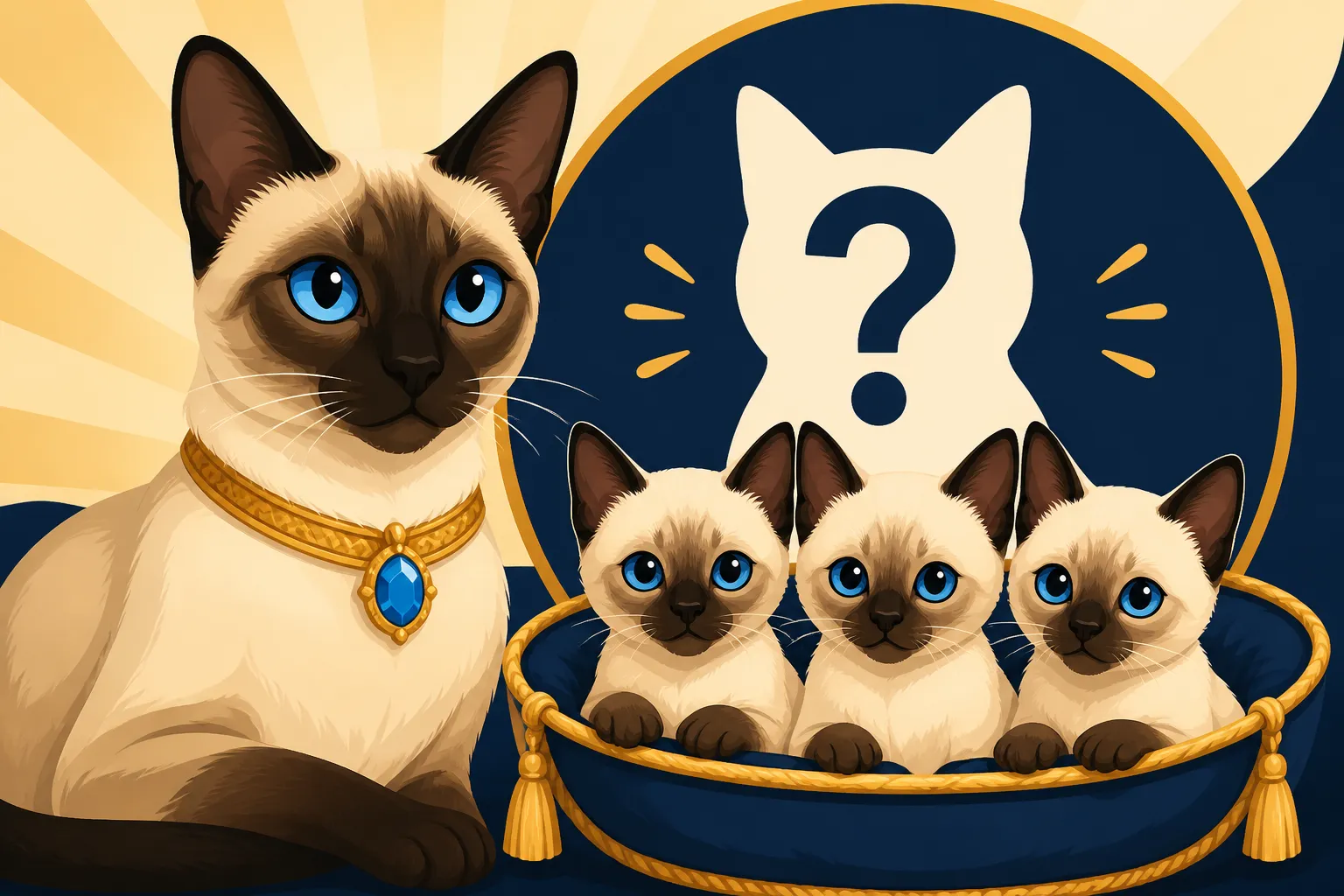
The three kittens most often named in accounts of the first Siamese litter born in Britain are Duen Ngai, Kalohom, and Khromata. They were the offspring of Pho and Mia, a pair of Siamese cats brought to Britain from Siam in the 1880s. The litter is remembered because it marked an early step from importing Siamese cats into Britain to breeding them there.
You may see the kittens’ names spelled in slightly different ways in different retellings. That is not surprising. Their names were rendered in English from Thai, and older written forms did not always follow one consistent approach to sounds and spelling. A name might be copied from a newspaper, catalogue, or later breed-history account, with each writer preserving a different version.
For that reason, it is safest to treat Duen Ngai, Kalohom, and Khromata as the familiar historical spellings rather than assume every letter is definitive. If you come across another spelling, it does not automatically mean the source is referring to a different kitten. It may reflect a different transliteration or a later transcription.
The names are also a useful reminder that these cats were not simply anonymous examples of a new breed. Their arrival and breeding drew public interest, and the cats were recorded as individuals. To learn more about the imported pair themselves, see Who Pho and Mia the Siamese Cats Were.
Why the kittens’ names can be hard to verify
A common source of confusion is the difference between the first Siamese cats brought to Britain and the first Siamese kittens born in Britain. Pho and Mia were imported cats; Duen Ngai, Kalohom, and Khromata were their kittens. When a short account says “the first Siamese cats in Britain,” it may mean the imported pair, the first cats shown publicly, or the first litter born in the country.
Older accounts also tend to compress several events into a few sentences. The pair’s arrival, their public appearance, and the birth of their kittens may all be mentioned together, making it easy to blur the timeline. If a source simply says the cats “came to Britain” and then discusses a show, that does not necessarily mean the kittens were born before the show or were part of the original import.
A little care with wording helps. The three names are associated with Pho and Mia’s litter in Britain, while the parents are part of the earlier import story. The article How Many Kittens Pho and Mia the Siamese Cats Had looks more closely at the litter and the number of kittens reported.
There is another limitation: historical records do not always give the sort of detail a modern cat owner might expect. A name may survive while information about an individual kitten’s appearance, personality, or later life does not. It is tempting to fill in those gaps with a vivid story, but the more responsible approach is to separate what is commonly recorded from what is not clearly documented.
How Pho and Mia’s kittens fit into Siamese history
From imported cats to a British litter
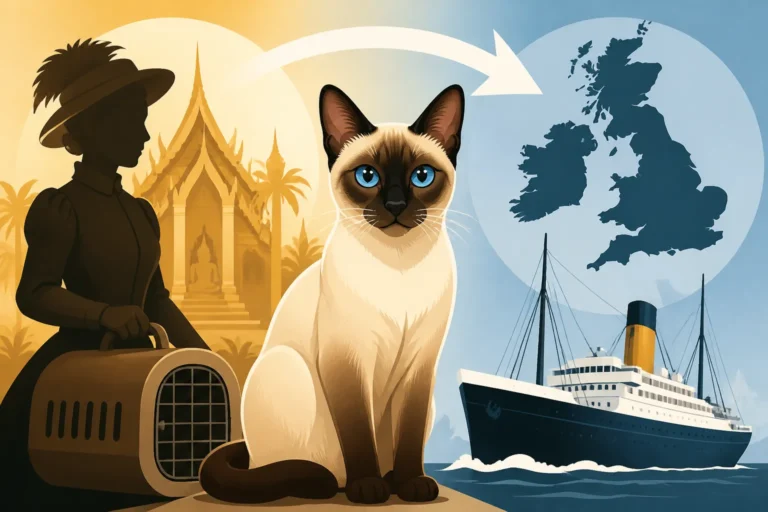
Pho and Mia are associated with the early introduction of Siamese cats to Britain. They were brought from Siam in the 1880s by a British official, and the cats became part of the growing public fascination with unfamiliar breeds. Their story is covered in more detail in Who Brought the First Siamese Cats to Britain.
The birth of their kittens mattered because it showed that Siamese cats could be bred in Britain, not just displayed as rare imports. At the time, a cat arriving from overseas was an event in itself. A litter born locally helped turn curiosity about individual imported animals into sustained interest in the breed.
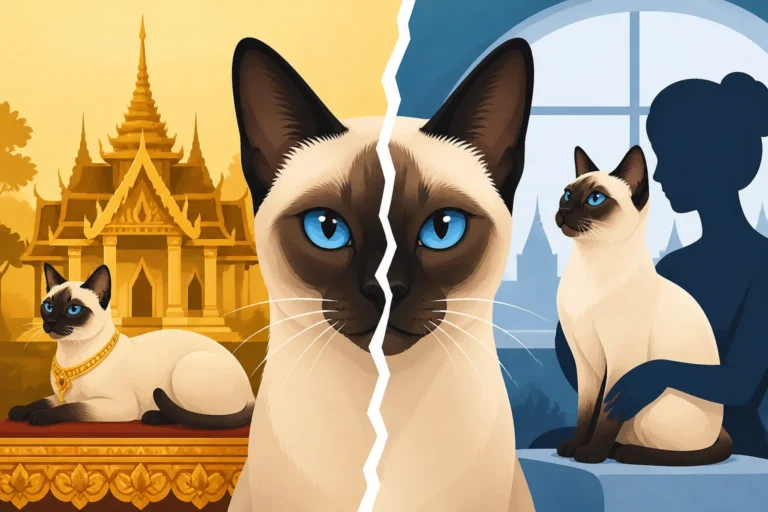
It is worth keeping this in perspective. Duen Ngai, Kalohom, and Khromata were an early British litter, but their birth alone did not create the modern Siamese breed. Breed identity developed over time through breeding choices, written standards, clubs, and shows. The kittens are an important early milestone, not the whole origin story.
That distinction can be helpful if you are reading a timeline and find different dates or descriptions. One account may emphasize the imported pair, another the public show, and another the kittens. These events are related, but they answer different questions about how Siamese cats became known in Britain.
The public interest surrounding the first Siamese cats
Siamese cats attracted attention partly because they looked unlike many cats familiar to British audiences. Their pale bodies, darker points, and striking blue eyes made them instantly recognizable. In the late nineteenth century, the contrast between their appearance and the cats people commonly saw at home added to their novelty.
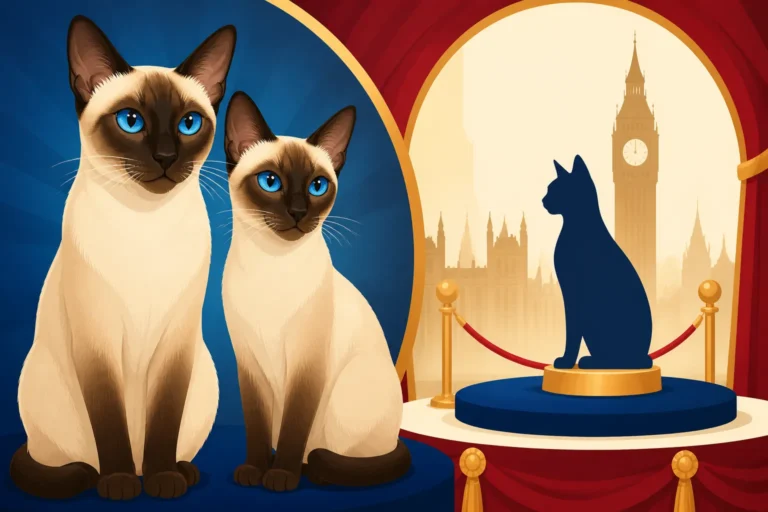
Pho and Mia became associated with public exhibition as well as breeding. The early show history is not always described consistently in brief summaries, so it helps to distinguish the imported adults from the kittens when following the story. For more on those appearances, see Which Show the First Siamese Cats Appeared At and What Judges Thought of the First Siamese Cats.
The kittens’ names give the story a human scale. It is one thing to read that a breed was introduced to a country; it is another to encounter the names of the first young cats born there. The names suggest that people were paying close attention to these animals, even though surviving accounts may not preserve the kind of everyday details that would make each kitten’s life easy to reconstruct.
That early public interest grew into a more organized world of breeders and enthusiasts. Clubs and written standards helped establish shared ideas about what a Siamese cat should look like. The later history of that organization is explored in Who Founded the Siamese Cat Club.
What we can and cannot say about the kittens
What the historical record supports
The commonly repeated account identifies Duen Ngai, Kalohom, and Khromata as kittens born to Pho and Mia in Britain. That is the central answer to the question of what the first British Siamese kittens were named. It is also the detail most useful to remember when separating the kittens from their imported parents.
Beyond that core fact, the record is less complete in popular summaries. They do not always agree on how names should be spelled, how the birth fits into a precise sequence of public events, or what happened to each kitten afterward. Some retellings may include additional details, but those details should be checked against the particular historical account rather than assumed to be universally established.
This is common with early breed histories. A small number of newspaper reports, show records, letters, and later recollections may be repeated for generations. As the account is shortened, qualifications can disappear. A careful reader notices whether a source is describing a documented event, repeating a traditional account, or making an inference.
If you are writing about these cats, a clear phrasing is: “Pho and Mia’s kittens are commonly recorded as Duen Ngai, Kalohom, and Khromata.” That wording gives the names without pretending that every spelling or surrounding detail is beyond dispute.
How to follow the story without mixing up the dates
When comparing accounts, start by asking what “first” refers to. It could mean the first Siamese cat to reach Britain, the first pair to be publicly exhibited, the first litter born there, or the first cats to influence organized breeding. Each milestone belongs to a different part of the story.
A simple timeline can keep those milestones straight:
| Historical milestone | Cats or event associated with it | Why it matters |
|---|---|---|
| Siamese cats brought to Britain | Pho and Mia | They are associated with the early importation of the breed |
| Siamese cats shown to the British public | Early exhibitions and cat shows | Public display introduced audiences to the breed |
| Siamese litter born in Britain | Duen Ngai, Kalohom, and Khromata | The kittens represent early local breeding |
| Breed organization develops | Clubs, breeders, and written standards | Shared rules helped shape the breed’s future |
Treat the table as a guide to the distinctions, not as a complete chronology. The order and detail of individual events may be presented differently across accounts. The broader development of the breed is covered in How Old the Siamese Cat Breed Is and How the Applehead Siamese Cat Became the Wedge.
Modern Siamese ownership is a separate subject from this nineteenth-century history, but one practical connection is worth noting: breed history does not tell you everything about caring for a cat today. If you are preparing for a Siamese cat, think about everyday needs such as a suitable carrier, food, litter, and enrichment. Chewy can be one place to compare basic cat-care supplies, while your veterinarian can help you make choices that suit an individual cat.
The same principle applies to health and temperament. A historical name or pedigree does not guarantee that a particular cat will behave or feel a certain way. A Siamese may be very vocal and people-oriented, but individual cats vary. For a newly adopted cat, keep familiar supplies on hand and introduce changes gradually; Chewy’s listings can help owners compare routine items, but product choices should fit the cat rather than a romantic idea of the breed.
The names Duen Ngai, Kalohom, and Khromata remain memorable because they connect the larger story of the Siamese breed with three particular kittens. Pho and Mia represent the imported beginning; their litter represents an early British chapter. Keeping those parts distinct makes the history easier to understand—and helps explain why the kittens’ names continue to appear in accounts of the breed’s arrival and early development.
Disclaimer
This article is for general informational purposes only and does not constitute professional advice. Laws, prices and regulations vary by location and change over time. Consult a qualified professional for guidance on your specific situation.