How the Applehead Siamese Cat Became the Wedge
It’s quite a common experience to look at photographs of Siamese cats from decades ago and then gaze at a modern show Siamese today, feeling a pang of confusion. "Is that really the same breed?" you might wonder. The truth is, the Siamese cat has undergone a profound physical transformation, moving from the more traditional, rounded "Applehead" look to the dramatically slender, angular "Wedge" profile. This guide will unravel the story behind this striking evolution, explaining why and how this beloved breed’s appearance changed so significantly over time.
The Roots of the Siamese Cat's Appearance
To truly understand the journey from Applehead to Wedge, we have to travel back in time to the very origins of the Siamese cat. These cats weren't always the super-sleek creatures many associate with the breed today; their initial form was quite different, embodying a more moderate and robust build.
A Glimpse at the Original Siamese
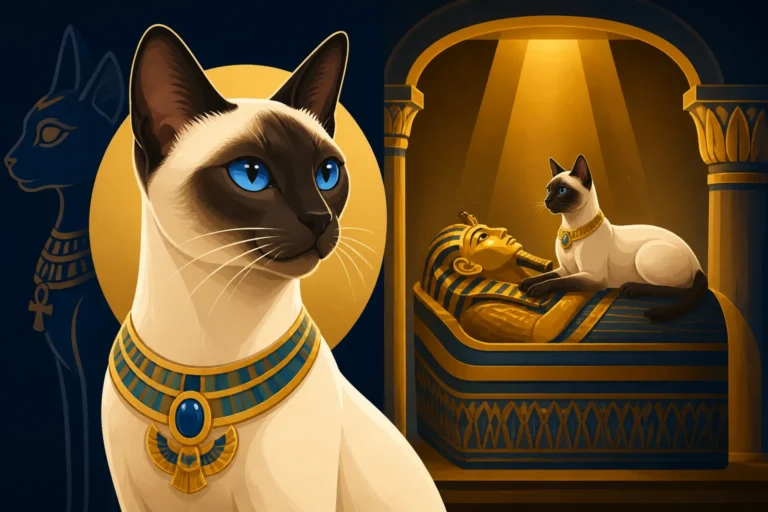
Imagine the cats roaming the royal palaces and temples of ancient Siam (now Thailand). These original Siamese cats, often referred to today as "traditional" or "old-style," were sturdy, medium-sized felines with a noticeable musculature. Their heads were distinctly rounder, resembling the shape of an apple, hence the affectionate nickname "Applehead." Their ears were of a moderate size, set in proportion to their heads, and their bodies were substantial, without being overly stocky. They had a natural elegance, but it was an elegance rooted in strength and balance, not extreme angles.
These cats were prized for their unique point coloration and their vibrant, almost dog-like personalities. They weren't just pets; they were integral parts of the culture, often appearing in ancient manuscripts like the What the Tamra Maew Manuscripts Show About the Siamese Cat. The legends surrounding their crossed eyes and kinked tails, like Why the Siamese Cat's Eyes Cross and Its Tail Kinks, further illustrate their historical presence and the physical traits that were once common and accepted. They were seen as beautiful and unique precisely for these characteristics, not despite them.
The Early Western Introduction
When the first Siamese cats made their way to Western shores, primarily in Britain and later America, in the late 19th century, they brought with them this traditional "applehead" appearance. Think about the cats famously brought to Britain by the Consul-General in Bangkok, Mr. Owen Gould, in 1884 – Pho and Mia. Who Brought the First Siamese Cat to Britain These pioneers of the breed in the West displayed the very characteristics of the original Thai cats. They had rounder faces, solid bodies, and often the charming little tail kinks that are now mostly bred out of modern show lines.
Early Western fanciers were captivated by these exotic, vocal, and intelligent cats. Initially, there wasn't a strict, formal standard as we know it today, allowing for a wide range of natural variations. The primary focus was on their striking color pattern and their undeniable charm. Breeders worked to establish the breed and increase its numbers, largely focusing on preserving the unique "points" – the darker coloration on the extremities – and their distinctive blue eyes, rather than on dramatically altering their overall body or head shape. The initial impression of the Siamese cat in the West was therefore firmly rooted in its original, moderate build.
The Rise of the "Wedge" – A Deliberate Evolution
The journey from the comfortable, rounded Applehead to the dramatically sculpted Wedge was not a sudden leap, but rather a gradual, intentional process driven by the evolving tastes and ambitions within the cat fancy world.
The Influence of Show Standards
As more Siamese cats were imported and breeding programs became established in the West, cat clubs began to form and develop breed standards. These standards were essentially blueprints describing the ideal physical characteristics of a purebred cat, used by judges in cat shows to evaluate specimens. Over time, these standards for the Siamese cat started to emphasize traits that leaned towards greater refinement and elongation. What might have begun as a preference for a slightly longer nose or more almond-shaped eyes gradually escalated.
Breeders, eager to win ribbons and achieve recognition, began selecting for cats that exhibited these increasingly extreme features. A slightly narrower head might score higher, leading to breeders favoring offspring with those traits. Over generations, this selective breeding amplified certain characteristics, pushing the breed further and further from its traditional roots. The "wedge" head, characterized by a long, tapering skull forming a distinct triangle from the ears to the nose, became the hallmark of the ideal show Siamese. This was a direct response to the written standards and the competitive nature of the show ring. What a Siamese Cat Looks Like by the Standard became less about reflecting the cat's natural form and more about shaping an aspirational ideal.
The Drive for "Refinement"
The shift towards the "Wedge" wasn't just about adhering to a standard; it was also driven by an evolving aesthetic preference among many breeders and judges. The angular, sleek lines were seen as "modern," "elegant," and "refined." There was a desire to create a cat that was distinctively different, almost sculpted, moving away from the more common, domestic cat appearance. This drive for refinement meant not only a narrower head but also larger, wider-set ears that continued the line of the wedge, a longer, more tubular body, and incredibly slender legs. The goal was an almost ethereal, aristocratic appearance.
This pursuit of extreme refinement wasn't without its critics, even at the time. Some felt that the breed was being pushed too far, sacrificing health or natural beauty for an exaggerated look. However, the momentum within the show circuit was powerful. If a breeder wanted to be successful, they needed to produce cats that conformed to, and even pushed the boundaries of, the current "modern" standard. This led to a dramatic visual divergence between the cats winning Best in Show and the cats that still resembled their historical ancestors. It became a self-fulfilling prophecy where the most extreme examples often set the new benchmark.
Distinguishing the Applehead from the Wedge
For those unfamiliar with the Siamese breed's history, the differences between an Applehead and a Wedge Siamese can be quite startling. It’s not just a subtle variation; we're talking about two distinctly different looks within the same breed lineage.
Key Physical Differences
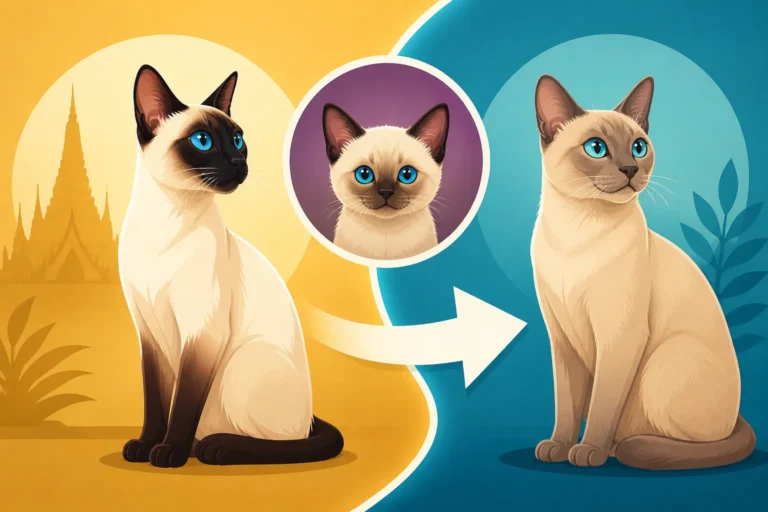
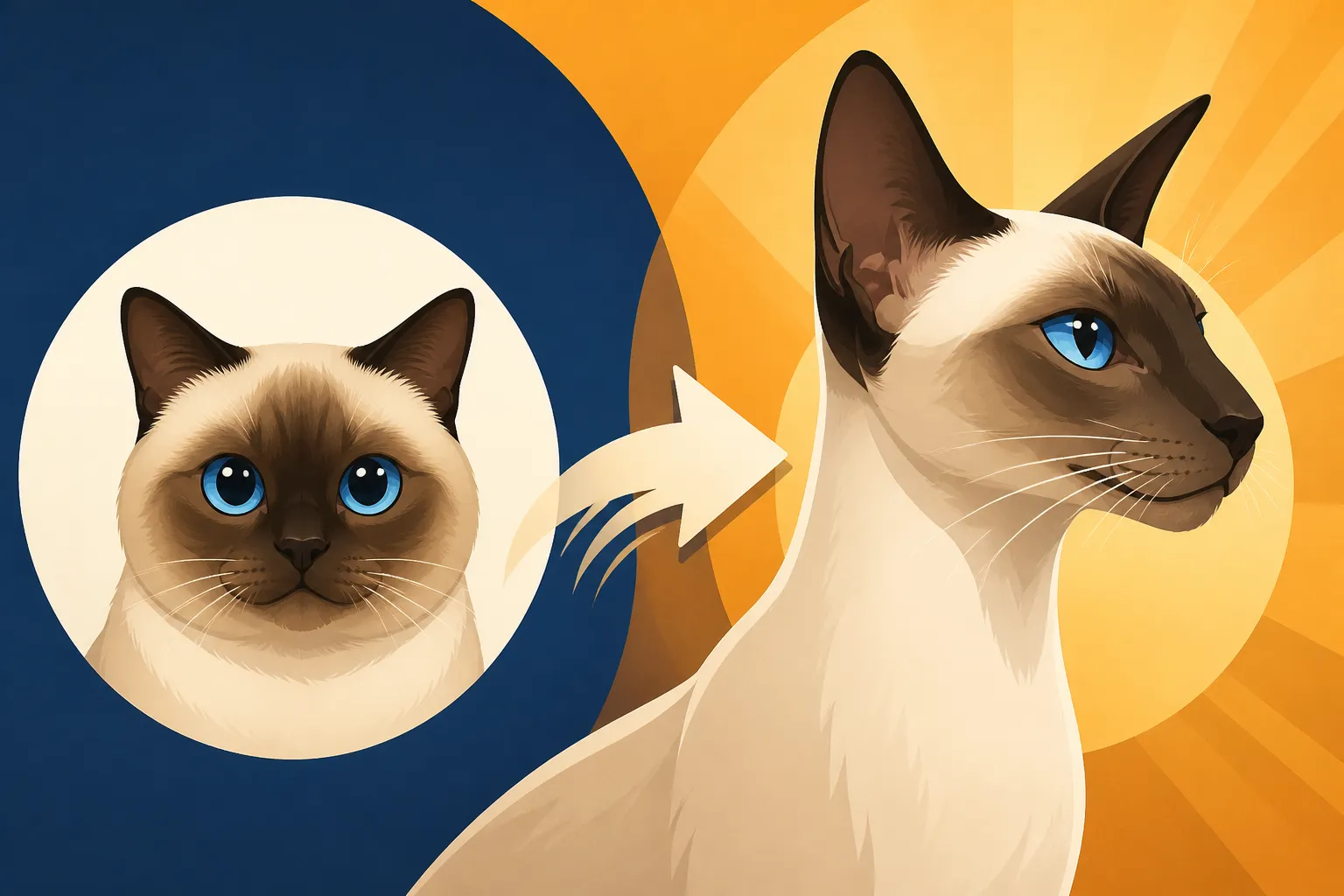
Let's break down the main points of divergence. The most obvious difference lies in the head shape. The Applehead, as its name suggests, has a broad, rounded head, with a gentle curve to the forehead and cheeks. Their muzzles are wider, giving them a more traditional domestic cat face. In contrast, the Wedge Siamese boasts a long, narrow, and distinctly triangular head, tapering from the wide-set ears down to a fine muzzle. Imagine drawing a perfect triangle from the outer base of each ear to the tip of the nose – that's the wedge.
The ears also differ significantly. Appleheads have medium-sized ears that are proportionate to their rounded heads, typically set fairly high and close. Wedge Siamese, however, have notably large ears that are broad at the base, flaring out and continuing the lines of the wedge-shaped head. When you look at them head-on, the ears truly define the extreme angularity. Their eyes also tell a story; while both have brilliant blue eyes, the Applehead tends to have slightly rounder, more open eyes, whereas the Wedge typically has more almond-shaped eyes that often appear to slant towards the nose, enhancing the angular look. How a Siamese Cat's Eyes Cross can occur in both, but the overall eye shape is usually different.
When it comes to body type, the Applehead is generally more muscular and cobby, with a substantial, medium-sized frame. They feel solid when you pick them up. The Wedge Siamese, on the other hand, is known for its long, svelte, tubular body, fine boning, and incredibly slender, elegant legs. They often appear almost delicate. Their tails also reflect this. Appleheads generally have a medium-length tail that tapers, while the Wedge has a very long, whip-like tail that matches their elongated body.
Here's a quick comparison table:
| Feature | Applehead (Traditional) Siamese | Wedge (Modern) Siamese |
|---|---|---|
| Head Shape | Broad, rounded, "apple-like" skull | Long, narrow, distinct wedge/triangle from ears to nose |
| Muzzle | Wider, more pronounced | Fine, delicate |
| Ears | Medium size, proportionate, high-set | Large, broad at base, wide-set, continue head lines |
| Eyes | Slightly rounder, open, brilliant blue | Almond-shaped, oriental slant, brilliant blue |
| Body Type | Sturdy, muscular, medium-cobby | Long, svelte, tubular, fine boning |
| Legs | Proportionate, moderate length | Long, slender, elegant |
| Tail | Medium length, tapering | Very long, whip-like |
The Spectrum of "Traditional" vs. "Modern"
It's important to understand that the terms "Applehead" and "Wedge" represent two ends of a spectrum, and the reality can be a bit more nuanced. Not every non-show Siamese cat perfectly fits the "Applehead" description, nor is every modern Siamese as extreme as a top show winner. There are many cats that fall somewhere in between, sometimes referred to as "classic" or "old-style" Siamese, which retain some of the traditional features while perhaps showing hints of the more refined look.
When you're looking for a Siamese cat, particularly from a breeder, you might encounter variations. Some breeders specifically aim for the most extreme "wedge" possible, meticulously selecting for those traits to compete in the show ring. Others might breed for a more moderate, "classic" look that still adheres to a recognized standard but isn't quite as extreme. Then there are those who champion the true "applehead" look, sometimes working with the specific breed of Thai Cat, which is recognized separately in some registries as preserving the original Siamese appearance. This means that while the ideal forms are distinct, individual cats can display a range of characteristics. When you're seeking a specific look, it's crucial to communicate clearly with your breeder about their breeding goals and what their lines typically produce.
The Impact on Health and Temperament
The dramatic physical changes in the Siamese breed haven't just been aesthetic; they've also sparked discussions and concerns about potential impacts on the cats' health and, to a lesser extent, their famous personalities.
Health Concerns and the Extreme Wedge
When any breed is selectively bred for extreme physical traits, there's always a risk that health can be compromised. For the extreme Wedge Siamese, some of these concerns have revolved around characteristics related to their head shape. The very narrow muzzles and changes in skull structure can sometimes lead to dental issues, such as overcrowding of teeth or malocclusions, which can be painful and require veterinary intervention. Dental Disease in a Siamese Cat is a common feline ailment, but exaggerated jawlines can certainly exacerbate it.
Additionally, the exaggerated skull shape might be linked to certain respiratory challenges in some individual cats, though this is less common than with brachycephalic (flat-faced) breeds. Owners of extremely wedged cats might need to be particularly vigilant about their cat's oral health, ensuring regular check-ups and being prepared for potential dental cleanings or extractions. It's a key reason why choosing a reputable breeder who prioritizes health over extreme aesthetics is so vital. They should be transparent about any known issues in their lines and test for hereditary conditions where possible. Thankfully, many breeders are now focusing on a healthy, moderate wedge, steering away from the most extreme versions that could lead to discomfort for the cat.
Temperamental Traits Across Types
One of the most enduring characteristics of the Siamese cat, regardless of their head shape, is their unique and often captivating temperament. They are famously vocal, intelligent, and highly social. What a Siamese Cat's Temperament Is Really Like is a topic that endlessly fascinates owners. While there's no conclusive scientific evidence to suggest a direct link between head shape and specific personality traits, some anecdotes and observations exist within the fancier community.
Some proponents of the Applehead or traditional Siamese suggest that these cats retained a slightly more robust constitution and perhaps a generally more "mellow" or less high-strung personality, though they are still very active and interactive. On the other hand, the modern Wedge Siamese is sometimes characterized as being even more intense in their personality: intensely vocal, intensely demanding of attention, and intensely intelligent. This could, of course, be a self-fulfilling prophecy, where breeders selecting for extreme physical traits might also inadvertently select for more extreme behavioral traits, or simply that the modern Siamese's sharp, elegant appearance seems to match a sharp, lively mind. Ultimately, individual personality varies greatly from cat to cat, and factors like early socialization and environment play a much larger role than head shape in shaping a cat's individual temperament. Both types are generally considered highly interactive, affectionate, and demand a lot of their human companions!
The Resurgence of the Traditional Siamese and the Thai Cat
Amidst the dominance of the Wedge Siamese in the show ring, a counter-movement began to gain traction: a renewed appreciation for the original, more moderate Siamese look. This led to the revival of the "old style" and, eventually, the recognition of a distinct breed.
Renewed Interest in the "Old Style"
Over the years, as the Wedge Siamese became more extreme, a growing number of cat lovers and some dedicated breeders began to feel that something precious was being lost. They yearned for the sturdy, round-headed cats of yesteryear, the ones that closely resembled the photographs of the first Siamese cats imported to the West. This sentiment led to a resurgence of interest in what became known as the "traditional" or "old-style" Siamese. These cats were bred to maintain the Applehead characteristics: a rounded head, a solid, muscular body, and moderate-sized ears.
This movement wasn't about rejecting the modern Siamese, but about offering an alternative for those who preferred the classic look and felt it often came with a more robust general health profile. It was a conscious effort to preserve the genetic diversity and historical appearance of the breed. For potential owners, this meant having a choice – if the extreme wedge didn't appeal to them, or if they had concerns about potential health implications like those possibly linked to Amyloidosis Is the Disease That Kills Young Siamese Cats or Why a Siamese Cat's Liver Can Rupture Without Warning that might be exacerbated by extreme breeding, they could seek out breeders focusing on the old-style. These cats often capture the charm of vintage Siamese imagery, providing a link to the breed's storied past.
The Thai Cat as a Distinct Breed
One of the most significant developments in the push to preserve the original Siamese look was the formal recognition of the Thai Cat as a distinct breed. How the Thai Split From the Siamese Cat is a fascinating story in itself. Essentially, while Western breeders were developing the Siamese into the modern Wedge, the cats in their native Thailand (Siam) largely retained their original appearance – the robust, rounded "Wichianmat" cat. These were the true "appleheads" in their homeland.
Breeders who wanted to maintain this traditional look, particularly those focused on preserving the actual landrace cat from Thailand, advocated for recognizing the Thai Cat as a separate breed. This allowed them to establish a standard that specifically called for the moderate, round-headed, sturdy body type without conflicting with the existing, very different standard for the modern Siamese. Today, if you are looking for a cat that embodies the look of the original Siamese, the Thai Cat is often the answer. They are recognized by several cat registries and represent a direct link to the ancestral Siamese, offering a healthy and hearty alternative to the extreme show lines while still providing all the intelligence, vocal prowess, and affectionate nature that makes Siamese cats so beloved. When sourcing food or toys for your Thai cat, you'd find the same excellent variety on platforms like Chewy as you would for any other feline friend, ensuring they're well-cared for.
Living with Either a Wedge or Applehead Siamese
Regardless of whether you are drawn to the sleek, angular beauty of the modern Wedge Siamese or the classic, robust charm of the Applehead, bringing a Siamese cat into your home is a commitment to a lively, intelligent, and deeply affectionate companion.
Finding a Reputable Breeder
The most crucial step in welcoming any Siamese cat into your life is finding a reputable breeder. This is true whether you're seeking a Wedge or an Applehead. A good breeder will prioritize the health and temperament of their cats above all else. They will be transparent about their breeding practices, openly discuss any health issues prevalent in the breed, and often provide health guarantees. Don't be shy about asking questions regarding their lines, the health tests they perform (even if some, like a direct DNA test for amyloidosis, don't exist, they should be tracking family health and longevity, as mentioned in Why There Is No Siamese Cat Amyloidosis Gene Test), and the socialization of their kittens.
A responsible breeder will also interview you to ensure you can provide a suitable home for one of their precious kittens. They should be registered with a recognized cat association and be able to provide pedigree papers. Visits to their cattery (if permitted and sanitary) or video calls can give you insight into the living conditions and the health of the parent cats. They will usually provide initial veterinary care, including vaccinations and deworming, and often send the kitten home with a starter pack of food, toys, and perhaps even some literature. For instance, if your breeder recommends a specific brand of kitten food, you'll find it readily available on sites like Chewy for easy restocking.
Caring for Your Siamese Companion
Caring for either an Applehead or a Wedge Siamese involves meeting their core needs as active, intelligent, and highly social cats. Their short, sleek coats are low-maintenance, requiring only minimal grooming, maybe a quick brush once a week to keep them gleaming. But don't let the grooming ease fool you; their mental and emotional needs are substantial! These are not "set it and forget it" cats. They thrive on interaction and can become quite demanding if ignored.
Both types benefit immensely from environmental enrichment. Puzzle feeders, climbing structures, and plenty of interactive play sessions are essential to keep their sharp minds engaged and prevent boredom, which can sometimes manifest in destructive behaviors or excessive vocalization. Ensuring they have a variety of toys, from wand toys to crinkle balls, readily available from pet retailers like Chewy, will help keep them stimulated. Regular veterinary check-ups are paramount, including How Often a Siamese Cat Needs a Wellness Exam and dental care, to catch any potential health issues early, whether they are predisposed to certain conditions or not. Providing a stimulating, loving, and consistent home environment is the key to a happy, well-adjusted Siamese, regardless of their particular head shape.
Disclaimer
This article is for general informational purposes only and does not constitute professional advice. Laws, prices and regulations vary by location and change over time. Consult a qualified professional for guidance on your specific situation.