Whether a Siamese Cat Needs a Water Fountain
One of the most common worries for Siamese cat owners, myself included, is making sure our chatty companions are drinking enough water. These intelligent, often intensely bonded felines can be notoriously finicky about their water sources, and inadequate hydration is a silent threat that can lead to serious health issues down the road. This guide is here to unravel the mystery of Siamese cat hydration, exploring their unique needs and answering the burning question: does your Siamese really need a water fountain?
The Siamese Cat's Relationship with Water: Why Hydration Matters So Much
It’s easy to assume all cats are pretty much the same when it comes to basic needs like water, but if you’ve lived with a Siamese, you know they’re anything but typical. Their metabolism, their activity levels, and even their ancestral desert origins all play a role in their relationship with hydration. Getting enough water isn't just about quenching thirst; it's a fundamental pillar of their long-term health.
The Thirst Factor: Are Siamese Cats Naturally Thirstier?
While Siamese cats aren't inherently "thirstier" in the way a desert animal might be, their active, energetic nature means they burn through calories and fluids at a different rate than a more sedate feline. They are often lean, constantly on the go, and always observing their environment. This high-octane lifestyle, combined with their sometimes-picky nature, means we, as their human companions, need to be extra vigilant about their water intake. It's not uncommon to see a Siamese zooming through the house, playing fetch, or carrying on a lengthy conversation, all activities that contribute to fluid loss. If they're particularly vocal or prone to extended play sessions, they're expending more energy, and thus, require more consistent hydration.
Beyond their energy, there’s an interesting genetic angle to consider. Many domestic cats, including Siamese, descended from desert-dwelling ancestors. This lineage means their bodies are incredibly efficient at conserving water and extracting moisture from their prey. In the wild, a cat would get most of its hydration from eating fresh kills, which are about 70-75% water. Our modern kibble, while convenient, can be as low as 5-10% water. This significant nutritional shift means domestic cats, and active Siamese cats in particular, often don't feel a strong natural drive to drink enough freestanding water to compensate for a dry diet. We need to help them bridge that gap.
Urinary Health Concerns: A Silent Threat for Many Cats
The biggest, most pressing reason to ensure your Siamese cat is well-hydrated is to safeguard their urinary tract health. Cats, unfortunately, are prone to a host of urinary issues, ranging from painful urinary tract infections (UTIs) to more serious conditions like bladder stones or idiopathic cystitis. These conditions can be incredibly uncomfortable for your cat and distressing for you to witness. A cat struggling with urinary issues might suddenly start eliminating outside the litter box, straining to urinate, or crying in pain. These are urgent signs that require immediate veterinary attention.
Adequate water intake helps to flush out the urinary system, keeping the bladder healthy and preventing the concentration of minerals that can lead to stone formation. Diluted urine means a lower risk of crystals forming and helps maintain a healthy pH balance. It also reduces the likelihood of bacteria accumulating and causing infections. For breeds like the Siamese, who can occasionally be more susceptible to certain health conditions, proactive hydration is a simple yet incredibly effective preventative measure. Ensuring they drink plenty can literally save them from painful and expensive vet visits. This is where pet insurance, like plans offered by Healthy Paws, can become invaluable if, despite all your efforts, a urinary issue still arises and requires extensive treatment.
Common Drinking Habits of Siamese Cats: Understanding Their Quirks
If you've ever owned a Siamese, you know they're a breed full of personality, and that personality often extends to their drinking habits. They're not always content with a simple bowl of still water in the corner. Understanding these quirks is key to making sure they get the hydration they need.
The Faucet Fanatics: Why Still Water Isn't Always Appealing
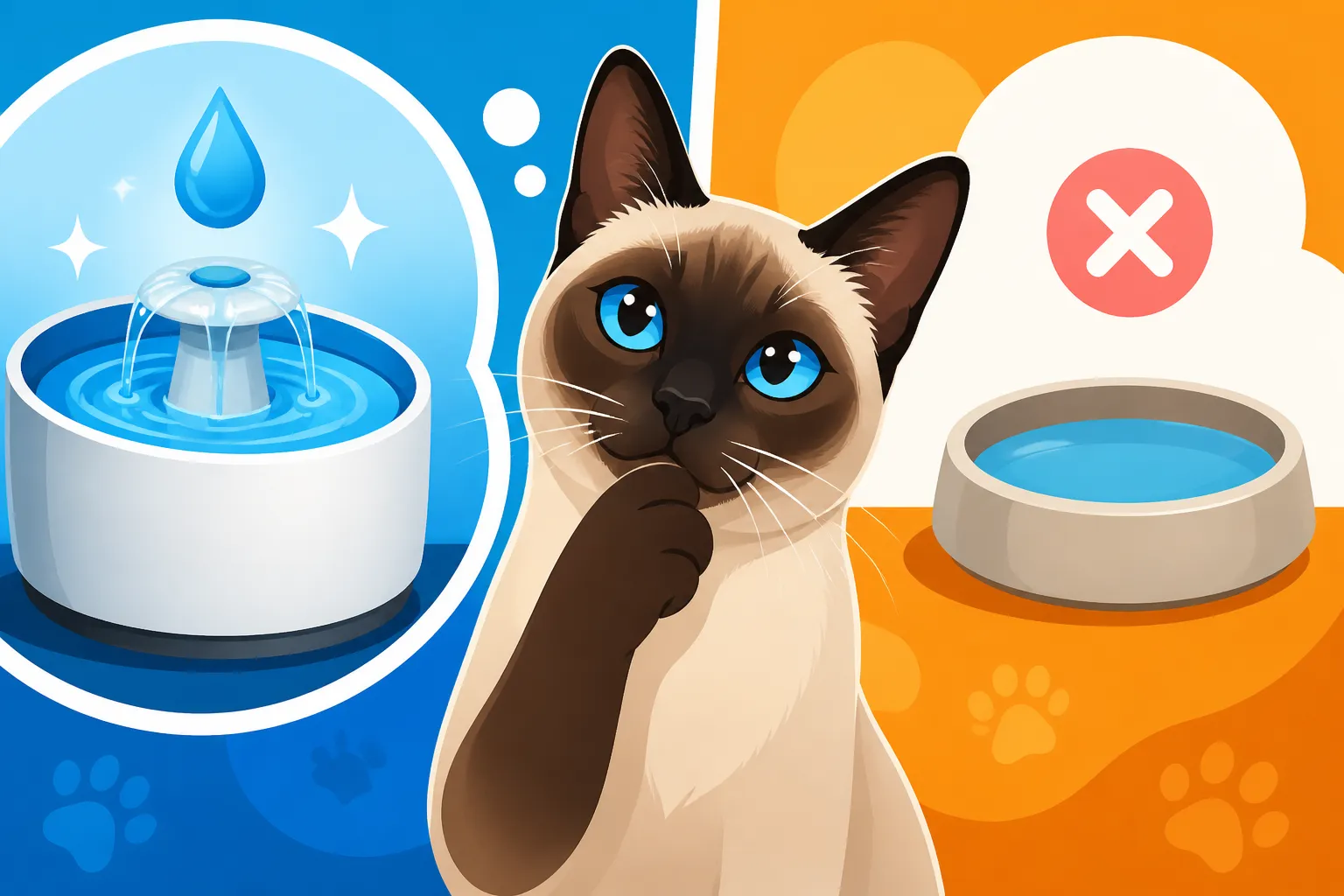
It's almost a rite of passage for a Siamese owner: finding your cat perched on the kitchen counter, eagerly lapping from a dripping faucet. Many Siamese cats absolutely adore running water. This isn't just a cute quirk; it's rooted in their instincts. In nature, still, stagnant water is often a breeding ground for bacteria and parasites. Running water, on the other hand, is usually fresher and safer. Even though the water in their bowl comes from your tap, their ancient instincts might still tell them that moving water is the better, healthier option.
This preference for moving water means that a static bowl, no matter how clean or fresh the water might seem to us, just doesn't spark their interest. They might take a few sips out of necessity, but they won't be drawn to it in the same way they are to a trickling tap. I've known Siamese cats who will literally sit by the sink and yowl until someone turns on the faucet for them – a testament to their vocal nature and their unwavering determination! If your Siamese is a regular at the bathroom sink, it's a huge clue that they're craving that flowing water experience. How Much Water a Siamese Cat Should Drink is a good read to understand the volume they actually need.
The Picky Drinkers: What Makes a Siamese Cat Turn Up Its Nose?
Beyond the running water preference, Siamese cats can be surprisingly particular about their drinking setup. It's not just the type of water, but also the location, the bowl material, and even the temperature. I've encountered Siamese cats who refuse to drink from a bowl near their food, associating it with hunting and not wanting to contaminate their water source. Others might dislike the reflection in a shiny stainless steel bowl or the lingering scent that certain plastics can impart.
Consider the placement: is the water bowl in a high-traffic area, or a quiet, safe spot where they won't feel vulnerable? Is it near their litter box? Many cats instinctively avoid drinking near where they eliminate, again, a throwback to wild behaviors to prevent contamination. The temperature also plays a role; some Siamese prefer slightly cooler water, while others don't seem to mind. If you've tried different bowls – ceramic, glass, stainless steel – and multiple locations, and your Siamese is still giving their water the cold shoulder, it’s a strong indicator that something about the setup isn't working for them. This pickiness isn't them being difficult; it's them communicating their needs, and we need to listen.
The Benefits of a Water Fountain for Your Siamese
Given their unique drinking habits and the critical importance of hydration for their health, a water fountain often emerges as an incredibly effective solution for Siamese cats. It's not just a fancy gadget; it's a tool that taps into their instincts and encourages healthier drinking patterns.
Encouraging Increased Water Intake
This is the big one. The primary, most significant benefit of a water fountain for your Siamese cat is that it dramatically increases their water intake. By providing a continuous flow of fresh, circulating water, fountains cater directly to that instinctual preference for moving water we discussed. Cats are often drawn to the sound of trickling water, and the visual movement catches their eye, prompting them to investigate and, hopefully, drink more frequently and for longer periods.
I've seen firsthand the difference a fountain can make. Cats who barely touched their still water bowl will suddenly become enthusiastic drinkers, sometimes spending several minutes at the fountain, lapping happily. This consistent hydration helps to prevent urine from becoming too concentrated, which is a major factor in reducing the risk of urinary tract issues and keeping their kidneys functioning optimally, especially as they age. Think of it as making water irresistible rather than just available. You might even find your Siamese's coat looking a little healthier, their energy levels more consistent, and fewer instances of them trying to hijack your bathroom faucet. It’s a win-win situation for their health and your peace of mind.
The Appeal of Running Water: Mimicking Natural Sources
As mentioned, running water is generally seen as safer and fresher in the wild. While our tap water is safe, the perception of freshness is what matters to your cat. A water fountain mimics a bubbling stream or a dripping tap, which are the kinds of water sources that would naturally attract a cat in a wild setting. This primal draw is incredibly powerful.
Imagine a hot summer day: would you rather drink from a still puddle or a clear, gurgling brook? Your Siamese makes a similar, albeit instinctual, choice. The movement of the water aerates it slightly, which can improve its taste to some cats. It also keeps the water cooler than a stagnant bowl, adding another layer of appeal. For a cat that loves to play with water, a fountain can also double as a source of enrichment. They might bat at the stream, paw at the surface, and then take a drink, engaging multiple senses and making hydration an enjoyable activity rather than a chore. This is a far cry from the boring, static water bowl that many cats, particularly the discerning Siamese, often ignore.
Filtering and Freshness: Cleaner Water for Your Feline
Beyond just the appeal of movement, most quality cat water fountains come equipped with filtration systems. These filters usually contain activated carbon and sometimes ion-exchange resins. What does that mean for your Siamese? It means the water they're drinking is cleaner, clearer, and often tastes better. The filters remove impurities, odors, and tastes that might be present in tap water, such as chlorine or sediment. They also trap fur, dust, and food particles that can quickly contaminate a regular water bowl, making it unappetizing.
For cats who are prone to a sensitive stomach or just particular about everything, this enhanced freshness can be a game-changer. A fountain ensures a continuous supply of clean water, reducing the need for you to constantly refresh their bowl (though daily cleaning of the fountain itself is still crucial!). This consistent access to pristine water directly contributes to their overall health and well-being, diminishing the risk of them ingesting anything that could cause minor digestive upset or, worse, contribute to a urinary issue down the line. It's an investment in their health that pays dividends.
Choosing the Right Water Fountain for Your Siamese Cat
So, you're convinced a water fountain might be the answer for your thirsty Siamese. Great! But walk into any pet store or browse online, and you'll quickly realize there are a dizzying array of options. Picking the right one isn't just about aesthetics; it's about material, flow, noise, and ease of cleaning.
Material Matters: Stainless Steel, Ceramic, or Plastic?
The material of your cat's water fountain is a crucial consideration, not just for durability but also for your cat's health and your ease of maintenance.
Stainless Steel Fountains: These are often considered the gold standard. Stainless steel is non-porous, meaning it's less likely to harbor bacteria or develop biofilm (that slimy residue you sometimes find in bowls). It's also incredibly durable, resistant to scratches, and easy to clean, often being dishwasher-safe. For Siamese cats who might have sensitive skin or be prone to "cat acne" on their chin, stainless steel is a great choice because it's hypoallergenic and doesn't leach chemicals. On the downside, some cats might dislike the reflections or the metallic taste (though this is rare). Brands like Pioneer Pet and PetSafe offer excellent stainless steel options.
Ceramic Fountains: Ceramic fountains are another fantastic choice, particularly for aesthetics. They're heavy and stable, making them hard for even the most determined Siamese to tip over. Like stainless steel, ceramic is non-porous and easy to clean, reducing bacteria buildup. They often come in beautiful designs that can blend seamlessly with your home decor. However, they can be more fragile than stainless steel if dropped, and often more expensive upfront. They are also usually dishwasher-safe, which is a big plus for busy owners.
Plastic Fountains: Plastic fountains are typically the most budget-friendly and lightweight option. They come in a huge variety of shapes and sizes. However, plastic can scratch over time, creating tiny crevices where bacteria can thrive. This means they require more diligent cleaning to prevent biofilm buildup. Some cats can also develop sensitivities to plastic, leading to chin acne. If you choose plastic, opt for high-quality, BPA-free options and be prepared for frequent, thorough cleaning. They are a good entry-level option to see if your Siamese takes to a fountain before investing more. You can find a wide range of all these materials on Chewy.
Here's a quick comparison:
| Feature | Stainless Steel | Ceramic | Plastic |
|---|---|---|---|
| Durability | Excellent, very resistant | Good, but fragile if dropped | Fair, can scratch |
| Hygiene | Excellent, non-porous | Excellent, non-porous | Fair, can harbor bacteria |
| Ease of Cleaning | Very High, often dishwasher safe | High, often dishwasher safe | Moderate, requires diligent cleaning |
| Cost | Moderate to High | Moderate to High | Low to Moderate |
| Aesthetics | Modern, clean | Often decorative | Varies widely |
| Potential Downsides | Can be noisy (pump) | Can be heavy, breakable | Scratches, potential for chin acne |
Flow Options and Noise Levels
Fountains offer different flow patterns – bubbling, free-falling stream, gentle waterfall. Some cats prefer a strong stream, while others are intimidated and prefer a more subtle bubbling. Observe your Siamese: do they try to drink directly from the faucet stream, or do they prefer the bowl where the water collects? This can give you a clue. Many fountains come with adjustable flow rates or interchangeable spouts to customize the experience.
Noise levels are another huge factor. A constantly whirring or gurgling fountain can be annoying to you and might even deter a sensitive Siamese cat. Look for fountains advertised as "whisper-quiet" or those with submersible pumps. Most reputable brands will specify their noise levels or have reviews that mention it. A gentle hum is usually acceptable, but a loud, persistent motor noise can make both you and your cat regret the purchase. Remember, a happy drinking experience means both quiet operation and appealing water flow.
Maintenance and Cleaning: What to Expect
No matter which fountain you choose, regular maintenance is non-negotiable. This isn't a "set it and forget it" device. Fountains, with their pumps and filters, need consistent cleaning to remain hygienic and functional.
Daily tasks: You'll want to top off the water daily and visually inspect for debris.
Weekly tasks: At least once a week, you should fully disassemble the fountain. This means taking out the pump, cleaning all its components (usually with a small brush that often comes with the fountain), scrubbing the basin, and replacing the filter. Filters are typically good for 2-4 weeks, but this can vary depending on your water quality and how much your cat sheds. Neglecting cleaning will lead to bacterial buildup, slimy residue, and a clogged pump, which not only makes the water unappetizing but can also damage the fountain itself.
It might sound like a bit of work, but consider it part of your weekly routine, much like cleaning litter boxes. The health benefits for your Siamese far outweigh the few minutes of effort. Knowing your cat is getting fresh, clean, circulating water that actively encourages them to drink makes it all worthwhile.
Beyond the Fountain: Other Ways to Boost Your Siamese Cat's Hydration
While a water fountain is a fantastic tool, it's not the only way to ensure your Siamese stays well-hydrated. A multi-pronged approach is often the most effective, especially for particularly picky drinkers. Combining strategies can maximize their fluid intake and give you peace of mind.
The Power of Wet Food
This is perhaps the single most impactful thing you can do for your Siamese cat's hydration, fountain or no fountain. Wet food, also known as canned or pate food, has a moisture content that typically ranges from 70-80%. This closely mimics the natural diet of their wild ancestors. If your Siamese is currently on a diet primarily composed of dry kibble (which, as we know, has very little moisture), transitioning them to or adding wet food can make a dramatic difference to their overall hydration levels.
Many veterinarians and feline nutritionists advocate for at least a partial wet food diet for all cats, specifically because of the hydration benefits for urinary and kidney health. Consider integrating one or two wet meals a day, or even mixing a little water into their dry kibble (if they'll eat it!). Fresh food options that are naturally high in moisture can also help boost hydration. This simple dietary change can often resolve chronic low-level dehydration issues that a fountain alone might not fully address, particularly if your cat isn't a huge fan of drinking from any source. Whether a Siamese Cat Needs Wet Food can give you even more insights into this dietary shift.
Strategic Bowl Placement and Multiple Stations
Even with a fountain and wet food, thinking strategically about water bowl placement can further encourage your Siamese to drink. Don't rely on just one water source in your home. Think about where your cat spends most of their time and place water bowls (or additional fountains) in those areas.
Here are some tips:
- Multiple Locations: Place bowls in different rooms – near their favorite napping spot, in the living room, and perhaps in a quiet corner of your bedroom. The goal is to make water easily accessible wherever they are, so they don't have to go far or feel inconvenienced.
- Away from Food and Litter: As mentioned, many cats prefer their water source to be separate from their food bowls and certainly far away from their litter boxes. Try placing water bowls in different areas than where you feed them.
- Different Bowl Types: Even if you have a fountain, keep a few traditional bowls out. Some days, your Siamese might just fancy a different type of drink! Experiment with ceramic, glass, or stainless steel bowls in various sizes.
- Consider Elevation: Some cats, especially older ones, prefer to drink from slightly elevated bowls, as it can be more comfortable for their necks and joints. Caring for an Old Siamese Cat touches on similar considerations for aging felines.
- Freshness is Key: No matter the bowl type or location, always ensure the water is fresh and the bowl is clean. A quick rinse and refill daily can make a huge difference in appeal.
By combining the allure of a fountain with a moisture-rich diet and thoughtful placement of multiple drinking stations, you create an environment where your Siamese cat is constantly reminded and encouraged to hydrate. It’s about meeting them where they are and catering to their natural instincts, ensuring they lead a healthy, happy life.
Disclaimer
This article is for general informational purposes only and does not constitute professional advice. Laws, prices and regulations vary by location and change over time. Consult a qualified professional for guidance on your specific situation.