Which Gene Causes PRA in a Siamese Cat
It's incredibly distressing to learn that your beloved Siamese cat might be at risk for a debilitating inherited condition like Progressive Retinal Atrophy (PRA). As pet parents, we want to understand every facet of their health, especially when it comes to something as fundamental as their vision. This guide will meticulously break down the specific genetic cause behind PRA in Siamese cats, help you navigate the complexities of genetic testing, and offer insights into managing this challenging condition.
Understanding Progressive Retinal Atrophy (PRA) in Siamese Cats
Progressive Retinal Atrophy (PRA) is one of those veterinary terms that sounds intimidating, and frankly, it is a serious condition for our feline friends. Imagine a slow, creeping darkness stealing away your cat's world, eventually leaving them completely blind. That's the heartbreaking reality of PRA for affected Siamese cats and their devoted owners.
What PRA Means for Your Siamese
At its heart, PRA is a group of genetic diseases that cause the photoreceptor cells in a cat's retina to degenerate over time. Think of the retina as the "film" in a camera – it's responsible for capturing light and sending those signals to the brain to form images. In a Siamese cat with PRA, these vital cells, primarily the rods (responsible for night vision) and then the cones (responsible for day vision and color perception), slowly break down. The initial signs often go unnoticed because cats are masters at adapting to their environment, especially as their vision subtly declines. You might not see them bumping into things right away, but you might notice them being a little more hesitant in dimly lit rooms or perhaps misjudging jumps they used to nail perfectly. This gradual loss of vision means your cat has to rely more and more on their other highly developed senses, like hearing and smell.
Initially, your Siamese might struggle with night vision, a condition known as nyctalopia. This is often the first and most subtle hint that something isn't quite right. They might become clumsier in the evenings, reluctant to go into dark hallways, or hesitant to use the litter box if it’s in a poorly lit area. As the disease progresses, their daytime vision also starts to fade. This slow, relentless march towards blindness can be incredibly frustrating for owners who are trying to pinpoint what's happening. Is it just old age? Are they being finicky? Or is something deeper going on? Understanding that this is a progressive disease helps to explain why the changes are often so subtle at first, making early detection a significant challenge.
The Devastating Progression of PRA
The progression of PRA isn't a sudden event; it's a journey, and unfortunately, it's a one-way trip to complete blindness. The rate at which vision is lost can vary among individual cats, even within the same breed, but the outcome is generally the same. Initially, the rod cells, which are crucial for seeing in low light, begin to falter. This is why nocturnal clumsiness is often the first symptom. Your Siamese, typically so agile and confident in the dark, might start to hesitate, bump into furniture, or misjudge distances.
As the condition advances, the cone cells, which handle daytime vision and color perception, also start to deteriorate. This means that eventually, even in bright light, your cat will have significant vision impairment. For Siamese cats specifically, the age at which they first lose night vision can vary, but typically signs become noticeable between 1 to 5 years of age, though some might show signs earlier or later. Over a period of months to a few years, your cat will lose their sight entirely. The frustration for owners comes from feeling helpless, watching their vibrant, active companion slowly lose their ability to navigate their world independently. It’s a profound loss for both the cat and the family, but knowing what to expect can help you prepare and support them through this transition. If you notice signs a Siamese cat is going blind, it’s crucial to consult your vet right away to get a proper diagnosis and understand the timeline.
The Genetic Culprit: The CEP290 Gene Mutation
For those of us who cherish our Siamese cats, understanding the root cause of conditions like PRA is empowering. It helps us make informed decisions about their care and, for breeders, about responsible breeding practices. In the case of Progressive Retinal Atrophy in Siamese cats, the science has pointed to a very specific genetic anomaly.
Pinpointing the CEP290 Gene
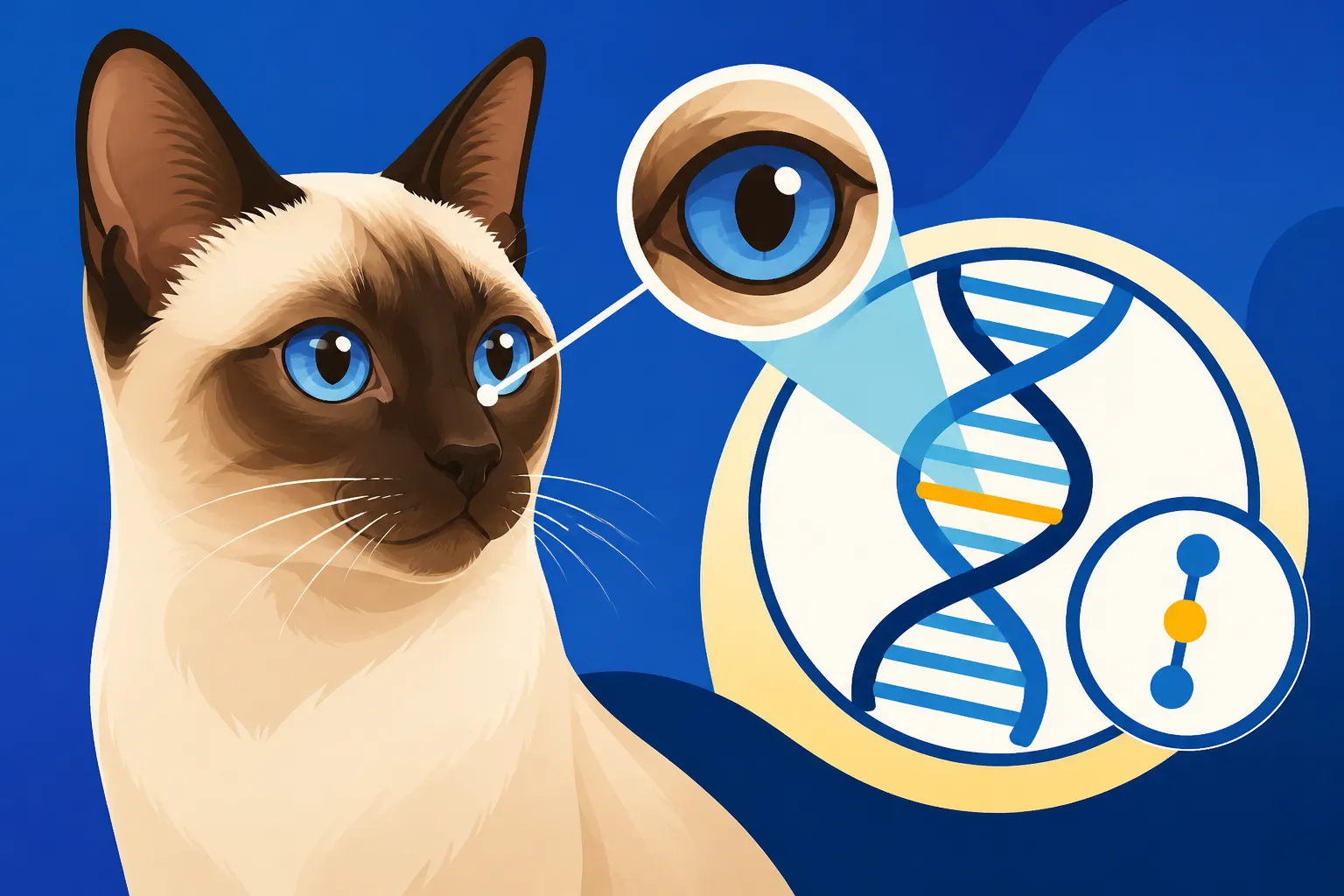
The primary gene mutation responsible for the most common form of Progressive Retinal Atrophy in Siamese cats is located within the CEP290 gene. This gene is absolutely vital for the normal development and function of photoreceptor cells in the retina. Think of the CEP290 gene as the blueprint for building and maintaining the delicate machinery within these cells that allows them to detect light. When this blueprint has a significant error – a mutation – that machinery doesn't get built correctly or maintained properly.
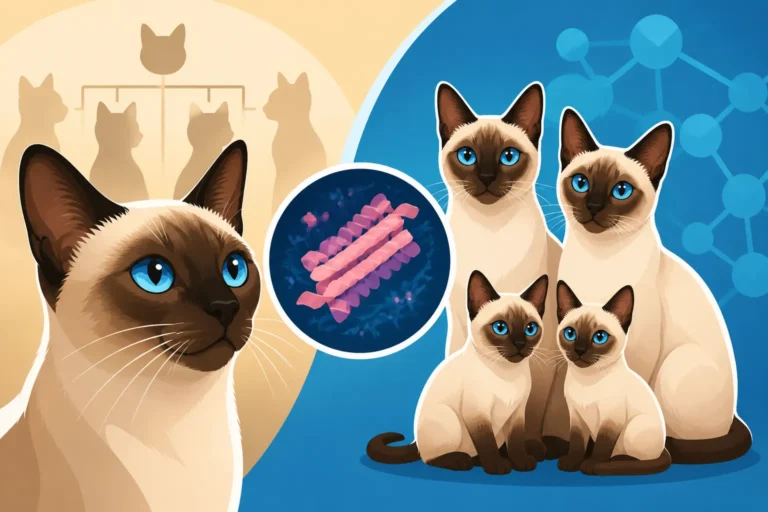
Specifically, the mutation identified in Siamese cats is a deletion of four base pairs within the CEP290 gene, leading to a truncated protein. This faulty protein means the photoreceptor cells in your cat's eyes, which are supposed to capture light and send signals to the brain, cannot function as they should. Over time, these cells become damaged and eventually die off, leading to the progressive loss of vision. It’s not a malfunction; it’s a breakdown at the most fundamental, cellular level. This discovery has been a game-changer for Siamese breeders and owners, allowing for the development of genetic tests that can identify carriers and affected cats, potentially reducing the incidence of this devastating condition.
Autosomal Recessive Inheritance: What It Means for Breeding
The CEP290 mutation causing PRA in Siamese cats follows an autosomal recessive inheritance pattern. This means a few critical things for understanding how the disease is passed down through generations and why it can sometimes seem to appear "out of nowhere" in a litter.
Here's a simplified breakdown:
- Autosomal: The gene is not located on a sex chromosome (like X or Y), so it affects males and females equally.
- Recessive: A cat must inherit two copies of the mutated gene – one from each parent – to actually develop PRA and go blind.
- Clear Cat: Has two normal copies of the gene (N/N). They will not develop PRA and cannot pass the mutated gene to their offspring.
- Carrier Cat: Has one normal copy and one mutated copy of the gene (N/P or N/PRA, where P/PRA denotes the mutation). These cats will not develop PRA themselves because the single normal copy is enough for proper retinal function. However, they can pass the mutated gene to their kittens.
- Affected Cat: Has two mutated copies of the gene (P/P or PRA/PRA). These are the cats that will develop PRA and eventually go blind. They will also pass a mutated copy of the gene to all of their offspring.
This recessive pattern explains why a breeding pair might produce affected kittens even if both parents have perfect vision. If two carrier cats (N/P) are bred together, statistically, each kitten has a 25% chance of being affected (P/P), a 50% chance of being a carrier (N/P), and a 25% chance of being clear (N/N). This is why genetic screening is so crucial for responsible breeders to prevent accidentally producing affected kittens. It underscores the importance of knowing whether an affected Siamese cat's relatives should be bred, as carriers often go undetected without specific DNA testing.
Here’s a helpful table illustrating the possible outcomes of different breeding pairs:
| Parent 1 Status | Parent 2 Status | Offspring Probabilities (PRA) |
|---|---|---|
| Clear (N/N) | Clear (N/N) | 100% Clear |
| Clear (N/N) | Carrier (N/P) | 50% Clear, 50% Carrier |
| Clear (N/N) | Affected (P/P) | 100% Carrier |
| Carrier (N/P) | Carrier (N/P) | 25% Clear, 50% Carrier, 25% Affected |
| Carrier (N/P) | Affected (P/P) | 50% Carrier, 50% Affected |
| Affected (P/P) | Affected (P/P) | 100% Affected |
This table makes it clear why breeders must test their cats. A carrier might look perfectly healthy, but they carry the potential to pass on a devastating condition. It also highlights the moral imperative for breeders to be transparent about their cats' genetic status.
Navigating the Genetic Testing Landscape for Siamese PRA
When you’re facing the possibility of a genetic condition like PRA in your beloved Siamese, understanding the available testing options becomes paramount. It’s not just about getting a diagnosis; it’s about making informed decisions for your cat's future health and, for breeders, ensuring the health of the breed. The good news is that advancements in veterinary genetics have provided tools to help.
The rdAc DNA Test: A Closer Look
The specific DNA test available for Progressive Retinal Atrophy in Siamese cats and related breeds (like the Oriental Shorthair, Balinese, and Javanese) is often referred to as the rdAc test. This test directly identifies the four-base pair deletion within the CEP290 gene that we discussed earlier. It’s a significant tool because it allows owners and breeders to determine a cat's genetic status – whether they are clear, a carrier, or affected – long before any clinical signs of vision loss become apparent.
However, it's important to understand the nuances of this test. While the rdAc test identifies a known cause of PRA in Siamese cats, it doesn't rule out all possible causes of retinal degeneration. Genetic science is always evolving, and it's theoretically possible, though less common for this specific breed, that other, as-yet-undiscovered mutations could also lead to similar conditions. For the CEP290 mutation, the rdAc test is generally considered reliable and widely used by reputable laboratories. If you're wondering whether the rdAc DNA test works on a Siamese cat, the answer is yes, for this specific mutation. Many breeders include this test as part of a comprehensive health panel for their breeding cats, often alongside other tests relevant to the breed. It's usually a simple cheek swab or blood sample that can be sent to a specialized veterinary genetics lab. While genetic testing can incur costs, some pet insurance providers, like Healthy Paws, may offer coverage for diagnostic tests if your cat begins to show symptoms and a vet recommends it, which can be a relief when managing unexpected health issues.
Beyond DNA: The Role of Ophthalmic Exams
While DNA tests are invaluable for genetic screening, they don't replace the need for thorough ophthalmic examinations by a veterinary ophthalmologist. Here's why:
- Clinical Confirmation: If your cat is showing signs of vision loss, an eye exam is crucial to confirm that PRA is indeed the cause and to rule out other eye conditions that might present similarly, such as glaucoma, cataracts, or other retinal diseases. A specialist can perform tests like an electroretinogram (ERG), which measures the electrical activity of the retina in response to light, to definitively diagnose PRA. This can tell you how a vet confirms PRA in a Siamese cat.
- Monitoring Progression: For cats diagnosed with PRA, regular eye exams can help monitor the rate of vision loss and allow you to prepare for their eventual blindness. It also ensures there are no secondary issues developing that could cause discomfort or further problems.
- Identifying Other Issues: Even a cat with a "clear" DNA test result for rdAc could potentially develop other eye problems unrelated to this specific form of PRA. An ophthalmologist can detect these conditions early. For example, if your cat has a sudden injury to the eye or develops an infection, a DNA test won't tell you that.
- Breeding Decisions: For breeders, while DNA tests identify carriers, an ophthalmologist's certification can confirm the eye health of breeding stock and provide an additional layer of assurance, especially if there's any ambiguity or concern. Some breeders might even consider that an eye exam beats a DNA test for a Siamese cat in terms of comprehensive eye health, though both provide different, valuable information.
It’s about using all the tools at our disposal to ensure the best possible care for our Siamese companions. If you're serious about preventing genetic diseases in your lines, understanding what a Siamese cat breeder should have screened is essential, and this certainly includes eye health evaluations.
Living with a Siamese Cat Affected by PRA
Receiving a diagnosis of PRA for your Siamese cat can be emotionally devastating. The thought of your vibrant, intelligent companion losing their sight is heartbreaking. However, it's important to remember that blindness isn't the end of a happy, fulfilling life for a cat. They are incredibly adaptable creatures, and with your help, they can thrive.
Early Signs and Adaptation
The first signs of PRA can be incredibly subtle, often starting with difficulty seeing in dim light. You might notice your Siamese becoming more hesitant to move around at dusk or in poorly lit rooms. They might start bumping into furniture they previously navigated with ease, or become more startled by sudden noises or movements. Their pupils may also appear more dilated, even in normal light, as their eyes try to gather every last bit of available light. The age a Siamese cat first loses night vision can vary, but it's often in their prime years.
As their vision diminishes further, you’ll likely see them relying more heavily on their other senses. Their ears might twitch constantly, scanning for auditory cues, and their nose will be actively sniffing out familiar scents. They might become more vocal, using their distinctive "Meezer" voice to communicate their location or express confusion. It's during this phase that your role as their guide and protector becomes paramount. You'll need to start thinking about how to rearrange a home for a blind Siamese cat, ensuring their environment is consistent and safe. Avoid moving furniture, keep clutter off the floor, and always announce your presence before approaching them to prevent startling them. These small adjustments can make a world of difference in helping your cat feel secure and confident as their world changes. Many owners find peace in knowing that their beloved feline friend can still live a wonderful life, full of love and comfort, even without sight.
Supporting Your Blind Siamese
Once your Siamese cat has lost or is losing their vision due to PRA, your focus shifts entirely to providing a safe, predictable, and enriching environment. The good news is that Siamese cats are intelligent and resilient, and with the right support, how a blind Siamese cat manages can be surprisingly good.
Here are some practical steps you can take:
- Maintain Consistency: This is perhaps the most crucial rule. Do not rearrange furniture, food bowls, litter boxes, or bedding. Your cat memorizes the layout of their home by touch, smell, and spatial awareness. Any sudden changes can cause immense stress and confusion. If you absolutely must move something, do it gradually and guide your cat repeatedly to the new location.
- Establish Scent Markers: Cats rely heavily on scent. Consider using distinct scents (like a drop of essential oil diluted in water, or a specific air freshener) near important areas like litter boxes, food stations, or favorite resting spots. Just make sure the scents are cat-safe and not overpowering.
- Safety First: Block off stairs with gates if necessary, especially during the initial adjustment phase. Pad sharp corners of furniture. Be extra cautious with open windows, balconies, or any outdoor access. A catio can be a safe way for a blind cat to enjoy fresh air.
- Vocalization and Touch: Always speak to your cat as you approach them, so they know you’re there and aren’t startled. Use a consistent phrase, like "Kitty, it's me!" Gentle touches can also reassure them.
- Enrichment Through Other Senses: Engage their sense of hearing with noisy toys (balls with bells inside), and their sense of smell with catnip or puzzle feeders that hide treats. Interactive play using toys on a stick can still be very engaging.
- Litter Box Accessibility: Ensure litter boxes have low sides for easy entry and are always in the same, easily accessible locations. Consider adding more litter boxes than usual.
- Consider a Companion: While not always necessary, some blind cats thrive with a calm, patient feline companion who can act as a "seeing-eye cat." This isn't a replacement for your care, but a second cat can offer comfort and a sense of security. However, carefully consider whether a blind Siamese cat needs a companion, as introductions need to be managed carefully.
- Regular Vet Check-ups: Continue routine veterinary visits to monitor their overall health. Discuss any concerns you have with your vet. Pet insurance, such as a plan from Healthy Paws, can be incredibly helpful in managing ongoing veterinary care costs, especially for diagnostic tests or specialized treatments that may arise from their condition or other age-related issues. Understanding what a Siamese cat costs to insure a month can help you plan ahead for these types of situations.
Living with a blind Siamese cat requires patience, empathy, and a willingness to adapt, but the bond you share will only deepen as you become their eyes and their most trusted companion.
Disclaimer
This article is intended for informational purposes only and does not constitute professional veterinary advice. Always consult with a qualified veterinarian or veterinary specialist for any health concerns or before making any decisions about your cat's medical care.