Whether a Siamese Cat Sits Still for a Nail Trim
Trying to trim your Siamese cat's nails can sometimes feel less like a grooming session and more like wrestling a highly intelligent, incredibly agile, and very vocal octopus. Many Siamese owners dread this routine task, often because their feline companions seem to have a sixth sense for when the clippers come out, transforming into a wriggling, protesting bundle of fur. This comprehensive guide will walk you through understanding why your Siamese might resist nail trims, provide practical techniques to make the experience more tolerable for both of you, and offer tips to foster a cooperative environment.
Understanding the Siamese Cat Temperament and Nail Trims
Siamese cats are renowned for their distinctive looks, piercing blue eyes, and their incredibly unique personalities. They are often described as "dog-like" in their devotion and intelligence, but this also means they have strong opinions and aren't afraid to express them. When it comes to something as invasive as a nail trim, their strong will can certainly come to the forefront.
Why a Siamese Might Resist Nail Trims
It's not just about being "difficult" – there are very real reasons why a Siamese might put up a fuss. First, their intelligence means they quickly learn to associate the sight or sound of clippers with an uncomfortable experience. They anticipate the restraint, the strange feeling on their paws, and the snip, snip, snip. Unlike some more placid breeds, a Siamese isn't likely to just tolerate something they dislike. They will vocalize their displeasure, pull away, and use their considerable strength to escape. If you've ever tried to hold a determined Siamese still, you know exactly what I mean.
Their sensitive nature also plays a role. Siamese cats have delicate paws, and the quick (the pink part of the nail containing blood vessels and nerves) can be easy to nick, causing pain and making them even more averse to future trims. A bad experience, even just one, can set back your progress significantly. They also pick up on your anxiety. If you're stressed, they'll sense it and become stressed themselves, creating a vicious cycle. They need to feel like they are partners in this, not victims of it, which aligns with their generally interactive and communicative nature. For more insights into their unique mental makeup, you might find How Clever a Siamese Cat Is fascinating.
The Ideal Scenario: Starting Early and Positive Reinforcement
The absolute best foundation for stress-free nail trims is to start when your Siamese is a kitten. From the moment they arrive home, begin handling their paws gently. Make it a game, not a chore. Touch their toes, gently press on their paw pads to extend the claws, and immediately reward them with a tiny, high-value treat or a favorite toy. The goal is to create a positive association, so they learn that paw handling equals good things.
As they get a little older, introduce the clippers. Let them sniff them, hear the sound of them clipping a piece of dry pasta (away from their paw, of course!), and still give treats. Gradually, work up to actually clipping just one nail, then lavish praise and treats. The more you can make it a gradual, positive experience from the outset, the better. A kitten that grows up associating nail trims with cuddles and yummy snacks will be a much more cooperative adult.
Realistic Expectations for Adult Siamese Cats
If you have an adult Siamese who already has a strong aversion to nail trims, let me be real with you: it's going to be a process, and it probably won't be perfect overnight. You might not achieve a full 10-nail trim in one sitting, and that's perfectly okay. The goal isn't perfection; it's progress and maintaining your bond. Forcing the issue can lead to distrust, scratching, and increased stress for both of you.
Understand that some adult Siamese cats will always require a bit of a dance. They might tolerate one or two nails, then need a break. They might need two people: one to hold (gently, but firmly) and distract, and one to clip. Be prepared for vocalizations – that's just a Siamese being a Siamese! Think of it as their way of expressing their feelings, rather than a direct challenge. Patience is truly your most powerful tool here. Remind yourself that consistent, positive, short sessions are far more effective than infrequent, stressful, marathon struggles.
Essential Tools and Techniques for a Smoother Nail Trim
Having the right equipment and a clear plan can dramatically reduce the stress associated with nail trims. Don't underestimate the impact of good tools and a calm approach.
Choosing the Right Trimmers and Environment
First things first, invest in quality nail clippers. There are two main types: scissor-style and guillotine-style. Many cat owners find scissor-style clippers easier to use for feline nails as they offer better control and a clear view of the nail. Avoid large dog clippers; they're too bulky and intimidating. Look for a pair with sharp blades to ensure a clean cut, preventing splintering or crushing the nail, which can be painful. You can find a good selection of various types on online retailers like Chewy or Amazon, often with reviews from other cat parents.
Next, consider your environment. Choose a quiet, well-lit room where your Siamese feels safe and secure. Avoid areas with high traffic, loud noises, or sudden movements. A bathroom counter or a comfortable armchair can work well, as long as it's a stable surface. Good lighting is crucial so you can clearly see the quick and avoid cutting too far back. Consider using a Feliway diffuser in the room beforehand; these release calming pheromones that can help reduce anxiety in many cats. Setting up a calming atmosphere is part of understanding Grooming a Siamese Cat Takes Five Minutes a Week, as it's not just about the physical act but the emotional state.
Step-by-Step Approach to Trimming
Once you have your tools and a calm environment, here's a detailed approach:
- Preparation is Key: Gather everything you need: clippers, high-value treats (like Churu puree or small bits of cooked chicken), styptic powder (just in case you nick the quick – it happens!), and perhaps a towel.
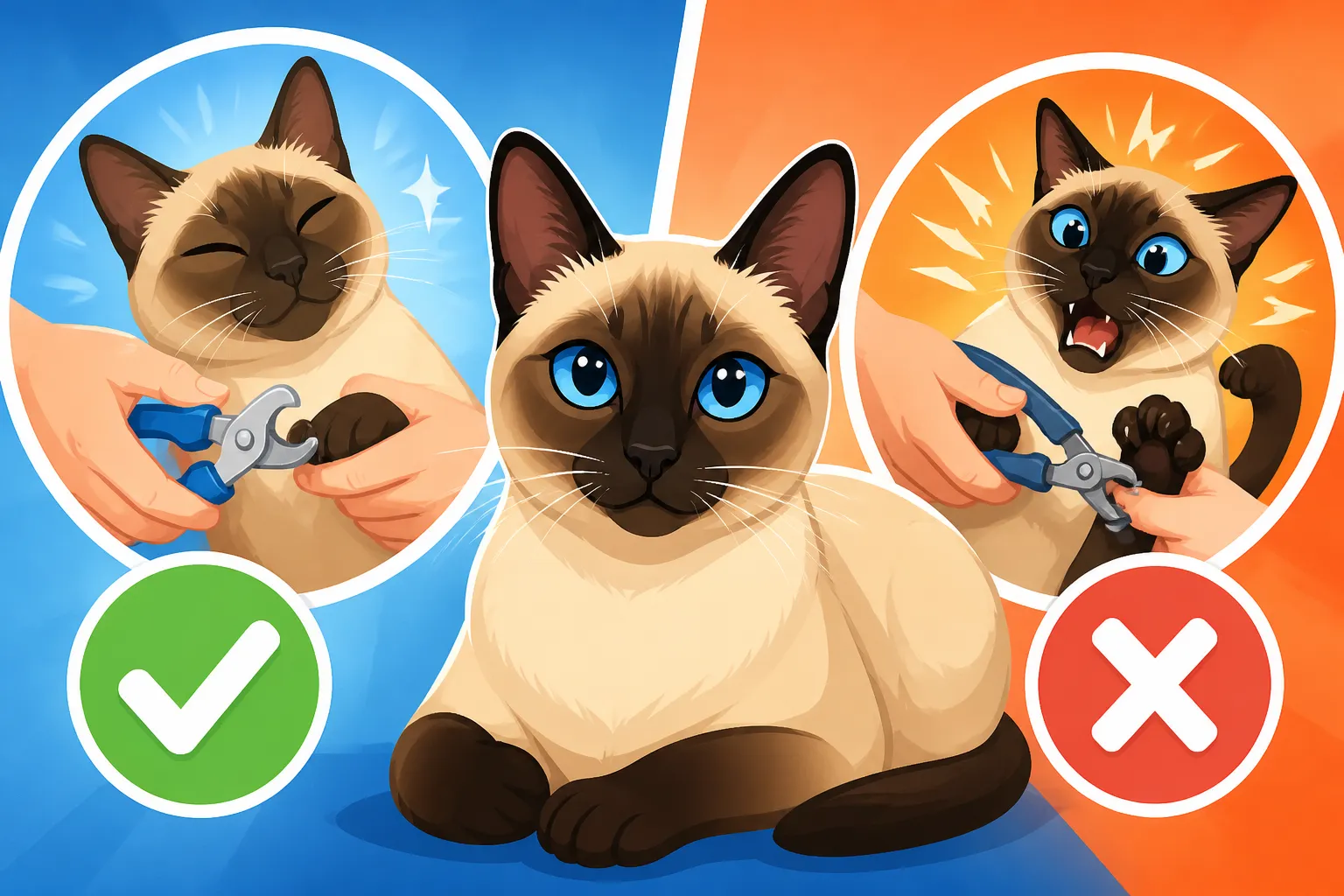
- Positioning: Gently pick up your Siamese and place them in your lap or on a comfortable, stable surface. Some cats prefer to be held cradled, others prefer to sit facing away from you, with their back against your chest. Find what works best for your cat. You might even find success gently wrapping them in a towel, like a "cat burrito," leaving only one paw exposed at a time. This can provide a sense of security and limit their ability to wriggle free.
- Paw Handling: Take one paw and gently press on the top of the toe and the paw pad simultaneously. This extends the claw.
- Identify the Quick: On most Siamese cats, especially those with lighter nails, the quick will appear as a pink area inside the nail. Avoid cutting into this. For darker nails, it's harder to see, so it's always safer to clip only the very tip, a millimeter or two at a time. When in doubt, err on the side of caution.
- The Clip: Using your sharp clippers, make a swift, clean cut just below the quick. A quick, confident snip is better than hesitant nibbling.
- Reward Immediately: After each successful clip (or even after just handling a paw without a clip, if that's all your cat will tolerate), immediately offer a treat and calm praise. The association is paramount.
- Take Breaks: If your cat starts to get agitated, stop. Don't push it. You can always try again later, or even tackle just one paw per session. Remember, you're building trust, and that's more important than getting every nail trimmed right now. The consistency of positive, short sessions is far more effective than one long, traumatic one. If you're concerned about how often to do this, understanding How Often a Siamese Cat's Claws Need Cutting can help you set a schedule.
When to Seek Professional Help
Sometimes, despite your best efforts, your Siamese just won't cooperate. Or perhaps their nails are severely overgrown, making it difficult and painful to trim them yourself. In these cases, there's absolutely no shame in seeking professional help.
Your veterinarian or a professional groomer who is experienced with cats can often do the job quickly and efficiently. Vets are also equipped to handle more resistant cats safely and can advise on any underlying issues that might be contributing to their resistance, such as pain from arthritis or other conditions. For very anxious or aggressive cats, a vet might even suggest light sedation to ensure the safety and comfort of everyone involved, which is always a last resort. Don't hesitate to consult them, especially if you find yourself constantly battling your feline friend. A professional intervention can reset the situation, allowing you to then focus on maintaining the trim with the positive reinforcement techniques. Think of it as a temporary measure to get things back on track.
Making Nail Trims a Positive Experience (or at Least Tolerable!)
The key to long-term success with Siamese cat nail trims isn't just about the act of clipping; it's about conditioning your cat to accept, and even perhaps enjoy, the process. This takes patience, consistency, and a deep understanding of your cat's unique personality.
Desensitization and Counter-Conditioning
This is where the magic happens over time. Desensitization means gradually exposing your cat to the triggers of nail trimming without overwhelming them. Counter-conditioning means changing their emotional response from negative to positive.
Start with daily, brief sessions of just touching their paws. Don't even bring out the clippers yet. Each time you touch a paw, immediately follow with a reward. Do this several times a day for a few days. Then, introduce the clippers into the room. Let them see them, sniff them, then put them away and give a treat. Gradually, you can work up to touching the clippers to their paw, then pressing a paw pad, then clipping just one nail. The important part is that every step, no matter how small, is immediately followed by something highly positive.
Think about it like teaching a trick. Your Siamese is highly intelligent and can learn to associate the routine with positive outcomes. This is similar to how you might approach training for other behaviors, like those covered in How to Teach a Siamese Cat a Quiet Cue. Consistency is more important than speed. If your cat tolerates just a paw massage today, that's a win!
Harnessing Distraction Techniques
Distraction can be your best friend during a nail trim, especially if you have a moderately resistant Siamese. A lick mat covered with a delectable treat can keep their attention occupied while you work. You can spread wet cat food, a favorite soft treat, or a specialized lickable paste onto the mat. While they're engrossed in licking, their focus is diverted from their paws.
Another excellent distraction is having a second person involved. One person can hold and gently pet the cat, talking to them in a calm, soothing voice, or offering treats, while the other person handles the clipping. This allows the cat to have a positive interaction (the petting and treats) while the less pleasant task is completed. Some owners even use calming music or white noise in the background to create a more relaxed atmosphere. Keeping their mind busy with something enjoyable often works better than pure restraint.
Understanding Your Cat's Limits
This is probably the most crucial aspect of building a cooperative relationship around nail trims. Your Siamese is an individual with distinct boundaries. Pushing past those boundaries will only lead to resentment and make future sessions harder. Learn to recognize the subtle (or not-so-subtle) signs that your cat has had enough.
Signs of stress or fear can include:
- Tail lashing
- Flattened ears
- Dilated pupils
- Growling or hissing
- Increased tension in their body
- Trying to pull away forcefully
When you see these signs, it's time to stop. Even if you've only managed one nail, that's enough for the session. End on a positive note, with a treat and praise, even if you didn't accomplish much. This teaches your cat that you respect their limits and that the experience isn't endlessly unpleasant. Remember, the goal is long-term compliance, not a single perfect trim. This kind of respect and understanding is fundamental to their well-being and is touched upon in articles like What a Siamese Cat's Temperament Is Really Like. Building this trust means your cat feels safer with you, even during tasks they don't particularly enjoy.
Here's a quick comparison of different approaches to nail trimming, highlighting how you might adapt based on your Siamese's personality:
| Approach / Cat Type | Calm & Cooperative Siamese | Moderately Resistant Siamese | Highly Resistant/Anxious Siamese |
|---|---|---|---|
| Ideal Scenario | Quick, solo trim in one session | Multiple short sessions, possibly with distraction | Professional help, slow desensitization, or vet sedation |
| Preparation | Clippers, treats (optional) | Clippers, high-value treats, lick mat/paste, quiet space | Professional appointment, potentially Feliway, calming pheromones |
| Technique | Gentle hold, quick snips, reward after each paw | "Cat burrito" towel wrap, one paw at a time, clip and reward | Minimal restraint, focus on desensitization steps, not actual clips |
| Distraction/Support | Minimal needed | Lick mat, second person for distraction, soothing voice | Vet/groomer, high-value treats, calming aids |
| Outcome Expectation | All nails trimmed efficiently | A few nails per session, gradual progress over days | Getting nails trimmed by a pro, starting small steps at home |
| Key Takeaway | Maintain positive association | Patience, consistency, positive reinforcement, manage expectations | Prioritize safety, reduce trauma, build trust over time |
Conclusion
Trimming your Siamese cat's nails doesn't have to be a battle royale every few weeks. While their intelligent and opinionated nature can certainly make it a challenge, with the right approach, tools, and a heaping dose of patience, you can turn it into a tolerable, or even a mildly pleasant, experience for both of you. Start early if possible, use high-value treats and positive reinforcement consistently, and learn to read your cat's signals. Remember, building trust and maintaining your bond is always more important than getting every single nail trimmed in one go. Keep those sessions short, sweet, and positive, and you'll find that your vocal, loving Siamese companion will eventually learn to cooperate.
Disclaimer
This article is for general informational purposes only and does not constitute professional advice. Laws, prices and regulations vary by location and change over time. Consult a qualified professional for guidance on your specific situation.