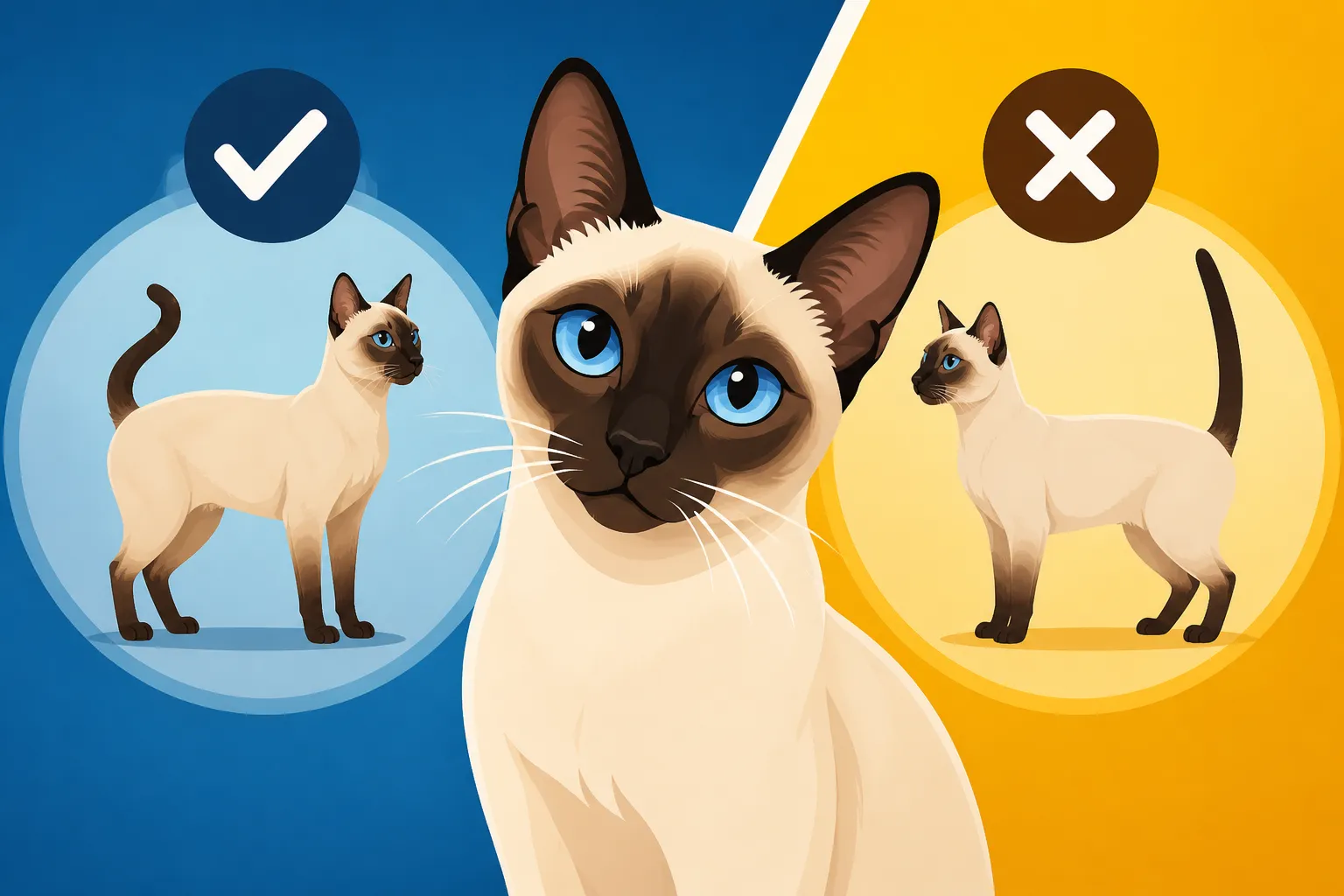
Whether a Siamese Cat’s Kink Is Still Bred For
For generations, the image of a Siamese cat often conjured up a picture of elegance, intelligence, and a distinctly vocal nature, sometimes with a charmingly crooked tail. Many of us grew up hearing tales of temple cats and their kinked tails holding royal rings or guarding sacred vases. But if you're looking at Siamese cats today, you might notice that those tail kinks are far less common, leading to confusion about their significance. This guide will dive into the fascinating history of the Siamese cat's kinked tail, explore how breeding standards have evolved, and clarify whether this unique physical trait is still intentionally sought after.
The Historical Significance of the Kinked Tail
The kinked tail of the Siamese cat is one of those distinctive features that has been woven into the very fabric of the breed's mystique. It's not just a physical characteristic; for a long time, it was almost synonymous with the breed, a quirky little mark that made these cats even more unique. Understanding its journey from an accepted, even celebrated, trait to one that is now considered a fault really helps us appreciate the evolution of cat breeding.
Ancient Origins and Legends
In the ancient kingdom of Siam, where these magnificent cats originated, the kinked tail was not seen as a flaw but rather a distinguishing mark, often romanticized in folklore. Imagine the grand temples of Siam, filled with these striking cats, often depicted in old manuscripts and art. One of the most enduring legends, and certainly my favorite, tells of Siamese cats serving as guardians of royal princesses. These princesses would reportedly use the cats' tails as hooks to hang their precious jewelry while bathing. Over time, the constant holding of these rings supposedly caused the cats' tails to develop permanent kinks. It's a charming story that paints a vivid picture of the Siamese cat's esteemed place in ancient culture.
Another tale suggests that Siamese cats were entrusted with guarding valuable temple vases. To ensure these precious items weren't dropped, the cats would wrap their tails tightly around them, and the effort eventually led to the distinctive bend or kink. While these are clearly fanciful stories, they highlight how deeply ingrained the kinked tail was in the perception and mythology surrounding the Siamese cat. It was a visible sign, a historical marker that connected the cat to its noble past and its important role within Siamese society. These legends contributed to the cat's mystique and made the kinked tail a cherished, rather than dismissed, feature. The Temple Legends Behind a Siamese Cat's Kinked Tail explores these tales in more detail, giving you a deeper appreciation for this rich history.
The Kinked Tail in Early Siamese Cat Imports
When the first Siamese cats made their way to Western countries in the late 19th century, particularly to Britain and America, many of them exhibited the very same kinked tails described in the legends. These early imports were often gifts from the King of Siam, intended for dignitaries and royalty, and they represented an exotic, elegant mystery from the East. The initial cats that arrived, like Pho and Mia, who were brought to Britain in 1884 by the British Consul-General in Bangkok, Mr. Owen Gould, often had features that would be considered "traditional" by today's standards, including a more rounded head, a sturdier body, and yes, those iconic kinked tails.
These first Siamese cats captured the imagination of the public and early cat fanciers. Their striking blue eyes, rich point coloration, and distinctive vocalizations were enchanting. The kinked tail was simply part of their overall exotic appeal, an interesting characteristic that further set them apart from the domestic cats of Europe and America. There was no established breed standard yet that deemed it a fault; it was simply a natural variation found within the early foundation stock. Breeders and owners admired these cats for what they were, kinks and all, as direct descendants of the royal cats of Siam. To learn more about these early arrivals, check out Who Brought the First Siamese Cat to Britain.
The Evolution of the Siamese Cat Standard
As the Siamese cat gained popularity in the West, cat fanciers began to organize and establish formal breed clubs. This was a crucial step in standardizing the breed and ensuring its consistent development. However, this process also meant making decisions about which traits were desirable and which were not, leading to a significant shift in how the kinked tail was perceived.
From Accepted Trait to Fault
The transition of the kinked tail from an accepted, charming quirk to a recognized fault wasn't an overnight decision, but a gradual process driven by the desire to refine the breed. When the first breed standards were drafted by organizations like the Siamese Cat Club in Britain (founded in 1901) and later by American registries, there was a concerted effort to define the ideal Siamese. Initially, some standards were a bit more lenient, or simply didn't specifically address the kink. However, as breeders aimed for what they considered "perfection" and uniformity, any deviation from a perfectly straight, whip-like tail began to be seen as an imperfection.
The shift was also influenced by a growing understanding of genetics and what certain physical anomalies might signify. While minor kinks might just be cosmetic, a significant kink could sometimes indicate a more profound skeletal abnormality in the vertebrae of the tail or even further up the spine. The focus moved towards breeding for overall structural soundness and health. Thus, over time, a kinked tail was officially designated as a disqualifying fault in most major Siamese breed standards around the world. This meant that a cat with a kinked tail could not be shown or, ideally, used for breeding purposes within the purebred fancy. Understanding When the Siamese Cat Club Was Founded provides context for these early standardization efforts.
The Modern Siamese Standard and the Kink
Today, if you look at the breed standards set forth by major international cat registries like the Cat Fanciers' Association (CFA) in North America, The International Cat Association (TICA), or the Governing Council of the Cat Fancy (GCCF) in the UK, you'll find a clear stance on the kinked tail. Across the board, a kinked tail is considered a definite fault, and often a disqualifying one, in a show-quality Siamese cat. These standards typically describe the ideal Siamese tail as long, thin, tapering to a fine point, and, crucially, straight.
The rationale behind this isn't just aesthetic. As mentioned, a visibly kinked tail, especially a severe one, can be an indicator of a vertebral malformation. While many kinks are benign and don't cause the cat any pain or mobility issues, the presence of such a structural irregularity is generally discouraged in breeding programs. The emphasis in modern breeding is on producing healthy, sound animals that conform to a consistent, refined type. Therefore, responsible breeders rigorously select against traits like tail kinks to maintain the health and integrity of the breed. If you're curious about all the specific physical characteristics, What a Siamese Cat Looks Like by the Standard provides a comprehensive overview of the modern ideal.
The Reality of Kinked Tails Today
So, with all this talk of breed standards, does that mean kinked tails have vanished entirely from the Siamese cat population? Not quite. While intentional breeding for kinks is a thing of the past for recognized show lines, these charming little quirks can still pop up from time to time. The reality is often more nuanced than a simple yes or no.
Accidental Kinks vs. Intentional Breeding
It’s really important to distinguish between a kinked tail that is a result of intentional breeding and one that appears unexpectedly. In the world of modern, ethical Siamese breeding, no responsible breeder is actively trying to produce cats with kinked tails. In fact, they go to great lengths to avoid it. Breeders meticulously study pedigrees, examine their breeding stock, and certainly wouldn't breed a cat that consistently produces kinked tails if it's found to be a heritable trait in their lines. The goal is always to adhere to the breed standard and prioritize the health and structural soundness of the kittens.
However, genetics can be a tricky thing. Even with careful breeding practices, a kitten might occasionally be born with a slight tail kink due to recessive genes surfacing or a spontaneous mutation. These are usually accidental occurrences, not the result of deliberate selection. If a responsible breeder finds a kitten with a kink, they typically sell it as a pet-quality cat, often with a spay/neuter agreement, to ensure it doesn't enter the breeding pool and perpetuate the trait. This is a commitment to upholding the breed standard and health. What a Siamese Cat Contract Restricts often includes clauses like this to protect the integrity of the breed.
Where Kinked Tails Still Appear
Despite the strict standards in show circles, you might still encounter Siamese cats with kinked tails in a few scenarios. One common place is within what are often referred to as "traditional" or "applehead" Siamese lines. These lines haven't always followed the dramatic refinement towards the extreme wedge head and slender body of the modern show Siamese. Instead, some breeders of traditional Siamese cats focus on preserving the older, rounder-headed, sturdier body type, which was closer to the original imports. In these lines, some of the older, less selected-against traits, including slight tail kinks, might still be present. It's not necessarily bred for, but it's not always as rigorously selected against as in championship lines. Whether a Traditional Siamese Cat Is the Same Breed delves into the differences between these types.
Another place you might find a kinked tail is, sadly, in rescue situations. When cats end up in shelters, their breeding history is often unknown. A rescue Siamese cat might have come from a less-than-reputable breeder who wasn't adhering to breed standards, or perhaps it's a mixed breed cat with some Siamese ancestry where the trait popped up. Furthermore, the Thai cat breed, which has split from the modern Siamese, specifically aims to preserve the "old-style" or traditional Siamese look, including a less extreme head and body. While the Thai breed standard usually calls for a straight tail, some practitioners of this lineage appreciate the historical context of the kink and might be more tolerant of it in pet-quality animals, though usually not in show cats. How the Thai Split From the Siamese Cat sheds light on this interesting divergence.
Health Implications and Ethical Breeding
While the romance of ancient legends might make a kinked tail sound charming, it's crucial to understand the underlying reasons why modern breeding standards discourage it. It's not just about aesthetics; it's fundamentally about the health and well-being of the cat.
Potential Health Concerns Associated with Kinks
When we talk about a "kink" in a cat's tail, we're referring to a deformity in the vertebrae, the small bones that make up the tail. While a very minor, cosmetic kink might be harmless, more pronounced kinks can sometimes be indicative of more significant skeletal abnormalities. In severe cases, these deformities might not be limited to the tail itself but could extend further up the spine, potentially causing discomfort or even affecting mobility. Imagine if the vertebrae aren't properly formed or fused; this could lead to nerve impingement or structural weakness, which could become painful or problematic as the cat ages.
For example, a cat with a severe tail kink might have difficulty communicating through tail language, or even experience pain if the kink is a site of constant pressure or inflammation. While many cats with minor kinks live perfectly normal, healthy lives, a responsible breeder prioritizes minimizing any potential for health issues that could be passed down genetically. Therefore, removing such traits from the breeding pool is a proactive measure to ensure the long-term health of the breed. This aligns with broader efforts to screen for Congenital Defects in a Siamese Cat Kitten.
The Role of Responsible Breeding
This brings us to the cornerstone of ethical cat ownership: responsible breeding. A truly responsible Siamese breeder will always prioritize the health, temperament, and genetic soundness of their cats above all else, including adherence to the breed standard. This means actively selecting against any traits that could indicate an underlying health issue, even if those traits have historical or romantic appeal. They will perform thorough health screenings on their breeding cats for known issues in the breed, even if a DNA test doesn't exist for every condition.
When choosing a Siamese kitten, you want to look for a breeder who is transparent about their health testing, lineage, and the overall well-being of their cattery. They should be able to show you the parents, discuss their health history, and explain why certain traits (like a straight tail) are considered important for the breed's future. They don't breed for quirks; they breed for health and type. Resources like Chewy, for instance, often provide articles and guides on how to choose a responsible breeder, emphasizing the importance of health over superficial characteristics. Don't be afraid to ask detailed questions about health and screening, including Which Tests the Siamese Cat Health Panel Covers.
Here's a quick look at how perspectives on the Siamese cat's kinked tail have changed over time:
| Feature | Historical Perception (Pre-1900s) | Modern Breed Standard (Post-Mid 20th Century) |
|---|---|---|
| Kinked Tail | Often seen as a charming, distinctive trait | Considered a fault, often disqualifying for show |
| Origin | Romanticized by legends and folklore | Recognized as a vertebral deformity |
| Breeding Focus | Less emphasis on structural perfection | Rigorous selection against for health and type |
| Health Concern | Generally not considered a health issue | Potential indicator of skeletal abnormality |
In conclusion, while the kinked tail holds a fascinating place in the Siamese cat's history and folklore, it is no longer a trait that is actively bred for in responsible, modern breeding programs. The focus has shifted firmly towards ensuring the health, structural integrity, and consistent type of this beloved breed. While you might still encounter a Siamese with a charming kink, especially from older lines or in rescue, rest assured that ethical breeders are striving for a perfectly straight tail as part of their commitment to the breed's well-being.
Disclaimer
This article is for general informational purposes only and does not constitute professional advice. Laws, prices and regulations vary by location and change over time. Consult a qualified professional for guidance on your specific situation.