What the Tamra Maew Says About the Siamese Cat
Many Siamese cat owners are fascinated by their beloved companions' long history, often hearing whispers of ancient Thai manuscripts and royal cats, but the specifics can feel a bit lost in translation. It's tough to piece together how today's graceful, vocal Meezers connect to their distant ancestors described centuries ago. This guide aims to demystify the "Tamra Maew," the revered Siamese cat books, revealing exactly what these ancient texts tell us about the original Siamese cat and its enduring legacy.
Delving into the Tamra Maew: Ancient Siamese Cat Manuscripts
When we talk about the history of the Siamese cat, one cannot escape the mention of the "Tamra Maew." This isn't just a casual reference; these ancient texts are literally the foundation of our understanding of this magnificent breed, offering a peek into a world where cats held immense cultural and spiritual significance. Without these writings, much of the Siamese cat's origin story would remain shrouded in mystery.
What Exactly is the Tamra Maew?
The "Tamra Maew," which translates to "Cat Treatises" or "Cat Books" in Thai, refers to a collection of beautifully illustrated manuscripts from Siam (modern-day Thailand). These aren't like modern encyclopedias; they are historical records, artistic expressions, and practical guides all rolled into one. Imagine a precious, hand-painted book detailing various types of cats, often accompanied by intricate verses describing their physical appearance, temperament, and even their auspicious qualities. What the Tamra Maew Manuscripts Show About the Siamese Cat is truly remarkable, detailing a world where cats were revered.
These manuscripts were typically inscribed on Khoi paper, a durable material made from the bark of the Khoi tree, and bound in a distinctive accordion-fold style. The illustrations are vivid, often depicting cats in various poses, with distinct colorations and features. The accompanying text, usually written in ancient Thai script, provides poetic descriptions that were meant to be memorized and passed down through generations. These books were more than just reference materials; they were cultural artifacts that embodied the deep respect the Siamese people held for felines.
The Historical Context of These Writings
The Tamra Maew manuscripts date back several centuries, with some scholars suggesting their origins could be as early as the 14th century, though most surviving copies are from the Ayutthaya Kingdom period (1350-1767) and the Rattanakosin Kingdom period (from 1782 onwards). This was a time when Siam was a powerful and culturally rich kingdom, deeply intertwined with Buddhist philosophy and traditions. The concept of auspiciousness – good fortune and blessings – played a significant role in daily life, and animals, especially cats, were often seen as carriers of such luck. What Siam Was When the Siamese Cat Was Named gives you a better idea of the historical setting these cats emerged from.
During these periods, cats were not merely pets; they were integral to the spiritual and social fabric of society. The wisdom contained within the Tamra Maew wasn't just for curiosity; it was a guide for identifying cats that would bring prosperity, ward off evil spirits, and bestow blessings upon their owners. These texts reflect a sophisticated understanding of feline characteristics, filtered through a lens of cultural belief and deep reverence. They are a testament to the long-standing bond between humans and cats in Siam, a relationship that predates many Western notions of pet ownership.
The Genesis of the Tamra Maew: Purpose and Preservation
Understanding why these precious cat books were created and how they managed to survive centuries of upheaval is crucial to appreciating their significance. They weren't just random scribblings; they served a profound purpose within Siamese culture, ensuring that specific feline knowledge and reverence were maintained across generations.
Why Were These Cat Books Created?
The primary reason for the creation of the Tamra Maew was to document and categorize "good luck" cats (Siam's auspicious cats) and, conversely, to warn against "bad luck" cats. In ancient Siam, the well-being of a household or even the entire kingdom was believed to be influenced by the presence of certain animals, and cats, with their mysterious and graceful nature, were particularly potent symbols. These manuscripts served as a kind of ancient guide for royalty, nobles, and perhaps even wealthy commoners, on how to identify and cherish the cats that would bring prosperity, health, and happiness.
Beyond mere superstition, these texts also reflected a keen observational eye. They describe distinct physical features like coat color, eye color, and body shape, alongside behavioral traits. This indicates a genuine interest in feline genetics and behavior, even if interpreted through a mystical lens. The verses often highlight the specific blessings each auspicious cat was said to bring, whether it was wealth, protection from harm, or increased status. This meticulous documentation underscores the high value placed on these particular felines in Siamese society.
How Were the Manuscripts Preserved?
The preservation of the Tamra Maew manuscripts is quite remarkable, given the volatile history of the region, including wars and political unrest. Many copies were housed in royal libraries, temples, and the private collections of noble families. Temples, in particular, often served as centers of learning and repositories of cultural knowledge, offering a relatively safe haven for such precious documents. The reverence for these texts, coupled with the Buddhist tradition of preserving sacred writings, undoubtedly contributed to their survival.
When historical events, such as the destruction of Ayutthaya by Burmese invaders in 1767, led to the loss of countless artifacts, some copies of the Tamra Maew were either moved to safer locations or recreated from memory and surviving fragments in the subsequent Rattanakosin period. Scribes and artists meticulously copied and recopied these works, ensuring that the knowledge and artistry endured. Today, many original and reconstructed Tamra Maew manuscripts are preserved in prestigious institutions like the National Library of Thailand, serving as invaluable historical and cultural treasures.
The Wichianmat: The Original Siamese Cat Described
Among the many cats detailed in the Tamra Maew, one stands out as the direct ancestor of what we now know as the Siamese cat: the Wichianmat. This designation is crucial, as it provides a clear lineage and description of the breed before its introduction to the Western world. Understanding the Wichianmat is truly understanding the Siamese cat's roots.
Identifying the Wichianmat Within the Texts
The term "Wichianmat" itself translates roughly to "moon diamond" or "diamond gold" (some sources say "moon gem"), a poetic name that perfectly captures the striking appearance of these cats with their pale bodies and darker points. The Tamra Maew specifically describes the Wichianmat with features that are unmistakably those of the modern Siamese cat, particularly the traditional or "old-style" Siamese. It wasn't just a cat; it was the cat with the distinctive coloration pattern that would later captivate the world. What the Wichianmat Behind the Siamese Cat Is delves deeper into this fascinating original name.
The texts often use metaphors to convey the cat's beauty and unique qualities, likening its eyes to sapphires and its coat to polished ivory. These vivid descriptions leave little doubt that the cat being celebrated was indeed the pointed cat we recognize today. The specificity of the descriptions, differentiating the Wichianmat from other auspicious cats, highlights its unique status and the profound impression it made on the ancient Siamese people.
Physical Characteristics Noted in the Tamra Maew
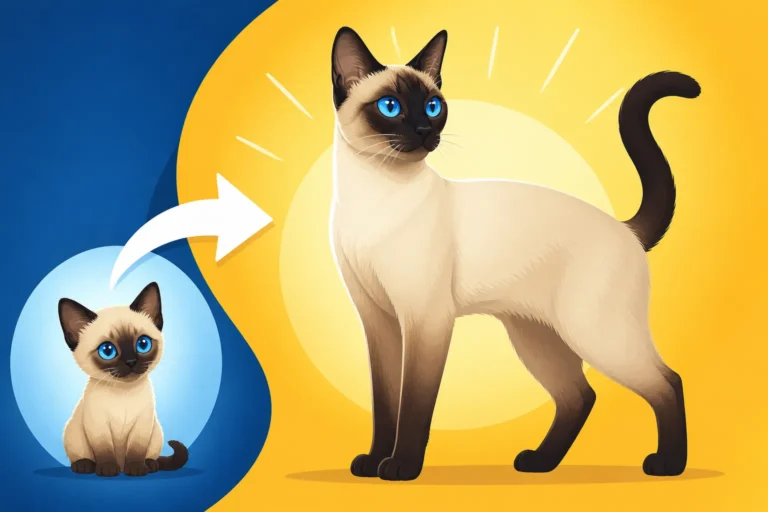
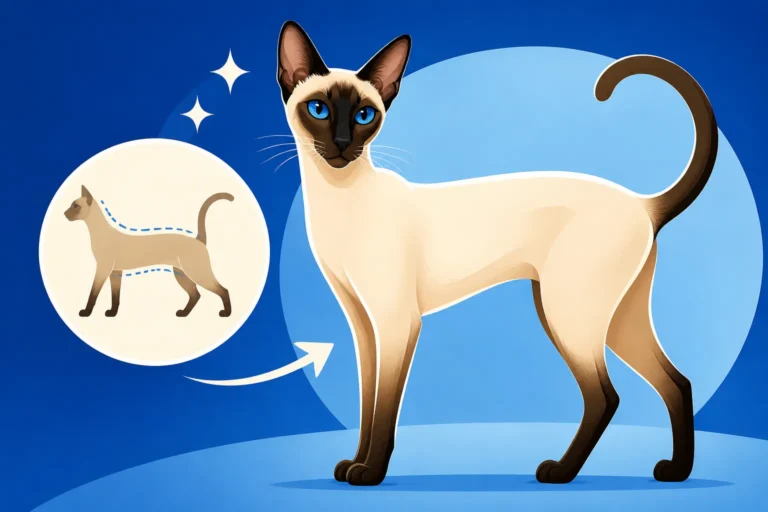
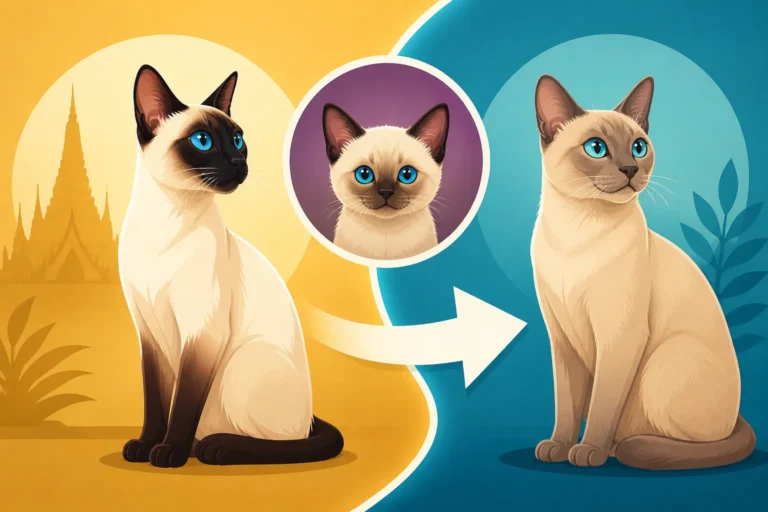
The Tamra Maew's descriptions of the Wichianmat are remarkably consistent with the physical traits of traditional Siamese cats. The most prominent feature is, of course, the pointed coloration: a pale body contrasted by darker "points" on the face (mask), ears, paws, and tail. The texts often mention a light-colored body, which would darken with age and exposure to cooler temperatures, a phenomenon we know today is linked to the temperature-sensitive enzyme responsible for their coat color. The Age a Siamese Cat Kitten Gets Its Points is directly linked to this temperature sensitivity.
Other physical characteristics frequently cited include:
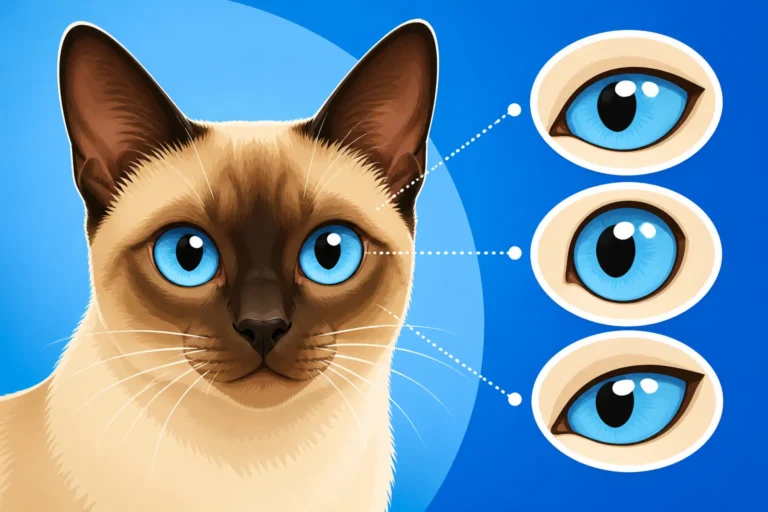
- Eyes: Deep blue, sparkling, and often described as sapphire-like. This distinct blue eye color is a hallmark of the Siamese breed, directly resulting from the same genetic mutation that causes their point coloration. Why a Siamese Cat Has Blue Eyes at All explains the genetic reason behind this striking feature.
- Body Type: Generally described as elegant, slender, and graceful, but not overly extreme. This aligns with the "traditional" or "applehead" Siamese rather than the more elongated, wedge-headed show cats of the modern era.
- Tail: The texts sometimes mention a kinked tail or crossed eyes as common features, which, while now considered faults in some modern show standards, were seen as unique and even desirable traits in ancient Siam, sometimes attributed to their role in temple legends. The Temple Legends Behind a Siamese Cat's Kinked Tail explains more about this interesting physical trait.
It's clear that the scribes of the Tamra Maew possessed a keen eye for detail, capturing the essence of the Wichianmat's appearance with precision and poetic flair.
| Feature | Tamra Maew Description (Wichianmat) | Modern Siamese Cat Parallel (Traditional) |
|---|---|---|
| Body Color | Pale or ivory, darkening with age/cold | Light body, temperature-sensitive points |
| Points | Dark mask, ears, paws, tail (like a diamond) | Seal, Blue, Chocolate, Lilac points etc. |
| Eye Color | Sparkling blue, sapphire-like | Always brilliant blue |
| Body Shape | Elegant, graceful, moderate build | Muscular, svelte, not overly slender |
| Tail | Often mentioned with a kink | Kinks are faults in show, present in some |
| Eyes | Sometimes described as crossed | Crossed eyes are faults in show, present in some |
Behavioral and Mystical Qualities of the Wichianmat
Beyond their captivating appearance, the Wichianmat cats described in the Tamra Maew were also revered for their distinctive personalities and believed to possess mystical attributes. These ancient perceptions paint a rich picture of how the original Siamese cats interacted with their human companions and how deeply they were integrated into the spiritual beliefs of the time.
Temperament and Personality Traits
The Tamra Maew often hints at the intelligent, interactive, and vocal nature of the Wichianmat, traits that are famously characteristic of the modern Siamese cat. While not explicitly using terms like "talkative" or "demanding," the descriptions imply a cat that is highly engaged with its surroundings and its people. This isn't a cat that quietly blends into the background; it's a vibrant presence. This aligns perfectly with What a Siamese Cat's Temperament Is Really Like, even today.
One could infer from the texts that these cats were cherished companions, often depicted close to royalty or important figures. This suggests a trusting and affectionate disposition towards their chosen humans. The energy and alertness of the Wichianmat were also likely prized, possibly for their ability to sense changes in their environment or even their innate curiosity. Owners today often share stories about their Siamese cats following them from room to room, engaging in "conversations," and demanding attention – behaviors that seem to echo through the centuries from their ancient ancestors.
Supernatural Beliefs and Royal Associations
In ancient Siam, the Wichianmat was not just a beautiful animal; it was considered an auspicious creature, a bringer of good fortune, and even a vessel for departed souls. The belief that these cats could carry the spirits of deceased royalty to the afterlife added an immense layer of sacredness to their existence. This profound spiritual connection elevated them far beyond mere domestic animals. Whether a Siamese Cat Was Once Sacred truly highlights this.
Their presence in royal palaces and temples wasn't just for aesthetic pleasure; it was believed to confer blessings and protection upon the royal family and the kingdom. The distinctive pointed coloration and sapphire eyes were often interpreted as symbols of purity, wisdom, and connection to the divine. The legends surrounding their roles, such as guarding sacred artifacts or ensuring the prosperity of the monarchy, underscore the mystical importance attributed to these magnificent felines.
The Role of the Wichianmat in Ancient Siamese Society
The descriptions within the Tamra Maew clearly indicate that the Wichianmat played a very special role in ancient Siamese society, far removed from the status of a common barn cat. These were creatures of privilege, highly valued and intricately woven into the cultural fabric of the kingdom.
Cats of Royalty and Temple Guardians
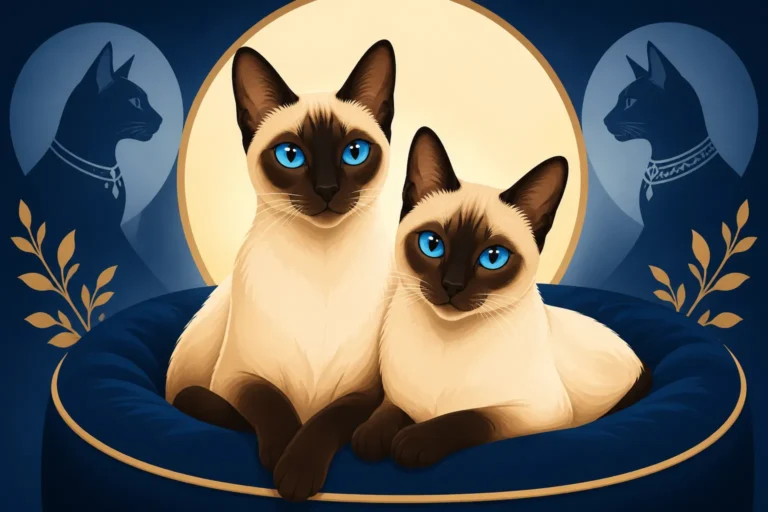
It's widely believed, and supported by the Tamra Maew, that the Wichianmat were primarily kept by royalty and within the confines of temples. They were not typically found roaming the streets or as pets in every household. This exclusivity speaks volumes about their perceived value and sacredness. Imagine a cat so rare and prized that only the King or revered monks had the honor of their company. Whether Only Royalty Kept the Siamese Cat sheds more light on this fascinating aspect.
The idea of them guarding temples, sitting by precious artifacts, and being present during royal ceremonies isn't just a romanticized notion; it's rooted in the reverence these cats commanded. Their keen senses and intelligent nature would have made them effective, albeit symbolic, guardians, adding a living, breathing element to the sacred spaces they inhabited. Their very presence was a blessing, believed to ward off evil and invite prosperity.
Daily Life and Care of These Esteemed Felines
Given their elevated status, the Wichianmat would have received exceptional care. They were likely well-fed with high-quality food, perhaps even sharing meals prepared for their royal or monastic caretakers. Unlike outdoor cats left to fend for themselves, these were cherished companions whose comfort and well-being would have been a priority. This would have included warm, comfortable sleeping arrangements, perhaps even special bedding or cushions, especially given their tendency to seek warmth due to their unique genetics affecting coat color.
Their environment would have been one of relative safety and luxury, protected from the harsh realities of the outside world. This care would have extended to their health, with any ailments likely attended to by knowledgeable individuals. While the concept of a "vet" as we know it didn't exist, traditional healers or those with a deep understanding of animal welfare would have likely looked after these precious cats. This attentive care, as suggested by their royal and temple associations, contributed to their longevity and thriving within the ancient kingdom. Today, pet parents still go to great lengths to provide top-notch care, even sourcing specific foods and toys from places like Chewy to ensure their Siamese are happy and healthy.
The Enduring Influence of the Tamra Maew on Modern Siamese Cats
The wisdom and descriptions found in the Tamra Maew haven't simply faded into history; they continue to resonate deeply in the world of Siamese cats today. These ancient texts provide a crucial benchmark against which we can understand the evolution of the breed and appreciate the different forms it has taken.
Connecting Ancient Descriptions to Today's Breed Standard
When modern Siamese cat breeders talk about "traditional" or "old-style" Siamese, they are often referring to cats whose appearance more closely aligns with the descriptions in the Tamra Maew. The texts emphasize a cat with an elegant, yet sturdy body, a moderately rounded head (often called "applehead"), and strong, muscular legs. These features contrast with the more extreme, elongated "wedge-head" type that became popular in show rings during the mid-20th century. How the Siamese Cat's Head Changed Shape in Fifty Years is a prime example of this divergence.
Breed standards in different cat registries sometimes reference the historical descriptions as a way to maintain a connection to the breed's origins. While some registries have embraced the more modern, slender look, others acknowledge and even celebrate the traditional type, sometimes under different breed names like the Thai cat. What the Thai Standard Asks That the Siamese Cat's Does Not directly relates to the efforts to preserve the look described in the Tamra Maew. The core elements – the point coloration, the blue eyes, the vocal nature – remain central to all Siamese varieties, a testament to the accuracy and enduring power of the ancient descriptions.
The Debate: Traditional vs. Modern Siamese and the Tamra Maew
The Tamra Maew forms a vital part of the ongoing discussion within the Siamese cat community about what constitutes the "true" Siamese cat. Advocates for the traditional Siamese often point to the Tamra Maew as definitive proof that their cats are closer to the original Wichianmat. They argue that the ancient texts describe a less extreme, more robust cat, which they believe is healthier and more representative of the breed's heritage. Whether the Tamra Maew Pictures a Modern Siamese Cat is a question that often comes up in these discussions.
On the other hand, breeders of modern, wedge-headed Siamese cats appreciate the elegant, refined lines achieved through selective breeding, viewing it as an artistic evolution of the breed. While they acknowledge the historical importance of the Tamra Maew, they often contend that selective breeding is a natural part of developing any purebred animal. Ultimately, the Tamra Maew serves as a shared historical touchstone, allowing enthusiasts of all Siamese types to connect with the breed's remarkable and ancient past, even as they pursue different aesthetic ideals in the present.
Beyond the Wichianmat: Other Cats Mentioned in the Tamra Maew
It's easy to focus solely on the Wichianmat when discussing the Tamra Maew, given its direct link to the Siamese cat. However, these ancient texts are far more extensive, describing a fascinating array of other cats, each with its own unique appearance, personality, and auspicious qualities. This broader view gives us a deeper appreciation for the ancient Siamese people's comprehensive understanding and reverence for felines.
Diversity of Cats in the Ancient Texts
The Tamra Maew is not a one-cat show; it meticulously describes several distinct types of cats, classifying them into categories of "good luck" (auspicious) and "bad luck" (inauspicious). The number of auspicious cats varies slightly between different versions of the manuscripts, but typically around 17 to 23 "good luck" cats are detailed. Each cat has a specific name, a poem or descriptive verse, and an illustration. These range from solid-colored cats to those with unique patterns or specific markings, demonstrating a remarkable understanding of feline variations.
For instance, you might find descriptions of cats like the Konja (a solid black cat, believed to bring wealth), the Mala (a dark-grey cat, thought to bring good fortune), the Vilaas (a black cat with white paws, also associated with prosperity), and the Supalak (a solid brown cat with beautiful eyes, a guardian against evil). These descriptions are just as vivid and poetic as those for the Wichianmat, indicating that all these cats were observed and categorized with great care. This rich tapestry of feline descriptions shows a culture deeply attuned to the nuances of cat appearance and behavior.
The Significance of All "Good Luck" Cats
The inclusion of so many different "good luck" cats in the Tamra Maew highlights a fundamental aspect of ancient Siamese beliefs: a holistic view of fortune and well-being, where various feline traits were believed to contribute to different types of blessings. It wasn't just about one cat bringing all the luck; specific cats were associated with specific benefits, such as wealth, protection, good health, or social status.
This means that while the Wichianmat was highly prized, other cats with their own unique characteristics also held significant value. For an ancient Siamese household or royal court, having a diverse collection of auspicious cats, each fulfilling a different symbolic role, might have been seen as enhancing overall prosperity and protection. The Tamra Maew, therefore, serves as a comprehensive guide not just to the Siamese cat's lineage, but to an entire ancient system of feline symbolism and the profound respect held for all cats believed to bring good fortune. Today, pet owners still pick certain cat breeds for their supposed personality traits or beauty, perhaps unknowingly echoing this ancient practice, whether they're selecting a cat from a breeder or finding cat supplies like a new cat tree from Chewy.
Disclaimer
This article is for general informational purposes only and does not constitute professional advice. Laws, prices and regulations vary by location and change over time. Consult a qualified professional for guidance on your specific situation.