The Temple Legends Behind a Siamese Cat’s Kinked Tail
It's easy to look at a Siamese cat today, with their sleek lines and piercing blue eyes, and forget the long, storied history that shapes them. But one of the most persistent and fascinating quirks often associated with the breed—the kinked tail—carries with it centuries of myth, wonder, and even a little bit of magic from their homeland. For many of us, the idea of a royal cat, guarding ancient treasures, just captures the imagination in a way that scientific explanations sometimes can't. This guide dives deep into the enchanting temple legends that tried to explain why some Siamese cats sport that distinctive bend in their tail, exploring both the folklore and the genetic reality behind it.
Echoes from Ancient Siam: The Origins of the Kinked Tail Legends
Before we even get to the specific legends, it’s vital to understand the context from which these stories sprang. The Siamese cat, or Wichianmat as they are known in their native land, was not just any cat in ancient Siam. These felines held a revered status, often associated with royalty, temples, and spiritual significance. Their striking appearance, intelligent gaze, and vocal nature set them apart, making them prime candidates for myths and legends that sought to explain their unique features, including that often-present kink in the tail. It wasn't just a physical trait; it was woven into the very fabric of their identity and cultural narrative.
The Tamra Maew and Early Descriptions
The earliest written records that hint at the existence and characteristics of the Siamese cat come from ancient manuscripts known as the Tamra Maew, or "The Cat Book Poems." These treasured texts, believed to date back to the 14th to 18th centuries, describe and illustrate various cats of Siam, outlining their physical traits and often their auspicious qualities. In these ancient descriptions, we find clues that suggest the kinked tail was a recognized, and perhaps even cherished, feature of these revered felines. It wasn't something to be bred out or seen as a flaw; rather, it was part of what made them distinctive and special. What the Tamra Maew Manuscripts Show About the Siamese Cat sheds more light on these fascinating historical documents and how they illuminate the breed's past.
Imagine scribes meticulously penning verses and painting images of these cats, highlighting every detail down to the curve of their tails. If the kink were considered undesirable, it's unlikely it would have been so consistently depicted or mentioned. These texts served as guides for cat fanciers and royalty alike, ensuring the preservation of the breed's characteristics. The consistent inclusion of the kink suggests a cultural acceptance, if not outright admiration, of this physical trait. It was a distinctive mark, a characteristic that helped identify these special cats.
The Cultural Context of Royal Cats
In ancient Siam, cats were not mere pets; they were integral to court life and temple rituals. The Siamese cat, in particular, was believed to be a guardian of temples and a companion to royalty, sometimes even thought to carry the souls of the deceased into the afterlife. This elevated status meant that every characteristic of these cats, from their striking Why a Siamese Cat Has Blue Eyes at All to their unique coloration, was observed with great interest and often attributed deeper meaning. The kinked tail, therefore, wasn't just a random genetic anomaly; it needed a story, a purpose, something that fit its regal and mystical persona.
These cats lived lives of luxury and spiritual importance, quite different from the average street cat. They were housed in temples, fed the finest foods, and attended by devoted caretakers. Their perceived connection to the divine and their role in ceremonies imbued their physical traits with symbolic weight. A kink in the tail, rather than being a simple genetic variation, was transformed into a mark of their sacred duties or a testament to their interactions with the spiritual world. This rich cultural backdrop is essential for understanding why these legends took root and persisted for so long.
The Enduring Temple Legend: Guardians of Sacred Treasures
Among the many tales that sought to explain the Siamese cat's unique features, the legend of the kinked tail as a result of guarding sacred treasures is arguably the most famous and widely shared. It’s a story that perfectly blends the cat's elegance with its perceived loyalty and wit, offering a romantic explanation for a physical trait that was once quite common in the breed. This legend really drives home the idea of the Siamese cat as a watchful protector, an intelligent companion with an important role to play.
The Princess, the Rings, and the Kink
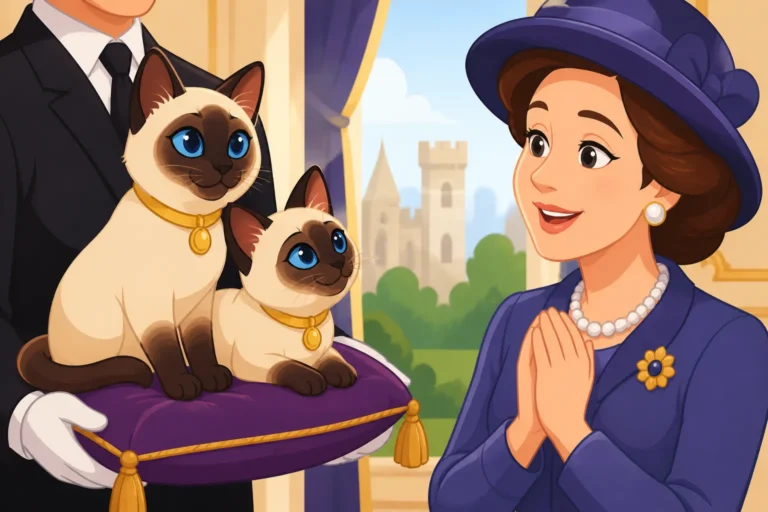
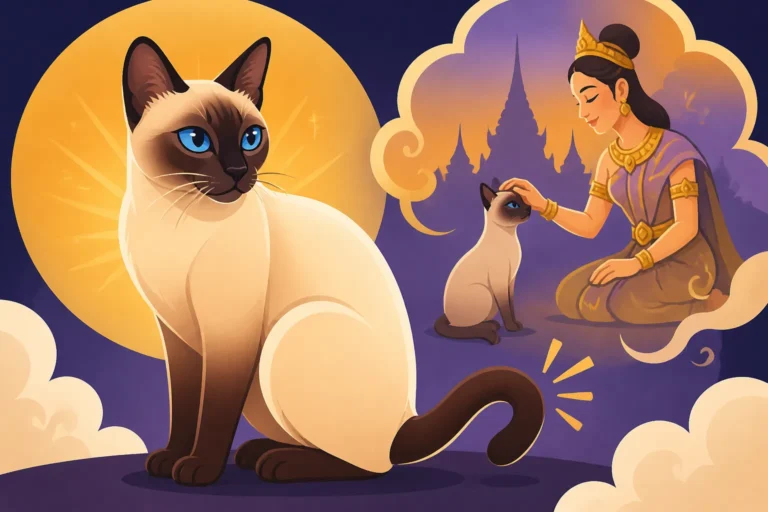
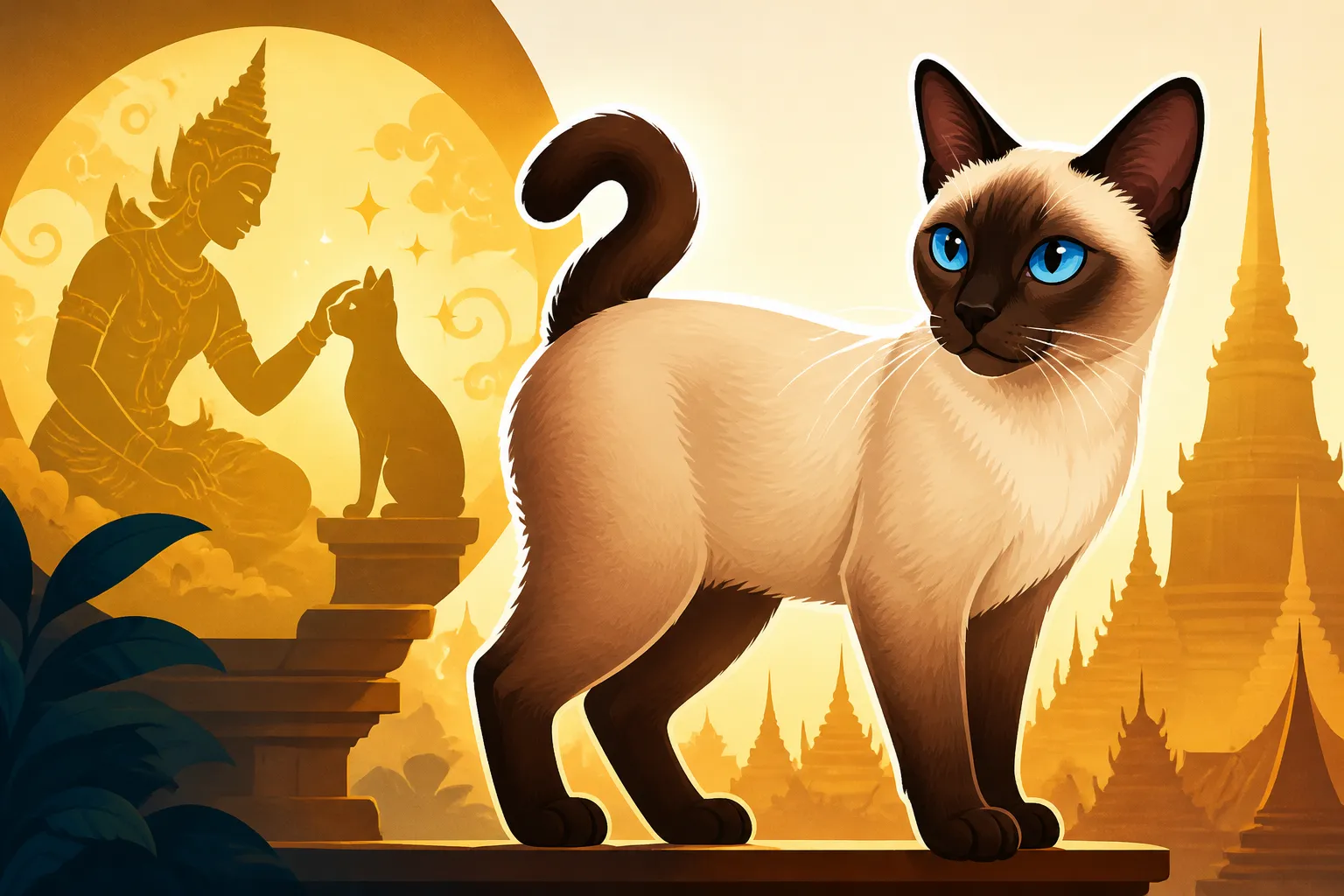
The most cherished version of the kinked tail legend tells of a Siamese princess, beloved for her beauty and her precious rings. Whenever she would bathe, she would entrust her valuable rings to her faithful Siamese cat, who would dutifully guard them. To ensure the rings wouldn't be lost or slip off, the princess would thread them onto the cat's tail, and the clever feline would then kink its tail tightly to secure the precious jewels. Over generations, it's said that this habit became ingrained, passed down from one royal guardian to the next, resulting in the distinctive permanent kink in their tails.
This delightful story paints a picture of unwavering devotion and cleverness. It's not just a tale of a cat, but a narrative that highlights the bond between human and animal, where trust and responsibility are paramount. The image of a Siamese cat, tail curled meticulously to protect glittering gems, adds a layer of charm and mystique to the breed's history. It explains not just the kink, but also hints at the cat's intelligence and loyalty, traits that modern Siamese cat owners still recognize and adore today. Which Legend Explains a Siamese Cat's Kinked Tail delves further into this captivating narrative.
Variations on the Sacred Guardian Theme
While the princess and her rings is the most popular story, other similar legends elaborate on the theme of Siamese cats as guardians. Some tales suggest that Siamese cats were appointed to guard sacred chalices or other priceless artifacts within the temples. In these versions, the cats would wrap their tails around the base of the objects, holding them steady and preventing them from being stolen or toppled. The constant, vigilant gripping of these sacred items supposedly led to the permanent bend in their tails, a physical reminder of their unwavering duty.
Another variation even connects the crossed eyes of some Siamese cats to their guardianship. It’s said that they stared so intently at the treasures they were protecting that their eyes became permanently crossed. Why a Siamese Cat's Eyes Cross and Its Tail Kinks explores this interconnected folklore. These legends serve not only to explain physical traits but also to reinforce the Siamese cat's esteemed position within Siamese society. They weren't just decorative animals; they were active, intelligent participants in the preservation of culture and wealth, their unique features bearing the mark of their important roles. This rich oral tradition was passed down through generations, shaping the perception of these magnificent felines.
More Than Just a Myth: Other Folkloric Explanations
While the princess and her rings legend is certainly the most romantic, other fascinating bits of folklore also tried to explain the kinked tail. These alternative tales, perhaps less widely known but equally charming, offer different perspectives on how this distinctive trait might have come to be. They often speak to the cats' maternal instincts or their interactions with other creatures, further embedding them into the fabric of daily life and natural storytelling.
The Mother Cat and Her Kittens
One endearing folk tale suggests a more heartwarming, albeit still mythical, origin for the kinked tail. This story revolves around a mother Siamese cat and her litter of playful kittens. It’s said that to keep her rambunctious offspring close and safe, especially during travel or when she needed to gather them, the mother cat would wrap her long, elegant tail around her kittens, holding them gently but securely against her body. Over time, the repeated action of coiling her tail around her young caused the vertebrae in her tail to fuse and kink, a mark of her fierce maternal devotion.
This particular legend resonates deeply with cat lovers, highlighting the protective and nurturing side of felines. It speaks to the deep bond between a mother cat and her babies, a universal theme that transcends cultures. The kink, in this context, becomes a symbol of love and care, a permanent reminder of a mother's instinct to keep her family safe. It offers a softer, more emotional explanation than the rigid duty of guarding treasures, and it's easy to picture a loving mama cat, perhaps even one whose pictures you might see on a site like Chewy, gently corralling her tiny charges with her tail.
The Monkey's Gripping Tail
Another whimsical legend, perhaps less solemn than the temple guardian stories, proposes an interaction with another animal as the cause of the kinked tail. This tale suggests that Siamese cats, known for their agility and intelligence, would sometimes interact with the monkeys prevalent in the forests of Siam. According to the legend, mischievous monkeys would often grab hold of the cats' tails during playful chases or encounters, clinging tightly as the cats darted through trees or over temple walls. The monkeys' strong grip and the cats' efforts to shake them off supposedly led to the tail becoming bent or kinked over time.
This story adds a touch of playful mischief to the Siamese cat's lore, portraying them as clever creatures navigating a world full of other animals. It highlights their quick reflexes and their ability to outsmart even the nimblest of primates. While purely mythological, it's a testament to the vivid imaginations of the people of Siam, who found explanations for every unique feature of their beloved cats, whether through grand tales of royalty or simple stories of nature's interactions. These diverse legends show how deeply embedded the Siamese cat was in the cultural imagination.
From Legend to Lineage: The Genetic Reality of the Kinked Tail
While the legends are beautiful and captivating, the reality behind the kinked tail is, as often happens, a matter of genetics. For centuries, the kinked tail was not merely a feature of folklore but a common physical characteristic seen in many Siamese cats. Understanding its genetic basis helps us bridge the gap between myth and modern breeding practices. It’s a classic example of how a noticeable physical trait can be explained by simple biological mechanisms, even if the cultural explanation is far more enchanting.
The Simple Genetics Behind the Kink
From a scientific perspective, a kinked tail in a Siamese cat is generally caused by a genetic mutation that affects the development of the tail vertebrae. It’s typically a harmless, congenital defect, meaning the cat is born with it. The kink occurs when one or more tail vertebrae are malformed, fused, or abnormally short, creating a visible bend or knot in the tail. This trait often follows a polygenic inheritance pattern, meaning multiple genes might be involved, or it can be a simple autosomal recessive trait in some cases. It's not a sign of injury or mistreatment but a natural, albeit sometimes inconsistent, part of the cat's genetic makeup.
In the early days of the breed, before extensive selective breeding for specific aesthetic standards, the gene for the kinked tail was quite prevalent in the Siamese cat population. Litters would often include kittens with various degrees of tail kinks, from slight bends to more pronounced twists. Congenital Defects in a Siamese Cat Kitten can provide more general information about birth abnormalities in these felines. This genetic predisposition explains why the kink was so common and why it featured so prominently in the breed's folklore – it was simply a part of their natural appearance at the time.
Historical Breeding and the Embrace of Traits
In early Siamese cat breeding, particularly in Siam itself, the kinked tail was not considered a fault. In fact, as the legends suggest, it was often seen as a distinctive mark of the breed, a unique identifier that added to their exotic charm. When the first Siamese cats were imported to the Western world in the late 19th century, many of them exhibited kinked tails. Early photographs and illustrations of these pioneer cats frequently show tails with varying degrees of kinks, indicating that this was an accepted and unremarkable feature of the breed.
Breeders and fanciers in those early days didn't actively try to eliminate the kink. Instead, they celebrated the unique appearance of these cats, kinks and all. The focus was on preserving the overall integrity of the breed, including its striking point coloration, vocal personality, and elegant physique. The kink was simply one of those charming characteristics that made a Siamese cat undeniably a Siamese. It was only later, as breed standards became more refined and Western tastes began to influence breeding goals, that the perception of the kinked tail began to shift. The Siamese Cat Came From Siam, Not Thailand offers further context on the breed's origins.
The Shifting Sands of Breed Standards: Kinks in Modern Siamese Cats
The journey of the Siamese cat from the royal courts of Siam to a beloved household pet in the West is also a story of evolving aesthetic ideals. What was once celebrated or, at the very least, accepted, became undesirable as breed standards became more stringent. This shift drastically altered the prevalence of the kinked tail in the show ring and, consequently, in the general population of purebred Siamese cats.
The Early Days: Kinks as a Desirable Trait
When Siamese cats first arrived in Europe and North America, their exotic appearance, including their sleek bodies, striking blue eyes, and yes, their often-kinked tails, was a marvel. Early breed enthusiasts and judges actually considered the kinked tail an authentic marker of the breed, a testament to its ancient origins. It was often mentioned in early descriptions and even implicitly accepted in the nascent breed standards. The kinks were charming quirks, a nod to the cat's mysterious past and the legends surrounding it.
Think about the initial excitement of seeing these cats, so different from any other domestic feline. Every unique characteristic was part of their allure. A breeder showing off their prize Siamese would proudly present a cat with a slightly kinked tail, knowing it added to the animal's authenticity and appeal. There was no pressure to "fix" or "correct" this trait; it was just part of the package. This was a time when the focus was more on the overall "type" and unique characteristics that separated them from other cats, rather than strict uniformity of every single physical trait. Whether the Kink Was Ever in the Siamese Cat Standard explores this historical acceptance in detail.
Modern Standards and the Disappearance of the Kink
As cat fancying became more organized and competitive in the 20th century, breed standards began to evolve and become much more precise. Show judges started to favor an appearance of perfection, where deviations from an idealized form were penalized. The kinked tail, once an accepted, even romanticized, feature, slowly transitioned into a "fault" under these newer, stricter show standards. Breeders, aiming to win championships, began actively selecting against the kinked tail, breeding cats with perfectly straight tails to meet the evolving aesthetic demands.
This intense selective breeding over decades has led to a significant reduction in the occurrence of kinked tails in purebred Siamese cats registered with major cat associations today. While the gene for the kink can still pop up occasionally, it is much rarer than it once was. The desire for a smooth, unblemished line, from the tip of the nose to the end of the tail, became paramount. This shift reflects a broader trend in many purebred animals, where specific aesthetic ideals, sometimes far removed from the animal's natural or historical appearance, become the driving force behind breeding decisions. You'll still find some wonderful traditional Siamese cats with kinks, but they are less common in the show-ring focused lines. What a Siamese Cat Looks Like by the Standard shows what judges look for today.
Living with a Kinked Tail: Health and Welfare Considerations
If you encounter a Siamese cat, or any cat, with a kinked tail today, it's natural to wonder about its implications for their health and well-being. While the legends attribute mystical origins, and modern standards might deem it an imperfection, the reality for the cat is usually far simpler. It's important to differentiate between a benign genetic quirk and something that might cause discomfort or health issues.
Is a Kinked Tail Painful or Problematic?
For the vast majority of cats, a genetically inherited kinked tail is entirely benign and causes absolutely no pain or health problems. It's simply a cosmetic variation, much like a specific hair or eye color. The vertebrae in the tail might be fused or malformed, but this usually doesn't affect the nerves or the cat's ability to use its tail for balance and communication. A cat with a kinked tail will typically move, express itself, and live its life just as comfortably as a cat with a perfectly straight tail. Owners often report that their cats are completely oblivious to their unique tail shape, and it doesn't impact their playful antics or graceful movements. You might notice them using products from Chewy to keep active and healthy, just like any other cat.
The crucial point here is that the kink is usually present from birth due to genetics. It’s not something that develops later in life from injury, which would be a different scenario entirely. Therefore, if you're considering adopting a cat with a kinked tail, or if your current feline friend has one, there's generally no need for concern regarding their comfort or quality of life simply because of the tail's shape. It’s part of their individual charm and story, perhaps even connecting them directly to those ancient Siamese temple guardians.
Understanding the Difference Between Kinks and Injuries
While a congenital kinked tail is usually harmless, it's vital for cat owners to be able to distinguish it from an injury. A kink that appears suddenly, or one that is accompanied by pain, swelling, or changes in how the cat uses its tail, is a completely different matter and warrants immediate veterinary attention. Injuries to the tail, such as breaks, sprains, or nerve damage, can be very painful and may require medical intervention. These injuries can occur from accidents like getting caught in a door, being stepped on, or falling.
To differentiate, examine the tail gently. A congenital kink will typically feel like a solid, unmoving bend or knot in the bone structure, and the cat will show no signs of discomfort when it's touched. An injured tail, however, will likely be sensitive, painful to the touch, and the cat might react negatively when you try to examine it. They might hold their tail at an odd angle, refuse to wag it, or even try to hide it. If you're ever in doubt, particularly if there was an obvious incident, a quick trip to the vet is always the safest course of action to ensure your beloved Siamese isn't suffering. This discernment is important for responsible pet ownership, whether you're shopping for their favorite toys or monitoring their health, with or without resources like Chewy for supplies.
The Lasting Legacy: Why the Kinked Tail Still Fascinates
Despite generations of selective breeding to eliminate it, the legend of the kinked tail in Siamese cats continues to capture the imagination. It’s a powerful reminder that every physical trait, no matter how small, can carry a rich history and cultural significance. For many, the kink represents a tangible link to the breed's mystical past, a whisper from the ancient temples of Siam. It’s a trait that bridges the gap between the modern, refined Siamese and its ancient, wilder ancestors.
Connecting to the Siamese Cat's Mystical Past
The legends of the kinked tail serve as a captivating narrative that connects contemporary Siamese cats to their revered ancestors. In a world where many purebred animals are bred for increasingly specific and sometimes extreme aesthetic standards, these stories offer a grounding connection to the breed’s origins. The idea of a Siamese cat, tail kinked from generations of guarding royal rings or sacred chalices, adds a layer of depth and romance that transcends mere physical appearance. It tells a story of purpose, loyalty, and an almost sacred bond between these cats and their human companions.
For many owners of "traditional" or "old-style" Siamese cats, which are more likely to exhibit the kinked tail due to less intensive selective breeding, this trait is a point of pride. It’s a visual cue, a living heirloom that links their beloved pet directly to the ancient Siamese lineage. It sparks conversations, encourages historical research, and keeps the fascinating folklore alive. This cultural appreciation is just as important as the genetic understanding of the trait, as it speaks to the enduring magic these cats hold for us.
Appreciating the Unique Traits of the Breed
Ultimately, the story of the kinked tail is a testament to the enduring appeal of the Siamese cat's unique traits. Whether it's their striking vocalizations, their intense intelligence, their playful antics, or their distinctive physical characteristics, Siamese cats have always stood out from the crowd. The legends surrounding the kinked tail, alongside those explaining their crossed eyes Why a Siamese Cat's Eyes Turn Inward or their distinctive point coloration Why a Siamese Cat Has Dark Points, contribute to the breed's overall mystique and charm. They remind us that there's often more to our pets than meets the eye, and that their individual quirks can be part of a much larger, richer tapestry of history and culture.
In an age where genetic purity and breed standards sometimes overshadow individuality, the kinked tail serves as a gentle reminder to appreciate every cat for its unique self. It encourages us to look beyond the "perfect" and find beauty and fascination in the natural variations that make each animal special. While modern breeding has largely moved away from it, the kinked tail will forever be a part of the Siamese cat's story, a whimsical mark left by princesses, temple treasures, and the creative minds of ancient Siam.
Summary Table: Kinked Tail Legends vs. Reality
To help clarify the differences between the enchanting legends and the scientific reality, here's a quick comparison:
| Feature/Aspect | Temple Legends' Explanation | Scientific/Genetic Explanation |
|---|---|---|
| Cause of Kink | Repeatedly gripping royal rings or sacred temple treasures; maternal protection of kittens; monkey interactions. | Congenital skeletal deformity (fused/malformed vertebrae) due to a genetic mutation. |
| Purpose/Meaning | Mark of loyalty, guardianship, devotion, maternal love; a distinguishing characteristic. | Primarily a benign cosmetic trait with no functional purpose, often a relic of historical genetic prevalence. |
| Pain/Health Impact | None mentioned in legends; often seen as a sign of dedication. | Typically no pain or health issues for the cat; a cosmetic trait. |
| Historical View | Revered or accepted as a unique feature of royal/temple cats. | Common in early Siamese populations due to genetic prevalence. |
| Modern View (Breed Standards) | Romanticized but largely bred out; seen as a "fault" in show rings. | Considered a genetic fault in modern show standards, actively selected against. |
| Prevalence | Assumed to be a common trait among these special cats. | Rare in modern purebred show lines, more common in traditional/older lines or mixed breeds. |
Disclaimer
This article is for general informational purposes only and does not constitute professional advice. Laws, prices and regulations vary by location and change over time. Consult a qualified professional for guidance on your specific situation.