Who Received Pho and Mia the Siamese Cats in England
In the 1880s, Siamese cats were still unfamiliar to most people in Britain, and the story of Pho and Mia’s arrival can get muddled between the person who brought them over and the person who received them. This guide explains who received the cats, how they were connected, and why their place in early British Siamese history matters.
Who received Pho and Mia in England
The cats were given to Lilian Jane Gould
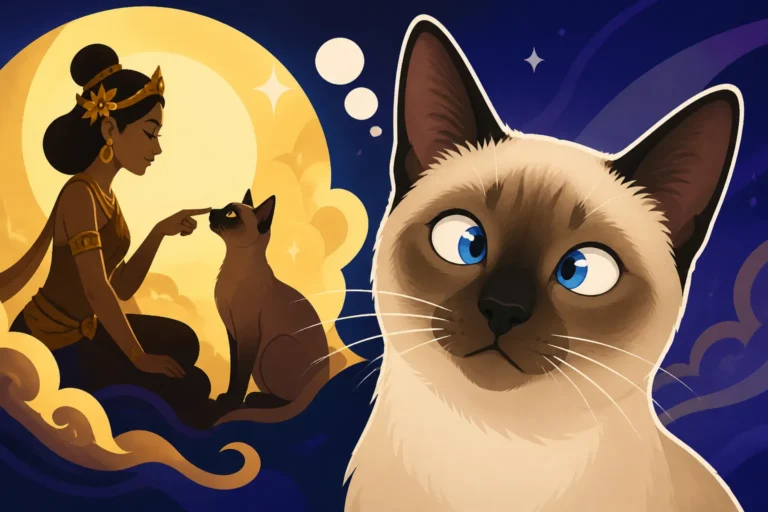
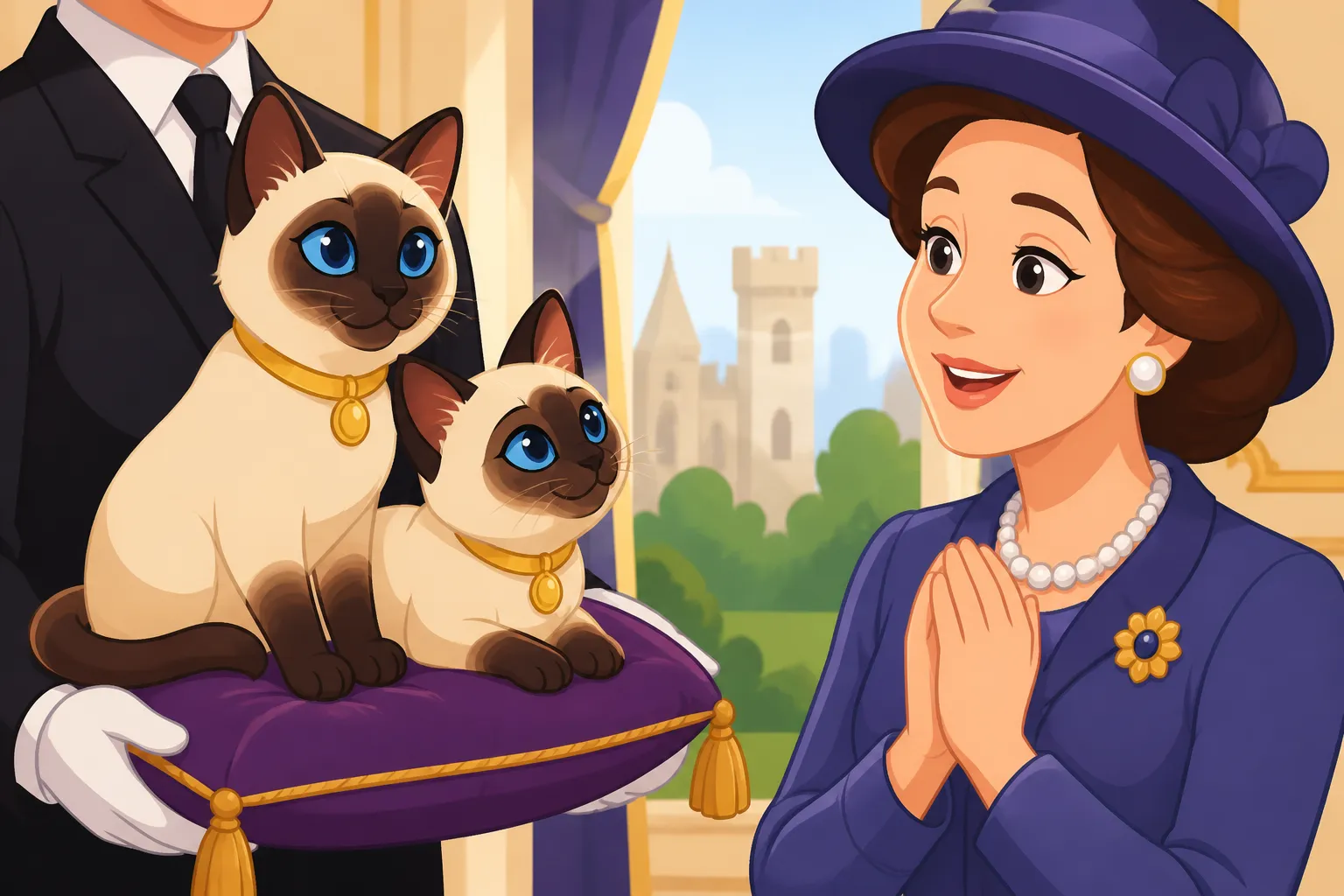
Pho and Mia were received by Lilian Jane Gould, the sister of Edward Blencowe Gould, the British official who brought the cats from Siam to England. Accounts of the breed’s early British history describe them as a gift from Edward to his sister. That makes Lilian Jane Gould the recipient, while Edward is the person associated with bringing the cats to Britain.
It is an easy distinction to lose when the story is retold. A brief account may say the cats were “brought to England by Gould,” without clarifying that Edward gave them to his sister. Another may mention Mrs. Gould without naming her brother. Keeping the two roles separate makes the history easier to follow: Edward arranged the cats’ journey, and Lilian Jane received them.
For the wider story of the pair and their early place in the breed, see Who Pho and Mia the Siamese Cats Were. Their arrival is also part of the broader history explored in Who Brought the First Siamese Cat to Britain.
Why the recipient’s identity matters
Lilian Jane Gould’s role matters because Pho and Mia did not simply arrive in Britain and disappear into a private household. They became associated with early breeding and public interest in Siamese cats. The cats’ lives in England helped introduce the breed to people who had never seen one before, at a time when the distinctive pointed coat and blue eyes could seem startlingly different from the cats familiar in Britain.
The recipient’s home also provided the setting for the next part of the story. Pho and Mia were not just curiosities brought back from overseas; they were living cats whose offspring helped sustain interest in the breed. Their household connected the journey from Siam with the early development of Siamese cats in Britain.
That does not mean the entire British Siamese population descended only from Pho and Mia. Early breed histories involve additional cats and later imports, and the details can vary across accounts. Still, the pair are remembered because their arrival and kittens became an important early chapter in the breed’s British history.
How Edward Blencowe Gould and his sister fit into the story
Edward brought the cats from Siam
Edward Blencowe Gould is associated with Pho and Mia’s journey from Siam to England in 1884. He was a British official in Siam, and his position gave him a connection to the region from which the cats came. In retellings, this is sometimes compressed into a simple statement that he “introduced” Siamese cats to Britain. That phrase can obscure the family gift behind the story.
The distinction is useful: Edward was the traveller and giver, not the person who received the cats in England. Lilian Jane Gould was his sister and the person to whom the cats were given. Their family connection is one reason the pair’s story has survived in breed histories: it can be traced through a specific journey and a named recipient, rather than only through an anonymous reference to imported cats.
Pho and Mia’s passage also took place in a different era of animal travel. Bringing cats from Siam to Britain was not the routine trip it might sound like in a short modern biography. The journey crossed great distances, and the animals had to adapt to a new home and climate. The story gives a glimpse of how unusual and notable such an import was at the time.
Lilian Jane Gould helped carry the story forward
Once Pho and Mia were in England, Lilian Jane Gould became central to their story as their owner and the person associated with their breeding. This is why identifying her as the recipient is more than a minor biographical detail. It places the cats in the home where their British chapter unfolded.
The pair are reported to have had kittens, adding another layer to their historical importance. Those kittens helped draw attention to Siamese cats in Britain and became part of the early record of the breed there. If you want to follow that part of the story, see How Many Kittens Pho and Mia the Siamese Cats Had and What the First British Siamese Cat Kittens Were Named.
It is sensible to treat individual details in early cat histories with care. Records from the nineteenth century can be incomplete, and later accounts may summarize events differently. The core relationship, however, is clear in the commonly told account: Edward brought Pho and Mia from Siam and gave them to his sister Lilian Jane Gould in England.
| Person or cats | Role in the story | Why the role matters |
|---|---|---|
| Edward Blencowe Gould | Brought Pho and Mia from Siam to England | Connects the cats’ origin to their journey |
| Lilian Jane Gould | Received the cats as a gift from her brother | Identifies the person who owned them in England |
| Pho and Mia | The Siamese pair associated with the early British story | Their presence and kittens helped build interest in the breed |
What happened after Pho and Mia arrived
Their kittens brought public attention
Pho and Mia are remembered not only as imported cats but also as parents of kittens in England. Their offspring became part of the early British Siamese story, helping a small number of cats become a more visible subject of public curiosity. At a time when the breed was unfamiliar to many people, a litter could attract attention simply because the kittens’ coloring and appearance were so distinctive.
The kittens’ story is often linked to public exhibition. Early cat shows offered a place for people to see breeds they might otherwise know only from descriptions. For more on that milestone, see Which Show the First Siamese Cats Appeared At. The show context helps explain how a private family gift could become part of a wider cultural story about cats and breeding.
It is worth remembering that the development of a recognized breed takes time. One pair and one litter do not establish a stable breed population on their own. Pho and Mia’s significance is better understood as an early public and breeding milestone, rather than as the sole origin of every Siamese cat later found in Britain.
The early cats faced a challenging change of environment
The move from Siam to Britain meant a major change in climate, surroundings, and daily life. A warm-climate cat arriving in a cooler country would have needed an indoor home and thoughtful care. Nineteenth-century household conditions were also different from modern pet-keeping, so it is best not to assume that Pho and Mia experienced the same veterinary support, nutrition, or travel arrangements that a cat would today.
The story of early imported animals often includes uncertainty about how well they adapted. Pho and Mia are remembered because they left a lasting mark on the breed’s history, but the details of their later lives should not be embellished beyond what accounts support. Whether the First Siamese Cats Survived Long in England explores that question more closely.
This is one reason the story remains compelling: it is both a breed-history milestone and a reminder that these were individual animals, not simply symbols of an emerging breed. Their journey depended on human decisions, and their lives in England unfolded in a very different world from the one a modern indoor cat inhabits.
Why Pho and Mia still matter to Siamese cat history
They connect Siam with Britain’s early breed history
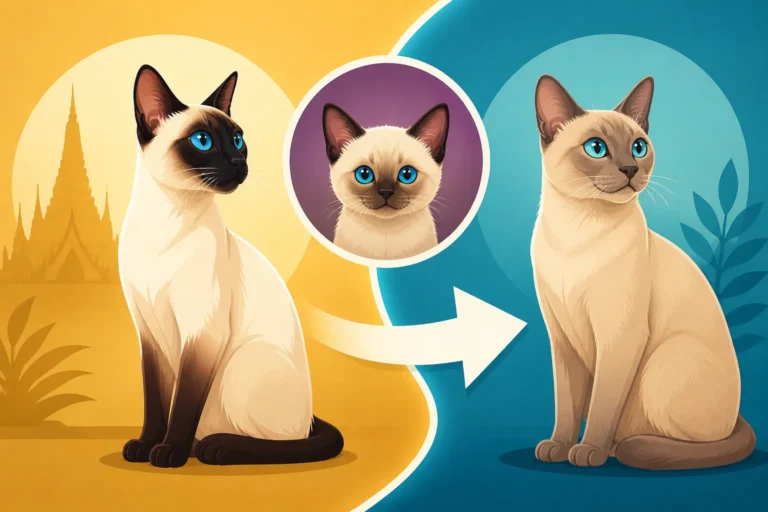
Pho and Mia offer a clear link between Siam, where Siamese cats originated, and the growth of interest in the breed in Britain. Their story is one small but memorable piece of a much longer history. For broader context, read The Siamese Cat Came From Siam, Not Thailand and Where the Siamese Cat Comes From.
That connection is especially useful because breed histories can easily become simplified into a single “first cat” anecdote. In reality, a breed’s presence in a new country grows through imports, breeding, exhibitions, written descriptions, and the enthusiasm of owners. Pho and Mia are important because they help make those processes tangible: a named pair arrived, a family member received them, and their kittens became part of the public story.
Their history also reminds readers that the words used for countries and breeds reflect the period in which a story took place. The cats came from Siam, the name used in accounts of their time. Modern discussions may use Thailand when describing the country today, but that does not change the historical setting in which Pho and Mia were brought to Britain.
A family gift became a public breed milestone
The answer to the title question is straightforward: Lilian Jane Gould received Pho and Mia in England as a gift from her brother, Edward Blencowe Gould. But the significance of the story lies in what followed. The cats became associated with early breeding and exhibition, helping British audiences encounter Siamese cats as a distinct and fascinating type.
When you see the story summarized, check whether it distinguishes the giver from the recipient. If it names Edward as the person who brought the cats to Britain, that describes the journey. If it names Lilian Jane Gould as their recipient, that describes who received them. Both details belong in a complete account, and confusing them can make the cats’ early history harder to understand.
Pho and Mia’s place in the story is not that they single-handedly created the modern Siamese breed. Rather, they represent an early documented chapter in the breed’s arrival and visibility in Britain. Their names, their family connection, and the attention their kittens attracted have kept their story alive in accounts of Siamese cat history.
Disclaimer
This article is for general informational purposes only and does not constitute professional advice. Laws, prices and regulations vary by location and change over time. Consult a qualified professional for guidance on your specific situation.