Which British Official Brought the First Siamese Cats Home
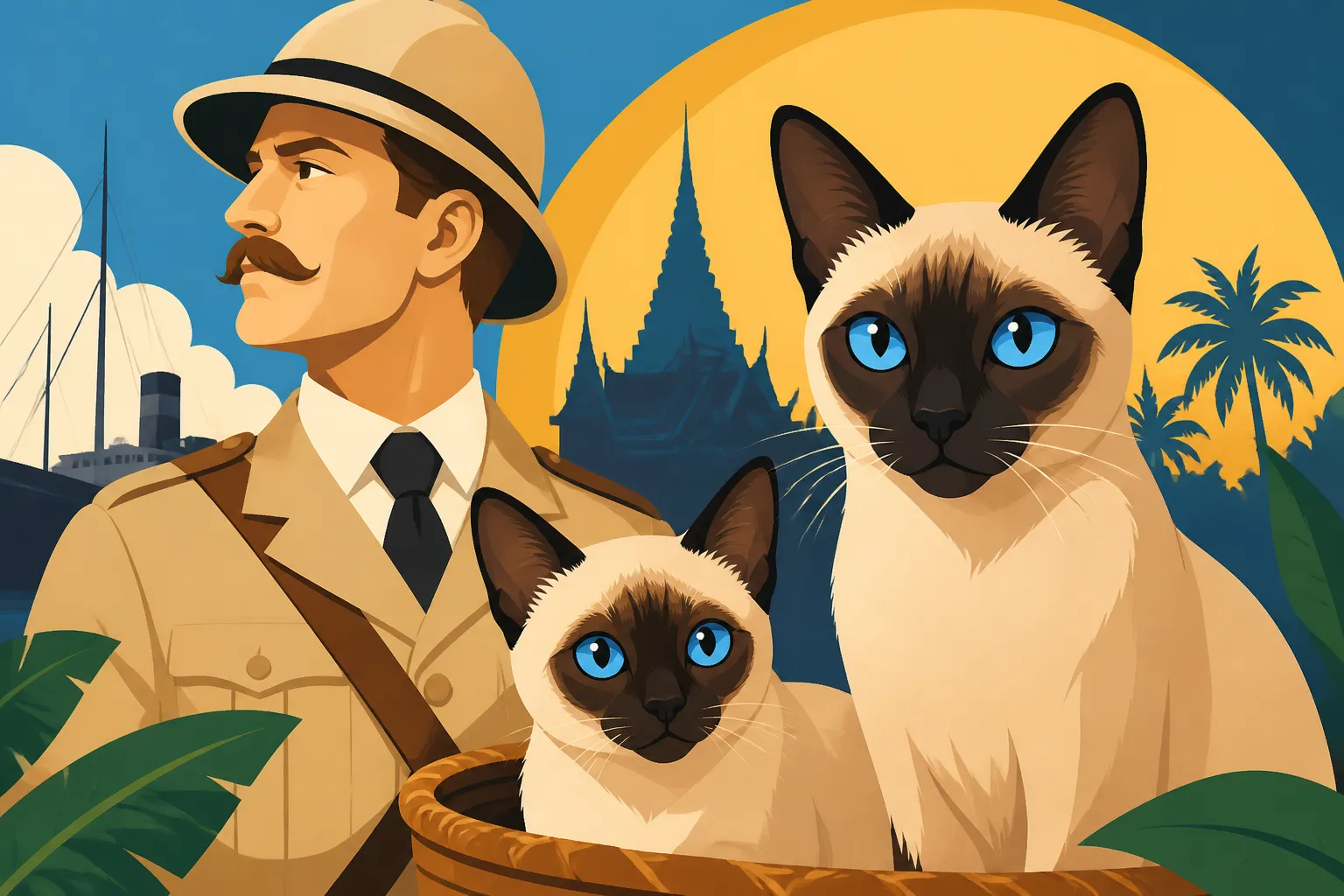
The British official most often credited with bringing the first well-documented Siamese cats to Britain was Edward Blencowe Gould, a British diplomat serving in Bangkok. In 1884, he sent a pair called Pho and Mia to his sister, Lilian Jane Gould. This guide explains who Gould was, what is known about the cats, and why “first” is best understood with a little historical care.
The British official credited with bringing Siamese cats to Britain
Edward Blencowe Gould and his role in Bangkok
Edward Blencowe Gould was a British official stationed in Bangkok, then the capital of Siam. He is widely credited with arranging the journey to Britain of a pair of Siamese cats in 1884. Accounts commonly identify him as a British consul or consul-general, although historical references do not always use his title consistently.
The key point is that Gould was not a cat breeder or a public figure famous for promoting a new breed. His importance in this story comes from his position in Siam and his connection to the pair that later became part of Britain’s recorded Siamese-cat history. For a broader account of the breed’s roots, see Where the Siamese Cat Comes From.
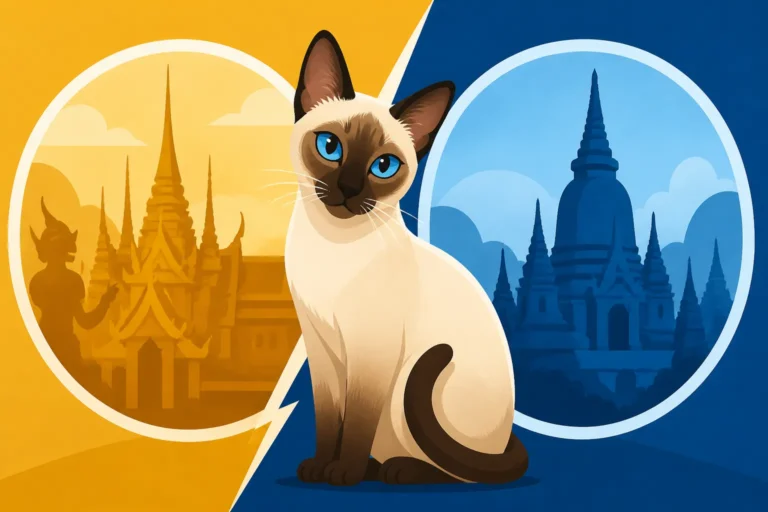
Gould’s story also belongs to a wider period of growing contact between Britain and Siam. Diplomats, traders, and other travelers moved between the countries, and unusual animals sometimes became treasured gifts. Siamese cats attracted particular attention because they looked strikingly different from many cats familiar to people in Britain.
Why the cats went to England
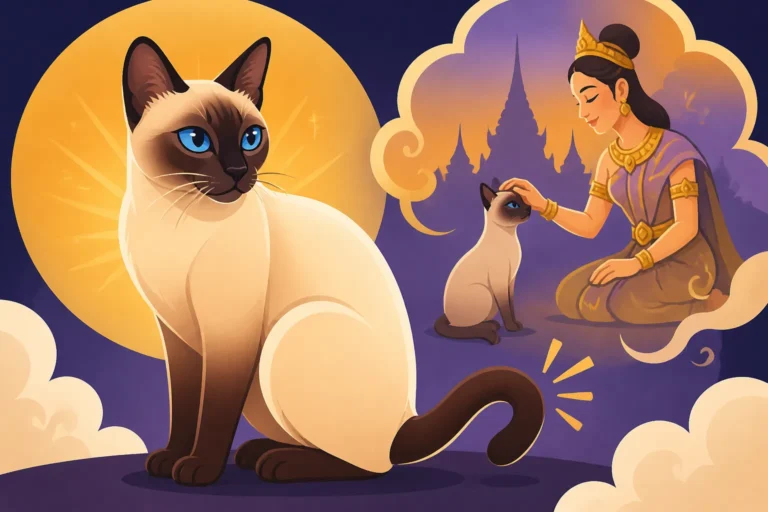
The pair were sent as a gift to Gould’s sister, Lilian Jane Gould, who was living in Britain. She later became an important early enthusiast of the breed. In the accounts that identify her as the recipient, the cats are named Pho and Mia.
That family connection helps explain how the cats entered British life. Their arrival was not simply a commercial import or a planned effort to establish a cat-breeding business. A pair sent as a personal gift could still have a lasting effect, especially when the recipient took an interest in showing and breeding them.
It is worth being precise about what the record supports. Gould is credited with bringing the pair to Britain, while Lilian is associated with their care and with the early public story of Siamese cats there. Those roles are related, but they are not interchangeable. The account of Who Pho and Mia the Siamese Cats Were looks more closely at the cats themselves.
Pho and Mia, the pair at the center of the story
The names and what is known about them
Pho and Mia are the names most often attached to the pair sent from Bangkok to England. They are remembered not just because they were Siamese cats, but because they became part of an early, recognizable record of the breed in Britain. Their names appear in accounts of the first Siamese cats shown there and of the kittens associated with them.
Like many stories from the early history of cat breeds, details can be repeated with slightly different wording across later accounts. Some tell the story briefly as a diplomatic gift; others emphasize the cats’ descendants or their appearance at an exhibition. The core narrative remains that Gould sent Pho and Mia to his sister, and that the pair helped bring Siamese cats to public attention in Britain.
A useful way to approach the story is to separate the widely repeated essentials from details that may be less firmly documented. The names, the family connection, and the approximate date are central. Claims about every stage of the cats’ journey, their exact appearance, or the precise circumstances of their arrival should be treated more cautiously unless supported by a clear historical record.
What “the first” means in this account
Calling Pho and Mia “the first Siamese cats in Britain” can sound more definitive than the evidence allows. They are best described as the earliest well-documented pair commonly credited with arriving in Britain. That phrasing leaves room for the possibility that other Siamese cats had been brought to Britain earlier without leaving a record that has become part of the breed’s standard history.
The distinction matters because historical records are uneven. A private traveler might have transported a cat without it appearing in a newspaper, a show catalogue, or a surviving family archive. The absence of a known record is not proof that no earlier arrival occurred; it simply means Pho and Mia are the pair most consistently named in the documented account.
| Question | What the commonly told account says | A careful way to describe it |
|---|---|---|
| Who brought the cats to Britain? | Edward Blencowe Gould, a British official in Bangkok | Gould is widely credited with arranging their arrival |
| Which cats are named? | Pho and Mia | They are the best-known pair in the early British account |
| When did they arrive? | 1884 | This is the date most often associated with their arrival |
| Who received them? | Gould’s sister, Lilian Jane Gould | She is associated with their care and later show history |
| Were they certainly the first Siamese cats in Britain? | They are often described that way | “Earliest well-documented pair” is a more cautious formulation |
For more context on the breed’s earlier history, How Old the Siamese Cat Breed Is explores the difference between the breed’s longstanding roots in Southeast Asia and its later visibility in Europe.
From private gift to public curiosity
The Siamese cats’ appearance in Britain
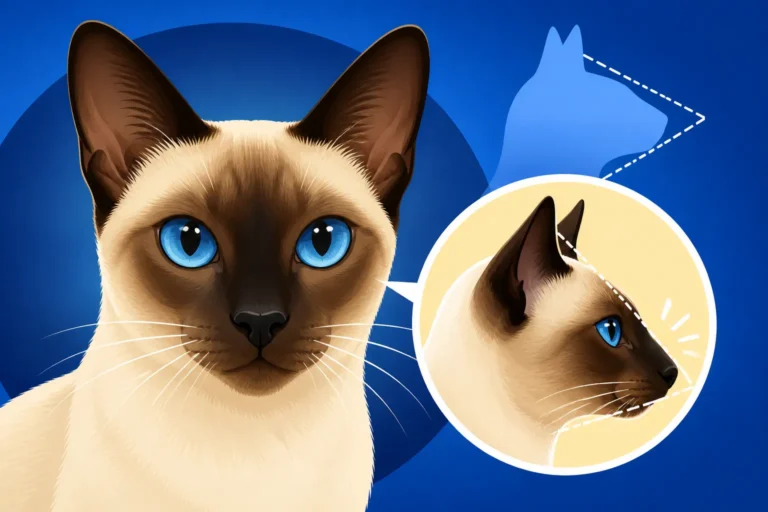
Siamese cats stood out to British audiences. Their pale bodies, darker points on the face, ears, legs, and tail, and vivid blue eyes made them unlike the cats many visitors expected to see. The look was striking, but it was also unfamiliar, and early reactions were not always admiring.
The cats’ appearance at a British cat show helped turn a private gift into a public story. Pho and Mia are associated with the early Siamese exhibit at the Crystal Palace, where they drew attention as an unusual type of cat. The exhibition gave visitors and fanciers an opportunity to see the breed rather than hear about it secondhand. See Which Show the First Siamese Cats Appeared At for more on that event.
Some early observers reportedly considered the cats unusual or unattractive. That reaction is a reminder that breed standards and popular tastes change. Features now treated as signature Siamese traits were once novel enough to prompt surprise, skepticism, and debate. The history of What Judges Thought of the First Siamese Cats adds detail to this early reception.
How the cats helped establish a British following
The arrival of Pho and Mia did not instantly create a large Siamese-cat population in Britain. A pair could attract interest, but establishing a recognizable breed took time. People needed opportunities to see the cats, describe their features, compare them, and decide how they should be bred and judged.
The cats and their descendants became part of those early efforts. Their story is often connected to the kittens born to Pho and Mia and to the growth of interest in Siamese cats among British fanciers. The accounts of early breeding helped make the breed more than a single exotic curiosity: they suggested that Siamese cats could be established and shown in Britain.
This process eventually led to organized breed enthusiasm. The Siamese Cat Club, founded later, gave fanciers a way to share knowledge and promote the breed. That development did not begin with one official or one gift alone, but Gould’s role is an important starting point in the commonly told British timeline. When the Siamese Cat Club Was Founded follows that story into the next stage.
Reading the history without overstating it
Why different accounts may phrase the story differently
Short breed histories often compress several events into one sentence: a British official brought the first Siamese cats home, gave them to a relative, and they appeared at a show. That is easy to remember, but it can blur the difference between transporting the cats, receiving them, caring for them, and presenting them to the public.
Names and job titles may also be shortened. One account may call Gould a consul, while another may use consul-general or describe him more generally as a British official in Bangkok. This variation does not necessarily mean that the basic story is contradictory; it can reflect how later writers summarize the same person’s position.
Dates can be compressed too. The cats are associated with an 1884 arrival and with an early show appearance the following year. When a source gives only one date, check whether it refers to the journey, a public exhibition, or a later milestone in the breed’s organization. Keeping those events separate makes the timeline easier to follow.
How Gould’s story fits the larger Siamese history
Gould’s role is a bridge between the Siamese cat’s earlier life in its homeland and its growing recognition in Britain. He did not create the breed, and the cats were not “invented” when they arrived in England. They came from a cat population with a history that long preceded their appearance in a British exhibition hall.
The story is still significant because recorded arrivals can shape what later generations remember. A pair with names, a known recipient, and a public appearance is easier to trace than animals that traveled privately and left no visible record. That is why Pho and Mia occupy such a clear place in breed histories even though the phrase “first Siamese cats” should be used thoughtfully.
The broader record is also a reminder that breed histories often depend on a handful of surviving details. A diplomatic connection, a family gift, and a show appearance became the foundation of a widely repeated narrative. To understand the difference between that British milestone and the Siamese cat’s much older origins, What the Tamra Maew Manuscripts Show About the Siamese Cat provides useful historical context.
What to remember about the first Siamese cats in Britain
The British official most often credited with bringing Siamese cats to Britain was Edward Blencowe Gould, who was serving in Bangkok. In 1884, he sent Pho and Mia to his sister, Lilian Jane Gould. The cats became associated with early British public interest in the breed and with its appearance at the Crystal Palace.
The most careful wording is that Pho and Mia were the earliest well-documented Siamese pair commonly credited with arriving in Britain. That avoids turning an incomplete historical record into an absolute claim about every cat that may have traveled there. It also gives each person their proper place in the story: Gould arranged the gift, Lilian received the cats, and the pair helped introduce a distinctive breed to British audiences.
Disclaimer
This article is for general informational purposes only and does not constitute professional advice. Laws, prices and regulations vary by location and change over time. Consult a qualified professional for guidance on your specific situation.