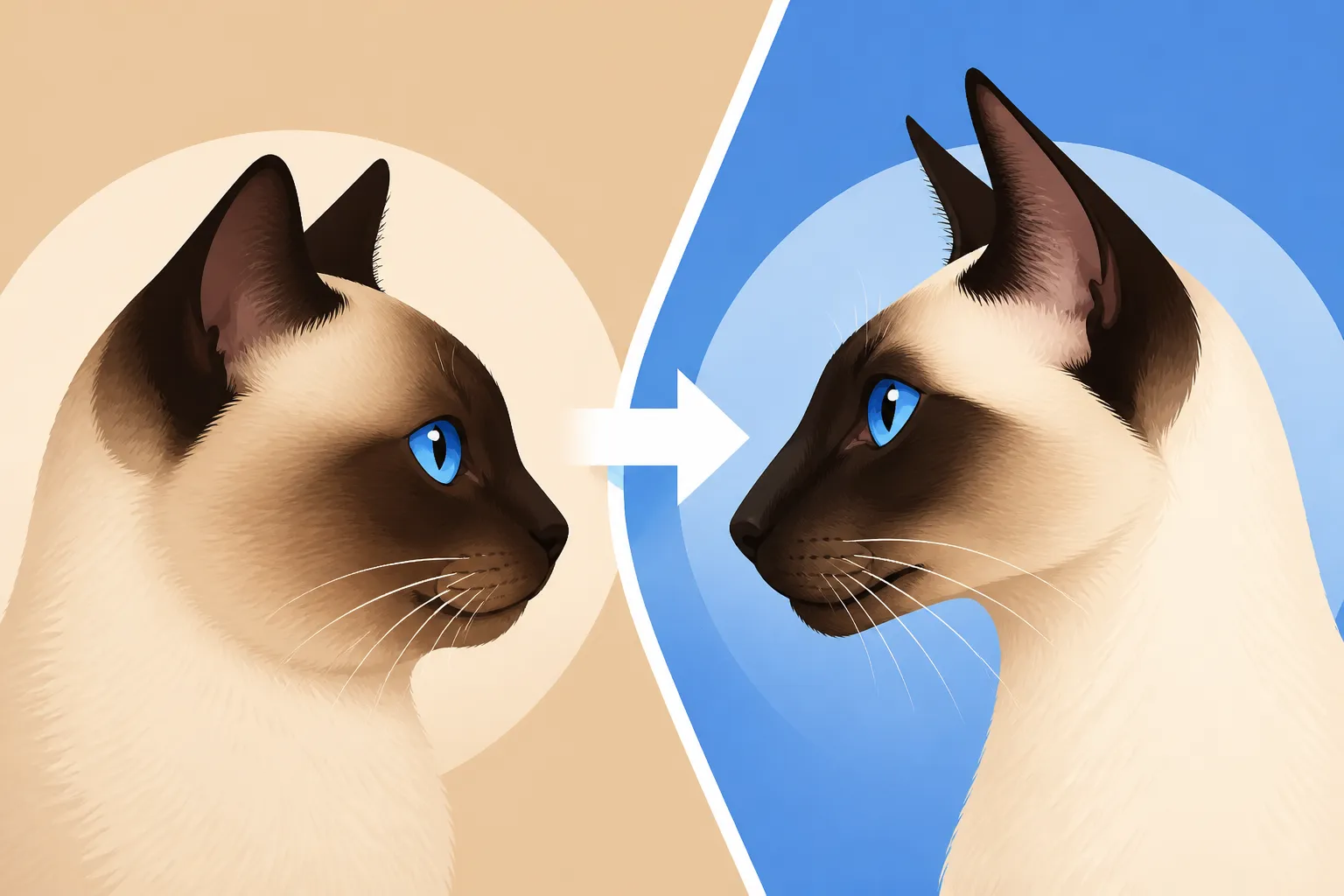
How the Siamese Cat’s Head Changed Shape in Fifty Years
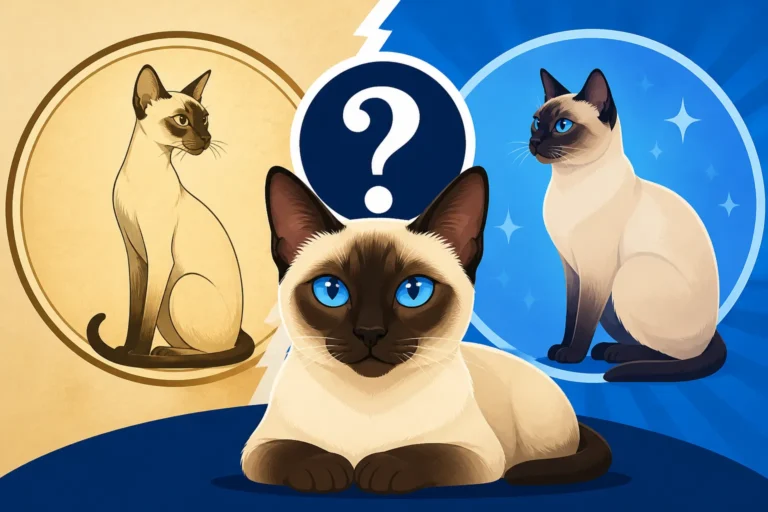
Have you ever looked at an old photo of a Siamese cat from your grandparent's era and then at a picture of a modern show-winning Siamese, and thought, "Are these even the same breed?" It's not just you. The Siamese cat's head shape has undergone a truly remarkable transformation over the last fifty to one hundred years, evolving from a more robust, rounded appearance to the sleek, angular "wedge" we often see dominating the show rings today. This guide will walk you through that fascinating journey, explaining why and how this iconic breed's profile changed so dramatically.
The Early Siamese: A Look at the "Original" Head Shape
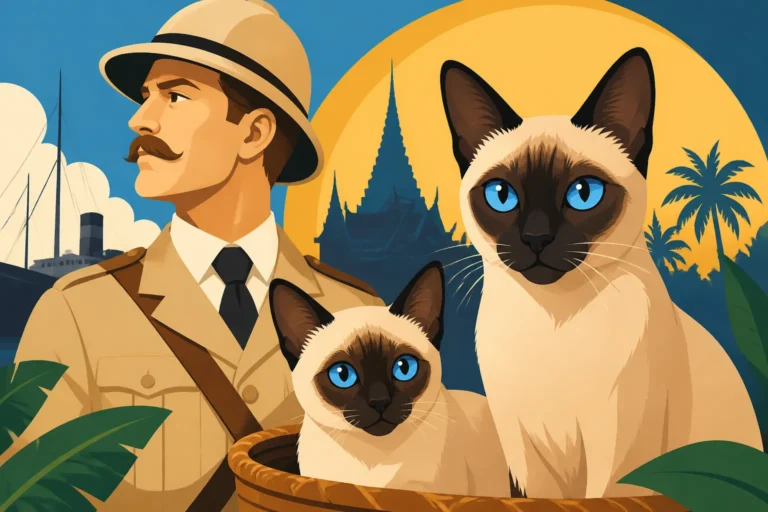
When the first Siamese cats made their way from Siam (modern-day Thailand) to Western shores in the late 19th century, they certainly cut a striking figure with their masked faces and piercing blue eyes. But their physical appearance, particularly their head shape, was quite different from what many consider the breed standard today.
The Humble Beginnings: First Impressions from Siam
Imagine those first Siamese cats arriving in Europe and America. They weren't bred to a specific Western show standard, but rather represented the natural landrace cats found in their homeland. Historical photographs and early descriptions often depict cats with a more moderate, natural look. Their heads were typically broader, with a noticeable curve to their forehead, a gentler stop at the nose, and a muzzle that was well-proportioned but not sharply pointed. Their ears, while still quite prominent, weren't the exaggerated, wide-set features we often see in modern show lines. They had an undeniable elegance, but it was an elegance of balance and proportion, not extremity. These were the cats whose ancestors were treasured in their native land, likely for their unique appearance and vocal personalities, as described in ancient texts like the What the Tamra Maew Says About the Siamese Cat. These early cats were robust, healthy, and simply cat-like, with a grace that was inherent rather than selectively amplified.
They carried themselves with a regal air, even if their features weren't yet sculpted by generations of selective breeding in the West. It’s important to remember that for centuries, the Siamese cat was revered in its homeland. The focus there was on maintaining a strong, healthy population, not on exaggerating specific physical traits for aesthetic purposes. The cats arriving in the West were essentially snapshots of this long-standing natural population, bringing with them a genetic blueprint that Western breeders would soon begin to interpret and reshape. These were the very first "meezer" pioneers, long before the controversies of head shapes ever began.
"Foreign" Yet Familiar: Early Western Adaptations
When these "royal cats of Siam" first landed, Western breeders were captivated by their exotic coloring and captivating personalities. Initially, the focus wasn't on dramatically altering their head structure. Instead, breeders admired their lean bodies, striking blue eyes, and intelligent expressions. Early breeding goals were more about maintaining the unique color points and ensuring the cats were healthy and prolific. The general consensus was that these were indeed graceful and elegant creatures, but the idea of a sharply triangular "wedge" head wasn't yet a predefined ideal. Breeders worked with the cats they had, often cross-breeding to expand the gene pool and solidify the distinct Siamese traits.
The early interpretations of "elegance" in the Siamese were still quite broad. Judges and breeders of the late 1800s and early 1900s looked for an overall harmonious appearance. While they appreciated the sleekness, they weren't yet fixated on extreme angles. There was a period of exploration and development as the breed became established in new countries, with different bloodlines being introduced and combined. The physical characteristics were certainly foreign and unique to the European and American cat fancy, but they also possessed a fundamental familiarity, a strong cat essence, that made them endearing. This period was crucial for the breed's initial establishment and paved the way for the more deliberate selective breeding that would follow, eventually leading to a dramatic divergence in appearance.
The Rise of the "Traditional" or "Applehead" Siamese
For many decades, the Siamese cat we've come to call the "Traditional" or "Applehead" was simply the Siamese cat. This was the widely accepted and loved image of the breed for a significant portion of the 20th century.
Defining the "Applehead" Aesthetic
The "applehead" Siamese is characterized by a broader, rounder skull, reminiscent of an apple shape when viewed from the front or top. Their muzzle tends to be shorter and more rounded, with a distinct stop where the forehead meets the nose. The ears are still large but are typically set a little lower and closer together than in modern show types, giving the head a softer, less angular appearance. Their eyes are usually a deep sapphire blue, and while striking, they don't possess the extreme almond shape or slant often seen in today's show cats. This look emphasizes a more robust, sturdy build overall, a quality that was highly valued by many breeders and pet owners for decades.
This aesthetic became deeply ingrained in the public consciousness. Think of the Siamese cats in classic cartoons, books, or old Hollywood movies – they almost invariably feature this gentle, rounded "applehead" profile. It spoke to a certain charm and accessibility, making the Siamese an incredibly popular household companion. If you look at photos of Siamese from the 1940s or 50s, you'll see this consistent, beautiful, moderate look. It truly defined the breed for generations, and many people today, when they picture a Siamese, still envision this more classic style. If you're curious to see exactly what I mean, you can find many examples that beautifully illustrate What an Applehead Siamese Cat Looks Like.
Popularity and Widespread Acceptance
The "applehead" look wasn't just tolerated; it was celebrated. For many years, this was the epitome of what a Siamese cat should be. It was the face of the breed that adorned cat food packaging, graced the pages of pet magazines, and charmed families across the globe. This was a time when the Siamese cat’s unique vocalizations and playful, dog-like personality were paramount, and their physical features were simply an attractive frame for these beloved traits. The moderate head structure, often paired with a slightly stockier body, contributed to an image of a healthy, sturdy, yet undeniably elegant companion animal.
Breed standards in the early to mid-20th century typically described a graceful, medium-sized cat with a well-proportioned head. There was no mention of an "extreme wedge" or specific triangular measurements. The focus was on overall balance, health, and maintaining the distinct colorpoint pattern. This widespread acceptance meant that breeders, judges, and pet owners were all largely on the same page regarding the ideal Siamese appearance. It was a golden age for the traditional look, before the intense competition of the show ring began to push for ever more extreme and specialized traits, leading to the divergence we see in the breed today. Many would argue that this era represents the true essence of the Siamese, where form naturally followed function and historical context.
The Shift Towards the "Wedge": Early Influences and Breeding Goals
As the mid-20th century approached, a subtle but significant shift began to emerge within the Siamese breeding community, particularly among those involved in competitive cat shows. The desire for a more "refined" or "exotic" look started to take hold.
The Desire for Refinement: Pushing the Envelope
The concept of "refinement" in cat breeding can be a double-edged sword. While it often aims to enhance desirable traits, it can also lead to an exaggeration of features, pushing a breed far beyond its original, natural appearance. For the Siamese, this desire for refinement began to manifest as a preference for longer lines and more angular features. Breeders started envisioning a cat that was even more slender, more aristocratic, with a head that seemed to flow seamlessly into its long neck. This wasn't a sudden, overnight change, but a gradual evolution in aesthetic ideals. The robust, rounded "applehead" began to be seen by some as perhaps a little too common, a little less "exotic" than what the breed could potentially become.
This period saw a deliberate selection for cats with slightly longer, narrower skulls, and ears that were set a bit wider and larger. The goal was to create a more dramatic, streamlined silhouette. It was a move towards what some considered a more "modern" or "sophisticated" look for the breed, differentiating it further from other domestic cats. The idea was to take the already elegant Siamese and make it even more elegant, more striking, by extending and sharpening its features. This push for a more extreme profile was driven by a vision of what the Siamese could be, rather than what it had historically been. If you're wondering when this started, you might be interested in learning more about When Siamese Cat Breeders Started Selecting for the Wedge.
Standard Changes and Show Ring Impact
The true accelerant for this shift towards the "wedge" was the cat show circuit and the evolving breed standards set by various cat fancy associations. Initially, standards might have been somewhat vague, allowing for a range of interpretations. However, as certain breeders started presenting cats with longer, more angular heads, and these cats began to win, a feedback loop was created. Judges, consciously or unconsciously, started to favor these "newer" looks, interpreting them as a superior form of elegance or refinement. This, in turn, encouraged more breeders to pursue these traits, believing that to be competitive in the show ring, they needed to adapt their breeding programs.
Over time, breed standards were revised to explicitly describe and reward these emerging features. Terms like "long, tapering wedge," "large, wide-set ears," and "straight profile" began to appear, solidifying the direction of the breed. This wasn't a malicious act, but rather a collective artistic interpretation within the cat fancy. Breeders, driven by the desire to produce winning cats, meticulously selected individuals that exhibited these traits, gradually intensifying them over generations. The pressure to win in the show ring became a powerful force, effectively shaping the breed's physical evolution. This intense demand from the show world significantly impacts pricing and availability, leading to discussions about Why Show Demand Drives the Wedge Siamese Cat Price.
Defining the Modern "Wedge" Siamese
Fast forward to today, and the modern show-type Siamese is a stark contrast to its early ancestors. The "wedge" head has been refined to an extreme, becoming the hallmark of the contemporary breed.
Characteristics of the Contemporary Show Siamese
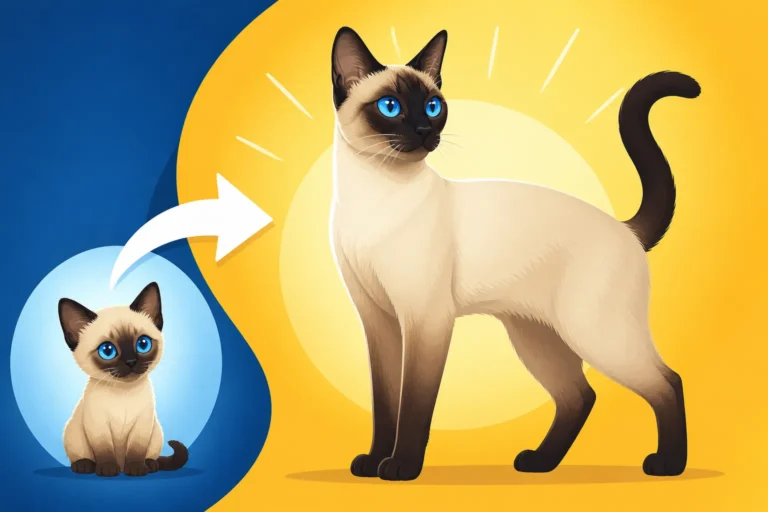
The modern "wedge" Siamese is a marvel of angular lines and sleek contours. Its head is a long, tapering wedge, starting from the tip of the nose and widening in perfectly straight lines to the tips of the ears, forming an unmistakable triangle. The ears themselves are large, pointed, and set wide apart, continuing the lines of the wedge. When you look at a show-quality Siamese, you’ll notice that the profile is perfectly straight from the top of the head down to the nose tip, without any break or stop. The muzzle is fine and pointed, and the chin is strong, aligning with the tip of the nose. Their eyes are almond-shaped, slanting towards the nose, and maintain that intense, vivid blue.
This head structure is accompanied by an equally lean, elegant body, long, slender legs, and a whip-like tail. The overall impression is one of extreme refinement, grace, and an almost ethereal beauty. It’s a design that is instantly recognizable and distinct, a testament to decades of highly selective breeding aimed at achieving this very specific aesthetic. Breeders work diligently to achieve these precise proportions, which are meticulously outlined in the breed standards of major cat registries. For a visual representation, it's incredibly helpful to look at current examples of What a Modern Wedge Siamese Cat Looks Like to fully grasp the extent of this transformation.
The "Extreme" Look: A Breed Apart
The modern wedge Siamese is not just a slightly refined version of the "applehead"; it is, in many ways, a visually different animal. The differences are so profound that a novice might not even recognize the historical connection between an early 20th-century Siamese and a champion from today's show circuit. This "extreme" look is a deliberate creation, a sculptural ideal achieved through focused breeding. It's about sharp angles, elongated features, and a streamlined profile that aims for an almost minimalist elegance. This is the look that now dominates the international cat show scene, embodying what many consider the pinnacle of Siamese breeding.
This distinct aesthetic has set the modern Siamese apart, creating a clear visual divide within the breed's history. While some admire this extreme beauty, others worry about the potential impact of such intense selective breeding on the overall health and genetic diversity of the cats. Nevertheless, for those dedicated to the show circuit, the wedge is the Siamese. It represents the breed's evolution and the continuous pursuit of an idealized form, aligning perfectly with the rigorous demands of competition. The breed standard, meticulously crafted over time, explicitly rewards these exaggerated features, solidifying Why the Siamese Cat Standard Rewards an Extreme Head in modern cat fancy.
The "Fifty-Year" Divide: Comparing Applehead and Wedge
The transformation of the Siamese head shape didn't happen overnight; it was a gradual process that gained significant momentum over roughly a fifty-year period, primarily from the mid-20th century onwards. This period created a distinct divide, giving rise to two very different visual interpretations of the same breed.
A Tale of Two Timelines: The Evolution of Appearance
Let's trace this journey. In the early 1900s, the Siamese cat had a generally moderate head, a feature that continued well into the 1940s and 50s. This was the era of the "applehead," a robust and charming feline. However, starting around the mid-century, and intensifying through the 1960s and 70s, the drive for a more extreme, angular look accelerated. Breeders began selecting for longer, narrower heads and larger, wider-set ears. By the late 20th century, the "wedge" had become the dominant show type, a far cry from its more rounded ancestors. This relatively short span of time saw a dramatic re-sculpting of the breed's most defining feature.
The divergence wasn't just about a subtle change; it was a fundamental re-imagining of the breed's silhouette. To truly appreciate this, it helps to put the key differences side-by-side.
| Feature | Traditional / "Applehead" Siamese | Modern / "Wedge" Siamese |
|---|---|---|
| Head Shape | Broader, rounder skull, moderate curvature, distinct stop at nose. | Long, tapering wedge, straight lines from nose to ear tips, no stop. |
| Muzzle | Shorter, fuller, more rounded. | Fine, pointed, elongated. |
| Ears | Large, but set moderately, continuing the curve of the head. | Very large, wide-set, continuing the lines of the wedge, forming a triangle. |
| Eye Shape | Oval to slightly almond-shaped, less slanted. | Almond-shaped, distinctly slanted towards the nose. |
| Overall Impression | More robust, softer, natural, often described as "old style." | Ultra-sleek, angular, extreme, often described as "modern show style." |
This table really highlights how significant the changes were. It’s not just a tweak here and there; it's a complete redesign of what the "ideal" Siamese head should be.
The "Lost" Look: Why Some Seek the Traditional
For many people, especially those who grew up with the image of the "applehead" Siamese, the modern wedge can be quite surprising, even jarring. There's a strong emotional attachment to the "traditional" look, with many believing it represents the true, authentic Siamese, closer to its origins in Thailand. This preference isn't just about nostalgia; it's often rooted in a desire for a more moderate, less exaggerated animal, one that perhaps feels more robust and less prone to the perceived fragilities of extreme breeding. These enthusiasts feel that the essence of the Siamese was altered, not necessarily improved, by the pursuit of the wedge.
This sentiment has led to a dedicated movement to preserve and promote the "old style" Siamese. Many breeders and pet owners actively seek out cats that exhibit the broader head, rounded muzzle, and overall sturdy build of the traditional type. They believe that these cats embody a classic beauty and, importantly, often retain a more robust constitution. The debate isn't about which is "better," but about preserving genetic diversity and celebrating different interpretations of the breed. This desire has even led to the formal recognition of separate breeds that closely resemble the original Siamese, but more on that later. It’s fascinating to see how deeply personal and passionately felt these preferences can be, highlighting the ongoing discussion about Whether the Traditional Siamese Cat Still Exists in its pure form. You can often find breeders dedicated to these historical types on specialized forums or sometimes even through mainstream pet product sites like Chewy that cater to all varieties of cat lovers.
Health Considerations and Public Perception of Head Shapes
The dramatic changes in the Siamese head shape haven't been without discussion, particularly concerning potential health implications and how the public, beyond the show world, views these distinct aesthetics.
The Debate Over Health and Functionality
While the Siamese cat is generally considered a healthy breed with an impressive lifespan, often reaching The Fifteen to Twenty Years a Siamese Cat Gets, concerns can arise when breeding for extreme physical traits. With the push towards a more extreme wedge, some questions have been raised about potential impacts on health and functionality. For instance, while not as pronounced as in some brachycephalic (short-nosed) breeds, overly narrow muzzles or extreme head shapes could theoretically lead to breathing difficulties or dental issues if pushed too far, though this is less commonly reported in Siamese compared to breeds like Persians. The wide-set, large ears, while visually striking, are generally not associated with health problems.
The argument for maintaining moderation in breeding often centers on ensuring the long-term health and welfare of the breed. When breeders prioritize an extreme aesthetic, there's always a risk that other important traits, like robustness and genetic diversity, might inadvertently be compromised. While a truly healthy Siamese is characterized by vitality and longevity, as explored in How Healthy the Siamese Cat Actually Is, responsible breeders of all types – traditional and modern – strive to produce sound, healthy animals. However, the discussion around head shape sometimes brings to light broader philosophical debates within the cat fancy about how far selective breeding should go, and whether form should ever compromise function.
Public Preference vs. Show Ring Ideal
Perhaps one of the most interesting aspects of the Siamese head shape evolution is the significant disconnect between what often wins in the show ring and what the general public recognizes and prefers. Many everyday cat lovers, when they think of a Siamese, still picture the "applehead" or "traditional" look. This is the Siamese cat that populated their childhood books, films, and memories. They often find the moderate features endearing and approachable, valuing the classic charm over the sleek, almost alien-like elegance of the extreme wedge.
This difference in preference means that while modern wedge Siamese cats are highly prized and sought after by show enthusiasts, traditional or "applehead" types continue to be incredibly popular in pet homes. Many potential cat owners aren't looking for a show winner; they're looking for a beloved companion whose appearance aligns with their nostalgic image of the breed. This widespread public appeal ensures that breeders of traditional Siamese cats continue to thrive, catering to a strong demand for the "old-style" look. Whether someone is seeking a traditional or modern Siamese, they will likely turn to resources like Chewy for all their new companion's needs, demonstrating that the love for the breed transcends the nuances of head shape. It's a testament to the enduring appeal of the Siamese personality, regardless of the finer points of their physical manifestation.
Preserving the Past: The Role of the Thai Cat and Old-Style Breeders
The significant divergence in the Siamese cat's head shape led to a fascinating development: the conscious effort by some enthusiasts to preserve the "old style" look, resulting in the establishment of new, yet historically familiar, breeds.
The Emergence of the Thai Cat
As the modern Siamese cat evolved rapidly towards the extreme wedge, many passionate cat lovers felt that the original, traditional appearance was being lost. This desire to preserve the more moderate, rounded head and sturdy body of the historical Siamese led to the development and recognition of the "Thai" cat. The Thai breed is essentially an effort to maintain the genetic integrity and physical characteristics of the Siamese cats that were common before the intensive selective breeding for the wedge began. They are often referred to as "Old-Style Siamese" or "Traditional Siamese" and are recognized as a separate breed by several cat registries, including TICA (The International Cat Association).
The Thai cat embodies the look that was prevalent in the mid-20th century and earlier: a rounder head, a distinct stop at the nose, less extreme ear set, and a slightly heavier-boned body. Their temperament remains very much like the classic Siamese – vocal, intelligent, and deeply affectionate – but their physical profile is a direct homage to the cats from which the modern Siamese diverged. This creation of a separate breed was a proactive step to ensure that the genetic lines responsible for the traditional appearance would not be diluted or lost entirely. It’s a beautiful example of how breed enthusiasts can actively work to safeguard the historical diversity within the cat world, a story deeply intertwined with How the Thai Split From the Siamese Cat and What the Thai Cat Is Next To a Siamese Cat.
Old-Style Breeding Efforts
Beyond the formal recognition of the Thai cat, there are numerous dedicated "old-style" Siamese breeders who focus specifically on producing cats with the more moderate, traditional "applehead" features. These breeders often prioritize genetic health, robust constitution, and the classic Siamese temperament, alongside the physical appearance that was once the norm for the breed. They are consciously working against the prevailing tide of the modern show standard, seeking to maintain a different vision of the Siamese.
These breeders are invaluable for those who prefer the traditional look but want a purebred Siamese. They often work with carefully selected lines that have retained the desired head shape and body type, ensuring that future generations continue to exhibit these beloved characteristics. While their cats may not compete in the mainstream show rings dominated by the wedge, they find a strong and appreciative market among pet owners who cherish the historical aesthetic. These efforts demonstrate a deep commitment to the breed's heritage, recognizing that beauty comes in many forms, and that the original, more rounded Siamese holds a special place in the hearts of many cat enthusiasts. When looking for a kitten, prospective owners might find these breeders through specialized clubs or online communities, and then use platforms like Chewy to source all their supplies for their unique companion.
Disclaimer
This article is for general informational purposes only and does not constitute professional advice. Laws, prices and regulations vary by location and change over time. Consult a qualified professional for guidance on your specific situation.