How Many Kittens Pho and Mia the Siamese Cats Had
Pho and Mia, the Siamese cats brought to Britain in the nineteenth century, had three kittens. Their litter became part of the early story of Siamese cats in Britain, though historical accounts preserve fewer details about the kittens than modern readers might expect. Here is what is known about their number, names, and place in breed history.
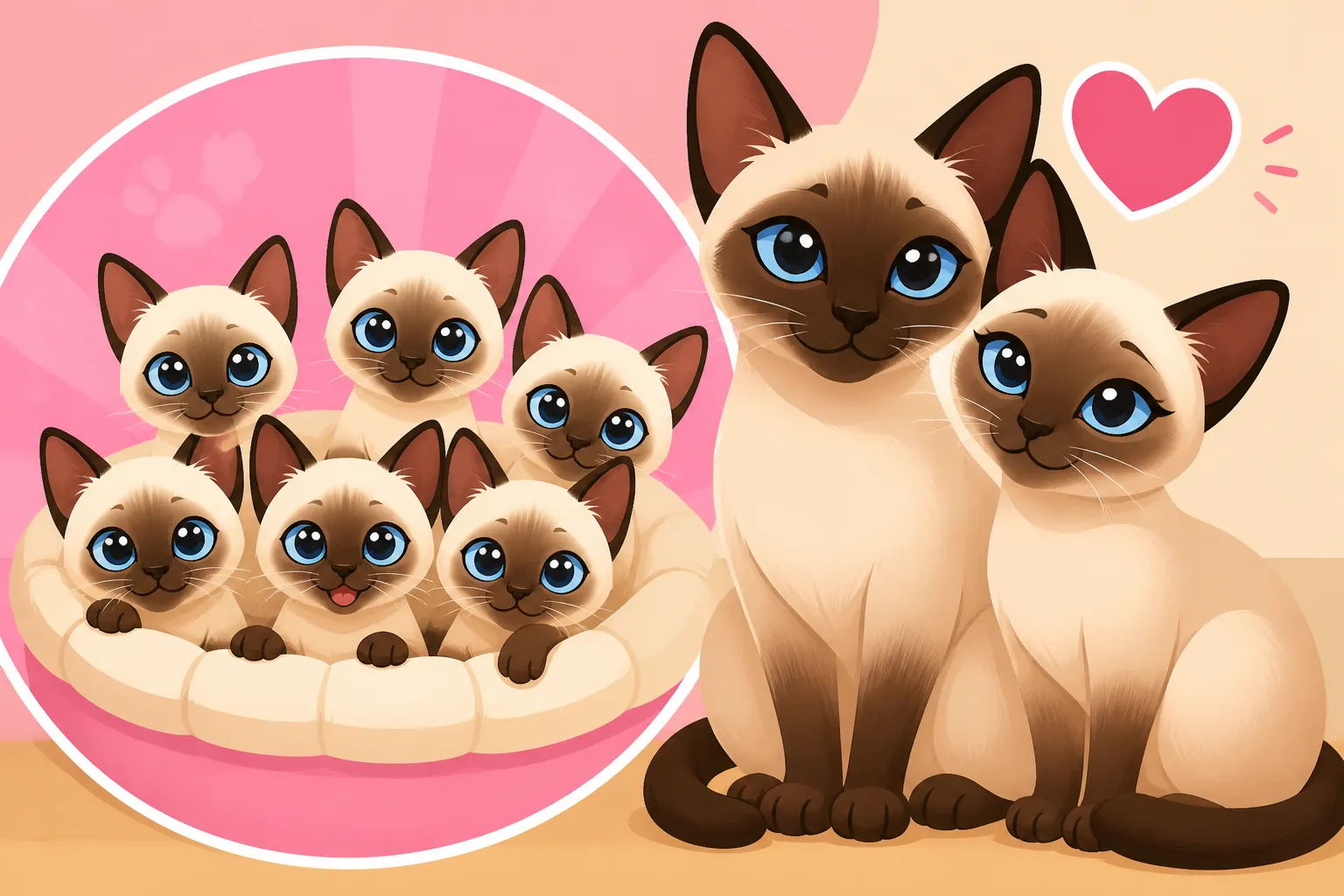
Pho and Mia had three kittens
The litter was born in Britain
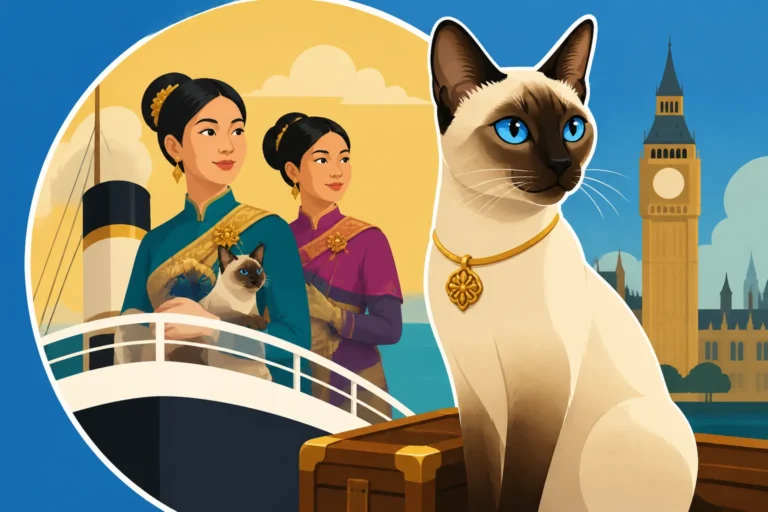
Pho and Mia are remembered as an early pair of Siamese cats in Britain. They were brought from Siam, now Thailand, in the late nineteenth century, and their arrival helped introduce British audiences to a cat that was then unfamiliar to most of them. For more on the cats and the circumstances surrounding their arrival, see Who Pho and Mia the Siamese Cats Were and Who Brought the First Siamese Cat to Britain.
The pair had a litter of three kittens in Britain, generally dated to 1885. That is the clearest answer to the question in the title: Pho and Mia had three kittens. Their litter is notable not because three was an unusual number for cats, but because these kittens belonged to one of the earliest recorded Siamese families in Britain.
It is worth keeping the historical setting in mind. Cat breeding was not documented with the standardized pedigrees, photographs, online registries, and detailed health records familiar to many people today. The surviving story is brief, and it does not answer every question a modern reader might have about the litter.
What the historical record can and cannot tell us
The figure of three kittens is repeated in accounts of Pho and Mia and their role in the early British Siamese story. However, the records do not offer the kind of complete family history that a present-day breeder might provide. Details such as each kitten’s precise birth date, physical development, and later descendants are not always consistently recorded.
That gap can be frustrating if you are trying to reconstruct a full family tree. It does not mean the litter is imaginary or that the number is just a guess; rather, it reflects the uneven detail available in historical accounts. The most responsible way to state the fact is that Pho and Mia are reported to have had three kittens, while recognizing that the surviving documentation is limited.
| Question | Historical account |
|---|---|
| Who were the parents? | Pho and Mia, Siamese cats brought to Britain |
| How many kittens did they have? | Three |
| When was the litter born? | Commonly dated to 1885 |
| Are the kittens’ names recorded? | Yes, though spellings can vary |
| Are full biographies available for all three? | No; surviving detail is limited |
Their litter is also a reminder that breed history is often pieced together from scattered records. A short mention in a show report or a later breed history can preserve an important fact while leaving many ordinary details of the cats’ lives unknown.
The kittens’ names and their place in the story
The three kittens are often named
The kittens are commonly identified as Duen Ngai, Kalohom, and Khromata. Spellings may differ between accounts because names were being represented in English from another language, and historical spelling conventions were not uniform. If you encounter slightly different versions, that variation does not necessarily indicate that an additional kitten or a different litter is being described.
The names matter because they give the three kittens a more distinct place in Siamese history than a simple note that Pho and Mia had offspring. They are often mentioned in connection with the early British Siamese cats and their appearance at a cat exhibition. For the naming details, see What the First British Siamese Cat Kittens Were Named.
At the same time, it is best not to assume that every later account supplies the same information or spells each name identically. Old records can be copied, abbreviated, or rendered differently. When comparing versions, focus first on the stable details: the litter consisted of three kittens, they were associated with Pho and Mia, and their names are commonly given as Duen Ngai, Kalohom, and Khromata.
Why their names are still discussed
The kittens’ names continue to attract attention because they connect individual cats to a broader turning point: Siamese cats were moving from being little-known imports to animals presented before British audiences. A named kitten is easier to trace in a historical narrative than an unnamed one, even when the trail eventually becomes thin.
For readers researching Siamese ancestry, the names can sound like the start of a complete pedigree. In reality, the historical record is not a continuous, fully documented family tree. The kittens are important as early recorded descendants, but the available evidence does not necessarily let us follow each one through every later generation.
Their story also helps separate what is documented from what people might infer. We can say that three kittens were born and that commonly repeated accounts give their names. We should be more cautious about claims regarding their exact personalities, adult appearance, offspring, or lifespan unless a reliable historical account specifically records those details.
How the kittens became part of Siamese cat history
Their public appearance helped make the breed visible
Pho and Mia’s kittens are associated with the early exhibition of Siamese cats in Britain. Cat shows gave the public and enthusiasts a chance to see breeds they might otherwise have known only through descriptions. The family’s appearance helped make the Siamese more than a story about exotic cats arriving from abroad: it showed that they could be bred and raised in Britain as well.
The kittens are connected with the Crystal Palace cat show in 1885 in accounts of the breed’s early British history. To explore that exhibition context, read Which Show the First Siamese Cats Appeared At and Which London Show the First Siamese Cats Were Entered In. These historical events were part of the gradual process by which cats began to be categorized, judged, and discussed as recognizable breeds.
A show appearance does not mean that the kittens immediately became famous or that their descendants shaped every later Siamese line. It does mean their family was visible at a moment when Siamese cats were attracting growing curiosity. The first exhibitions were steps in a much longer story of changing standards, breeding choices, and public interest.
Early show culture was not the same as modern cat shows
It is easy to imagine a nineteenth-century show as a version of a contemporary cat exhibition, complete with polished breed standards and extensive paperwork. The reality was less settled. Breed categories and judging expectations were still developing, and the way Siamese cats were described or assessed could differ from the systems used later.
That early uncertainty is part of why records from the period can feel incomplete or inconsistent. A show report might describe a cat in a few lines without preserving the kind of detailed profile that owners now expect. For more background on how early audiences responded, see What Judges Thought of the First Siamese Cats.
The cats’ appearance in exhibitions should therefore be understood as a meaningful early milestone, not as proof that the breed’s modern identity had already been fixed. Over time, clubs, breeders, and registries helped formalize standards and create more systematic records. Pho and Mia’s kittens belong to the beginning of that process.
What to take away from Pho and Mia’s litter
Three is the supported answer, with a historical caveat
If you are looking for a direct answer, Pho and Mia had three kittens. They are commonly named Duen Ngai, Kalohom, and Khromata, and the litter is generally placed in 1885. Those details make the family an important part of the Siamese cat’s early British history.
The caveat is that historical documentation is not as complete as a modern pedigree file. Spellings may vary, and the surviving accounts do not provide a full life story for each kitten. It is reasonable to repeat the established number and commonly recorded names without filling in missing details as though they were certain.
For wider context, How Old the Siamese Cat Breed Is looks at the breed’s deeper history, while Where the Siamese Cat Comes From explores its origins. Pho and Mia’s litter is one small but memorable chapter in that larger story: three kittens born in Britain, recorded by name, and associated with the period when Siamese cats were beginning to capture public attention.
Why this small detail remains meaningful
A litter of three might sound like a minor detail compared with the Siamese cat’s long history. But it makes the past feel more tangible. Instead of thinking only about a breed moving between countries, we can picture a particular pair of cats and their kittens becoming part of a new community of cat enthusiasts.
That human-scale history is often what makes breed research rewarding. The records may not tell us what the kittens liked to eat or where they slept, but they preserve their names and their connection to an early British Siamese family. Those fragments give modern readers a way to understand how a breed’s story develops—not all at once, but through individual animals, small litters, and public encounters that are remembered long afterward.
Disclaimer
This article is for general informational purposes only and does not constitute professional advice. Laws, prices and regulations vary by location and change over time. Consult a qualified professional for guidance on your specific situation.