Why the Siamese Cat’s Eyes Cross in the Legend
The captivating gaze of a Siamese cat, often characterized by those mesmerizing blue eyes that sometimes seem to drift inward, has always been a hallmark of the breed's distinct allure. For many new owners, or even seasoned enthusiasts, witnessing those crossed eyes can spark a whirlwind of questions: Is it a health issue? Is it normal? But beyond the scientific explanations, the origin of this unique trait is beautifully entwined with ancient folklore, offering a rich tapestry of stories that truly deepen our appreciation for these magnificent felines. This guide will delve into one of the most beloved legends explaining why the Siamese cat's eyes cross, connecting us to their storied past as royal companions.
The Distinctive Charm of the Siamese Gaze
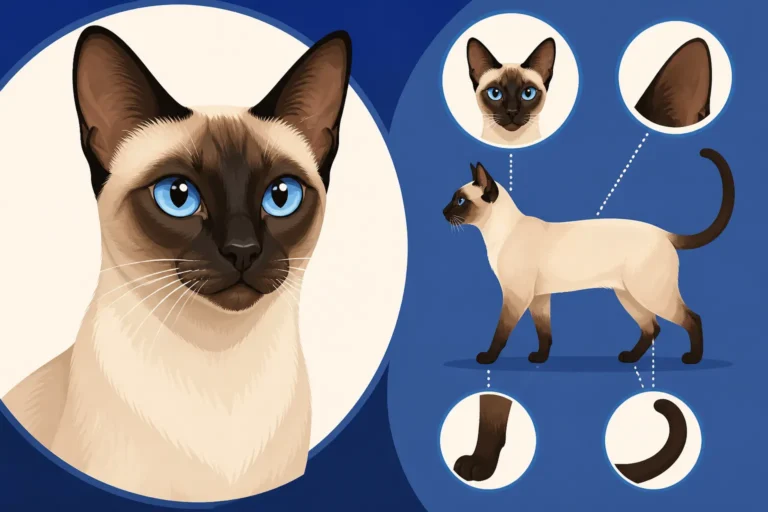
There’s no denying the striking appearance of a Siamese cat. From their sleek, lithe bodies to their rich point coloration, every feature seems designed to command attention. But perhaps no trait is as instantly recognizable, and sometimes perplexing, as their eyes. While modern breeding standards often try to minimize it, the crossed eyes, or strabismus, in a Siamese cat are, for many, an endearing characteristic that harks back to their ancient lineage. It’s a trait that makes them undeniably them.
What Crossed Eyes Look Like in a Siamese Cat
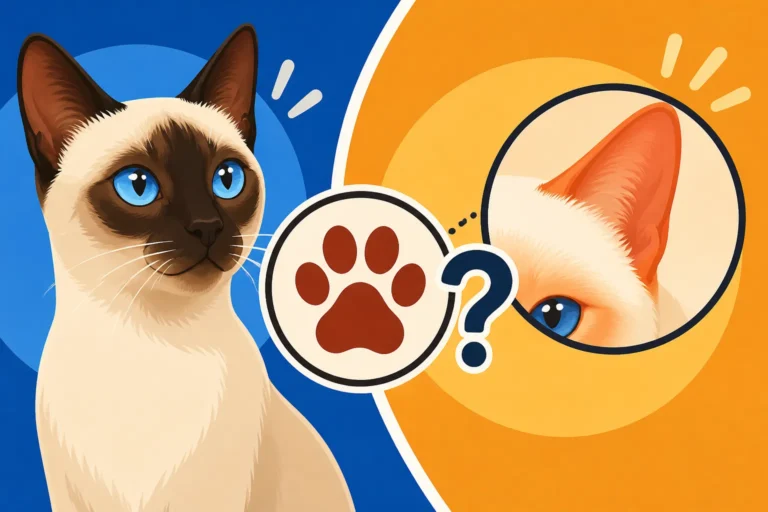
When we talk about crossed eyes in a Siamese, we're referring to a condition where one or both eyes turn inward, toward the nose. It's not a subtle thing; you can clearly see the misalignment. This isn't just a quirk, it's a part of the Siamese cat's physiology that has been present for centuries, woven into the very fabric of their breed. Imagine looking into those deep sapphire pools, only to find them converging, giving your cat an almost intensely focused, yet slightly bewildered, expression. For owners, it quickly becomes part of their cat's individual charm, a visual shorthand for the breed's unique genetics and history. It's a reminder that beauty often lies in imperfection, or at least, in what makes something truly distinctive.
Beyond Modern Breeding: A Glimpse into History
Today, many breeders actively select against crossed eyes, aiming for a "perfect" alignment according to show standards. However, if you look at older photographs or artistic depictions of Siamese cats, you'll find that crossed eyes were much more common, and indeed, often celebrated as a sign of authenticity. This shift in aesthetic preference can sometimes lead new owners to worry, thinking their beloved feline has a flaw. But historically, particularly in their native Siam, these traits were viewed very differently. They weren't seen as imperfections to be bred out, but rather as indelible marks, steeped in myth and reverence, that told a story. Understanding this historical context helps us appreciate why this feature, despite its modern-day reduction in prevalence, holds such a significant place in the Siamese cat's lore. You can learn more about What a Siamese Cat Looks Like by the Standard to see how these perceptions have changed.
Tales from Ancient Siam: Felines of Noble Lineage
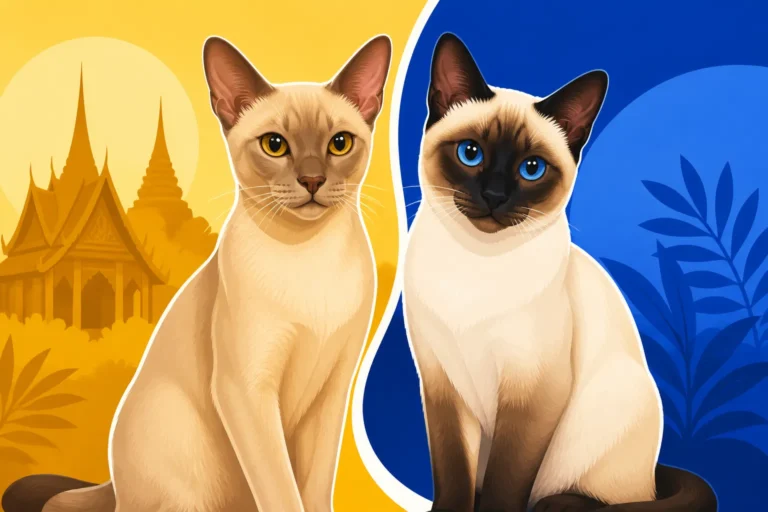
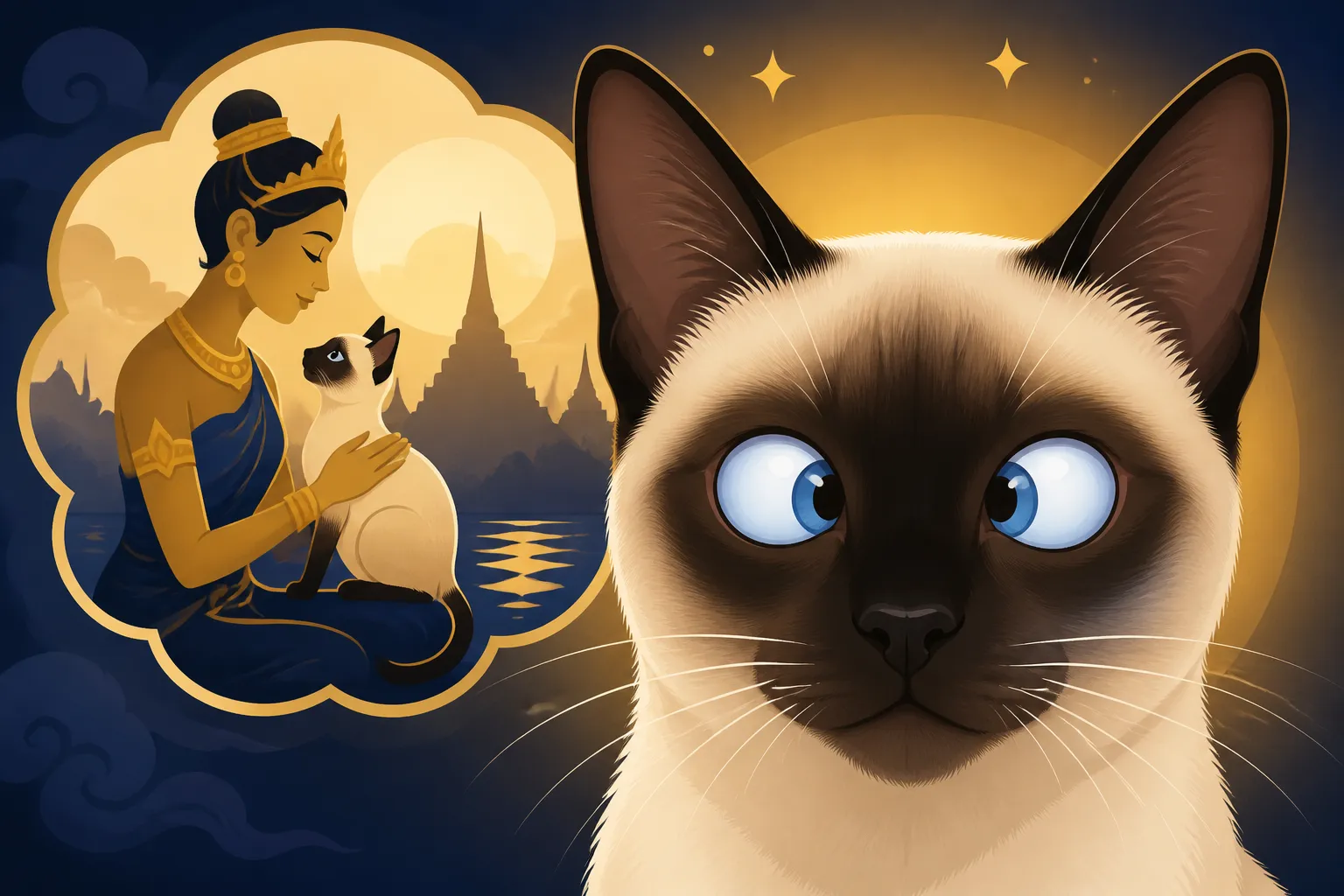
To truly understand the legends behind the Siamese cat's crossed eyes, we must travel back in time to the Kingdom of Siam, now Thailand. Here, these magnificent cats were not merely household pets but revered creatures, integral to the spiritual and social fabric of the royal court and sacred temples. They were guardians, companions, and symbols of good fortune, often granted privileges far beyond those of ordinary animals.
The Sacred Status of Temple and Royal Cats
In ancient Siam, the Wichianmat, as the Siamese cat was known locally, held an almost mythical status. They were believed to be conduits for the souls of deceased royalty and were kept within the hallowed walls of temples and palaces. These cats were pampered, protected, and believed to bring good luck to their noble guardians. Imagine a life of luxury, doted upon by monks and queens, with every need catered for. Their presence was thought to ward off evil spirits and ensure prosperity. This elevated status meant that every unique physical characteristic of these cats was not merely observed but often imbued with deeper meaning, giving rise to the enchanting legends that explain their distinctive features. The Tamra Maew Manuscripts Show About the Siamese Cat extensively detail the sacred cats of Siam.
How Physical Traits Became Embellished with Lore
When a creature is held in such high esteem, its unique attributes naturally become part of its story. For the Siamese cat, traits like their striking blue eyes, their incredibly vocal nature, their sleek bodies, and yes, their crossed eyes and kinked tails, were not simply genetic quirks. They were seen as divine markers, evidence of their dedication, intelligence, or even past lives. The people of Siam created beautiful, imaginative narratives to explain these features, transforming them from simple biological occurrences into enduring symbols of loyalty and wisdom. These stories served to reinforce the cat's revered position and were passed down through generations, becoming an inseparable part of the Siamese cat's identity. This rich oral tradition explains Where the Siamese Cat Comes From and its profound cultural significance.
The Legend of the Royal Vase and the Devoted Queen
Among the many captivating legends of Siam, one stands out as the most popular explanation for the Siamese cat's crossed eyes. It's a tale of unwavering loyalty, precious treasures, and a feline companion's profound devotion. This story paints a vivid picture of how a simple physical trait could be attributed to a cat's noble service.
The Queen's Treasure and Her Trusty Feline Guard
The legend often begins with a beloved queen of Siam, who, nearing the time of giving birth, was naturally concerned about the safety of her most prized possessions. These weren't just any jewels; they were irreplaceable royal treasures, perhaps ancient chalices, ceremonial swords, or sacred scrolls. She needed a guardian she could trust implicitly, someone utterly devoted and vigilant. Who better than her most loyal Siamese cat? The cat, in this story, was not just a pet, but a confidante and a silent sentinel, always by her side.
So, the queen entrusted her precious collection to her faithful feline. She meticulously arranged the treasures, placing her most cherished item – often described as a magnificent, slender vase or goblet – in a prominent position. She then commanded her Siamese cat to watch over them, day and night, until her return.
The Cat's Unwavering Gaze and Its Enduring Mark
True to its loyal nature, the Siamese cat took its duty with utmost seriousness. It sat down, fixed its gaze upon the most valuable piece, the beautiful vase, and began its vigil. Days turned into nights, and the cat remained motionless, its eyes locked onto the treasure. Such was its intense focus, its unwavering concentration on its sacred task, that over time, its eyes began to cross, permanently set in that inward stare of ultimate devotion. The legend suggests that the sheer, unblinking intensity of its watch caused this physical change, a visible manifestation of its absolute commitment to its queen and her treasures. The cat never faltered, never looked away, and in doing so, earned a lasting mark of its incredible loyalty.
The Connected Tale of the Kinked Tail
Interestingly, this same legend often provides an explanation for another distinctive, albeit now rare, Siamese trait: the kinked tail. As the story goes, the devoted cat, while guarding the precious vase, also wanted to ensure its physical security. To do this, it would wrap its long, elegant tail tightly around the slender base of the vase. This action provided an extra layer of protection, keeping the treasure steady and secure, and acting as a physical anchor for its vigilant body. Over the many days and nights of its vigil, the constant wrapping caused a permanent kink or knot to form in its tail, a visible reminder of its resourcefulness and unwavering dedication. Both the crossed eyes and the kinked tail thus became symbols of extraordinary loyalty and service, treasured marks of their royal heritage. It’s fascinating how these two distinct physical traits share a common mythical origin, highlighting the deep narrative traditions surrounding the breed. You can explore The Temple Legends Behind a Siamese Cat's Kinked Tail for more insight into this parallel story.
Here's a quick comparison of how these two unique Siamese traits are explained by legend:
| Trait | Legendary Origin | Symbolic Meaning |
|---|---|---|
| Crossed Eyes | Caused by intense, unwavering focus while guarding royal treasures, particularly a slender vase. | Loyalty, Vigilance |
| Kinked Tail | Formed by constantly wrapping the tail around the base of the royal vase for added security during the vigil. | Resourcefulness, Duty |
The Legacy of Loyalty: Passed Down Through Generations
These enchanting legends did more than just explain physical characteristics; they cemented the Siamese cat's reputation as a creature of profound loyalty, intelligence, and a deep connection to its human companions. In a time before genetic science, such stories provided a powerful and poetic understanding of the natural world, linking the physical to the spiritual and the historical.
A Mark of Honor, Not a Flaw
In ancient Siam, rather than being seen as defects, crossed eyes and kinked tails were considered marks of honor, badges of an ancestral legacy. They were visible signs that these cats carried the bloodline of those loyal guardians who had served queens and temples with such unwavering devotion. Imagine a culture where a physical trait is celebrated as a testament to historical heroism! This perception stands in stark contrast to how these traits might be viewed in modern times. For those who appreciated the breed's deep history, these features were cherished as part of the Siamese cat's authentic charm and noble heritage.
The Shift from Cultural Reverence to Modern Aesthetics
As Siamese cats made their way from the palaces of Siam to the homes and show rings of the Western world in the late 19th and early 20th centuries, perceptions began to change. Western breeding standards started to emphasize certain physical ideals, often favoring a sleek, elegant appearance without what were perceived as "faults" like crossed eyes or kinked tails. While the legends remained, the focus in breeding shifted towards uniformity and a specific aesthetic vision.
Today, while some traditionalists still appreciate these old-world traits, many contemporary breeders actively work to minimize their occurrence. This doesn't diminish the beauty or historical significance of the legends, but it highlights the evolving relationship between breed standards, cultural appreciation, and genetic selection. For many Siamese cat enthusiasts, however, the stories of loyalty continue to add a magical dimension to their understanding of these incredible felines, and they embrace the occasional crossed eye as a nod to their cat's incredible ancestry. You might find it interesting to learn Whether Crossed Eyes Are Still Bred Out of Siamese Cats in modern breeding.
The Scientific Reality Behind Crossed Eyes
While the legends are beautiful and enduring, modern science offers a different, albeit equally fascinating, explanation for why some Siamese cats have crossed eyes. This condition, known as strabismus, is directly linked to the unique genetic mutation responsible for their famous colorpoint coat pattern. It’s a classic example of how one gene can influence multiple traits, a phenomenon known as pleiotropy.
The Genetic Basis: Pigmentation and Visual Pathways
The gene that gives Siamese cats their distinctive "points" (darker fur on cooler parts of the body) also affects the nerve pathways from their eyes to their brain. Specifically, the partial albinism gene (often called the Himalayan gene) influences the production of melanin, which is responsible for pigment in both fur and eyes. This gene causes a partial misrouting of the optic nerves at a point called the optic chiasm.
Normally, nerve fibers from each eye cross over to the opposite side of the brain. In Siamese cats, some of these nerve fibers are misrouted, sending signals to the wrong side of the brain. To compensate for this visual miswiring and ensure proper depth perception, the cat's eye muscles work harder, pulling the eyes inward, resulting in strabismus. It's an involuntary physical adaptation to a genetic quirk. This genetic link is a key part of Why a Siamese Cat's Eyes Cross from a biological perspective.
Visual Processing and Compensatory Mechanisms
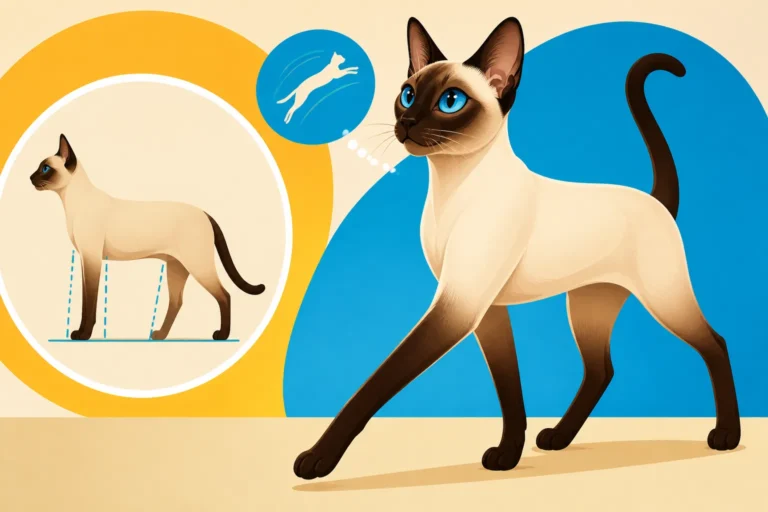
Think of it like this: if your brain isn't getting clear, properly aligned visual information from both eyes, it tries to adjust. For a Siamese cat with this genetic predisposition, the crossed eyes are actually a compensatory mechanism. Without this adjustment, their vision might be even more impaired. So, while it might look unusual to us, for the Siamese cat, it's a way for their brain to process the visual world more effectively given their unique neurological wiring. It’s a remarkable example of nature finding a way to make things work. This explains why, despite their crossed eyes, many Siamese cats navigate their world with impressive agility and grace.
Embracing the Legacy: Appreciating Your Siamese Cat
Whether you prefer the enchanting ancient legends or the precise explanations of modern science, there's no denying that the Siamese cat's crossed eyes are a captivating feature. For those of us who share our homes with these vocal and intelligent felines, understanding their history, both mythical and scientific, only deepens our connection and appreciation.
Celebrating the Breed's Rich Historical Tapestry
Owning a Siamese cat isn't just about having a pet; it's about becoming part of a centuries-old story. Every glance from those blue eyes, whether perfectly aligned or charmingly crossed, carries the echoes of ancient Siam, of royal courts, and devoted guardians. Embrace the legends! Share them with friends and family. It adds a layer of magic and historical depth to your cat's already vibrant personality. Your Siamese isn't just a cat; it's a living piece of history, a direct descendant of those revered temple cats. This historical connection is a powerful reminder of how truly special these animals are.
Finding Modern Comforts for Your Ancient Companion
Even though their lineage is ancient, our Siamese cats enjoy all the comforts of modern life. Providing them with stimulating environments and comfortable living spaces is key to their happiness. From sturdy cat trees that allow them to survey their kingdom from on high, to engaging puzzle feeders that challenge their keen minds, there are countless ways to enrich their lives. When I'm looking for high-quality, durable cat products that stand up to the energetic demands of a Siamese, I often browse the extensive selection on Chewy. They have everything from interactive toys that cater to their intelligent hunting instincts to cozy beds where they can curl up and dream of guarding ancient vases. Keeping their minds and bodies active is so important for this breed, and a quick scroll through Chewy's offerings can provide endless inspiration for enriching their daily lives. You can also explore options for their health, like eye care products, or even specialized food if they have specific dietary needs, all easily accessible through trusted retailers like Chewy.
| Aspect of Care | Importance for Siamese Cats | Common Items/Considerations |
|---|---|---|
| Mental Stimulation | Highly intelligent and prone to boredom; needs challenge to prevent destructive behaviors. | Puzzle feeders, interactive toys (wands, laser pointers), training sessions. |
| Physical Activity | Energetic and athletic; requires outlets for climbing, jumping, and running. | Tall cat trees, scratching posts, regular play sessions. |
| Comfort & Security | Crave warmth and cozy spots; feel vulnerable in cold. | Heated beds, soft blankets, window perches in sunny spots. |
| Nutritional Support | Lean and active, but prone to specific health issues; requires high-quality diet. | High-protein wet or dry food, freshwater access (consider a fountain). |
| Oral Hygiene | Prone to dental disease; proactive care is crucial for overall health. | Regular brushing, dental treats, professional dental cleanings. |
| Grooming | Short coat, but regular brushing helps manage shedding and maintain coat health. | Rubber grooming mitts, soft brushes. |
Your Siamese cat, with their captivating eyes and vocal personality, is a living connection to a fascinating past. By understanding both the legends and the science behind their unique traits, you can celebrate every aspect of what makes them such extraordinary companions.
Disclaimer
This article is for general informational purposes only and does not constitute professional advice. Laws, prices and regulations vary by location and change over time. Consult a qualified professional for guidance on your specific situation.