What Separates a Pet From a Show Siamese Cat
It’s a common scenario: you’re dreaming of bringing a beautiful Siamese cat into your home, and as you start to look at breeders, you notice two very distinct terms pop up – "pet quality" and "show quality." What on earth do they mean? Are they just fancy marketing terms, or do they signify something truly different about the cat you're considering? This guide is here to demystify these labels, explaining the real distinctions and helping you understand what to expect from each type of Siamese, especially when it comes to cost and temperament.
Understanding the "Show Quality" Standard for Siamese Cats
When a breeder or a judge talks about a "show quality" Siamese cat, they're referring to an individual who closely, if not perfectly, matches the official breed standard set by organizations like the Cat Fanciers' Association (CFA) or The International Cat Association (TICA). This isn't just about being a pretty cat; it's about adhering to very specific, often subtle, physical and temperamental criteria.
Physical Conformation and Breed Type
The hallmark of a show Siamese is its impeccable physical conformation. This means every aspect of its appearance, from the tip of its nose to the end of its tail, aligns with the ideal specified in the breed standard. We're talking about a very distinct, elegant silhouette that has been carefully cultivated over decades.
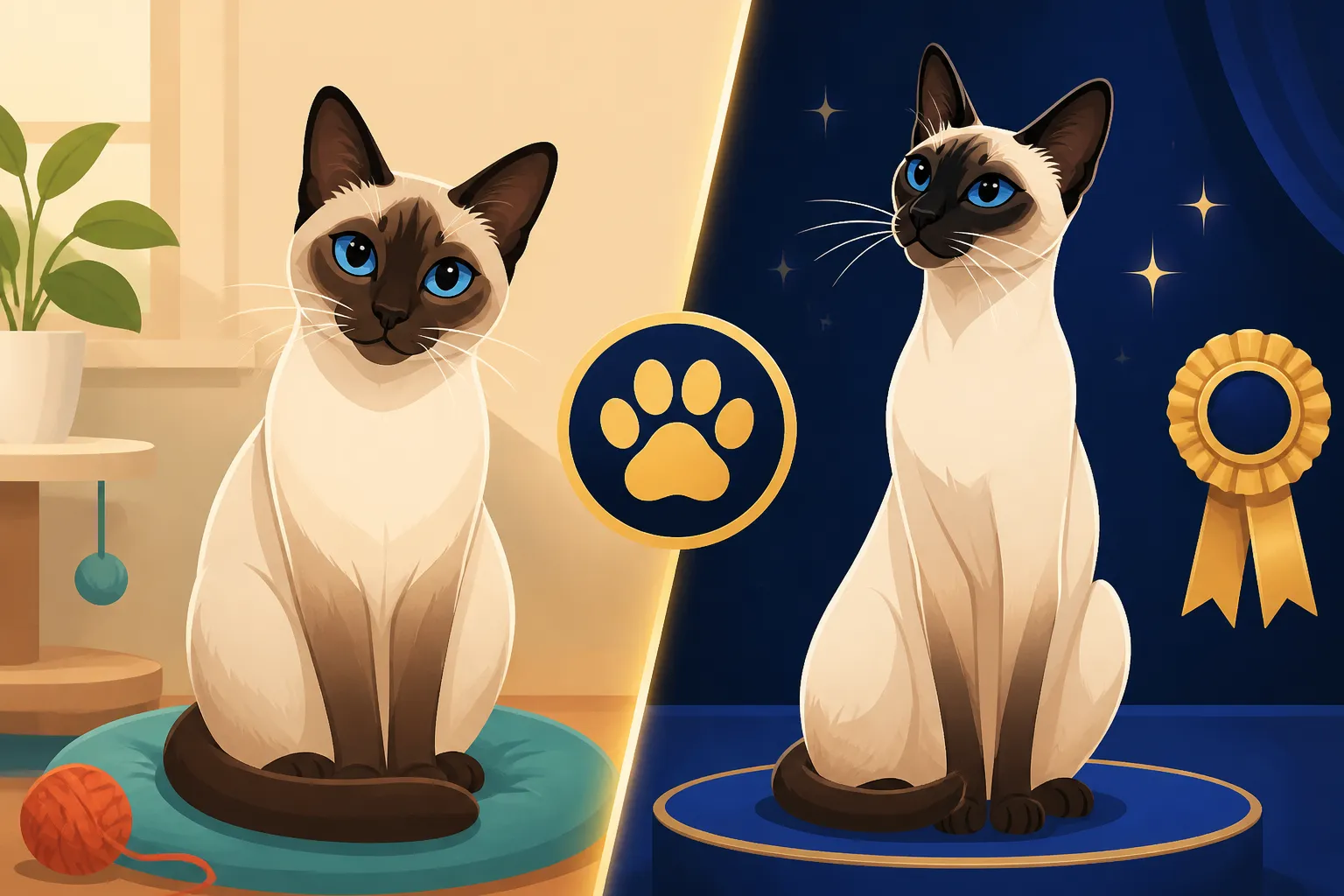
Judges look for that classic "wedge" head shape – a perfect triangle from the tips of the ears to the nose, without any pinch or bump. The ears themselves should be remarkably large, wide at the base, and set to continue the lines of the wedge. The eyes must be a striking, deep, vivid blue, almond-shaped, and angled to align with the wedge. The body is expected to be long, tubular, and incredibly svelte, almost delicate, with long, slender legs and small, oval paws. Even the tail needs to be long and tapering, whip-like, and completely free of kinks. Every single one of these traits is scrutinized, and even a slight deviation can mean the difference between winning a ribbon and simply participating. You can learn more about these specific traits in What a Siamese Cat Looks Like by the Standard.
Temperament and Presentation
Beyond physical perfection, a show Siamese must possess a particular temperament to succeed in the show ring. Imagine a bustling convention center, full of other cats, strange people, loud noises, and constant handling by judges. A shy, nervous, or aggressive cat, no matter how physically perfect, simply won't perform well.
Show cats are expected to be confident, calm under pressure, and tolerant of being handled by multiple strangers. They should interact positively with the judge, allowing them to examine their teeth, feel their coat, and assess their structure without fuss. This often means they’ve been socialized extensively from a young age to accept handling and new environments. A truly show-quality Siamese is a natural ambassador for its breed, showcasing not just its beauty but also the intelligent, engaging, and affectionate personality that defines the Siamese. Grooming and presentation are also key; their short, sleek coat must be immaculate, their ears clean, and their claws trimmed to perfection.
What Makes a "Pet Quality" Siamese Cat?
Now, let’s talk about "pet quality." It's a term that can sometimes sound less desirable, but nothing could be further from the truth. A "pet quality" Siamese cat is simply one that, while still a purebred Siamese with all the wonderful breed characteristics, has minor physical traits that don't quite meet the stringent demands of the show ring. These cats are bred first and foremost to be beloved companions.
Minor Deviations from the Breed Standard
A "pet quality" Siamese often has minor physical characteristics that make them unsuitable for competition, but absolutely perfect for a loving home. For instance, instead of the extreme wedge, they might have a slightly rounder head shape – sometimes referred to as an "applehead" or "traditional" style. Their ears might be a touch smaller, or not set quite as wide. Their eyes, while still a beautiful blue, might not be that exact deep sapphire hue the standard calls for, or perhaps they aren't quite as almond-shaped.
You might find a tiny, almost imperceptible kink at the very tip of their tail, or a slight imperfection in their point coloration that would be overlooked by an owner but noticed by a judge. Maybe their body isn't quite as long and svelte, or their legs aren't quite as slender. These are often superficial variations that have no impact whatsoever on the cat's health, longevity, or their ability to be an amazing, affectionate family member. These subtle differences often harken back to the "old style" Siamese many people remember from their childhoods, before the breed standard leaned towards the more extreme wedge. Why a Siamese Cat's Eyes Cross and Its Tail Kinks discusses some of these historical variations.
Temperament and Lifestyle Fit
The temperament of a pet quality Siamese is what truly shines in a home environment. While a show cat needs to be confident and calm in a show ring, a pet Siamese simply needs to be happy, healthy, and a joy to live with. They embody the classic Siamese personality: intensely vocal, incredibly intelligent, playful, and deeply affectionate with their human family. What a Siamese Cat's Temperament Is Really Like delves into this more.
These cats are bred for companionship, meaning their outgoing, curious, and often mischievous nature is encouraged. They thrive on interaction, following you from room to room, "conversing" with their unique meows, and demanding attention. A pet quality Siamese might not enjoy the stress of travel and crowded show halls, but they will excel at being your best friend, a snuggle buddy, and an endless source of entertainment. Their focus is on bonding with their family, not on winning rosettes.
Health, Genetics, and the Breeder's Role
Regardless of whether a Siamese cat is destined for the show ring or your sofa, a responsible breeder prioritizes health and temperament above all else. The terms "pet quality" and "show quality" refer to adherence to a cosmetic standard, not a health standard.
Health Screening for All Siamese Cats
A truly ethical breeder will conduct comprehensive health screenings on all their breeding cats, whether their offspring are designated as pet or show quality. This is absolutely critical for the long-term well-being of the kittens. Siamese cats, like many purebreds, can be predisposed to certain genetic health issues.
For example, amyloidosis, a condition where abnormal protein deposits build up in organs, particularly the liver and kidneys, is a concern in Siamese lines. There is no DNA test for Siamese Cat Amyloidosis, but reputable breeders will track health in their lines and be transparent about any known issues. Progressive Retinal Atrophy (PRA) is another genetic condition affecting eyesight, and while the rdAc DNA test is unreliable for Siamese, eye exams by a veterinary ophthalmologist are important. Responsible breeders will openly share health records of the parent cats and will often offer health guarantees for their kittens. Owners should also consider pet insurance providers like Healthy Paws to help manage unexpected veterinary costs, as even the healthiest lines can encounter unforeseen medical needs. You can learn more about general health in How Healthy the Siamese Cat Actually Is and Which Health Tests a Siamese Cat Breeder Runs.
Ethical Breeding Practices
Ethical breeders are passionate about the welfare of their cats and the future of the breed. They will take great care in selecting breeding pairs, not just for looks, but for good health, stable temperaments, and genetic diversity. They invest time, effort, and significant resources into raising healthy, well-socialized kittens. This includes proper nutrition, veterinary care, and early socialization to ensure kittens are confident and friendly before going to their new homes.
They will also have a thorough kitten contract, outlining responsibilities, health guarantees, and often a spay/neuter clause for pet kittens to prevent accidental or irresponsible breeding. If you're looking for a pet Siamese, an ethical breeder will be more concerned with finding the perfect home where the cat will thrive as a beloved family member, rather than focusing purely on show potential. They understand that a "pet quality" designation simply means the cat is intended for a lifetime of cuddles, not competition.
The Financial Implications: Cost and Care
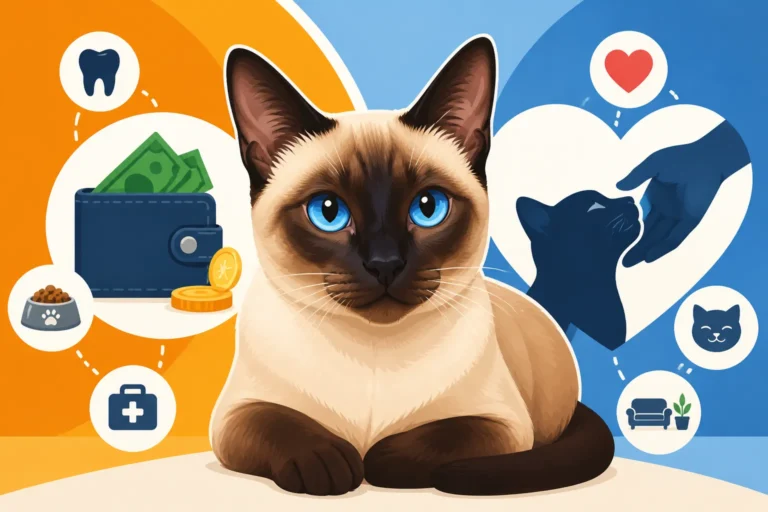
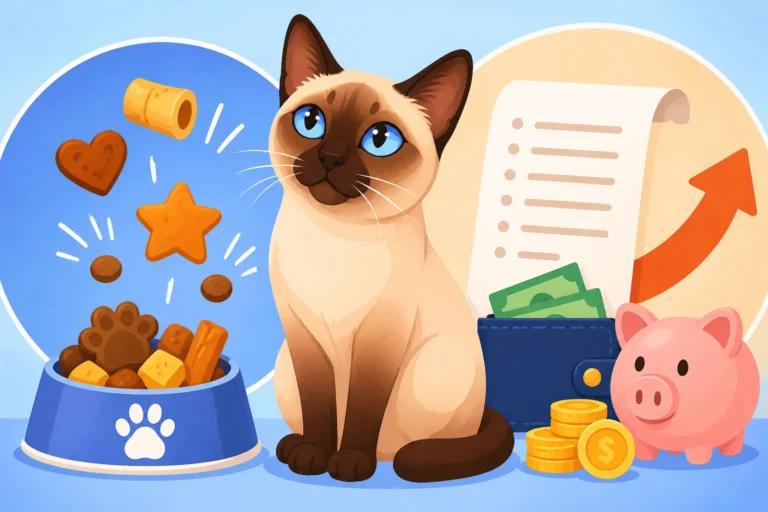
The initial cost of a Siamese cat can vary widely, and the "pet quality" versus "show quality" designation plays a significant role in this. However, it’s important to remember that ongoing care costs are largely the same for any Siamese, regardless of their show potential.
Initial Purchase Price Differences
Generally speaking, a show quality Siamese cat will command a higher purchase price than a pet quality one. This isn't because the pet quality cat is "less good," but rather reflects the breeder's substantial investment in maintaining and improving their show lines. Show breeders often spend considerable sums on stud fees, traveling to bring in top genetics, entering shows, and proving their cats in competition. The goal is to produce cats that are as close to the breed standard as possible, which is a demanding and costly endeavor. A kitten with true show potential represents the culmination of this effort.
A pet quality Siamese, while still coming from health-tested parents and receiving the same excellent care and socialization, will typically have a lower price. They are just as purebred and genetically healthy, but they might have those minor cosmetic flaws mentioned earlier that preclude them from a successful show career. Regardless of the initial price tag, any Siamese from a reputable breeder is a significant investment. You can get a sense of overall costs in What a Siamese Cat Costs to Buy in 2026.
| Feature | Show Quality Siamese Cat | Pet Quality Siamese Cat |
|---|---|---|
| Physical Standard | Meets official breed standard precisely. | Minor deviations from breed standard (e.g., head, tail kink). |
| Temperament | Confident, calm, enjoys handling by strangers, show-ready. | Affectionate, playful, vocal, thrives in home environment. |
| Breeding Focus | Preservation/refinement of breed standard, competition. | Companion animal first and foremost. |
| Price | Generally higher, reflecting breeding investment & potential. | Generally lower than show quality, but still significant. |
| Health Screening | Always extensive, same as pet quality. | Always extensive, same as show quality. |
| Lifestyle | May involve travel, shows, specific training. | Devoted companion for home life. |
Ongoing Costs for Pet vs. Show Cats
Once you bring a Siamese cat home, the day-to-day and year-to-year expenses are largely similar, whether your feline friend is a potential champion or your personal purring machine. Both will need high-quality nutrition. A wide selection of premium cat foods is available, from kibble and wet food to fresh meal plans that can cater to a Siamese cat’s specific needs. Your Siamese, regardless of their “quality,” is a lean, active animal that burns calories efficiently, so Feeding a Lean Siamese Cat That Burns Everything is important.
Regular veterinary care is a must for both types of cats, including annual check-ups, vaccinations, and parasite prevention. They will both need appropriate litter, litter boxes, and engaging toys to satisfy their high intelligence and play drive. Grooming a Siamese cat is generally minimal, but regular nail trims and occasional brushing are necessary. The main difference in ongoing costs would only appear if you choose to pursue a show career for your show quality Siamese, which would involve show entry fees, travel expenses, and specialized grooming products. For a pet quality Siamese, these additional show-related expenses simply aren't a concern, allowing you to focus your budget purely on their health, happiness, and enrichment. The total financial commitment over Twenty Years of a Siamese Cat, Priced Out is considerable, no matter their initial designation.
Disclaimer
This article is for general informational purposes only and does not constitute professional advice. Laws, prices and regulations vary by location and change over time. Consult a qualified professional for guidance on your specific situation.