What a Cat Tree for a Siamese Cat Costs
It’s a familiar scenario for many Siamese cat parents: you invest in a sleek, new cat tree, hoping it will be the ultimate climbing structure and observation post for your energetic feline, only to find it wobbly, ignored, or worse, completely shredded within a few weeks. The truth is, not all cat trees are created equal, and for a cat as intelligent, athletic, and demanding as a Siamese, simply grabbing the first cute option off the shelf just won't cut it. This guide will walk you through what to truly look for in a cat tree that will not only stand up to your Siamese's spirited nature but also provide the enrichment they desperately need, alongside a realistic look at the costs involved.
Why a Siamese Cat Demands a Superior Cat Tree
Your Siamese isn't just any cat; they're a unique blend of athleticism, intelligence, and a deep-seated need for interaction and stimulation. A standard, flimsy cat tree designed for a more sedate feline simply won't meet their complex requirements, leading to frustration for both you and your beloved companion.
Their Unmatched Athleticism and Energy Levels
Siamese cats are often described as feline acrobats, and for good reason! They possess an incredible amount of energy and a natural inclination to climb, jump, and survey their domain from high vantage points. If you've ever watched a Siamese scale curtains or leap onto a bookshelf, you know exactly what I mean. Their lean, muscular bodies are built for movement, and they need an outlet for that physical prowess. A small, unstable cat tree that barely reaches your waist isn't just boring for them; it's potentially dangerous. Imagine your Siamese launching themselves onto a platform only for the entire structure to sway alarmingly or, even worse, tip over. This isn't just a concern for their safety; it can also lead to them associating the tree with negative experiences, making them less likely to use it. A proper cat tree needs to be a fortress, a multi-level playground where they can safely express their natural climbing instincts without you worrying about a crash landing. How High a Siamese Cat Climbs is truly impressive, and their cat tree should reflect that.
Their Keen Intelligence and Low Boredom Threshold
Siamese cats are often lauded for their intelligence, and while this makes them wonderful companions, it also means they get bored easily. A cat tree that offers no challenge, no new nooks to explore, or no interesting textures quickly becomes just another piece of furniture. They need mental stimulation as much as physical exercise. Think of a static, single-platform tree – it might be fine for a cat content to simply nap, but your Siamese will likely sniff it once and then move on to more interesting (and potentially destructive) activities. They thrive on novelty and engagement. A high-quality cat tree will incorporate various elements like tunnels, cubbies, dangling toys (securely attached, of course!), and different climbing surfaces to keep their sharp minds occupied. If a cat tree isn't engaging enough, your Siamese might turn their attention to things like your expensive curtains or the top of your kitchen cabinets, proving that prevention through proper enrichment is often the best medicine. Enrichment for a Siamese Cat That Gets Bored in an Hour is a serious consideration.
Their Social Nature and Desire for Observation
One of the most endearing qualities of a Siamese cat is their deep bond with their human family. They aren't aloof; they want to be involved in everything you do. This means they often seek out elevated spots where they can observe the household goings-on. A cat tree isn't just a place to climb; it's a prime observation deck. If your Siamese is constantly jumping on counters or perching on door frames, it's a clear sign they're looking for higher ground to keep an eye on you. A well-designed cat tree provides these coveted high spots, allowing them to feel secure and included, rather than having to scramble for a view. They love to watch the world, and especially their world, unfold from a safe, elevated position. This helps them feel like a central part of the family, which, let's be honest, they believe they are!
What Makes a Quality Siamese Cat Tree (and Why It Often Costs More)
When we talk about "quality" in a cat tree for a Siamese, we're really talking about stability, durability, and thoughtful design. These factors inherently influence the price tag, but understanding why they're important will help you see the value in the investment.
Stability, Durability, and Construction Materials
This is perhaps the most critical factor. A cat tree for an active Siamese must be stable. This means a heavy, wide base that prevents wobbling or tipping when your cat launches themselves onto a platform. Look for solid wood construction rather than flimsy particle board wrapped in thin carpet. Solid wood posts and platforms are far more durable and can withstand the constant assault of claws and energetic leaps. Particle board, while cheaper initially, can quickly break down, especially if it gets wet or if your cat decides to really dig their claws into it.
The scratching surfaces are another key component. Sisal rope is a fantastic, durable option that provides a satisfying texture for your cat's claws, encouraging them to scratch the tree instead of your sofa. Cheap carpet coverings, on the other hand, can wear thin quickly, shedding fibers and losing their appeal. When you choose a tree with quality materials, you're not just buying a product; you're investing in something that will last, proving its worth over many years of vigorous use. It's often the case that paying a bit more upfront saves you money in the long run by avoiding frequent replacements.
Height, Multi-Level Design, and Engaging Features
For a Siamese, height is non-negotiable. They love to climb, so a tall cat tree with multiple levels and platforms is ideal. This provides them with plenty of vertical space to explore and different vantage points to survey their kingdom. Think about a tree that offers several distinct levels – perhaps a cubby at a lower level for a cozy nap, a mid-level platform for a quick stretch, and a top perch that lets them touch the ceiling (or nearly).
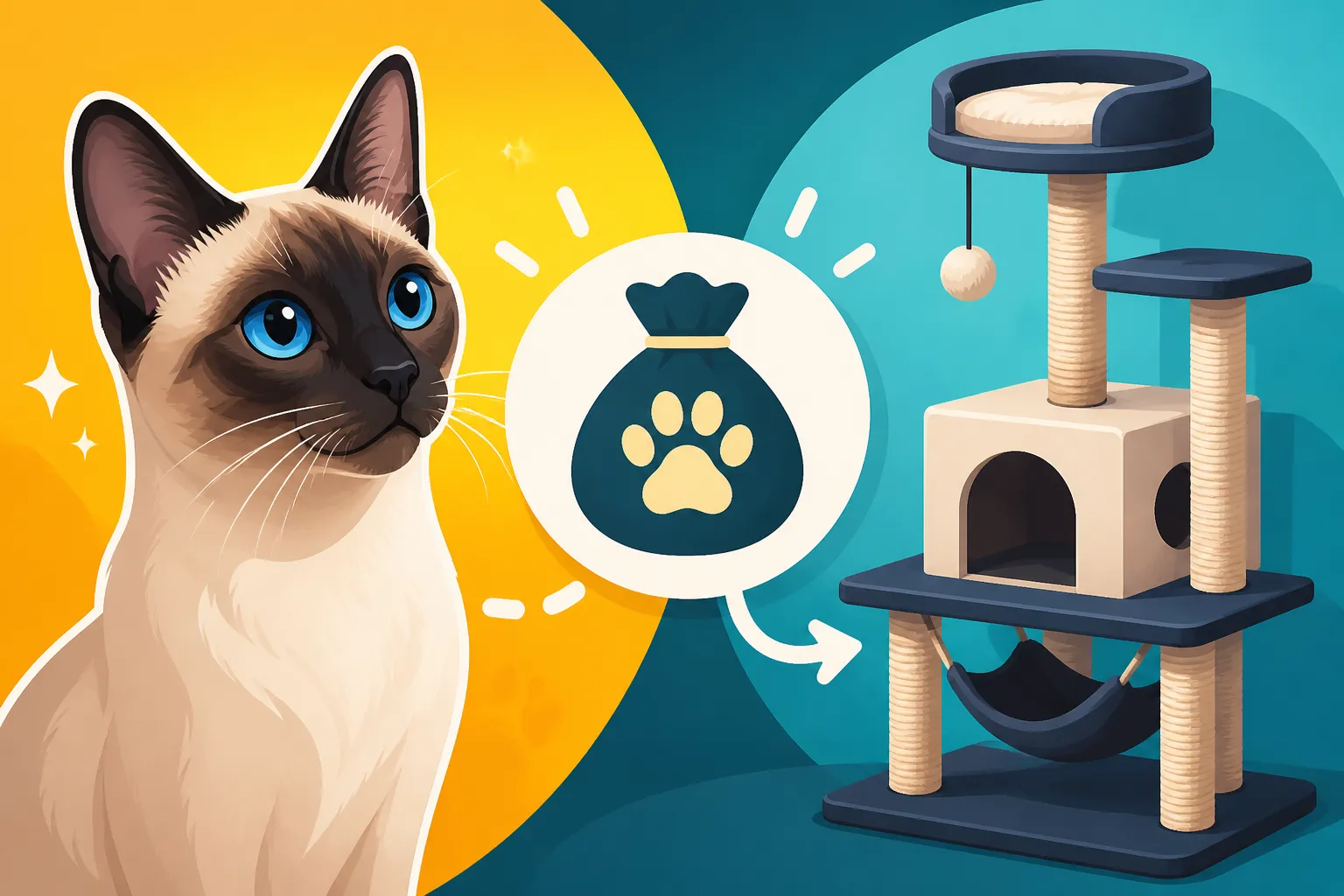
Beyond just height, look for features that promote engagement. Tunnels, enclosed cubbies, hammocks, and even dangling toys can add immense value. These elements cater to their natural hunting instincts and provide places for them to hide, stalk, or simply feel secure. Some premium cat trees even incorporate ramps or stairs, which can be particularly beneficial for older Siamese cats who still crave height but might struggle with big jumps. If you have multiple Siamese cats, a multi-level tree becomes even more important, offering enough space for each cat to have their own "territory" without squabbling.
Thoughtful Design and Home Aesthetics
Let's be honest, nobody wants a giant, ugly piece of cat furniture dominating their living room. While functionality is paramount, the design and aesthetics of a cat tree can also play a role in its cost. High-end cat trees often feature more appealing designs, using natural wood finishes, neutral colors, or even modular systems that can be customized to fit your space. These are the trees that integrate seamlessly into your home decor, rather than standing out like a sore thumb.
Some companies are now creating cat furniture that doubles as human furniture, like bookshelves with integrated cat tunnels or wall-mounted climbing shelves. While these options tend to be pricier, they offer a sophisticated solution for cat parents who value both their pet's happiness and their home's appearance. It's a testament to how far cat furniture has come, moving beyond purely utilitarian items to pieces that can genuinely enhance your living space.
The Price Range for Siamese Cat Trees
The cost of a cat tree for your Siamese can vary dramatically, from a relatively small outlay to a significant investment. Understanding these price points and what they typically offer can help you make an informed decision that suits both your budget and your cat's needs.
Budget-Friendly Options and Their Limitations
At the lower end of the spectrum, you might find cat trees ranging from perhaps thirty dollars up to around a hundred. These are usually smaller, often made with particle board construction and covered in thin carpet. They might have one or two small platforms and a basic scratching post.
While these can seem appealing due to their low upfront cost, they often come with significant limitations for a Siamese. They are typically less stable, meaning they can wobble or even tip when an energetic Siamese leaps onto them, creating a safety hazard. The materials also tend to be less durable; the carpet can quickly shred, and the structure itself can degrade, especially with heavy use. For a highly active and intelligent Siamese, a budget tree is often a false economy. They'll likely destroy it quickly, get bored, or simply ignore it in favor of climbing your furniture. They might be suitable for a tiny kitten for a very short period, or for a much older, less active cat, but they rarely meet the robust needs of a typical Siamese.
Mid-Range Selections: A Balance of Cost and Quality
Moving up, you'll find a wide array of mid-range cat trees, often priced between a hundred and three hundred dollars. This category usually offers a much better balance of cost and quality. You'll start to see more substantial construction, often with thicker posts and heavier bases made from sturdier wood composites or even solid wood elements. The scratching surfaces are more likely to be sisal rope, which is far more durable and satisfying for your cat.
Mid-range trees also tend to be taller, offering more levels, larger platforms, and sometimes a cubby or hammock. Brands like those you might find on Chewy often have a good selection in this range. These trees are generally more stable and durable than their budget counterparts, making them a much better investment for a Siamese cat. They can provide ample climbing, scratching, and observation opportunities without breaking the bank. It's crucial to read reviews and look for trees specifically praised for their stability, as even within this range, quality can vary.
High-End and Custom-Built Trees: The Investment Pieces
For those willing to make a significant investment, high-end and custom-built cat trees can range from three hundred dollars well into the many hundreds, or even over a thousand, depending on size, materials, and customization. These are truly investment pieces, designed for maximum durability, stability, and aesthetic appeal. They typically feature solid wood construction throughout, premium sisal rope, and often washable cushions or covers.
These trees are built to last for many years, often the entire lifetime of your Siamese. They can feature intricate designs, multiple tunnels, extra-large platforms, and even wall-mounted components for an integrated climbing system. Some owners opt for custom builders to create a unique piece perfectly tailored to their home and their Siamese's specific needs, incorporating specific colors, textures, or features like cat wheels. While the initial cost is much higher, the "cost per use" over a decade or more can actually be quite competitive, especially when you factor in the enjoyment and enrichment your Siamese will gain. What a Cat Tree for a Siamese Cat Costs can be substantial at this level, but it can also prevent costly vet visits for injuries from flimsy alternatives.
| Feature / Material | Typical Price Impact | Benefits for Siamese Cats |
|---|---|---|
| Particle Board/Carpet | Lower | Less stable, poor durability, quickly destroyed, potential safety hazard |
| Sturdy Wood Composite | Moderate | Better stability, decent durability, good value |
| Solid Wood Construction | Higher | Excellent stability, maximum durability, long-lasting investment |
| Sisal Rope Scratchers | Moderate | Highly durable, satisfying for scratching, promotes healthy claws |
| Plush Fabric/Soft Carpet | Lower/Moderate | Comfortable for napping, but less durable for scratching |
| Multi-Level/Tall Design | Moderate/Higher | Essential for climbing, exploration, and observation |
| Heavy/Wide Base | Moderate/Higher | Crucial for preventing wobbling and tipping |
| Enclosed Cubbies/Hammocks | Moderate | Provides security, hiding spots, and cozy napping areas |
| Wall-Mounted Components | Higher | Saves floor space, creates unique climbing challenges |
| Modular/Custom Systems | Higher | Customizable, allows for expansion, perfectly fits space |
Where to Find the Right Cat Tree and Making the Investment
Finding the perfect cat tree for your Siamese involves a bit of research and a willingness to prioritize quality over the lowest price. This investment will pay dividends in your cat's happiness and the integrity of your home furnishings.
Exploring Retailers and Online Options
The good news is that there are more options for cat trees today than ever before. You can start by browsing major pet supply retailers, both in brick-and-mortar stores and online. Websites like Chewy offer an enormous selection, often with detailed product descriptions and customer reviews that can be invaluable. Pay close attention to reviews from owners of active or larger cats, as their experiences will be most relevant to your Siamese. Look for specific mentions of stability, ease of assembly, and how well the materials hold up to enthusiastic use.
Beyond the big retailers, consider searching for specialty pet furniture stores or even small businesses that craft handmade cat trees. These smaller operations often focus on quality materials and unique designs, though their prices may be higher. Don't forget local pet boutiques; they sometimes carry higher-end, more durable options that aren't available everywhere. For those looking for something truly bespoke, a quick online search for "custom cat trees" or "cat furniture makers" in your area might yield some fantastic results.
Considering Longevity and Long-Term Value
It's tempting to opt for the cheapest cat tree you can find, especially when the price difference between a budget model and a sturdy one can be substantial. However, for a Siamese, this is often a false economy. A cheap, flimsy tree will likely be destroyed quickly, leading to the need for frequent replacements. This not only adds up financially over time but also creates frustration for you and a lack of consistent enrichment for your cat.
Think of a quality cat tree as a long-term investment in your Siamese's well-being. A well-constructed tree made from durable materials can last five, ten, or even fifteen years. When you spread the initial cost over such a long period, the annual expense becomes quite reasonable. This longevity also means consistent mental and physical enrichment for your cat, which can prevent behavioral issues stemming from boredom or lack of exercise. It's often the case that the most expensive item upfront ends up being the most economical choice in the long run. If your Siamese injures themselves on a poorly constructed tree, the vet bills could far outweigh the savings, so considering preventative measures is key to What a Siamese Cat Costs Over Twenty Years. Healthy Paws, for example, is a pet insurance provider that helps many owners manage unexpected veterinary costs, and while a good cat tree isn't direct insurance, it's a way to foster a safe environment.
DIY and Modular Solutions for the Creative Owner
For those who are handy or enjoy a project, building your own cat tree can be a rewarding and potentially cost-effective solution. This allows you to customize every aspect – height, number of platforms, types of scratching surfaces, and overall design – to perfectly suit your Siamese and your home. You can source high-quality materials like solid wood, thick sisal rope, and durable carpeting or upholstery fabric, often for less than the cost of a comparable pre-made high-end tree. There are countless plans and tutorials available online for inspiration, ranging from simple designs to elaborate cat condos.
Another excellent approach is to look for modular cat tree systems. These consist of individual components – posts, platforms, cubbies, ramps – that you can assemble and expand as needed. This flexibility means you can start with a smaller setup and add more elements as your Siamese grows, or as your budget allows. It also makes cleaning and maintenance easier, as individual parts can often be detached or replaced. Whether you build from scratch or assemble a modular system, the key is to prioritize stability, durability, and a variety of engaging features that will keep your intelligent and athletic Siamese happy and entertained for years to come. Your Siamese deserves a vertical paradise that truly caters to their unique spirit!
Disclaimer
This article is for general informational purposes only and does not constitute professional advice. Laws, prices and regulations vary by location and change over time. Consult a qualified professional for guidance on your specific situation.