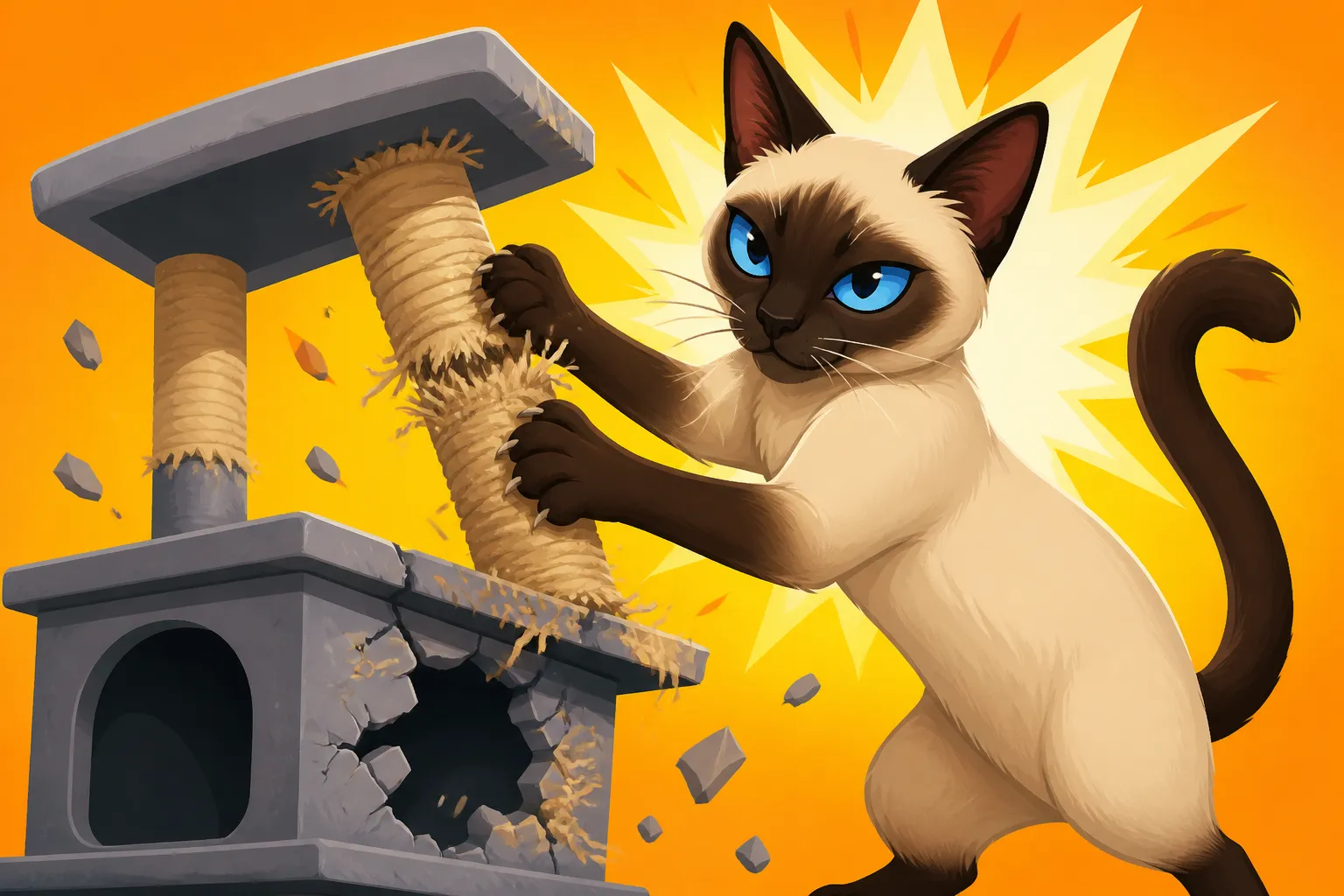
Why a Siamese Cat Destroys Cheap Cat Trees
Ever brought home a shiny new cat tree, visions of your elegant Siamese lounging majestically on top, only to find it reduced to a shredded, wobbling mess within weeks, if not days? It’s incredibly frustrating to invest in something you think will enrich your cat's life, only for it to be utterly demolished, especially when it seems barely used. This guide will explore why Siamese cats are prone to demolishing cheaper cat trees, delving into their unique temperament and physical needs, and what you can do to choose a more durable, engaging option that stands up to their boundless energy and intelligent demands.
Why Siamese Cats Are Unique Destroyers
Siamese cats aren't your average couch potatoes; they're bundles of energy, intelligence, and intense physical prowess. Their tendency to destroy cat trees isn't just mischief; it's often a direct consequence of their inherent breed characteristics combined with insufficient outlets for their natural behaviors. Understanding these traits is the first step toward finding a suitable solution.
Boundless Energy and Athleticism
Siamese cats are famously active and athletic, much more so than many other cat breeds. They love to climb, jump, and explore, and they do it with an intensity that can surprise even experienced cat owners. A cheap, flimsy cat tree simply isn't designed to withstand the sheer force of a Siamese launching itself upwards, scaling posts, or performing acrobatic leaps from one perch to another. They need solid, stable structures that can handle their dynamic movements without swaying or threatening to topple.
Imagine your Siamese, full of vim and vigor, deciding to tackle the tallest point of a new, budget-friendly cat tree. Instead of a sturdy climb, they might encounter wobbly platforms, posts that twist under their weight, or flimsy scratching surfaces that give way almost immediately. This isn't just disappointing for you; it can be frustrating and even dangerous for your cat, leading them to give up on the tree or, worse, injure themselves. This breed genuinely thrives on physical challenges, and a robust cat tree is a key part of providing that necessary physical outlet. You might be surprised at How Much Play a Siamese Cat Needs to stay truly content.
The Need for Vigorous Scratching
Scratching is an essential, instinctual behavior for all cats, but for a Siamese, it's often more intense. They use scratching to sharpen their claws, stretch their muscles, and mark their territory both visually and with scent glands in their paws. A vigorous Siamese scratch session can quickly obliterate the thin, loosely wound sisal rope or cheap carpet found on many inexpensive cat trees. They don't just "lightly file" their claws; they go at it with purpose and power.
If a cat tree doesn't offer a satisfying scratching surface, your Siamese will either ignore it or, more likely, attempt to make it satisfying through sheer will and brute force, often tearing it apart in the process. This isn't just about durability; it's about providing a surface that genuinely meets their instinctual needs. Without adequate scratching surfaces, they might turn to your furniture or carpets, which is a frustration nobody wants. Understanding Which Scratching Post a Siamese Cat Uses can guide your choices.
Intelligence and Boredom
Siamese cats are highly intelligent and curious creatures. They require significant mental stimulation to stay happy and avoid behavioral issues. A bland, uninspiring cat tree with a single, small platform and a scratch post that quickly unravels offers little long-term engagement for such a clever animal. When a Siamese gets bored, they often find their own ways to entertain themselves, and "destruction" can be a form of self-entertainment.
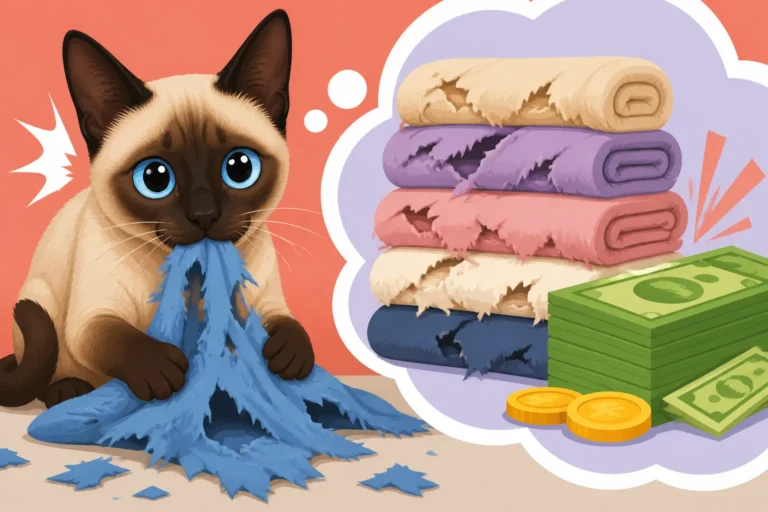
A bored Siamese might not just scratch the tree; they might systematically dismantle it, tearing at dangling toys, gnawing at fabric edges, or trying to pull apart unstable platforms. This isn't out of malice, but out of a deep-seated need for interaction and challenge. They need vertical spaces that allow them to survey their domain, different textures to explore, and perhaps even hidden nooks or interactive elements. Neglecting their mental needs can lead to more problematic behaviors, so understanding What a Bored Siamese Cat Destroys is crucial for Siamese owners.
The Flaws in Cheap Cat Trees
While the Siamese cat's nature makes them formidable opponents for any piece of furniture, many cat trees on the market are simply not built to last, especially not against a determined Meezer. The cost savings often come at the expense of material quality, construction integrity, and overall design.
Inferior Materials and Construction
Cheap cat trees often skimp on the most crucial elements: the internal structure and the covering materials. You might find particle board or thin cardboard tubes instead of solid wood or thick PVC pipes for the core structure. These materials are lightweight and prone to warping, breaking, or simply crumbling under pressure. The stability of the entire unit is compromised from the start.
The scratching surfaces are another common weak point. Thin, synthetic carpet or loosely wrapped sisal rope quickly shreds, frays, and peels away, leaving behind exposed cardboard or bare wood. This not only looks terrible but also makes the tree less appealing and effective for your Siamese's scratching needs. Even the plush fabric covers on platforms are often thin and easily torn, revealing the cheap padding or bare wood underneath. The goal for these manufacturers is usually low cost, not longevity.
Instability and Safety Concerns
One of the biggest issues with budget cat trees is their inherent instability. Manufacturers often use small, lightweight bases that don't provide adequate support for the height and number of platforms. This means the tree can sway, wobble, or even tip over when a larger or more energetic cat, like a Siamese, jumps on it or scales it rapidly. This isn't just annoying; it's a serious safety hazard.
A wobbly tree can deter your Siamese from using it, or worse, lead to falls and potential injuries. Imagine your agile cat taking a leap onto a top perch, only for the entire structure to shake violently. This teaches them that the tree is unsafe, and they'll quickly seek more stable (and likely inappropriate) surfaces for their climbing needs. A truly stable cat tree needs a wide, heavy base and sturdy connections between all its components. The well-being of your cat is paramount, and ensuring their environment is safe is a non-negotiable part of their care.
Lack of Engaging Features
Beyond just basic scratching and climbing, cheap cat trees often lack the stimulating features that intelligent and active Siamese cats crave. They might have one or two small platforms, a single scratching post, and maybe a flimsy dangling toy that snaps off on the first day. This minimal design offers little in the way of varied textures, hidden spaces, or challenging climbs that keep a Siamese engaged long-term.
A truly enriching cat tree should offer multiple levels for exploration, cozy cubbies for napping, different types of scratching surfaces (sisal, carpet, cardboard), and sturdy perches that allow your Siamese to observe their surroundings from a height. Think of it as a multi-level adventure playground, not just a place to sleep and scratch. The more features a cat tree offers, the more likely your Siamese is to spend time on it, channeling their energy constructively.
Choosing a Durable Cat Tree for Your Siamese
Investing in a quality cat tree might seem like a higher upfront cost, but it will save you money and frustration in the long run by providing a safe, durable, and engaging environment for your Siamese.
Prioritize Sturdy Construction and Materials
When shopping for a cat tree, focus on the underlying structure. Look for models made with solid wood, plywood, or thick, sturdy PVC piping. The base should be wide and heavy to prevent tipping. Examine the connections between platforms and posts; they should be securely fastened, often with large bolts, not just staples or small screws. A good cat tree feels solid and doesn't wobble when you push on it.
| Feature | Cheap Cat Tree (Prone to Destruction) | Durable Cat Tree (Siamese-Approved) |
|---|---|---|
| Frame Material | Particle board, thin cardboard | Solid wood, plywood, thick PVC |
| Base | Small, lightweight, unstable | Wide, heavy, stable |
| Scratching Posts | Loosely wound sisal, thin carpet | Tightly wound sisal, thick corrugated cardboard, robust carpet |
| Platforms | Thin, small, wobbly | Thick, spacious, securely attached |
| Fabric Covering | Thin, synthetic plush, easily torn | Durable, dense carpet or strong upholstery fabric |
| Connectors | Staples, small screws | Large bolts, robust hardware |
| Longevity | Months (if lucky) | Years |
For scratching surfaces, seek out tightly woven sisal rope that covers the entire post, or thick, dense carpet that can withstand heavy use. Some excellent trees also incorporate corrugated cardboard scratchers, which are highly satisfying for cats and replaceable. Platforms should be spacious enough for your Siamese to comfortably stretch out and move around without fear of falling.
Look for Engaging and Multi-Functional Designs
A durable cat tree should also be highly engaging. Consider designs that offer a variety of textures, levels, and activities. Multiple perches at different heights allow your Siamese to explore their vertical world. Enclosed cubbies or hammocks provide secure spots for napping and feeling safe, which is important for such an intelligent and watchful breed.
Think about interactive elements like dangling toys that are securely attached with strong cord, or puzzle features. Some modern cat trees even integrate feeding stations or climbing challenges. Remember, a Siamese needs more than just a place to scratch; they need an environment that stimulates their mind and body. Sites like Chewy often have detailed descriptions and customer reviews that can help you gauge the durability and engagement factor of various cat trees. If you're considering a big investment, sometimes reading reviews from other Siamese owners can be incredibly insightful.
Consider Placement and Maintenance
Even the most durable cat tree will benefit from thoughtful placement and regular maintenance. Position the tree in a high-traffic area where your Siamese feels part of the family, but also where it offers good views of the room and out a window if possible. A prime observation spot is a huge draw for a curious Siamese. Secure any wobbly parts immediately, and replace worn-out scratching surfaces or dangling toys as needed. Many high-quality cat trees have modular designs, allowing you to replace components rather than the entire unit.
Regular vacuuming will keep the tree clean and inviting. A well-maintained, durable cat tree won't just stand up to your Siamese's energy; it will become a cherished part of their territory, providing years of joy and appropriate outlets for their natural behaviors. This preventative measure helps ensure your Siamese has a consistently stimulating environment, which can even reduce behaviors like Psychogenic Alopecia in a Siamese Cat.
Beyond the Cat Tree: Holistic Enrichment
While a durable cat tree is a fantastic start, a Siamese cat thrives on a holistic approach to enrichment. Their energetic and intelligent nature means they need varied stimulation throughout their day to truly be happy and well-adjusted.
Active Play Sessions
Siamese cats require consistent and engaging play. Short, frequent play sessions with interactive toys – think feather wands, laser pointers (used responsibly), or toys that mimic prey – are essential. These sessions not only provide physical exercise but also mental stimulation, allowing them to "hunt" and burn off excess energy. Aim for at least two to three dedicated playtimes a day.
Structured play can help redirect some of their destructive tendencies from objects to appropriate toys. When they're given ample opportunity to chase, pounce, and "catch" their prey during playtime, they're less likely to channel that pent-up energy into tearing apart their environment. This is also a wonderful way to bond with your Siamese, fulfilling their deep need for interaction and attention.
Mental Stimulation and Training
Given their high intelligence, Siamese cats excel at learning. Don't underestimate their capacity for training! Clicker training can be incredibly effective for teaching them tricks, from simple commands like "sit" or "stay" to more complex behaviors like fetching toys. Puzzle feeders are another excellent way to engage their minds, making them "work" for their food and slowing down meal times, which can be particularly useful for this food-motivated breed.
Introducing new toys regularly, rotating them to keep things fresh, and even teaching them to walk on a harness and leash (if they're amenable) can provide novel experiences that prevent boredom. A mentally stimulated Siamese is generally a happier, less destructive cat. Investing in their mental well-being is just as important as their physical health.
Providing Companionship
Siamese cats are famously social and thrive on companionship. While you might be their primary human, they often benefit greatly from having another cat, especially another active, playful breed, to interact with. A compatible feline friend can provide endless hours of play, grooming, and shared relaxation, fulfilling their social needs even when you're busy.
Before bringing another pet into the home, careful consideration of personalities is key, but for many Siamese owners, a second cat transforms their pet's demeanor, significantly reducing boredom-induced behaviors. This shared interaction can often be a powerful deterrent against the kind of destructive behavior that stems from loneliness or insufficient social engagement. A Siamese Cat Should Not Live Alone is a common sentiment among owners for good reason.
Disclaimer
This article is for general informational purposes only and does not constitute professional advice. Laws, prices and regulations vary by location and change over time. Consult a qualified professional for guidance on your specific situation.