How High a Siamese Cat Climbs
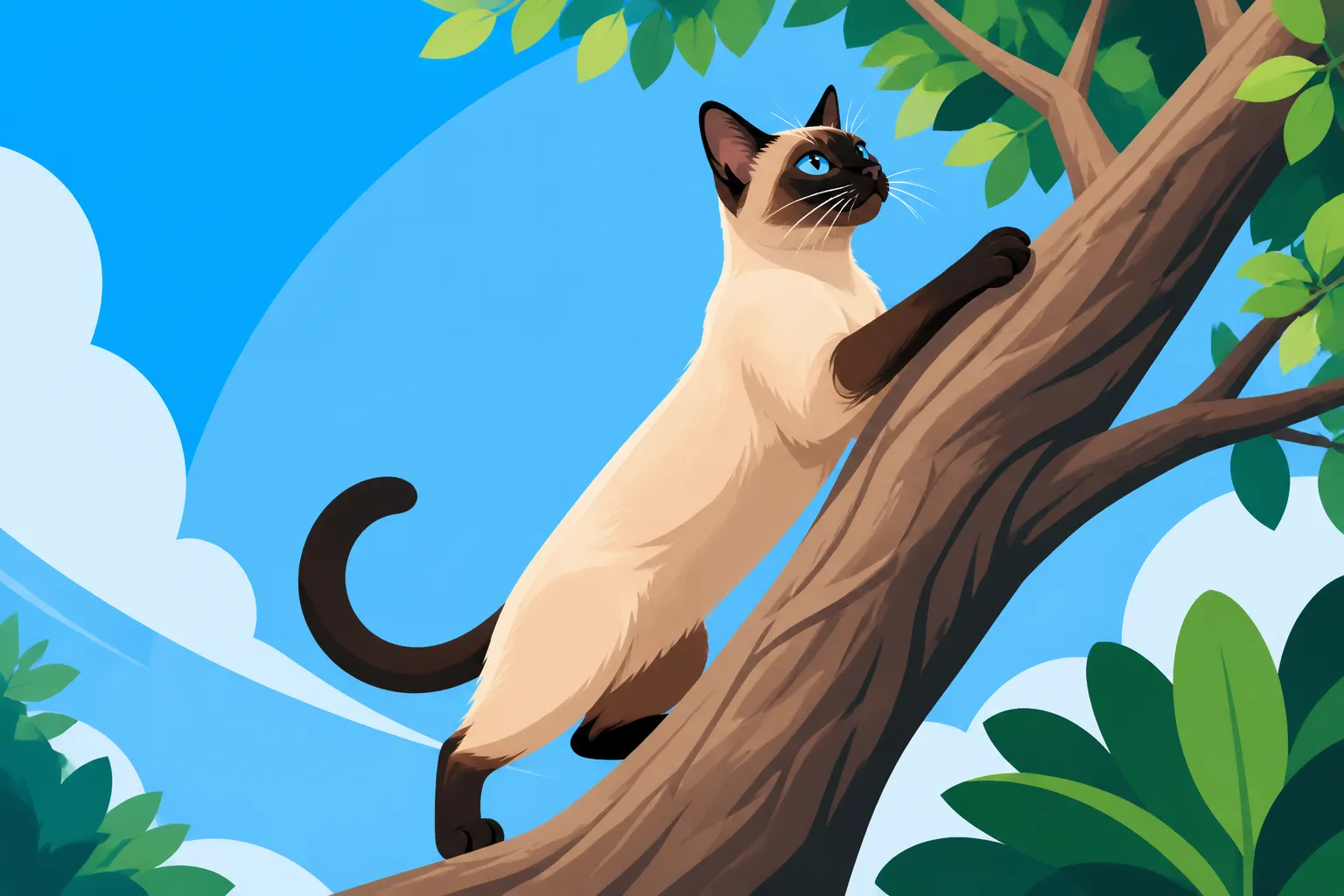
One of the most common "aha!" moments new Siamese cat parents experience is when their sleek, energetic feline friend suddenly appears atop the tallest bookshelf, the kitchen cabinets, or even the top of a door frame, looking down with an air of regal superiority. It’s not just an occasional leap; it’s a lifestyle for many Siamese cats, and it can leave you wondering just how high they can go, and more importantly, how to manage this aerial ambition without your home becoming a feline obstacle course. This guide will explore the incredible vertical prowess of Siamese cats, delve into the reasons behind their climbing obsession, and offer practical solutions to keep both your sanity and your Siamese safe and enriched.
The Natural Athlete: Why Siamese Cats Climb So High
Siamese cats aren't just pretty faces; they are remarkable athletes, built for agility, speed, and, yes, impressive vertical leaps. Their physical characteristics and inherent instincts make them natural climbers, often seeking out the highest vantage points in their environment. It’s not just about getting from point A to point B; it’s about inhabiting their world in three dimensions.
Their Unique Physical Attributes
Have you ever noticed how incredibly lean and muscular a Siamese cat is? They don't typically carry much excess weight, which is a huge advantage when it comes to gravity-defying feats. Their bodies are long and lithe, giving them a flexibility that many other breeds might envy. This slender build allows them to navigate tight spaces and balance on narrow ledges with surprising ease. Think of a tightrope walker, but with four paws and a tail for counterbalance!
Beyond their general physique, their powerful hind legs are like coiled springs. They can launch themselves from a standstill to eye-level with your kitchen cabinets in a single, fluid motion. Their strong leg muscles provide the explosive power needed for impressive vertical jumps. And let's not forget their claws – those sharp, retractable tools are perfect for gripping onto surfaces, whether it's a sturdy cat tree, a fabric curtain, or even textured wallpaper. While we might find a new scratch on our antique dresser, to them, it's just a convenient climbing aid. Why a Siamese Cat Stays So Thin often comes down to their metabolism and active nature, which fuels these athletic endeavors.
Instinctual Drive to Ascend
It's not just physical ability; it's deeply ingrained instinct. In the wild, high places offer a significant advantage. A vantage point allows a predator to survey its territory, spot potential prey from afar, and, just as importantly, see any approaching threats before they become an immediate danger. For your domestic Siamese, the top of the wardrobe becomes their personal savanna lookout, and your living room is their hunting ground. They are observing everything: the dust motes dancing in the sun, the squirrel outside the window, the movement of a toy mouse on the floor below.
This instinctual need to be elevated isn't just about hunting or safety; it's also about claiming dominance and territory. In a multi-cat household, the highest perch often belongs to the cat that feels most confident or secure. Even as a single cat, staking claim to the highest spots provides a sense of control and self-assurance. It’s their way of saying, "This is my domain, and I'm overseeing it all."
Understanding Their High-Rise Habits: Motivation Behind the Ascent
It's easy to dismiss a climbing Siamese as simply "being a cat," but there are often deeper motivations behind their desire to scale every available surface. Understanding these drives can help you provide appropriate outlets and prevent unwanted climbing.
Seeking Security and Escape
Imagine being a small creature in a giant's world. For a Siamese cat, humans, dogs, or even noisy children can feel imposing. High places offer a refuge, a safe haven where they can observe without feeling threatened or overwhelmed. If you have a bustling household, your Siamese might be climbing to escape the toddler's curious hands, the dog's playful nudges, or simply the general chaos of daily life.
Consider a scenario where guests come over. A shy or sensitive Siamese might immediately seek the highest, most secluded spot – perhaps the top of a tall cat tree or a closet shelf – to watch the strange new people from a safe distance. It gives them a sense of control and a place to decompress without feeling cornered. This need for a secure retreat is a powerful motivator for vertical exploration.
Boredom and Mental Stimulation
Siamese cats are famously intelligent and incredibly curious. How Clever a Siamese Cat Is means they need constant mental and physical engagement. A bored Siamese is a destructive Siamese, or at least, a Siamese looking for trouble! If they don't have enough appropriate outlets for their energy and curiosity, they will invent their own entertainment. Climbing every surface in your home is often their creative solution to a lack of stimulation.
They love to explore, investigate, and test boundaries. Reaching a new, previously inaccessible spot is a challenge they gladly accept. This isn't just about physical exercise; it's a mental puzzle. How do I get up there? Is it stable? What can I see from this new perspective? Providing ample Enrichment for a Siamese Cat That Gets Bored in an Hour is key to channeling this energy constructively. Without it, your curtains might become a makeshift climbing wall, or your delicate porcelain figurines might suddenly become precarious stepping stones.
Observing and Hunting Instincts
As mentioned earlier, the hunting instinct is strong in Siamese cats. High perches allow them to get a better view of their "prey," whether it's a toy mouse, a laser pointer dot, or even your wiggling toes under a blanket. From above, they can strategize their pounce, hone their focus, and enjoy the thrill of the hunt, even if it's just a game.
This observation isn't just about hunting. They are also incredibly interested in you. A Siamese cat often wants to be part of the action, even if it means watching from above. They might climb to the top of your fridge to observe your cooking, or perch on a high shelf to supervise your cleaning. They love to know what's going on in their world, and elevation provides the best seat in the house.
Creating a "Vertical World": Safe Climbing Solutions
Instead of fighting their natural instincts, the best approach is to embrace your Siamese cat's love for heights and provide them with safe, designated climbing opportunities. This strategy satisfies their innate needs while protecting your furniture and giving you peace of mind.
Investing in Quality Cat Trees and Condos
This is probably the most obvious, but also the most effective, solution. A tall, sturdy cat tree with multiple levels, scratching posts, and cozy perches is worth its weight in gold for a Siamese. Look for ones that are stable and heavy enough not to wobble when your energetic cat leaps onto the top platform. Platforms should be adequately sized for your cat to comfortably lounge.
Many owners have found a fantastic array of sturdy, multi-level cat trees on Amazon, ranging from simple designs to elaborate feline "condominiums." Consider one that reaches near the ceiling or offers various climbing routes. The key is to make it more appealing than your bookshelves. If you're on a budget, remember that What a Cat Tree for a Siamese Cat Costs varies widely, but investing in quality from the start often prevents future issues. A cheap, flimsy tree will quickly be discarded or destroyed, leading back to problem climbing. Don't be surprised if your Siamese destroys cheap cat trees rather quickly due to their energy and climbing prowess.
Utilizing Wall-Mounted Shelves and Catwalks
If floor space is limited, or you simply want to offer more expansive vertical territory, wall-mounted cat shelves and catwalks are an excellent option. These can transform unused wall space into a feline playground, giving your Siamese new routes and perches to explore. You can create a whole network of shelves, leading up to a cozy hideaway or a viewing platform.
Many retailers, including Amazon, offer a wide selection of stylish and sturdy wall-mounted cat furniture. When installing these, ensure they are securely anchored into wall studs to support your cat's weight as they launch and land. Think about creating a circuit: a shelf leading to another, then perhaps to a window perch, and finally down to a cat tree. This provides a dynamic environment for your cat, fulfilling their need for exploration and movement. This is especially important for How Well a Siamese Cat Lives Indoors Only, as it expands their perceived territory.
Considering Natural High Spots (with caveats)
Sometimes, despite all your efforts, your Siamese will still eye that top shelf or the kitchen cabinets. Instead of trying to eliminate all high spots, identify a few that are relatively safe and easy to cat-proof. For example, if your kitchen cabinets are sturdy and there's a clear, stable path to get up and down, you might designate one corner as an "approved" high spot, provided there are no hazards like hot stoves or breakable items.
For these approved spots, consider adding a non-slip mat or a small, soft bed to make it more inviting. The goal isn't to stop them from ever going high, but to redirect their climbing to safe, appropriate areas. Make sure these areas are clean and free of anything dangerous or fragile.
Here's a quick comparison of popular climbing solutions:
| Feature | Cat Trees | Wall-Mounted Shelves | Natural High Spots (e.g., cabinets) |
|---|---|---|---|
| Pros | Self-contained, multi-level, scratching surfaces | Space-saving, customizable routes, aesthetic | Already exists, no extra cost (initially) |
| Cons | Can be bulky, takes up floor space, can be pricey | Installation required, needs secure mounting, permanent | Potential hazards, not designed for cats, can damage property |
| Stability | Varies by quality; needs heavy base | Excellent if properly installed | Varies widely; often not designed for cat weight |
| Mental Stim. | Good, especially multi-tiered | Excellent, allows for complex routes | Limited if only one spot |
| Physical Ex. | Good for jumping and stretching | Excellent for climbing, balancing, agility | Varies |
| Cost | Moderate to High | Moderate (for materials and tools) | Low (for existing items) |
Keeping Paws Off Limits: Deterrents and Training
While providing alternatives is crucial, there will inevitably be areas where you absolutely do not want your Siamese cat to climb. This is where gentle deterrence and consistent training come into play.
Gentle Deterrents and Negative Reinforcement
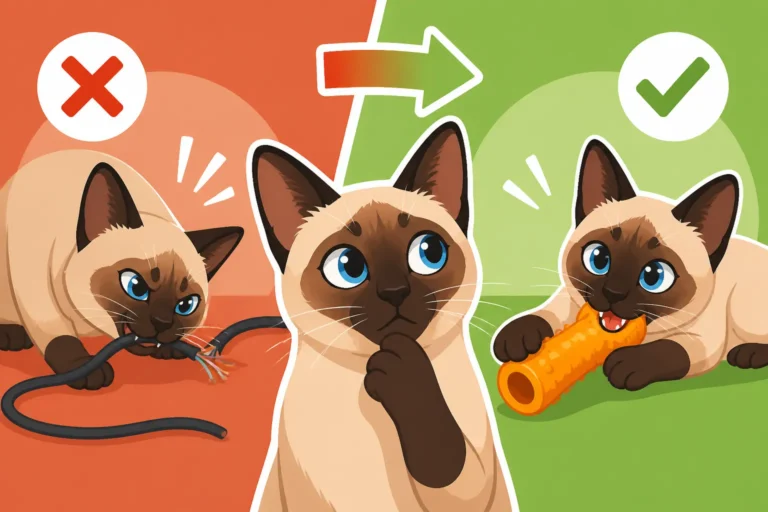
When you find your Siamese scaling forbidden heights, the goal is to make that spot undesirable without scaring or punishing your cat. Loud noises, like a quick clap or a sharp "no," can often be enough to interrupt the behavior. Water sprays from a plant mister are another classic deterrent, often effective because cats dislike sudden wetness.
For persistent climbers, double-sided sticky tape applied to the edge of a shelf or counter can work wonders. Cats generally dislike the sticky feel on their paws. Similarly, aluminum foil or crinkly plastic laid on surfaces can be off-putting due to the sound and texture. For a less permanent solution, consider deterrent sprays or mats that you can easily pick up from Amazon. These often emit sounds only audible to cats or have textures they find unpleasant. Remember, the key is consistency. Every time they attempt to climb the forbidden area, they should encounter the deterrent.
Redirection and Positive Reinforcement
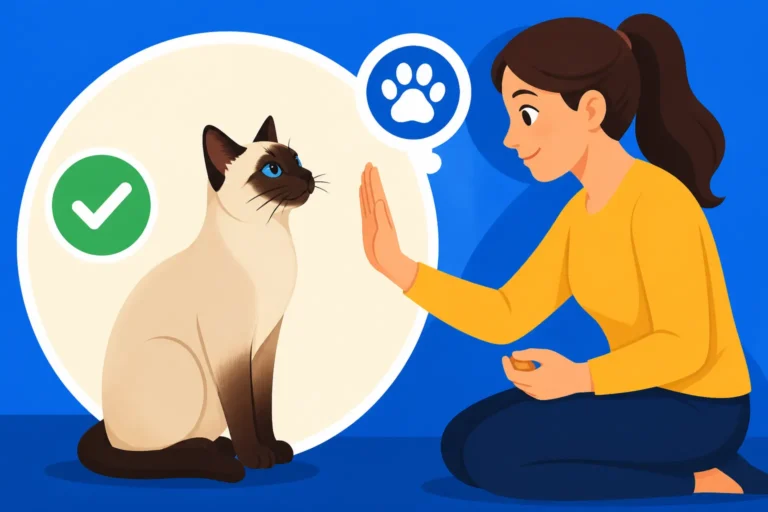
Negative reinforcement alone isn't enough; you must pair it with positive redirection. As soon as you deter your cat from an unwanted climbing spot, immediately guide them to an approved climbing area, like their cat tree or wall shelf. When they use the approved area, reward them with praise, a favorite treat, or a short play session. This teaches them that climbing is allowed, just in specific, safe places.
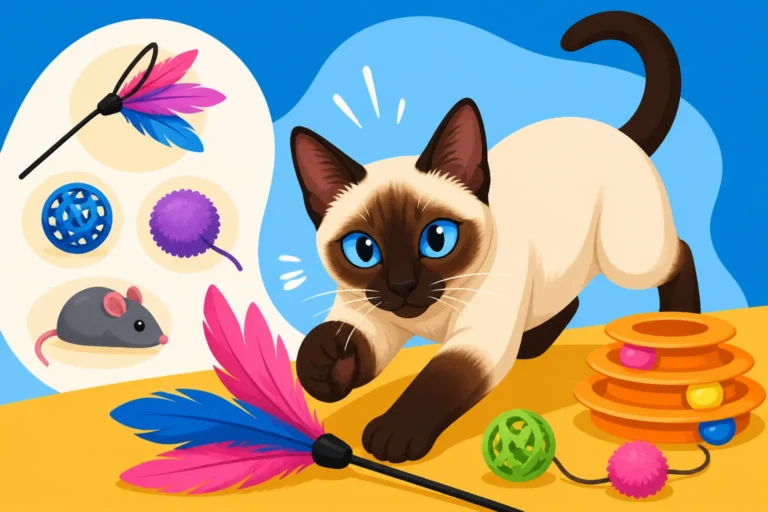
Interactive play sessions are also incredibly important for burning off that climbing energy. Using wand toys, feather teasers, or even a laser pointer (with caution, always end with a tangible reward!) can simulate the hunt and satisfy their need for vertical movement. Encourage them to jump and chase down from their cat tree, engaging their full athleticism in a controlled environment. How Much Play a Siamese Cat Needs is often more than owners realize, and meeting this need can reduce unwanted behaviors.
Securing Your Home Environment
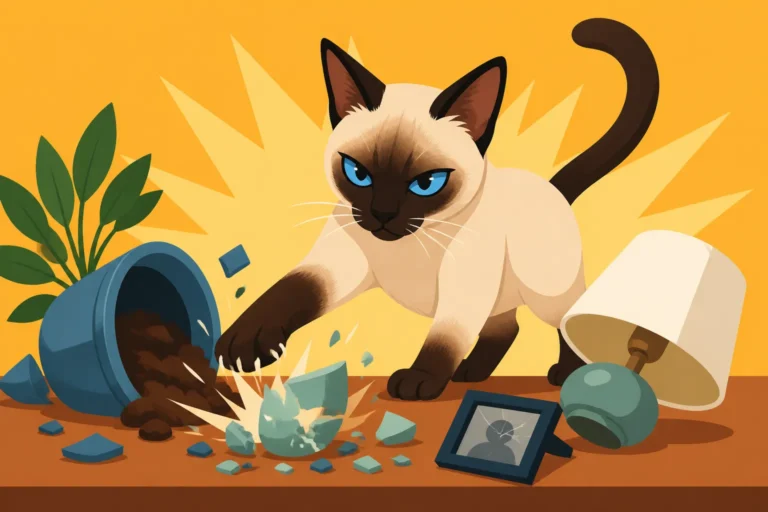
Finally, take a critical look at your home from your Siamese cat's perspective. Are there fragile items on high shelves that could easily be knocked over? Are there toxic plants within reach on a windowsill? Are curtains securely fastened, or could they come crashing down if used as a climbing rope?
Move breakables to lower, more secure locations, or into cabinets they cannot open. Ensure all shelves are properly anchored, especially if your cat can reach them. For very determined climbers, you might need to make certain areas completely inaccessible, perhaps by blocking off entry points or using child locks on cabinet doors. A quick search on Amazon will show you countless options, from towering cat condos to intricate wall-mounted perches, all designed to make your home a safer, more engaging place for your agile Siamese. By being proactive, you can ensure your Siamese cat’s natural love for heights doesn’t lead to any accidents or damage.
Disclaimer
This article is for general informational purposes only and does not constitute professional advice. Laws, prices and regulations vary by location and change over time. Consult a qualified professional for guidance on your specific situation.