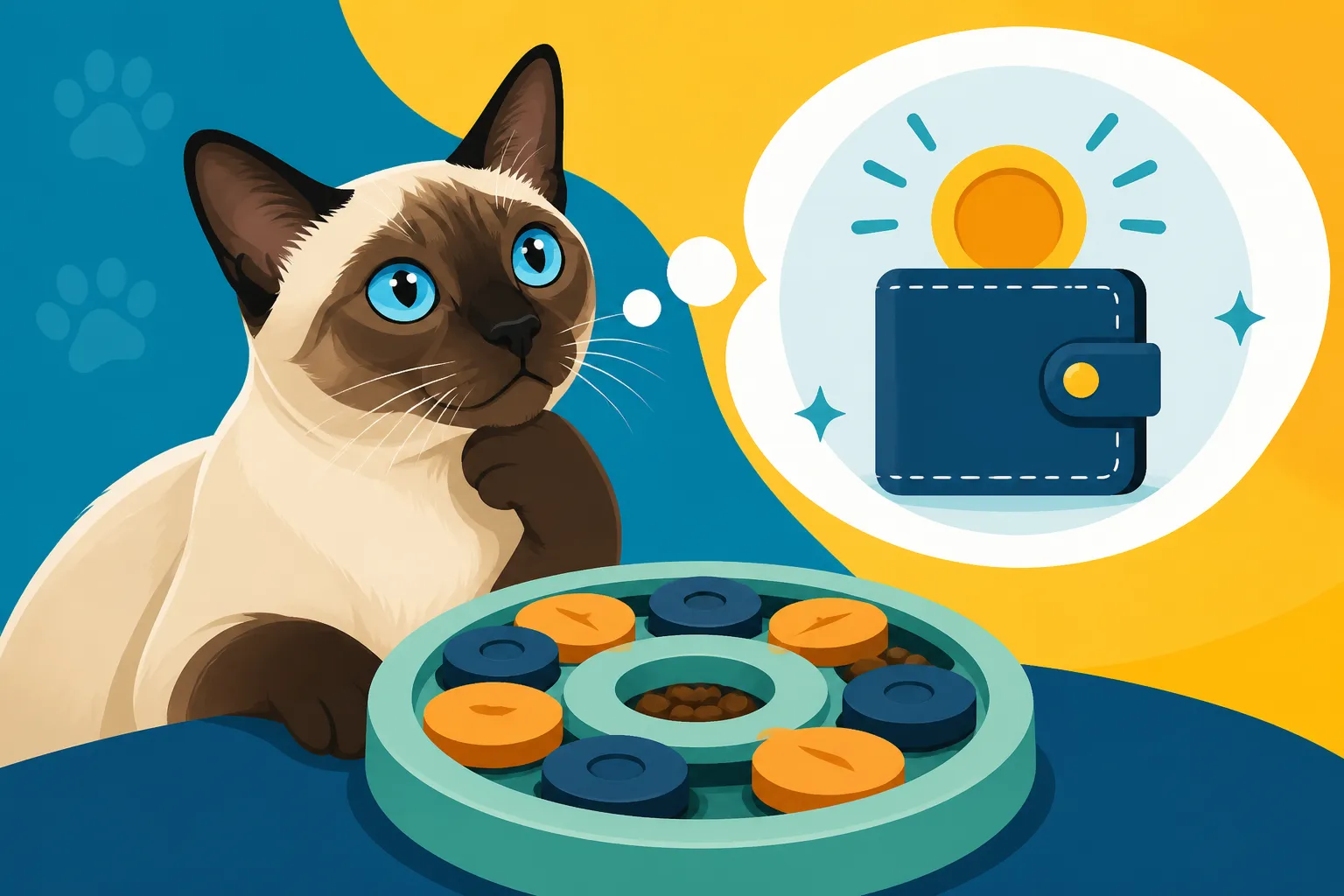
What a Puzzle Feeder for a Siamese Cat Costs
If you've ever watched your brilliant Siamese cat gobble down their dinner in mere seconds, only to then stare at you expectantly or, worse, start batting at things they shouldn't, you know the struggle is real. These intelligent, high-energy felines need more than just sustenance; they need mental engagement. This guide will walk you through what puzzle feeders are, why they're a game-changer for Siamese cats, and what you can expect to invest in one, ensuring your clever companion stays happy and stimulated.
Understanding Why a Siamese Cat Needs a Puzzle Feeder
Let's face it, Siamese cats aren't your average couch potatoes. They're thinkers, strategists, and often, little furry busybodies who thrive on interaction and challenge. A standard bowl, while functional, offers absolutely no mental stimulation, which for a Siamese can quickly lead to boredom and even mischief.
The Siamese Cat's Keen Intellect and Energy
It's no secret that Siamese cats are incredibly smart. They learn quickly, observe everything, and possess an insatiable curiosity that often gets them into delightful (and sometimes destructive) predicaments. Their energy levels are typically higher than many other breeds, meaning they need outlets for that physical and mental vigor. Simply putting their food in a bowl and walking away is akin to giving a highly intelligent child a coloring book when they're craving a complex Lego set – it might occupy them for a moment, but it won't fulfill their deeper need for a challenge. If that intellect isn't properly channeled, you might find your Siamese investigating the insides of your cupboards, unraveling toilet paper rolls, or attempting to dismantle your furniture. These cats need to work for their rewards, and a puzzle feeder provides that essential brain exercise. To learn more about their incredible minds, check out How Intelligent a Siamese Cat Is Compared to Other Cats.
Behavioral Benefits Beyond Just Eating
Puzzle feeders aren't just about slowing down a speedy eater (though they excel at that!). For a Siamese, they offer a host of behavioral advantages. First, they replicate a more natural hunting experience. In the wild, cats spend a significant portion of their day stalking, ambushing, and securing their prey. This process isn't just physical; it's a mental workout. A puzzle feeder taps into these innate instincts, turning mealtime into a fulfilling activity rather than a quick scarf-and-dash. This mental engagement can significantly reduce stress and anxiety, especially in cats who might be prone to overstimulation or, conversely, under-stimulation. They also encourage more deliberate eating, which can help prevent digestive upset from gulping food too quickly.
Pica and Wool Sucking Prevention
Many Siamese cat owners are familiar with Pica, a condition where cats chew and ingest non-food items, particularly fabrics like wool or blankets. While the exact cause can be complex, often involving genetics, nutritional deficiencies, or stress, boredom and a lack of mental enrichment are frequently contributing factors. A puzzle feeder can be a powerful tool in redirecting this oral fixation. By providing an appropriate and engaging outlet for their natural chewing and "hunting" instincts, it can lessen the urge to engage in wool sucking or other forms of Pica. Instead of fixating on your favorite sweater, your Siamese can focus their energy on extracting delicious kibble or treats from a challenging device. For more insight into this behavior, you might find Why a Siamese Cat Sucks Wool helpful. When a Siamese is busy figuring out how to get their next bite, they're less likely to be engaging in destructive or potentially harmful behaviors. If your Siamese has a history of ingesting fabric, remember that even with puzzle feeders, careful monitoring is essential, and vet consultation is always advised if Pica is severe, as it can lead to serious health issues like intestinal blockages.
Types of Puzzle Feeders and Their Cost Factors
Just like cat toys, puzzle feeders come in a dazzling array of designs, materials, and complexities. The cost typically aligns with these factors, ranging from budget-friendly DIY solutions to sophisticated electronic devices.
Entry-Level and DIY Options
If you're just dipping your toes into the world of puzzle feeders, or you're on a tight budget, there are excellent entry-level and even DIY options that can provide a great starting point for your Siamese.
- DIY Feeders: You can create simple puzzle feeders using everyday household items. A paper towel roll or toilet paper roll with small holes cut into it, filled with kibble and folded at the ends, makes for a basic but effective rolling feeder. A muffin tin with kibble in each cup and a ping-pong ball or crinkled paper on top of some, forces your cat to use their paws to get at the food. An empty plastic water bottle with holes can also be adapted. The cost here is essentially zero, as you're repurposing items. These are fantastic for introducing the concept and seeing if your Siamese takes to it, but they might not be the most durable or challenging in the long run for a truly clever cat.
- Basic Slow-Feeder Bowls: These are generally plastic bowls with ridges, labyrinths, or raised sections that simply make it harder for your cat to get large mouthfuls of food at once. They're designed more for slowing down eating than for complex puzzle-solving. You can often find these for a modest price, typically under the cost of a fancy bag of cat food. They are durable, easy to clean, and a good first step for cats that eat too quickly.
Mid-Range Interactive Feeders
Once your Siamese masters the basics, or if you want to jump straight into more engaging options, mid-range interactive feeders offer a good balance of challenge, durability, and cost. These are typically made from sturdy plastics or ceramics and feature more intricate designs.
- Treat Balls/Dispensers: These are hollow balls or cylinders with adjustable openings that dispense kibble as your cat bats, rolls, or nudges them. They encourage active play and movement. Brands like PetSafe or KONG offer various models. The cost for these can vary, but generally fall into a comfortable middle ground, often around the price of a couple of premium canned food meals.
- Maze and Board Feeders: These often look like small boards or trays with various nooks, crannies, pegs, or sliding components. Your cat has to use their paws or nose to maneuver the food through a maze or uncover hidden compartments. The Catit Senses line, for example, offers modular systems that can be combined for increasing difficulty. These types of feeders usually command a price equivalent to a month's supply of decent cat litter. They're excellent for mental stimulation and encouraging problem-solving skills, and many are designed to be stable and easy to clean. Websites like Chewy offer a fantastic selection of these, making it easy to browse different designs and read reviews from other cat owners.
High-End and Electronic Puzzle Feeders
For the Siamese cat that needs the ultimate challenge, or for owners looking for convenience and advanced features, high-end and electronic puzzle feeders are available.
- Complex Multi-Level Puzzles: These are often larger, multi-component feeders that require several steps or a sequence of actions to release food. They might involve pulling levers, pushing buttons, or solving a series of small puzzles. They are usually made from high-quality, durable plastics or even wood. These can be on the pricier side, often comparable to a new cat tree or a premium vet check-up. They are excellent for keeping highly intelligent and easily bored cats engaged over longer periods.
- Automated and Electronic Feeders: These feeders often include timers, portion control, and sometimes even interactive games or cameras. Some dispense food at set intervals or respond to specific actions from your cat. While these might not always be "puzzles" in the traditional sense, some do incorporate elements that require your cat to work for their food, like pressing a pad or triggering a sensor. The cost for these can range significantly, from the equivalent of a vet visit to something closer to a new small appliance. They offer convenience for owners and consistent stimulation for cats, but be sure to check reviews for durability and ease of cleaning. These are particularly useful if your Siamese needs a strict feeding schedule or if you're out of the house for extended periods.
Here's a quick comparison of the general cost shape and characteristics of different puzzle feeder types:
| Type of Feeder | Description | Typical Cost Shape | Durability | Complexity | Key Benefit |
|---|---|---|---|---|---|
| DIY / Basic Slow-Feeder | Repurposed household items or simple ridged bowls | Minimal (to cost of kibble) | Low to Medium | Low | Introduces concept, slows eating |
| Mid-Range Interactive | Treat balls, maze boards, sliding compartment feeders | Moderate (e.g., a bag of premium treats) | Medium to High | Medium | Engaging, mental stimulation, active play |
| High-End / Electronic | Multi-level puzzles, timed dispensers, app-controlled feeders | Higher (e.g., a vet visit) | High | High / Automated | Sustained challenge, convenience, advanced features |
Where to Buy and What Influences the Price
When you're ready to invest in a puzzle feeder for your Siamese, knowing where to look and what factors truly influence the price can help you make a smart decision.
Retailers and Online Marketplaces
The modern pet supply market offers a vast array of options, whether you prefer to shop in person or from the comfort of your home.
- Local Pet Stores: Many independent and chain pet stores carry a selection of puzzle feeders. Shopping locally allows you to physically examine the product, assess its size, material, and how complicated it truly looks. You can also get advice from staff, which can be invaluable when choosing the right feeder for your particular cat. Prices here might sometimes be slightly higher than online, but the immediate gratification and personalized service can be worth it.
- Large Online Retailers: Websites like Chewy are treasure troves of pet products, including an extensive range of puzzle feeders from various brands. You'll often find competitive pricing, a much wider selection than any single physical store, and countless customer reviews that can help you gauge a product's effectiveness and durability. Shopping online requires a bit more research on your part, but the sheer volume of options means you're more likely to find exactly what you're looking for, often with convenient delivery right to your door.
- Specialty Cat Boutiques: Some areas have niche pet stores that focus exclusively on cats or high-end pet products. These stores might carry unique, artisan, or more sophisticated puzzle feeders that you won't find elsewhere. While the prices in these boutiques might be at the higher end, the quality and unique design often justify the investment for many owners.
Material and Durability
The material a puzzle feeder is made from plays a huge role in its price and longevity. It's a key factor to consider, especially with a strong and determined Siamese.
- Plastic: Most entry-level and mid-range feeders are made from various types of plastic. These are generally lightweight, easy to clean, and come in a wide range of colors and designs. However, not all plastics are created equal. Cheaper plastics might not stand up to enthusiastic chewing or repeated dropping, potentially leading to cracks or broken parts. More durable, food-grade plastics will naturally command a slightly higher price.
- Ceramic or Stainless Steel: These materials are often found in higher-end slow-feeder bowls and some more robust puzzle designs. They are significantly more durable, resistant to chewing, and heavier, making them less likely to be pushed around by a determined Siamese. They are also generally easier to keep hygienically clean and don't absorb odors. However, they come with a higher price tag due to manufacturing costs and their inherent quality. Ceramic can also be fragile if dropped, but for static feeders, it's a great choice.
- Wood: Some artisanal or specialized puzzle feeders are crafted from wood. These can be aesthetically pleasing and offer a unique texture for your cat. However, wood needs proper sealing to be sanitary for food, and it can be more challenging to clean thoroughly than plastic or ceramic. They often fall into the higher price bracket due to craftsmanship.
Features and Complexity
Beyond the basic function, the bells and whistles of a puzzle feeder can significantly impact its cost.
- Adjustable Difficulty: Many interactive feeders feature mechanisms that allow you to increase or decrease the challenge. This is fantastic for a Siamese, as it means the feeder can grow with their skill level, preventing them from getting bored too quickly. Feeders with this feature tend to be more expensive as they involve more complex design and engineering.
- Non-Slip Bases: A simple but crucial feature, a non-slip base (often rubberized or weighted) prevents the feeder from sliding all over your floor as your enthusiastic Siamese works to get their food. This adds to the stability and usability and is usually reflected in a slightly higher price.
- Dishwasher Safe: Convenience matters! Feeders that are easy to disassemble and are dishwasher safe save you time and ensure proper hygiene. This design consideration can contribute to a higher price point compared to hand-wash-only items.
- Electronic Components: As mentioned earlier, features like timers, automatic dispensing, motion sensors, or even app connectivity drastically increase the complexity and manufacturing cost, placing these feeders at the top end of the price spectrum. While they offer advanced functionality, you're paying for that technology.
When considering which food to use in your puzzle feeder, opting for high-quality, palatable options ensures your cat is motivated to engage. Nutritious kibble or freeze-dried options can work well in these devices. Investing in enrichment tools like puzzle feeders can also be seen as a preventative health measure, potentially reducing the likelihood of behavioral issues or digestive problems that could lead to vet visits. In such cases, having pet insurance from providers like Healthy Paws can offer peace of mind for unexpected healthcare costs.
Maximizing the Value of Your Puzzle Feeder Investment
Buying a puzzle feeder is just the first step. To truly get your money's worth and ensure your Siamese cat reaps all the benefits, a little strategic planning and consistent effort go a long way.
Introducing the Feeder to Your Siamese Cat
Your clever Siamese might be smart, but they still need a proper introduction to new objects, especially something that changes their mealtime routine. Don't just dump all their food in a complex feeder and expect them to figure it out immediately. That can lead to frustration and disinterest.
- Start Simple: Begin with the easiest setting or the least complicated feeder you have. Place just a few pieces of high-value kibble or treats right on the surface or in the most accessible parts of the feeder.
- Make it Rewarding: Your Siamese needs to experience quick success initially. The more easily they get a reward, the more motivated they'll be to try again. Use treats they absolutely adore. For tips on tempting morsels, see Which Treats Suit a Siamese Cat.
- Gradual Increase in Difficulty: Once they're confidently getting food from the easy spots, slowly increase the difficulty. Put food deeper into mazes, under more sliders, or adjust the opening of a treat ball. Watch for signs of frustration, and if they seem discouraged, go back a step.
- Consistency is Key: Use the puzzle feeder regularly. Make it part of their daily routine, whether for a meal or just for treat time. The more they use it, the more adept they'll become, and the more they'll enjoy the challenge.
Regular Cleaning and Maintenance
Just like any food-related item, puzzle feeders need regular cleaning to prevent bacterial growth and keep them appealing to your cat. A dirty feeder can become a deterrent, negating your investment.
- Daily Rinse/Wipe Down: For most feeders, a quick rinse under warm water and a wipe-down after each use is sufficient, especially if using dry kibble.
- Weekly Deep Clean: Aim for a thorough wash at least once a week. If your feeder is dishwasher safe, this is a breeze. Otherwise, use warm, soapy water and a bottle brush to get into all the nooks and crannies. Rinse thoroughly to ensure no soap residue remains.
- Inspect for Damage: While cleaning, take a moment to inspect the feeder for any cracks, sharp edges, or signs of wear and tear, especially if your Siamese is a vigorous player or chewer. Replace damaged feeders to prevent injury to your cat or ingestion of small plastic pieces.
Rotating and Varying Puzzle Feeders
Imagine eating from the same plate every single day, with the same cutlery, in the exact same way. Even for us humans, that would get a bit monotonous! The same goes for your intelligent Siamese cat. They thrive on novelty and new challenges.
- Keep a Variety: Ideally, have two or three different types of puzzle feeders on hand. This could be a treat ball, a maze feeder, and a board puzzle.
- Rotate Regularly: Don't use the same feeder every day. Rotate them throughout the week, or even within the same day for different meals or treat sessions. This keeps your Siamese guessing and prevents them from mastering one feeder to the point of boredom.
- Increase the Challenge: As your cat gets smarter, they'll figure out even complex puzzles quickly. Having different feeders, or feeders with adjustable difficulty, allows you to continuously offer a fresh challenge. This sustained mental engagement is vital for a happy and well-adjusted Siamese. For more ideas on how to keep your cat entertained, consider What Toys a Siamese Cat Actually Uses. A truly occupied cat is a truly happy cat, and a puzzle feeder is one of the best tools in your arsenal to achieve that. Your Siamese needs plenty of play and stimulation to stay healthy and out of trouble; learning more about their play needs can be found in How Much Play a Siamese Cat Needs.
Disclaimer
This article is for general informational purposes only and does not constitute professional advice. Laws, prices and regulations vary by location and change over time. Consult a qualified professional for guidance on your specific situation.