What Toys a Siamese Cat Actually Uses
Oh, the infamous toy graveyard! If you're a Siamese cat owner, you know exactly what I'm talking about. We all get lured by those adorable, brightly colored cat toys at the pet store, picturing our beloved Meezer batting them around with glee. But more often than not, they end up gathering dust under the sofa, completely ignored, while your Siamese entertains themselves by trying to open the kitchen cupboards or "redecorating" your curtains. It's frustrating to spend money on something your intelligent, energetic feline deems utterly boring. This guide is here to shed some light on why Siamese cats are so particular about their playthings and, more importantly, what toys a Siamese cat actually uses, so you can make smarter choices and keep your chatty companion happily engaged.
Understanding the Siamese Play Drive
Siamese cats aren't just pets; they're active, highly intelligent companions with a strong personality. Their play isn't just a casual pastime; it's a vital outlet for their instincts and a key part of their mental and physical well-being. Understanding what drives their play will help you pick toys they'll truly appreciate.
Their Hunter Instincts
At their core, Siamese cats are still incredibly close to their wild ancestors in terms of their predatory instincts. They aren't content to merely look at a toy; they want to stalk it, chase it, pounce on it, and "kill" it. This isn't just about aggression; it's about fulfilling a deep-seated biological need. A toy that just sits there, no matter how cute, doesn't engage this ancient drive. They need something that moves unpredictably, mimics the erratic movements of small prey like birds or mice, and provides the thrill of the hunt. Think about a bird fluttering past the window, or a mouse scurrying under a cabinet – that's the kind of dynamic a Siamese cat seeks in their play. If a toy doesn't offer that, it's quickly dismissed as uninteresting. This is why you'll often find your Siamese staring intently at a dust bunny moving in the breeze rather than the expensive plush mouse you bought them.
High Intelligence and Boredom
One of the most defining characteristics of the Siamese cat is their formidable intelligence. They are problem-solvers, observers, and incredibly quick learners. While this makes them highly trainable – seriously, they can learn tricks! – it also means they get bored very, very easily. A toy that offers no challenge, no novelty, or no interaction quickly loses its appeal. Imagine being given a children's puzzle when you're an adult; you'd solve it once and then probably never touch it again. That's how a Siamese feels about a simple plastic ball after a few minutes. They need toys that engage their minds, make them think, and keep them guessing. A bored Siamese cat is often a mischievous Siamese cat, and that means they might turn their attention to things you'd rather they didn't, like climbing curtains or investigating kitchen counters. Providing adequate mental stimulation through play is crucial to avoiding destructive behaviors and keeping their sharp minds occupied. If you've ever wondered What a Bored Siamese Cat Destroys, trust me, it can be a lot!
The Bond and Interactive Play
More than many other breeds, Siamese cats thrive on interaction with their human companions. They're often described as "dog-like" in their devotion and their desire to be involved in everything you do. This extends deeply into their play habits. While some cats are perfectly content to entertain themselves with solo toys for hours, a Siamese often sees playtime as a shared activity, a chance to bond and communicate with you. They want you to be part of the hunt, to manipulate the "prey" in exciting ways, and to praise their cleverness. This isn't to say solo toys have no place, but truly effective play for a Siamese almost always involves you. Ignoring their requests for play can lead to frustration for them and can even impact your bond. They're talkers, remember? They'll often tell you exactly when it's play time with their distinctive vocalizations. How Much Play a Siamese Cat Needs is often more than you think, and much of it needs to be with you.
Types of Toys a Siamese Cat Truly Loves
So, what makes the cut for these discerning felines? It all comes down to mimicking their natural environment and engaging their sharp minds.
Interactive Wand Toys
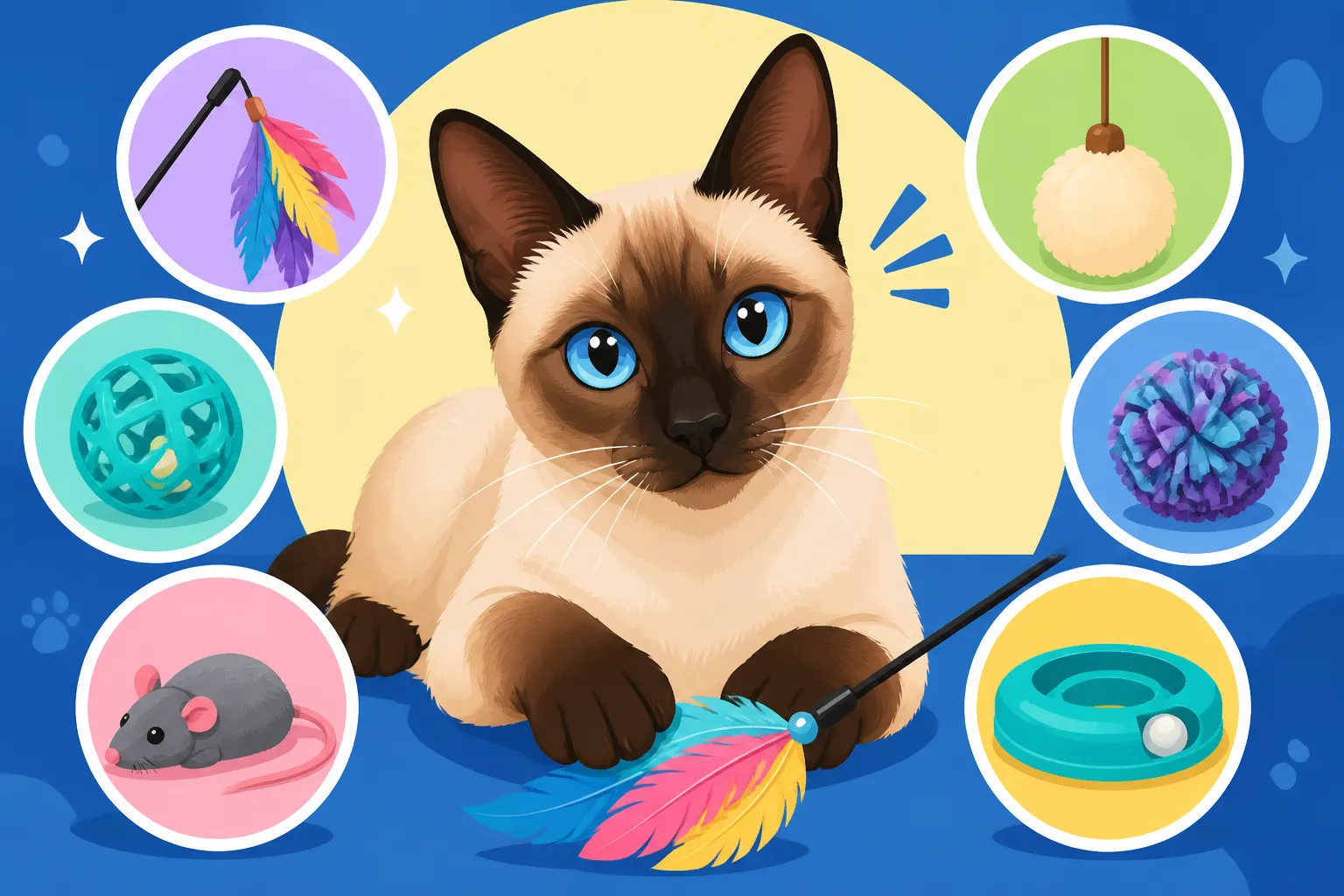
If there's one category of toy that consistently reigns supreme for Siamese cats, it's the interactive wand toy. These are the toys with a stick, string, and some kind of lure (feathers, ribbons, crinkly material) at the end. Why are they so effective? Because you are the operator. You can make the lure dart, hide, fly, and skitter, perfectly mimicking prey. This fulfills their hunting instinct in a way no static toy ever could. I've seen even the most aloof Siamese transform into a lean, mean hunting machine with the right wand toy. Brands like Da Bird are particularly popular for their realistic feather action, which truly brings out the aerial hunter in them. When using these, remember to make the "prey" hide, dart under furniture, and then "catch" it occasionally to keep your cat from getting frustrated. Always finish a session with a final "kill" where they get to capture the toy.
Puzzle Feeders
Given their intelligence and love of a challenge, puzzle feeders are an absolute hit with Siamese cats. These toys require your cat to figure out how to extract treats or kibble, turning mealtime into a stimulating game. Instead of just scarfing down their food from a bowl, they have to use their paws, nose, and brain to work for it. This not only provides mental enrichment but can also slow down fast eaters and prevent boredom-related overeating. You can find simple puzzle balls that dispense kibble when rolled, or more complex feeders with multiple compartments and moving parts. Many pet stores and online retailers like Chewy offer a wide variety of these. Start with something easy and gradually introduce more challenging puzzles as your Siamese master them. This taps directly into their natural problem-solving abilities and can be a wonderful way to provide enrichment when you're busy. If you're wondering Whether a Puzzle Feeder Occupies a Siamese Cat, the answer is a resounding yes!
Crinkle Balls and Springy Wonders
Sometimes, the simplest toys are surprisingly effective, especially if they hit that sensory sweet spot. Crinkle balls, made from crinkly mylar or other noise-making materials, are often a favorite. The sound mimics the rustling of small prey in leaves or grass, immediately grabbing a Siamese cat's attention. They love batting them around, chasing the sound, and pouncing on them. Similarly, simple spring toys that bounce erratically when batted can provide endless entertainment. They're lightweight, unpredictable, and can be easily batted across the floor, satisfying that urge to chase and capture. These are great for solo play sessions when you can't actively engage with a wand toy. They also tend to be quite durable and easy to replace.
Da Bird and Similar Flying Toys
Building on the success of interactive wands, specific flying toys like "Da Bird" stand out because of their incredible ability to simulate bird flight. The way the feathers flutter and spin through the air is almost uncanny, and it taps into a Siamese cat's primal instinct to hunt birds. Unlike a simple string, these toys move with an unpredictable, lifelike grace that keeps your cat utterly mesmerized. I've seen Siamese cats jump, twist, and contort themselves in mid-air trying to catch these. It provides fantastic exercise and mental stimulation. Just remember to put these away after play sessions, as the delicate feathers can be easily destroyed, and smaller pieces could become a choking hazard if ingested.
Laser Pointers (with caveats)
Laser pointers can be incredibly engaging for a Siamese cat, providing intense chasing and pouncing exercise. The darting red dot is irresistible to their predatory eye, and they will run, jump, and weave with impressive agility trying to "catch" it. However, they come with a significant caveat: always end a laser pointer session by directing the laser onto a physical toy or treat that your cat can actually "catch" and feel victorious about. If you just end the session by turning off the laser, your cat is left frustrated by the unfulfilled hunt, which can lead to behavioral issues or anxiety. They need that feeling of successful capture to complete the hunting cycle. Use laser pointers sparingly and always pair them with a tangible reward.
Toys That Often Miss the Mark (and why)
It's not just about what they do like; it's also about what they tend to ignore. Knowing this can save you money and prevent disappointment.
Stuffed Animals and Kickers (without catnip)
Unless they're infused with potent catnip, many Siamese cats will give a wide berth to plain stuffed animals or kicker toys. For us, they look cute and cuddly. For a Siamese, they're just… there. They don't move, they don't make noise, and they don't offer the thrill of the hunt. A catnip-filled kicker, on the other hand, can be a fantastic outlet for their "bunny kicking" instinct, where they grab it with their front paws and vigorously kick it with their back legs. But without that olfactory stimulant, a soft toy is usually just another obstacle in their path. It doesn't offer the dynamic interaction their intelligent minds crave.
Stationary Scratchers (without other features)
While scratching posts are absolutely essential for a Siamese cat's paw health and territorial marking, a simple, stationary scratcher on its own often isn't seen as a "toy." It's a tool, a piece of furniture, but not something for engaging play. If a scratcher is part of a larger cat tree with perches, dangling toys, or tunnels, then it becomes more appealing. But a standalone cardboard scratcher, while useful, isn't going to get their heart racing. They prefer vertical sisal posts that allow a full stretch, or horizontal ones they can really dig into. Focus on providing sturdy, appropriate scratching surfaces rather than expecting them to play with a flat cardboard pad. Why a Siamese Cat Owner Buys More Scratching Posts is because they absolutely need them for their well-being, but not necessarily for "play."
Cheap Plastic Balls
You know the ones – those lightweight, hollow plastic balls that come in a mesh bag for a couple of dollars. While some cats might bat them around briefly, a Siamese cat often finds them incredibly boring very quickly. They roll predictably, make minimal noise (unless they have a bell, which can sometimes be too loud and annoying for sensitive ears), and offer no challenge. There's no "prey" illusion, no problem to solve, just a ball that rolls. They're often too light to bat with any real force, and they don't have the varied textures or movements that hold a Siamese's attention. You'll likely see them get a few experimental bats, then a dismissive sniff, and then your Siamese will wander off to find something genuinely interesting to get into.
Maximizing Toy Engagement and Safety
Even with the right toys, how you present them and manage play can make a huge difference in your Siamese cat's engagement and safety.
Rotation and Novelty
Imagine eating your favorite meal every single day, three times a day, for weeks on end. Even the best dish would eventually become tiresome. The same goes for cat toys, especially for an intelligent breed like the Siamese. To keep their interest piqued, you need to implement a toy rotation system. Don't leave all their toys out all the time. Instead, keep a selection of toys in a basket and rotate them every few days or once a week. When a "new" toy appears, it suddenly becomes exciting again. This creates a sense of novelty and prevents boredom. You can also vary the types of toys available – one day emphasize interactive play, the next day introduce a new puzzle feeder. This keeps them on their toes and ensures they never quite know what exciting plaything might appear next.
Safe Play
Cat toys are generally designed with safety in mind, but no toy is completely foolproof, especially with a determined and clever cat like a Siamese. Always supervise play with toys that have small parts, strings, or feathers that could potentially come loose. Ingrained habits like Why a Siamese Cat Sucks Wool can lead to ingesting non-food items. Small pieces, ribbons, or loose strings can be swallowed and cause serious intestinal blockages. If your Siamese is a vigorous chewer or tends to ingest things they shouldn't, opt for more durable toys and inspect them regularly for damage. If a toy starts to fray or break apart, it's time to discard it. Regular checks for wear and tear can prevent accidental ingestion. If you suspect your cat has swallowed something they shouldn't, don't hesitate to contact your vet. Issues like Signs a Siamese Cat Has an Intestinal Blockage require immediate veterinary attention, and can unfortunately lead to expensive emergency care, sometimes requiring What a Siamese Cat's Blockage Surgery Costs. While pet insurance from providers like Healthy Paws can help with unexpected vet bills, prevention is always best.
DIY Fun
You don't always need to buy expensive toys to keep a Siamese cat entertained. Their intelligence and curiosity mean that everyday household items can often be transformed into fantastic playthings. A crumpled piece of paper, a cardboard toilet paper roll, or even a simple paper bag (with the handles cut off to prevent entanglement) can provide minutes of thrilling entertainment. A cardboard box becomes a fort, a hiding spot, or a wrestling opponent. You can also create simple puzzle feeders using empty plastic bottles or egg cartons. Just make sure whatever you offer is safe, non-toxic, and free of any small parts that could be swallowed. Sometimes, the most basic items, combined with your interactive play, are the biggest hits. The sheer joy a Siamese can get from batting a crinkled receipt across the kitchen floor can often outperform the fanciest store-bought toy.
| Toy Type | Why a Siamese Loves It | Best for | Caveats |
|---|---|---|---|
| Interactive Wand Toys | Mimics prey movement, human interaction, great exercise | Human-led play | Requires your active participation, supervise for safety |
| Puzzle Feeders | Mental stimulation, problem-solving, slows eating | Solo enrichment, mealtime | Can be ignored if too easy/hard, needs cleaning |
| Crinkle Balls/Springs | Noise stimulation, unpredictable movement, light-weight | Solo play | Can get lost easily, some prefer stronger sensory input |
| Da Bird (or similar) | Realistic flight simulation, intense hunting | Human-led play, exercise | Fragile, must be put away to prevent ingestion hazards |
| Laser Pointers | Intense chase, high energy burn | Exercise | Must end with a tangible reward to prevent frustration |
| Cardboard Boxes | Hiding, exploring, scratching, tearing | Solo or interactive | Can be quickly destroyed, takes up space |
| Empty Toilet Paper Rolls | Batting, tearing, can hold treats | Solo play, DIY puzzle | Easily destroyed, not durable |
Disclaimer
This article is for general informational purposes only and does not constitute professional advice. Laws, prices and regulations vary by location and change over time. Consult a qualified professional for guidance on your specific situation.