How to Clicker Train a Siamese Cat
If you've ever felt like your brilliant Siamese cat is running the household, rather than the other way around, you're certainly not alone. Many cat owners throw up their hands, convinced their feline friends are untrainable, especially these opinionated and highly intelligent "Meezers." But what if I told you there’s a powerful, positive way to channel that incredible Siamese brainpower, strengthen your bond, and even teach them some amazing feats? This guide will dive deep into the world of clicker training, transforming your approach to cat companionship and unlocking your Siamese's full potential.
Why Clicker Training is a Game-Changer for Siamese Cats
Let's be real: Siamese cats aren't your average lap cats. They're thinkers, strategists, and natural communicators. This intense mental activity is a huge part of their charm, but it can also be a source of frustration if you don't know how to channel it. Clicker training, with its emphasis on clear communication and positive reinforcement, aligns perfectly with the Siamese personality. It's not about forcing them to do tricks; it's about engaging their minds and celebrating their brilliance.
Tapping into Their Incredible Intelligence
Siamese cats are often described as "dog-like" in their intelligence and desire for interaction, and it's a reputation they've certainly earned. They observe everything, learn quickly, and possess an almost uncanny ability to figure things out. Their sharp minds, however, can quickly lead to boredom if not adequately stimulated. A bored Siamese is often a mischievous Siamese, finding creative (and sometimes destructive) ways to entertain themselves, from opening cupboards to scaling curtains.
Traditional training methods, often relying on correction or simple repetition without immediate feedback, can fall flat with a Siamese. They need to understand why they're doing something and what's in it for them. Clicker training provides that clarity. It’s like giving them a puzzle to solve where the reward is always clear and immediate. Think of it as a mental workout that satisfies their innate curiosity and need for engagement. You'll be amazed at How Clever a Siamese Cat Is once you start engaging them this way. It’s truly a testament to their cognitive abilities when they quickly pick up complex sequences, proving that they're not just beautiful faces, but sharp minds eager to learn.
Building a Stronger Bond Through Positive Reinforcement
The cornerstone of clicker training is positive reinforcement, which means you're rewarding desired behaviors rather than punishing unwanted ones. This approach is absolutely paramount for a sensitive and emotionally intelligent breed like the Siamese. They thrive on positive attention and genuine interaction with their human companions. Yelling, scolding, or negative responses can easily damage the deep bond you share, making them wary or resentful.
With clicker training, every session is a positive experience. The "click" is a precise signal that tells your cat, "Yes! That's exactly what I wanted you to do!" followed instantly by a reward. This clear, unambiguous communication builds immense trust. Your Siamese learns that engaging with you is always a good thing, a source of tasty treats and happy interactions. It transforms training into a fun, cooperative game that you both look forward to, deepening your understanding of each other. You're not just teaching tricks; you're speaking their language in a way that resonates with their loving and demanding nature.
Essential Supplies for Your Clicker Training Journey
Before you embark on this exciting adventure with your Siamese, it’s helpful to gather a few key tools. Don’t worry, you don’t need a fancy arsenal of gadgets. The beauty of clicker training lies in its simplicity and accessibility. Having the right supplies on hand, though, will make your sessions smoother, more effective, and much more enjoyable for both you and your feline student.
The Mighty Clicker and Its Purpose
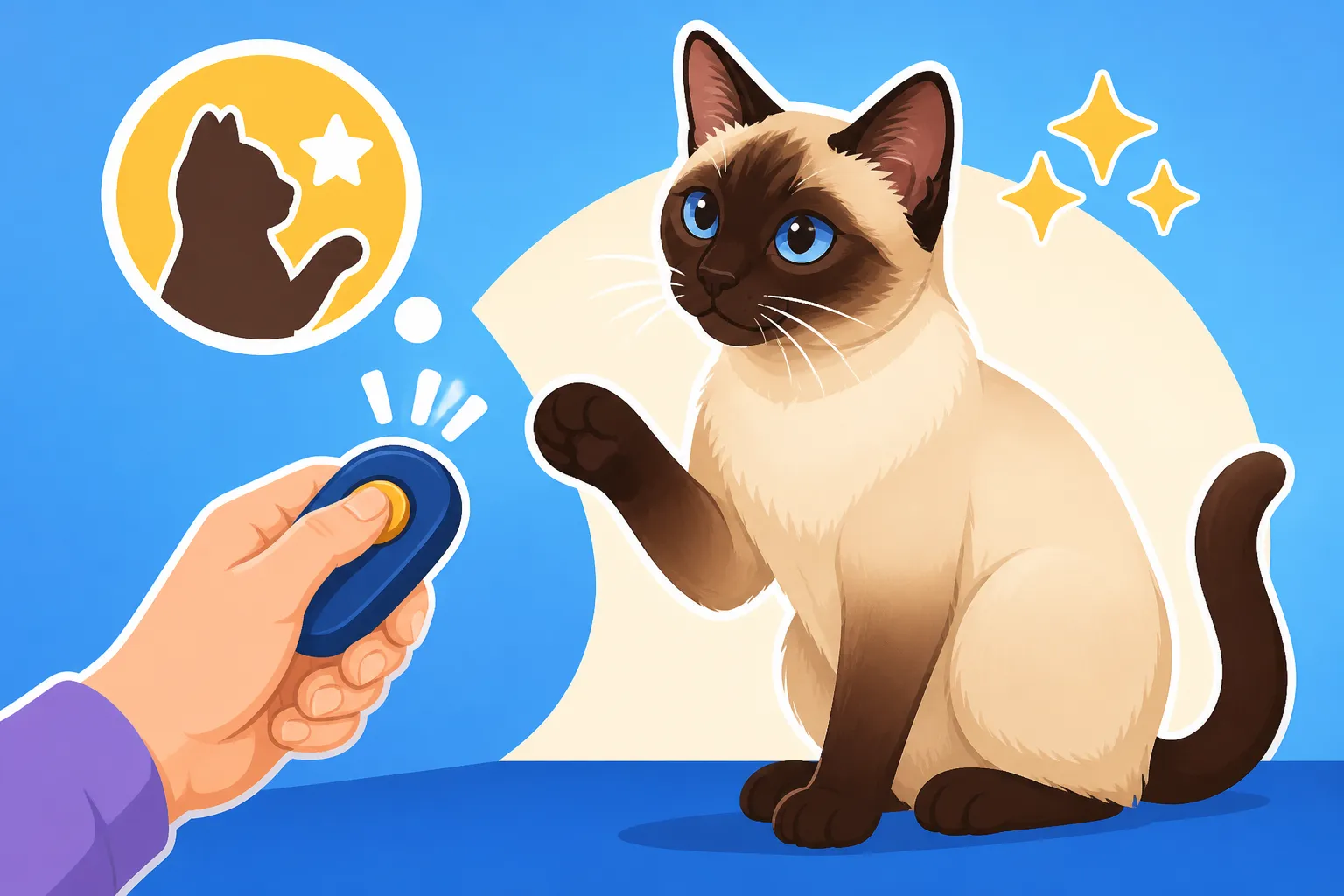
At the heart of clicker training is, predictably, the clicker itself. This isn't just any noisemaker; it's a specially designed device that emits a short, distinct, consistent sound. The magic of the clicker is its precision. In the fleeting moment your cat performs the exact behavior you want, the click acts as a highly accurate marker, signaling "that's it!" instantly. This is far more effective than your verbal praise alone, which can vary in tone or come a fraction of a second too late, making it harder for your cat to pinpoint what they did right.
There are various types of clickers available. Some are small box-shaped devices, others have a button that you press with your thumb, and some even come on wrist straps for hands-free operation. The best one is simply the one you find most comfortable to use consistently. You can easily find a wide range of options on sites like Amazon, often bundled with training guides or other pet accessories. The important thing is that it makes a clear, consistent sound every time. Avoid anything too loud that might startle your sensitive Siamese; a softer click is often preferable for felines.
Choosing the Right Rewards Treats and Praise
Once your Siamese hears that glorious click, the very next thing they should receive is a reward. And when it comes to motivating a Siamese, the reward needs to be high-value. What does that mean? It means something truly irresistible to your cat, not just any old kibble. Think of their absolute favorite indulgence. For many Siamese cats, this might be small pieces of cooked chicken, a tiny bit of tuna (in water, unsalted), freeze-dried salmon treats, or specific cat-safe chewy treats.
The treats should be small enough that your cat can swallow them quickly. You don't want them chewing for too long, as this breaks the flow of the training session. The goal is rapid reinforcement. If your Siamese loves attention, a quick stroke or enthusiastic verbal praise ("Good job!") can also be a valuable part of the reward system, either alone or in conjunction with a treat. Observe your cat: some are highly food-motivated, others respond more to toys or physical affection. Tailor your rewards to what your individual Siamese cherishes most, and remember that variety can also keep things interesting.
Creating an Optimal Training Environment
Setting the stage for success is crucial, especially with a cat as curious and easily distracted as a Siamese. Before you even start a session, choose a quiet, calm environment where you and your cat can focus without interruption. This means turning off the TV, silencing your phone, and ensuring other pets or small children won't suddenly burst in. A quiet room, perhaps a bedroom or a less trafficked area of your living space, is ideal.
Keep your training sessions short and sweet. For a Siamese, who have boundless energy but can also have surprisingly short attention spans for repetitive tasks, 5-10 minutes is often plenty. It’s better to have several short, successful sessions throughout the day than one long, frustrating one. Always try to end on a positive note, even if it means finishing with an easy trick your cat already knows. This leaves them feeling successful and eager for the next session. Make sure you have your clicker and treats within easy reach, so you can deliver them immediately after the click. Being prepared ensures a smooth, effective learning experience for your clever companion. This focus on engagement and positive reinforcement is a key part of providing Enrichment for a Siamese Cat That Gets Bored in an Hour.
The Step-by-Step Guide to Introducing the Clicker
Alright, you've got your clicker, your high-value treats, and a quiet space. Now for the exciting part: actually starting to train your Siamese cat! The process is surprisingly straightforward, but consistency is your best friend here. We're going to build a solid foundation, ensuring your cat truly understands what that "click" means before we even attempt to teach them a single trick.
Loading the Clicker: Making the Association
This is perhaps the most important foundational step in clicker training, often referred to as "loading the clicker" or "charging the clicker." The goal here is simple: to teach your Siamese that the sound of the click always means a treat is coming. They need to make this connection without any behavior being involved at first.
Here's how you do it:
- Get Ready: Sit in your quiet training space with your cat nearby, but don't ask them to do anything. Have your clicker in one hand and a few small, high-value treats in the other.
- Click and Treat: Click the clicker, and immediately (within one second!) offer your cat a treat. Don't wait for them to look at you, or sit, or anything else. Just click, then treat.
- Repeat: Do this about 10-20 times in a session. You'll likely see your Siamese perk up at the sound, perhaps looking at your hand, anticipating the treat. This is exactly what you want!
- Short Sessions: Keep these initial "loading" sessions brief – a few minutes at most. Repeat them a few times throughout the day for a day or two.
You'll know the clicker is "loaded" when your cat hears the click and immediately looks at you or your treat hand, expecting their reward. They've made the connection: click = delicious goodness! This forms the powerful positive association that fuels all future training.
Luring and Capturing Basic Behaviors
Once your clicker is loaded, you can start applying it to actual behaviors. There are two primary methods we use in the early stages: luring and capturing. Both are incredibly effective for teaching a highly intelligent cat like a Siamese.
-
Luring: This involves using a treat to physically guide your cat into a desired position. For example, to teach "sit":
- Hold a treat close to your cat's nose.
- Slowly move the treat up and back over their head. Most cats will naturally lower their rear end to follow the treat with their nose.
- The instant their bottom touches the ground, click! Then give them the treat.
- Repeat this process. Slowly reduce the reliance on the treat, making the motion smaller until it becomes a hand signal.
-
Capturing: This method capitalizes on behaviors your cat performs naturally. Instead of luring them, you simply wait for them to do something you like and then mark it with a click and treat. For example, if your Siamese naturally sits often:
- Have your clicker and treats ready while you're just observing them.
- The moment your cat sits down on their own, click!
- Immediately give them a treat.
- Repeat this every time they offer the behavior. They'll quickly figure out that sitting gets them a reward.
Both luring and capturing are excellent for introducing foundational commands like "sit," "down," or even coming when called. The key is that immediate, precise feedback from the clicker.
Adding Verbal Cues and Hand Signals
Once your Siamese is reliably performing a specific behavior with the help of a lure or by being captured, it's time to introduce a cue. This is what will eventually tell them what you want without needing the clicker or a treat lure.
- Introduce the Verbal Cue: Right before your cat performs the desired action (e.g., just as you move the treat to lure them into a sit, or just as they start to lower themselves to sit naturally), say your verbal cue clearly. For "sit," you'd say "Sit!" then lure/wait for the sit, click!, and treat.
- Add a Hand Signal (Optional but Recommended): You can also pair a hand signal with the verbal cue. For "sit," this might be raising your hand with an open palm. Again, the signal comes before the action.
- Fade the Lure: Over several sessions, gradually make your luring motion smaller and smaller. Eventually, your cat will respond to the verbal cue and/or hand signal alone. At this point, you'll still click and treat for the correct behavior.
- Fade the Clicker: Once your cat is consistently performing the trick on cue, you can start to fade the clicker. You won't need it for every successful execution. Instead, use it intermittently, perhaps for particularly good or quick responses, or for new environments. Continue to reward them with treats and praise, but the clicker becomes less necessary as the behavior becomes ingrained. This creates a strong, lasting association between the cue and the action, making your Siamese incredibly responsive. How to Teach a Siamese Cat a Quiet Cue could be a great example of a practical application once they understand the basics.
Advancing Your Siamese Cat's Clicker Skills
So your Siamese is a pro at the basics! They're sitting, perhaps lying down, and understanding the clicker. Fantastic! Now it's time to build on that foundation and introduce more complex and mentally stimulating challenges. This is where the true brilliance of your Siamese will shine, and you'll really start to see what Which Tricks a Siamese Cat Can Learn is all about.
Targeting: A Gateway to Complex Tricks
Targeting is a foundational skill that opens up a whole new world of training possibilities. It teaches your cat to touch a specific object (the target) with their nose or paw, which you can then use to guide them through more intricate behaviors.
- Introduce the Target Stick: You can buy a dedicated target stick (often extendable, with a ball on the end), or simply use a chopstick, a pencil, or even your finger.
- Teach "Nose Touch":
- Present the target stick a few inches from your cat's nose.
- The moment your Siamese sniffs or touches the target, click! and immediately offer a treat from your other hand.
- Repeat this many times. Your cat will quickly learn that touching the stick with their nose earns them a reward.
- Once they're consistently touching it, you can add a verbal cue like "Touch!" or "Target!" just before you present the stick.
- Use Targeting to Guide: Once "nose touch" is solid, you can use the target stick to guide your cat to move in specific ways. Want them to walk over there? Hold the stick where you want them to go. Want them to jump onto a perch? Hold the stick on the perch. As they move to touch it, click! and treat. This makes teaching sequences and navigating obstacles much easier.
Shaping Behaviors: Breaking Down Complex Actions
Shaping is a powerful technique where you reward successive approximations of a desired behavior. It's how you teach a cat something that they wouldn't naturally do all at once, like fetching an object and bringing it back. It requires patience and a keen eye for small steps.
Let's take "fetch" as an example:
- Initial Interest: Start by placing a favorite, light toy on the floor. Click! and treat for simply looking at the toy.
- Approach: Reward for taking a step towards the toy.
- Touch: Reward for touching the toy with their nose or paw.
- Pick Up: Reward for picking the toy up in their mouth (even if they drop it immediately).
- Hold: Reward for holding the toy for a second longer.
- Move with Toy: Reward for taking a step while holding the toy.
- Come Towards You: Reward for moving towards you with the toy.
- Drop: Reward for dropping the toy at your feet (you might need to lure with another treat to encourage the drop initially).
Each step is tiny, building towards the final goal. The key is to raise your criteria gradually. Don't move to the next step until your cat is consistently performing the current one. If they get stuck, go back a step or make the current step easier. This methodical approach is incredibly rewarding for both of you, demonstrating just How Well a Siamese Cat Fetches.
Troubleshooting Common Clicker Training Challenges
Even the smartest Siamese will hit a snag or two during training. It's completely normal, and understanding how to troubleshoot can save a lot of frustration.
- Distractions: Siamese cats are highly curious. If your cat is constantly distracted, you might need to find an even quieter training space or start with shorter sessions. Gradually introduce mild distractions as they become more proficient.
- Loss of Interest: If your cat walks away or seems bored, your sessions might be too long, or your treats aren't high-value enough. End the session on an easy success, and try again later with a more enticing reward or a shorter timeframe. Remember, multiple short sessions are better.
- Cat Not Understanding: If your Siamese isn't "getting" a particular step, you might be asking for too much too soon. Break the behavior down into even smaller, more manageable steps. Go back to basics if necessary. You might also be clicking too late or too early. Practice your timing!
- "Clicker Addiction": Some owners worry their cat will only perform if the clicker is present. Remember that once a behavior is solid, you can start to fade the clicker, replacing it with verbal praise and occasional treats. The clicker is a teaching tool, not a permanent crutch. The goal is for the cue to prompt the behavior and the reward to maintain it, with the clicker serving as a bridge during the learning phase.
- Too Much Vocalization: Your Siamese is already a talker, and they might start meowing at the clicker or at you for treats. Ignore demanding meows. Only click and treat for the desired behavior, not for vocal protest. Patience is key here.
| Training Session Element | Description | Why it's Important for Siamese Cats |
|---|---|---|
| Clicker | A small device that makes a distinct "click" sound. | Acts as an immediate, consistent marker for correct behavior, crucial for their intelligence to make quick associations and understand exactly what earned them a reward. |
| High-Value Treats | Tiny, irresistible morsels like cooked chicken, tuna, or freeze-dried meat. | Motivates highly intelligent and often opinionated Siamese cats; treats must be small for rapid consumption to maintain the flow of training and prevent satiety too quickly. |
| Quiet Space | A room free from loud noises, other pets, or sudden movements. | Minimizes distractions for a focused Siamese, who are easily engaged but also easily diverted by their environment. |
| Short Sessions | 5-10 minutes, multiple times a day. | Keeps their attention and avoids boredom or frustration, leveraging their energetic but sometimes short-attention-span nature. Always end on a high note. |
| Patience & Consistency | Repeating steps, celebrating small wins, never getting frustrated. | Siamese cats are smart but respond best to clear, predictable communication and a positive training atmosphere built on trust and mutual respect. |
What Tricks a Siamese Cat Can Learn (Beyond the Basics)
Once you and your Siamese have mastered the fundamentals of clicker training, the sky's the limit! Their intelligence, agility, and desire to interact make them ideal candidates for a wide array of skills, from practical household behaviors to impressive party tricks. This isn't just about showing off; it's about providing enriching mental stimulation and strengthening your incredible bond.
Practical Skills for a Harmonious Home
Beyond the fun of tricks, clicker training can be incredibly useful for teaching your Siamese practical behaviors that make everyday life smoother and less stressful for both of you.
- Coming When Called: This is perhaps one of the most vital commands you can teach any cat, especially a curious and adventurous Siamese. Start in a quiet room, say their name or "Come!", and when they take even a step toward you, click! and treat. Gradually increase distance and introduce mild distractions. This skill is invaluable for everything from dinner time to finding them if they've slipped past you.
- "Stay" or "Place" on a Mat: Imagine having guests over and your Siamese, bless their vocal and social heart, is everywhere. Teaching them to go to a designated "place" (like a mat or cat bed) and stay there can be a lifesaver. Start by luring them onto the mat, click! and treat. Gradually increase the duration they stay on the mat before the click and treat. This can be great for mealtimes or when you need them safely out of the way for a moment.
- Going into a Carrier: This is a game-changer for vet visits! Many cats develop an intense aversion to their carriers, turning what should be a simple trip into a wrestling match. Use clicker training to make the carrier a positive place. Start by clicking and treating for looking at the carrier, then for approaching it, then for a paw inside, then for entering fully, then for staying inside, and finally for the door closing. Always use high-value treats and keep sessions short and positive. Your vet will thank you, and your Siamese will be far less stressed during transport. Think about how much easier this makes trips, especially when considering How a Siamese Cat Behaves at the Vet.
Impressive Party Tricks and Mental Gymnastics
Siamese cats love to be the center of attention, and once they understand the game of clicker training, they'll often revel in learning flashy tricks. These aren't just for entertainment; they provide immense mental exercise and boost your cat's confidence.
- High-Fives, Spins, and Jumps: These are popular choices for a reason!
- High-Five: Start with targeting your hand. Hold your hand up, and when your cat touches it with their paw (as they might naturally do to investigate), click! and treat. Add the verbal cue "High-Five!"
- Spin: Use a lure (a treat in your hand) to guide your cat in a full circle. As they complete the circle, click! and treat. Gradually fade the lure, replacing it with a hand signal and verbal cue.
- Jumping Through Hoops: If your Siamese loves to climb and leap, this is a natural fit. Start with a hoop on the ground, lure them through, click! and treat. Gradually raise the hoop.
- "Speak": While many Siamese cats need no encouragement to be vocal, you can teach them to "speak" on cue if you wish. This is usually done by capturing. Wait for them to meow naturally, click! and treat. Once they make the association, add the "Speak!" cue.
- Puzzle Feeders: While not a "trick" in the traditional sense, using puzzle feeders is an excellent way to provide mental stimulation for your clever Siamese. They have to work to get their food, which engages their problem-solving skills and satisfies their hunting instincts. You can find many interactive options for enrichment on places like Amazon, proving What a Puzzle Feeder for a Siamese Cat Costs is well worth it for their mental health.
Leash Training Your Adventurous Siamese
Many Siamese cats are curious, outgoing, and genuinely enjoy exploring the world, making them excellent candidates for leash training. Clicker training provides the perfect framework for making this a positive and safe experience, rather than a battle of wills. This is a journey, not a sprint, and requires patience.
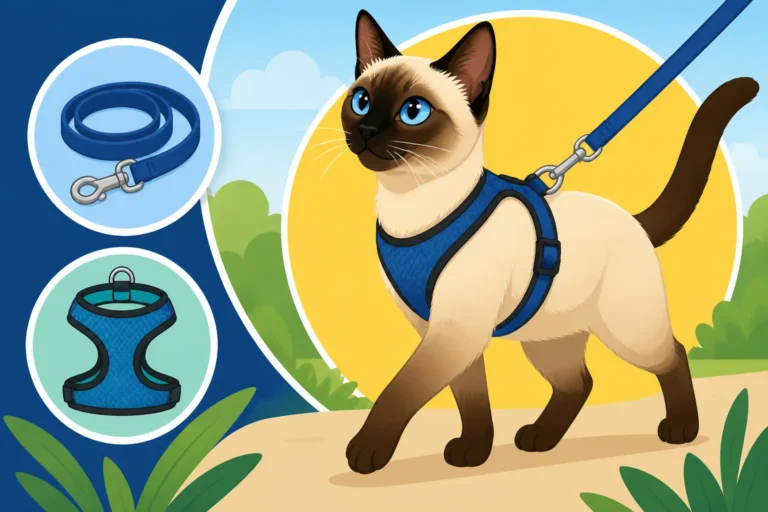
- Harness Introduction: Start by simply bringing out the harness (a properly fitted H-style or vest harness is best for escape artists like Siamese). Click! and treat for looking at it, then for sniffing it.
- Wearing the Harness: Place the harness on them for a few seconds, click! and treat, then immediately take it off. Gradually increase the time they wear it, always making it a positive experience with clicks and treats. Let them walk around the house wearing it.
- Leash Attachment: Once they are comfortable in the harness, attach the leash. Let them drag it around indoors (under supervision, so it doesn't get snagged). Click! and treat for any relaxed movement.
- First Walks: Start indoors or in a very secure, quiet outdoor space (like a private yard or catio). Don't pull them. Let them lead, and use the clicker to reward forward movement and staying near you. The goal is to make the experience enjoyable and stress-free. With consistent, positive clicker training, many Siamese cats grow to love their supervised outdoor adventures, transforming the question of How to Leash Train a Siamese Cat into a fun bonding activity.
Disclaimer
This article is for general informational purposes only and does not constitute professional advice. Laws, prices and regulations vary by location and change over time. Consult a qualified professional for guidance on your specific situation.