How Old a Siamese Cat Kitten Is When Points Show
One of the most exciting, and let's be honest, slightly impatient waits for any new Siamese kitten owner is seeing those beautiful points emerge. You bring home this adorable, tiny white fluffball, and you just know there's a stunning color underneath, but how long do you have to wait? This guide will walk you through exactly when to expect your Siamese kitten's points to show and what factors influence their captivating coloration.
Why Your Siamese Kitten Is Born White
It's a common surprise for first-time Siamese owners: their tiny bundle of joy arrives looking like a little marshmallow. You might even wonder if you've been given the wrong breed! But rest assured, this pristine white coat is entirely normal and, in fact, a fascinating hallmark of the Siamese breed's unique genetics. Understanding why they start out so pale is key to appreciating their eventual stunning transformation.
The Tyrosinase Enzyme and Temperature
The magic behind a Siamese cat's color points lies in a specific genetic mutation affecting the tyrosinase enzyme. This enzyme is crucial for melanin production – the pigment that gives skin and fur its color. In Siamese cats, this particular enzyme is heat-sensitive. It only functions correctly and produces pigment when the body temperature is cooler. Think of it like a tiny internal thermostat for color. Where the cat's body is warmest, the enzyme is inactive, leading to no pigment. Where it's cooler, the enzyme gets to work, creating those beautiful dark points. It's truly an incredible biological process to witness. What Point Coloration in a Siamese Cat Is delves deeper into this fascinating genetic trait.
The Warmth of the Womb
So, why are they born white? Simple: the womb is a consistently warm, cozy environment. While your kitten is developing inside its mother, its entire body is maintained at a uniform, warm temperature. This means the heat-sensitive tyrosinase enzyme is inactive all over, preventing any melanin production. Therefore, all Siamese kittens are born without visible points, appearing uniformly white or a very faint cream. It's like baking a cake in an oven; the heat is everywhere, so the "color" (pigment) doesn't have a chance to show up in specific spots. This universal warmth ensures they are all blank canvases, ready for their unique patterns to emerge once they enter the cooler world.
When Points First Appear
Once your tiny Siamese enters the big wide world, the real show begins! The process of their points developing isn't a sudden overnight switch but a gradual, subtle unveiling. Watching these colors emerge is one of the joys of raising a Siamese kitten. It's like a daily treasure hunt, spotting new shades appearing on their little noses and paws.
Initial Faint Markings
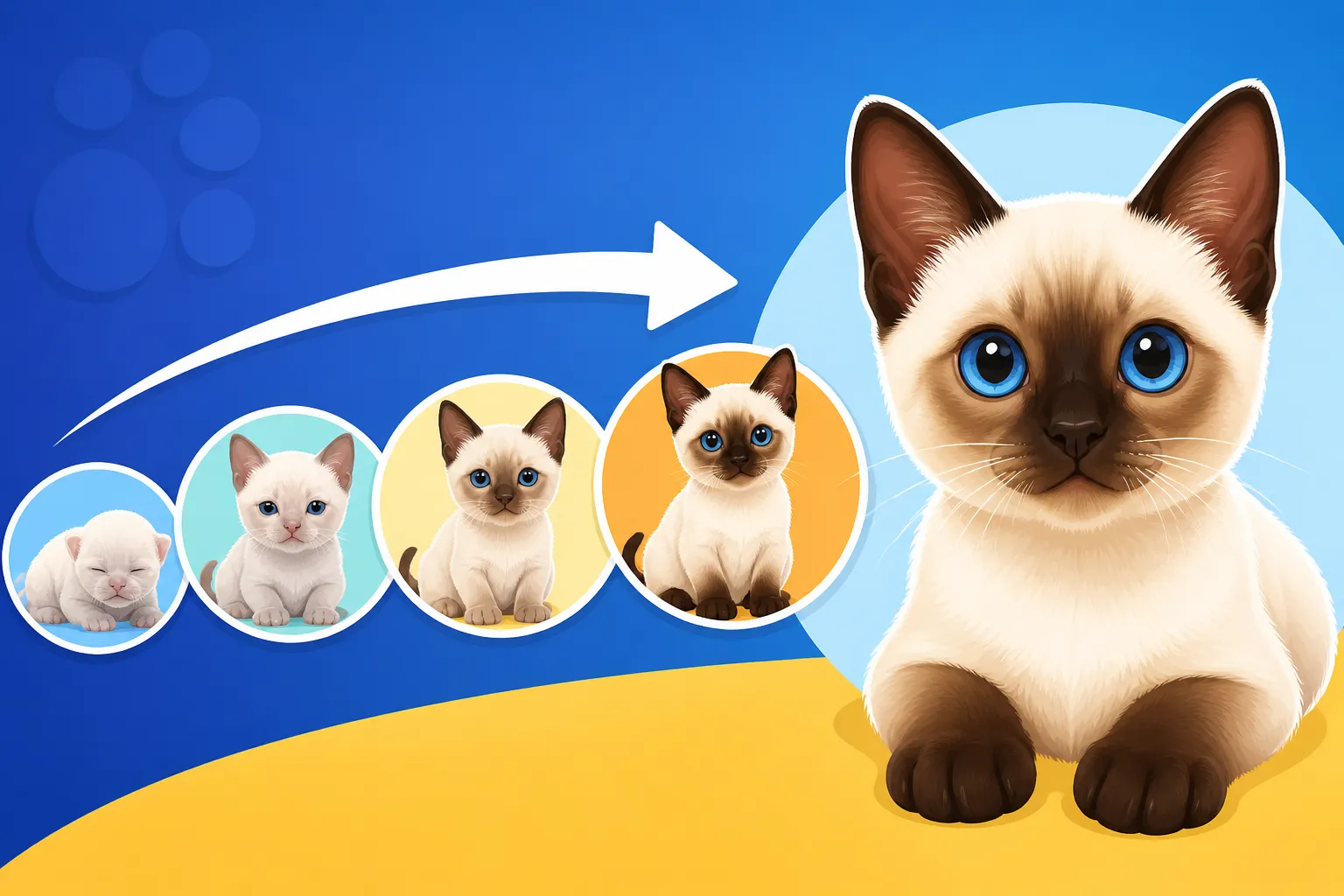
You'll usually start noticing the very first, faint hints of coloration when your Siamese kitten is around one to two weeks old. The most common places to spot these initial ghost markings are on their nose, paw pads, and the tips of their ears. These aren't dark, defined points yet, but rather a subtle shading, like a whisper of what's to come. For instance, a Seal Point kitten might show a barely perceptible greyish smudge on its nose, while a Lilac Point might have a faint pinkish-grey hue. It's often so subtle that you might second-guess yourself, wondering if you're just imagining it! But keep watching; those soft hints are the beginning of their signature beauty.
Gradual Darkening and Definition
As the weeks progress, these initial faint markings will start to deepen and become more defined. By the time your kitten is three to four weeks old, the points on their ears, nose, and paws will be much more noticeable. You'll clearly see the contrast against their still pale body. The tail might also begin to show more distinct color. This stage is particularly exciting because you can often get a better idea of what point color your kitten will be. For example, the difference between a Seal Point's dark brown and a Chocolate Point's milkier brown becomes more apparent. This period of rapid development continues through their first couple of months as they grow and move about, exposing their extremities to the ambient room temperature. How Long a Siamese Cat's Points Take to Finish offers insights into the full timeline.
Full Development Timeline
While the initial points are visible early on, a Siamese cat's full coloration actually continues to develop and deepen over a much longer period. By three to four months old, your kitten's points will be quite well-established and their unique pattern will be evident. However, their body color will remain relatively pale. It’s important to remember that a Siamese cat’s coat color isn't truly "finished" at this stage. They will continue to darken gradually throughout their lives, especially their body fur, becoming richer and often a shade or two deeper with age. It's a lifelong process, with colder climates or spending more time in cooler spots in the house influencing just how dark their body eventually gets.
Factors Influencing Point Development
While genetics lay the groundwork, several external factors can play a significant role in how quickly and how intensely your Siamese kitten's points develop. It's not just about waiting; it's also about their environment and even their general well-being. Thinking about these elements can help you understand the variations you might see between different kittens, even within the same litter.
Environmental Temperature
This is arguably the most significant factor. Since the tyrosinase enzyme is heat-sensitive, the ambient temperature of your home will directly affect how quickly and how darkly your kitten's points develop. Kittens kept in a cooler environment will generally develop their points faster and often with more intensity than those raised in a very warm home. Imagine two kittens from the same litter; one in a home that keeps the thermostat at 68°F (20°C) and another in a house consistently at 75°F (24°C). The cooler-housed kitten will likely show more rapid and distinct point development. This also explains why you might notice your Siamese cat’s body color darkening slightly in winter and lightening a bit in summer. How Temperature Controls a Siamese Cat's Color explains this in more detail.
Genetic Predisposition
While all Siamese cats share the foundational point coloration gene, the specific shade and intensity of their points are also determined by their individual genetic makeup. Some bloodlines might naturally produce darker, more intense points, while others might yield lighter, more delicate shades. For example, a Lilac Point Siamese cat will naturally have much lighter points than a Seal Point, regardless of the environmental temperature. The genetic blueprint dictates the type of pigment that can be produced, while temperature influences where and how much of that pigment actually expresses. This is why Which Gene Makes a Siamese Cat's Points is so important to understand for breeders.
Overall Health and Nutrition
A kitten's general health and the quality of their nutrition can indirectly impact the vibrancy and development of their coat. A healthy kitten receiving a balanced, high-quality diet is more likely to thrive, and this well-being can be reflected in their coat quality and color development. Conversely, a kitten that is unwell or not getting adequate nutrients might have a duller coat, and its point coloration might not develop as robustly as expected. Ensuring your kitten has access to premium cat food can support their overall health, including healthy skin and coat development. Regularly checking in with your vet, especially during those crucial early weeks, ensures they are on the right track.
Monitoring and What to Expect Long-Term
Watching your Siamese kitten's points develop is a journey, not a destination. Their coloration will continue to evolve, offering new nuances and shades as they mature. This ongoing change is part of what makes the Siamese so captivating throughout their lives. It's also a good reminder that a kitten's color isn't static, and slight changes over time are perfectly natural.
Observing Point Progression
As your kitten grows, take the time to observe their coat regularly. You’ll notice the points on their ears, face, paws, and tail becoming progressively darker and more solid. The body will generally remain lighter, but even this will start to show a subtle shading as they age. It's fascinating to compare photos of your kitten at different stages – you'll be amazed at the transformation! This slow, steady progression is entirely normal and expected. If you're ever concerned about a lack of development or unusual patches, a quick chat with your vet can offer peace of mind.
Anticipating Adult Coloration
It's tempting to try and predict your kitten's exact adult shade from their earliest points, but remember that the full depth of color takes time. While the primary point color (Seal, Blue, Chocolate, Lilac) will be evident by around 3-4 months, the richness and overall body shading will continue to mature, sometimes for up to two years. For instance, a Seal Point will develop a darker, richer seal brown, and their body might take on a warm, fawn tone. Whether a Siamese Cat Kitten's Final Color Can Be Predicted is a question many owners have, and the answer involves a bit of patience! An older Siamese cat, especially one kept in a cooler home, will often have a significantly darker body than a young kitten. This gradual darkening is a natural part of their unique physiology. You might even find some cozy, temperature-regulating beds on Amazon that your Siamese will adore, which can subtly influence their body temperature and, consequently, their coat color.
Point Coloration Development Stages
| Age Range | Key Characteristics | Appearance |
|---|---|---|
| Birth – 1 Week | Uniformly white or very pale cream. No visible points. | Little marshmallow |
| 1 – 2 Weeks | Faint, ghost-like shading begins to appear on nose, paw pads, and ear tips. | Subtle hints of color, often needing close inspection |
| 3 – 4 Weeks | Points become more distinct on ears, nose, paws, and tail. | Clearer contrast, basic point color recognizable |
| 1 – 2 Months | Points are well-established, darkening consistently. Body still mostly pale. | Defined points, stark contrast with body |
| 3 – 4 Months | Points are quite dark and solid. Body may start to show very subtle shading. | Strong point color, beginning of body shading |
| 6 Months – 1 Year | Points continue to deepen. Body color begins to gradually darken to its mature shade. | Richer point color, noticeable body warmth/shading |
| 1 Year + (Adult) | Full point depth achieved. Body color continues to darken subtly with age and temperature. | Mature, striking coloration with evolving body shade |
Disclaimer
This article is for general informational purposes only and does not constitute professional advice. Laws, prices and regulations vary by location and change over time. Consult a qualified professional for guidance on your specific situation.