How Temperature Controls a Siamese Cat’s Color
It’s a truly fascinating phenomenon to witness: one day, your adorable, pale Siamese kitten is romping around, and the next, its little ears and tail tips are starting to show a hint of color. Then, as the seasons change or they get a bit older, you might notice their coat deepening, almost as if they’ve been dipped in tea. This isn't just your imagination playing tricks on you; it's a direct, genetic response to their environment. This guide will unravel the captivating science behind how temperature dictates the stunning coat coloration of your Siamese cat, explaining why these changes happen and what you can expect as they grow and mature.
The Genetic Blueprint Behind Siamese Coloration
The distinctive "pointed" coloration of a Siamese cat — that beautiful contrast of darker extremities against a lighter body — isn't some random trick of nature. It's all thanks to a very specific genetic mutation that affects how their bodies produce pigment. Understanding this underlying mechanism is key to appreciating why temperature plays such a crucial role.
The Tyrosinase Enzyme and Temperature Sensitivity
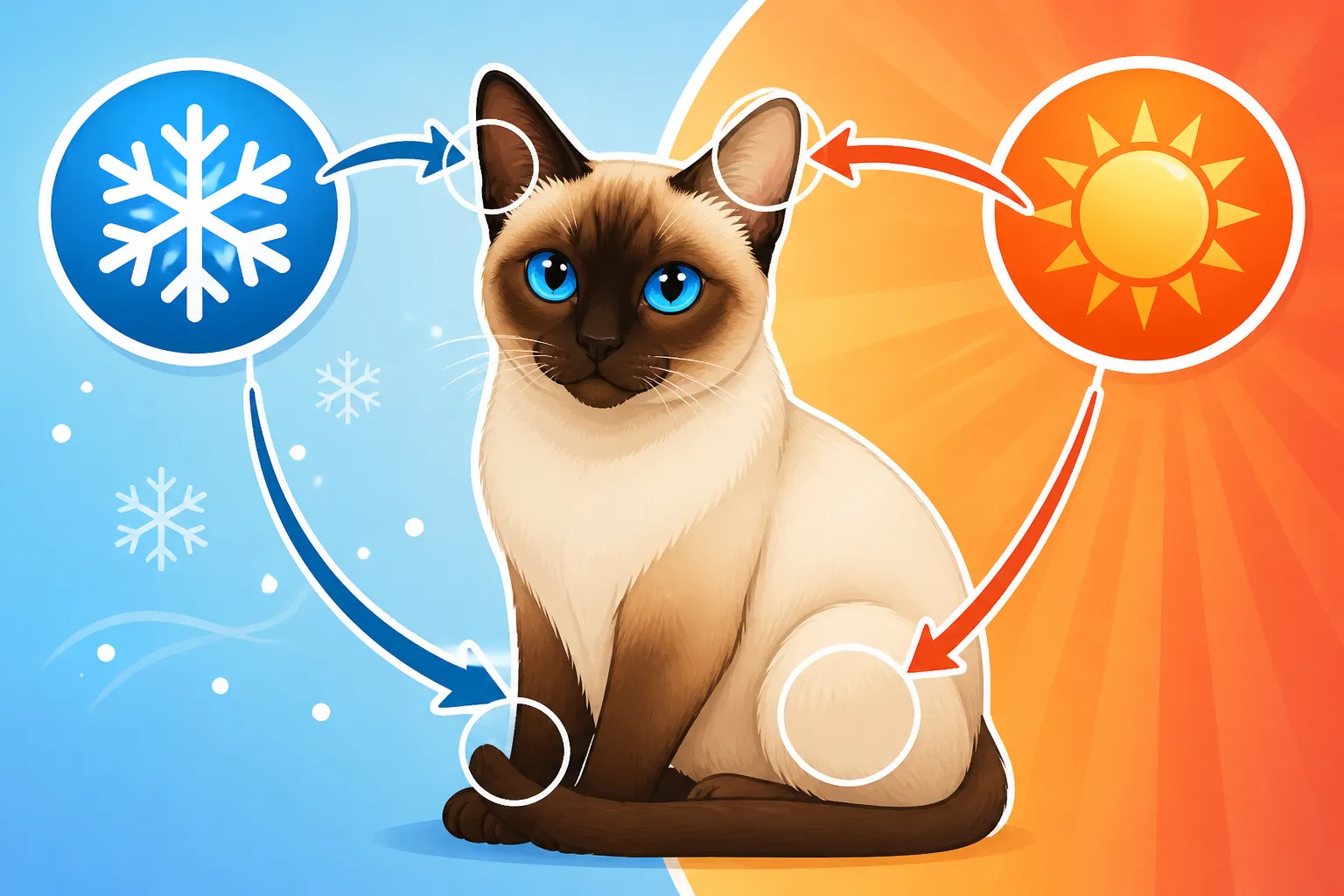
At the heart of a Siamese cat's unique coloring is an enzyme called tyrosinase. In most animals, tyrosinase is responsible for producing melanin, the pigment that gives skin and fur its color, and it works perfectly fine at normal body temperatures. But Siamese cats carry a mutated form of this enzyme. This particular mutation makes the tyrosinase enzyme heat-sensitive. Think of it like a tiny, biological switch that only turns on when the temperature is just right – or rather, when it's cool enough.
This means that the tyrosinase enzyme in a Siamese cat can only produce pigment in the cooler areas of their body. These cooler areas are typically their extremities: the ears, paws, tail, and face. These parts are naturally a few degrees cooler than the core body, allowing the enzyme to function and deposit melanin, leading to the characteristic dark points. The warmer parts of their body, like their torso and belly, remain lighter because the enzyme is essentially "turned off" by the higher internal body temperature, preventing pigment production. This intricate genetic dance is why your Siamese sports such a striking and beautiful coat pattern. Which Gene Makes a Siamese Cat's Points explores this in more detail.
Why Siamese Kittens Are Born White
One of the most charming facts about Siamese cats is that all kittens are born completely white or a very pale cream. If you've ever seen a litter of tiny Siamese bundles, you'd be hard-pressed to tell them apart from any other newborn kitten until their points start to develop. This isn't a mystery; it's a direct consequence of that temperature-sensitive tyrosinase enzyme we just talked about.
Inside their mother's womb, kittens are kept at a consistently warm, even temperature, typically around 100 to 102 degrees Fahrenheit (about 37.8 to 38.9 degrees Celsius). At this elevated temperature, the mutated tyrosinase enzyme in Siamese kittens is completely inactive. It simply cannot do its job of producing melanin. Therefore, no pigment is deposited in their fur while they are developing in utero. It's only once they are born and exposed to the cooler ambient air of the outside world that their body's extremities begin to cool down enough for the enzyme to spring into action. This gradual cooling process after birth is what allows their points to slowly emerge, transforming them from tiny white fluff-balls into the recognizable pointed beauties we adore. Why a Siamese Cat Kitten Is Born White delves deeper into this fascinating initial stage.
How Environmental Temperature Influences Point Development
Once a Siamese kitten is born, the world outside the womb starts to dictate their true colors. The ambient temperature they live in becomes a major factor, subtly or dramatically shaping the intensity and spread of their iconic points. It's a living canvas, constantly being painted by their environment.
The Process of Point Formation in Early Life
After birth, as a Siamese kitten's body cools down, especially its extremities, the tyrosinase enzyme begins to function. The color doesn't just appear overnight; it's a gradual process. You might notice the very tips of their ears and tail showing a slight tint first, then their little paws. This can take several days to a few weeks, depending on the individual kitten and the temperature of their environment. A kitten kept in a slightly cooler room might develop its points a little faster and potentially more intensely than one kept in a very warm environment, though the difference in these early weeks is often subtle.
The final shade and crispness of the points will also depend on the specific genetic "point color" the kitten carries – whether they're a Seal Point, Blue Point, Chocolate Point, or Lilac Point. However, regardless of the base color, the expression of that color relies entirely on temperature. The Age a Siamese Cat Kitten Gets Its Points can give you a better idea of the timeline for these initial color changes. This early development period is truly magical, watching your kitten's personality and colors emerge simultaneously.
The Impact of Ambient Temperature on Adult Siamese Color
This isn't just a kitten phenomenon; the relationship between temperature and color continues throughout a Siamese cat's entire life. An adult Siamese cat living in a consistently colder climate or a house kept at lower temperatures will often have darker, more expansive points and a generally darker body coat compared to a Siamese cat of the same genetics living in a warmer home. Conversely, a Siamese kept very warm might see their points become slightly lighter or less defined, and their body fur may remain a paler cream.
Imagine two Seal Point Siamese cats from the same litter. One lives in a cozy, heavily heated apartment in a cold northern city, rarely experiencing significant temperature dips. The other lives in a draftier, less heated country home in the same region, where the ambient temperature might be a few degrees cooler year-round. Over time, the cat in the cooler home might develop deeper, richer seal points that extend further up their legs and face, and their body might take on a more pronounced buff or fawn shade. The apartment cat, by contrast, might maintain a lighter body coat and slightly less intense points. This isn't a permanent change; if the cats swapped homes, their coloration would slowly adjust over months to reflect their new environment. You can really see this play out in How Much a Siamese Cat Darkens in a Cold House compared to How Much a Siamese Cat Lightens in a Warm House.
Unpacking the Mystery of Shaved Patches Growing Back Darker
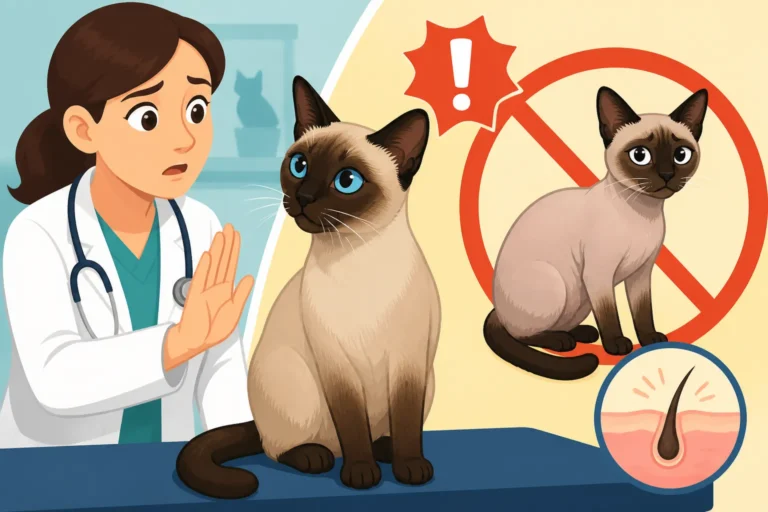
Many Siamese cat owners, or anyone who has worked with Siamese cats in a veterinary setting, will have noticed something peculiar: if a patch of fur is shaved for surgery or an IV, that fur often grows back significantly darker than the surrounding coat. This isn't a strange side effect of the clippers or the procedure itself; it's another clear demonstration of the temperature-dependent pigment production.
Localized Cold and Pigment Production
When a patch of fur is shaved, that area of the cat's skin loses a significant amount of its natural insulation. Fur, even the short, sleek coat of a Siamese, provides a layer of warmth. Without it, the exposed skin in the shaved area becomes cooler than the surrounding, insulated skin. This localized cooling is precisely what activates the dormant tyrosinase enzyme in that specific spot.
Once the skin temperature drops to a level where the enzyme can function, it starts producing melanin. As the new fur begins to grow in, it's infused with this pigment, resulting in a darker patch. It's almost like the cat's body is trying to "insulate" itself by growing darker, more pigment-rich fur in the cooler area, though the primary driver is simply the enzymatic response to the lowered temperature. This phenomenon is a striking visual example of how intricately a Siamese cat's genetics are linked to its thermal environment. The Shaved Patch That Grows Back Dark on a Siamese Cat goes into more detail about this specific occurrence.
The Temporary Nature of Darkened Shaved Patches
While those dark, shaved patches can look quite dramatic, especially on a light-bodied Siamese, they are generally not permanent. As the fur in the shaved area grows back to its full length, it gradually restores the natural insulation to that part of the body. Once the skin temperature underneath the regrowing fur returns to its normal, warmer core body temperature, the tyrosinase enzyme in that area becomes inactive again.
Over several weeks to months, as the cat sheds and new, unpigmented fur replaces the initially darkened strands, the patch will slowly lighten and blend back into the cat's original coat color. The exact timeline can vary depending on the cat's individual metabolism, the thickness of their regrowing fur, and the ambient temperature of their home. A cat living in a warmer environment might see the patch lighten faster than one in a cooler home. It’s a testament to the dynamic nature of their coloration, constantly adapting and responding to the thermal cues around them.
Factors Beyond Temperature That Can Affect Color
While temperature is undeniably the primary driver behind a Siamese cat's unique color changes, it's not the only thing that can influence their coat. There are other natural processes and even health considerations that can play a subtle, or sometimes more significant, role in how their beautiful coats look over time.
Age-Related Darkening
It's a common observation among Siamese owners that their cats tend to darken with age. A young, vibrant Seal Point might have a creamy body with sharply defined dark points, but by the time they reach their senior years, their body may have deepened to a rich fawn or even a light brown, and their points might appear almost black and quite expansive. This isn't just due to them feeling the cold more (though that can be a factor); it's a natural physiological process.
As a cat ages, their metabolism can slow down, and their body temperature might fluctuate slightly. More significantly, the cumulative effect of a lifetime of cooler extremities means that the tyrosinase enzyme has had more opportunities to produce pigment. Over years, this leads to a gradual accumulation of melanin across the body, not just in the traditional points. It's like a slow, continuous tanning process where the cooler areas have been "tanning" for longer. This natural darkening is a normal part of The Age a Siamese Cat Is Considered Senior and generally nothing to worry about. You can read more about this in Why an Older Siamese Cat Yowls More, which touches on some changes that occur in senior Siamese cats.
Illness and Stress
While temperature has a direct, genetic link to Siamese coloration, general health and stress can indirectly impact a cat's coat, including its appearance. A cat that is unwell or under significant stress might have a duller, coarser coat, or experience changes in shedding patterns. While this won't fundamentally alter their point coloration in the same way temperature does, it can affect the vibrancy and overall presentation of their fur.
For instance, a cat with a chronic illness might have an immune system that is working overtime, potentially impacting overall coat health. Severe stress could lead to overgrooming in certain areas, potentially exposing skin to cooler temperatures and causing localized darkening, similar to a shaved patch. However, it's crucial to distinguish these subtle, secondary effects from the primary, temperature-driven changes. If you notice a sudden or drastic change in your cat's coat quality or color that doesn't seem linked to temperature or age, it's always best to consult your veterinarian to rule out any underlying health issues. Signs a Siamese Cat Is Unwell can help you recognize potential problems.
Practical Considerations for Siamese Owners
Understanding the science behind your Siamese cat's changing colors isn't just a fun fact; it has practical implications for how you care for them and interpret what you see. It helps you appreciate their unique physiology and ensure their comfort.
Understanding Your Cat's Natural Color Progression
The most important takeaway for any Siamese owner is to understand that color changes are a completely normal and inherent part of owning this magnificent breed. Don't be alarmed if your kitten starts to darken, or if your adult cat's points become richer in the winter and lighten slightly in the summer. These are natural expressions of their genetics at work. Each Siamese is an individual, and their color progression will be unique, but the underlying principles of temperature sensitivity apply to all.
Embrace the subtle shifts and deepening shades as your cat matures. It's a living testament to their unique heritage and the constant interplay between their genes and their environment. Knowing this can save you unnecessary worry and help you appreciate the dynamic beauty of your companion. What Point Coloration in a Siamese Cat Is provides an excellent foundation for understanding these natural patterns.
Maintaining a Comfortable Environment
While it's fascinating to observe the temperature-induced color changes, it's important to prioritize your cat's comfort and well-being over any desire to manipulate their coat color. Siamese cats, with their short, single coats and lean bodies, are generally known to feel the cold more easily than some other breeds. This is why you often find them curled up in sunbeams, nestled under blankets, or seeking out warm laps.
Providing a consistently comfortable environment means keeping your home at a temperature that suits them. If you notice your Siamese is constantly seeking warmth, shivering, or huddling, it might be a sign they're a bit chilly. Consider offering them cozy beds, blankets, or even a heated cat bed, which you can often find readily available on platforms like Amazon or Chewy. Make sure they have access to sunny spots and draft-free areas where they can relax. While a cooler home might lead to darker points, their overall health and happiness should always come first. Keeping a Siamese Cat Warm offers many great tips for ensuring your feline friend is snug. You can also find a variety of cat-friendly heating pads or self-warming beds online, for example, on Chewy, which can be a real lifesaver during colder months. Even a simple soft blanket from Amazon can make a world of difference for a chilly Siamese.
Here’s a quick overview of how different factors can influence your Siamese cat's coat color:
| Factor | Effect on Point Coloration | Effect on Body Coloration | Key Mechanism |
|---|---|---|---|
| Newborn | None (white/pale cream) | White/pale cream | Warm uterine environment inactivates tyrosinase enzyme. |
| Cooler Ambient Temp | Darkens, intensifies, can expand | Darkens, becomes richer (fawn/buff) | Tyrosinase more active in cooler air, producing more melanin. |
| Warmer Ambient Temp | Lightens, less intense, can recede | Lightens, remains paler cream | Tyrosinase less active in warmer air, producing less melanin. |
| Shaved Patch | Becomes temporarily darker (as fur regrows) | Becomes temporarily darker (as fur regrows) | Loss of insulation cools skin, activating tyrosinase locally. |
| Aging | Gradually darkens and spreads over years | Gradually darkens (fawn to light brown) over years | Cumulative melanin production and minor metabolic shifts over a lifetime. |
| Illness/Stress | Indirectly affects coat quality; direct color change is rare | Indirectly affects coat quality; direct color change is rare | Can lead to duller fur or stress-induced overgrooming, subtly impacting appearance but not genetic mechanism. |
Remember, your Siamese cat is a unique individual, and observing these changes is part of the joy of having them in your life.
Disclaimer
This article is for general informational purposes only and does not constitute professional advice. Laws, prices and regulations vary by location and change over time. Consult a qualified professional for guidance on your specific situation.