How to Bathe a Siamese Cat
It's a truth universally acknowledged in the cat world that felines are self-cleaning machines. Most of the time, they do a stellar job, keeping their sleek coats pristine with a meticulous tongue bath. But then there are those moments – oh, those moments – when your beloved Siamese cat, with all their elegance and vocal charm, manages to get into something truly unmentionable. Whether it's a sticky situation, an accidental encounter with something toxic, or a veterinarian-prescribed medicated bath, the thought of actually bathing a cat, especially one as opinionated and clever as a Siamese, can fill even the most seasoned owner with dread. This guide is here to walk you through the process, aiming to make it as stress-free and effective as possible for both you and your feline friend.
Why Your Siamese Might (or Might Not) Need a Bath
Let's face it, the idea of bathing a cat often conjures images of a furious furball, claws out, soaking wet and utterly betrayed. It's a common misconception that all cats hate water, and while many do, some Siamese cats can be surprisingly tolerant, even curious. However, bathing should always be a last resort or a necessary medical intervention, not a regular spa day.
When a Bath is Truly Essential
While your Siamese is generally an expert self-groomer, there are definitely times when human intervention with soap and water becomes absolutely necessary. These aren't just inconvenient situations; sometimes they're critical for your cat's health and safety.
Imagine your curious Siamese, perhaps exploring a newly opened cupboard, suddenly covered in something sticky like motor oil, paint, or even tree sap. These substances aren't just messy; they can be toxic if ingested as your cat tries to groom them off. In such cases, a bath isn't optional, it's vital. Similarly, if your cat has somehow come into contact with a household cleaner, insecticide, or any other chemical, getting it off their fur immediately is paramount. You certainly don't want them licking these dangerous compounds. Another common reason, though thankfully less frequent for Siamese cats with their short coats, is flea infestation. A good flea shampoo, specifically formulated for cats, can be a crucial first step in eradicating these pests. Finally, certain skin conditions or allergies might require medicated baths prescribed by your vet. These aren't about cleanliness but about delivering therapeutic agents directly to the skin. Your vet will give you specific instructions on Which Shampoo Suits a Siamese Cat and how often to use it.
When to Skip the Bath
For the vast majority of daily grime and general tidiness, your Siamese cat has it covered. Their rough tongues are perfectly designed for grooming, distributing natural oils that keep their coat healthy and shiny. Over-bathing, even with cat-specific shampoos, can strip these essential oils, leading to dry, flaky skin, dull fur, and discomfort. Think about it: if their skin gets irritated, they might scratch more, potentially creating sores or infections. It's also important to consider the stress factor. Many cats find the entire process of bathing incredibly alarming. The unfamiliar sensations, the restraint, the loud running water – it can be a terrifying experience that far outweighs the benefit of a slightly cleaner coat. For general coat maintenance, a regular brushing routine is usually more than enough. After all, Grooming a Siamese Cat Takes Five Minutes a Week is often all they need to stay looking their best. Unless there's a compelling medical or safety reason, letting your Siamese handle their own hygiene is usually the best policy, both for their physical health and their emotional well-being. Knowing How Rarely a Siamese Cat Needs a Bath can save both of you a lot of unnecessary hassle.
Pre-Bath Preparations: Setting the Stage for Success
Alright, so you've determined a bath is absolutely necessary. This isn't a spontaneous act. Proper preparation is truly half the battle, especially with a clever and sometimes dramatic Siamese cat. Rushing into it will only escalate their anxiety and make the whole experience worse for everyone involved. Think of it as preparing for a delicate surgical procedure – precision and calm are key.
Gathering Your Supplies
Before you even think about putting your cat near water, have everything you need within arm's reach. You do not want to be fumbling around for a towel while your cat is mid-escape attempt. Start with a cat-specific shampoo – and let me stress this: cat-specific. Human shampoos, even baby shampoos, are formulated for a different skin pH and can cause severe skin irritation, dryness, or even chemical burns on a cat. Look for gentle, hypoallergenic options if your cat has sensitive skin. You can find a wide selection of cat-specific shampoos, along with other essential grooming tools, on retailers like Chewy or Amazon.
Next, you'll need plenty of towels. Have at least two large, absorbent towels ready, perhaps even a smaller one for their face. A non-slip mat for the bottom of the tub or sink is crucial; a slippery surface will only increase their panic. A small cup or a detachable shower sprayer with a gentle setting is ideal for wetting and rinsing. Cotton balls are great for gently plugging your cat's ears (never push them in too far!) to prevent water from getting into the ear canal, which can lead to infections. A washcloth or sponge can be helpful for their face and delicate areas. And finally, don't forget the treats! High-value, irresistible treats are essential for positive reinforcement after the ordeal.
Here’s a handy checklist for your bathing toolkit:
| Item | Purpose |
|---|---|
| Cat-specific shampoo | Safe cleansing, avoid human products |
| Several large towels | Drying, comfort |
| Non-slip mat | Prevents slips and panics in tub/sink |
| Small cup or sprayer | Gentle wetting and rinsing |
| Cotton balls | Protect ears from water |
| Washcloth/sponge | Gentle cleaning of face and sensitive areas |
| High-value treats | Positive reinforcement, distraction |
| Claw clippers | Prevents scratches before and during bath |
| Comb/brush | Pre-bath detangling |
| Old shirt for you | Protects your clothes from splashes and claws |
Creating a Calm Environment
Your Siamese cat is a creature of routine and can be very sensitive to changes in their environment or your mood. Approaching bath time like it's a high-stakes wrestling match will only transmit your anxiety to them. Instead, aim for an atmosphere of calm. Choose a time when your household is quiet, and you won't be interrupted. Close the bathroom door to prevent escapes. Ensure the room is comfortably warm, as your Siamese might feel the chill more easily once wet. Why a Siamese Cat Feels the Cold is something to consider, as their short coats offer less insulation.
You might even want to try a Feliway diffuser in the bathroom for about 30 minutes beforehand to release calming pheromones. Speak in a soothing, low voice throughout the preparation and bathing process. Avoid sudden movements or loud noises. For some cats, a few minutes of gentle play right before the bath can help burn off some nervous energy and distract them, but don't overdo it to the point of agitation. The goal is to make them feel as secure and unthreatened as possible in a situation that is inherently unsettling.
The Pre-Bath Groom and Nail Trim
This step is non-negotiable and incredibly important for two main reasons. First, a thorough pre-bath brush-through will remove any loose fur and help detangle minor mats. While a Siamese cat's short, sleek coat means they're less prone to severe matting than, say, a Persian, any tangles will become tighter and more difficult to remove once wet. How Much a Siamese Cat Sheds can be surprising, and a good brush will help minimize the wet, loose fur that can clog drains and stick to everything.
Second, and perhaps even more crucial for your own safety, is trimming their claws. Even the most docile Siamese cat can become a tiger when faced with water. Sharp claws are their primary defense mechanism, and an anxious cat will not hesitate to use them to climb out of your grasp, leaving you with some painful souvenirs. Use sharp, cat-specific claw clippers and trim just the very tips, avoiding the quick. If you're unsure how to do this safely, ask your vet or a groomer for a demonstration. This small act of preparation can make a huge difference in preventing injuries to both you and your cat. Knowing How Often a Siamese Cat's Claws Need Cutting regularly will also make this pre-bath trim less of a shock.
The Bathing Process: Step-by-Step Guidance
Okay, the stage is set, supplies are ready, and you've taken a deep breath. Now for the main event. Remember, patience and a gentle touch are your best allies here. This isn't about scrubbing vigorously; it's about getting them clean with minimal fuss.
The Gentle Approach to Getting Wet
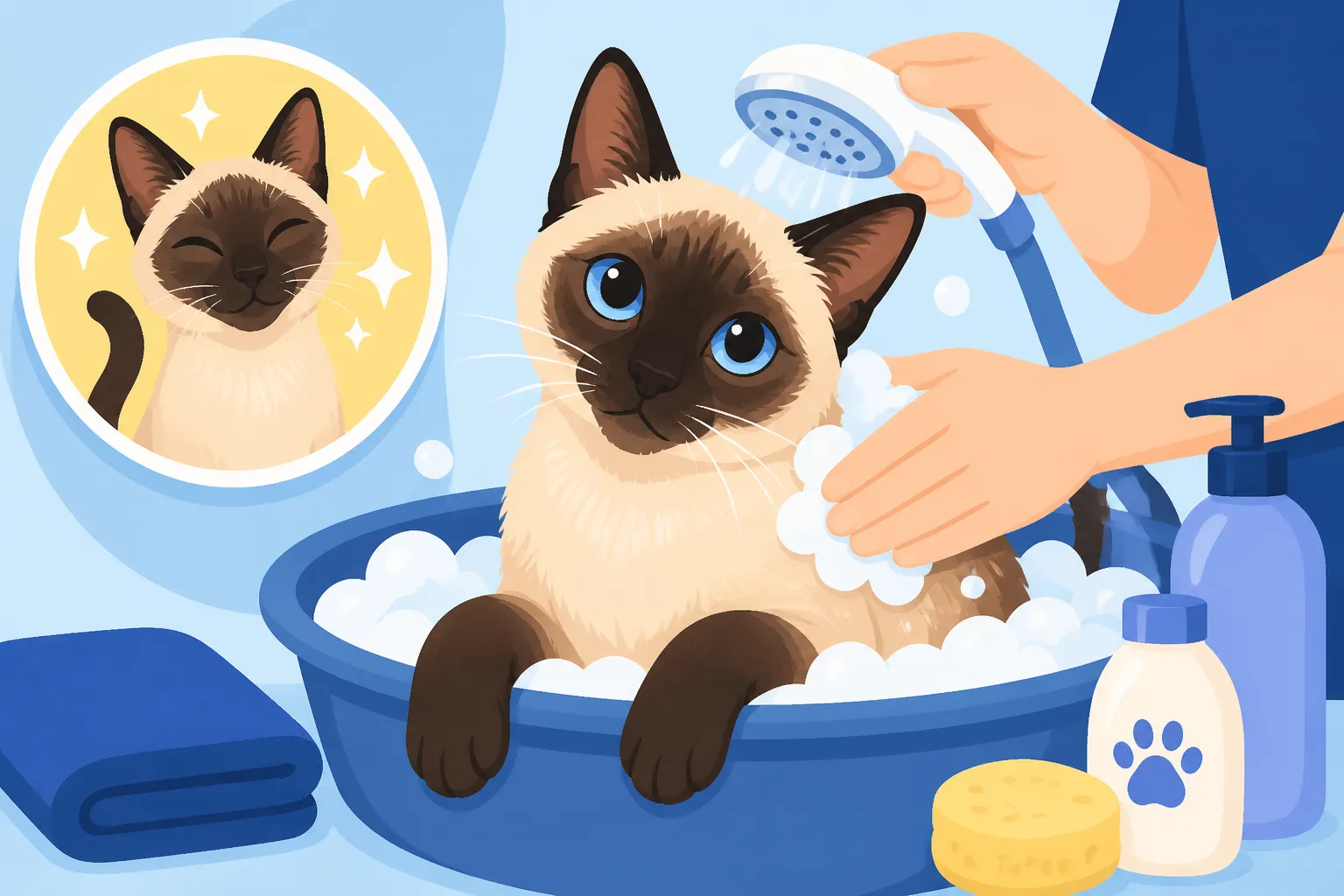
The first contact with water is often the most contentious point for a cat. Start by placing your non-slip mat in the tub or sink. Fill the basin with a few inches of lukewarm water before bringing your cat in. The sound of running water can be startling, so avoid filling it with them present if possible. The water should be comfortably warm, not hot or cold – test it with your elbow, just like you would for a baby.
Gently place your Siamese into the water, letting them stand on the non-slip mat. Many cats respond better if you start by wetting them from the neck down, avoiding their head and face initially. Use your cup or a very low-pressure sprayer to slowly dampen their fur. Talk to them in a soft, reassuring voice. Praise them for every moment of calm. If they start to panic, take a brief pause, continue to soothe them, and proceed slowly. Pay attention to How a Siamese Cat Reacts to Water – some might tolerate it better than others. It's a dance of gentle encouragement and careful handling.
Shampooing and Rinsing Thoroughly
Once your Siamese is thoroughly wet (again, avoiding the face), apply a small amount of cat-specific shampoo to your hands and gently work it into their fur. Start from the neck and work your way down their body, paying attention to areas that might be dirtier, like their paws or belly. Be mindful of their eyes and ears; those cotton balls you placed earlier will help protect their ears. If you need to clean their face, use a damp washcloth with just a tiny dab of shampoo, being extra careful around their eyes, nose, and mouth.
The most critical part of this step is rinsing. You absolutely must rinse all the shampoo out of their fur. Any residue left behind can cause skin irritation, itching, and lead to your cat licking and ingesting the chemicals, which is definitely what you want to avoid. Rinse thoroughly with lukewarm water, again from neck to tail, until the water runs completely clear and their fur feels squeaky clean, not slick. It might take several passes. This is where a gentle sprayer can be incredibly helpful for getting deep into their coat. For a Siamese, with their How Short a Siamese Cat's Coat Is, rinsing is usually quicker than with a long-haired breed, but don't rush it.
Drying Your Siamese
As soon as the rinsing is complete, lift your Siamese out of the tub and immediately wrap them snugly in one of your prepared towels. Gently but vigorously rub them dry. Most cats will appreciate being bundled up; it provides a sense of security and warmth. Use the second towel once the first one is quite damp. Pay special attention to keeping them warm during this stage, as Keeping a Siamese Cat Warm is important due to their lack of undercoat.
Avoid leaving them in a cold drafty area. If your Siamese tolerates it, you can use a hairdryer on the lowest heat setting and cool air, holding it at a safe distance and moving it constantly. However, many cats find the noise and sensation of a hairdryer terrifying, so don't force it. The goal is to get them as dry as possible to prevent them from getting chilled. Once they're mostly towel-dry, place them in a warm, quiet, draft-free room where they can finish air-drying comfortably. This might be a carrier lined with a soft blanket, or a cozy bed.
Post-Bath Care and Reinforcement
You've made it through the bath! Congratulations to both you and your Siamese. The work isn't quite done, though. How you handle the post-bath period can greatly influence how your cat perceives future bathing necessities.
Comfort and Reward
Immediately after the drying process, it's time for some serious positive reinforcement. Offer those high-value treats you prepared. Make a big fuss over them, giving them lots of gentle praise and affection, provided they're receptive. If they're still a bit grumpy, give them space but ensure they have access to their favorite comfy bed or a warm spot.
The goal here is to create a positive association, even if the bath itself was a bit traumatic. They need to understand that enduring this unpleasant experience leads to wonderful rewards and renewed comfort. A warm cuddle, a favorite toy, and some quiet time can help them decompress and return to their normal, elegant Siamese selves.
Dealing with Stress and Aftermath
It's completely normal for a Siamese cat to be a little out of sorts after a bath. They might hide, groom themselves intensely to restore their scent and coat texture, or even act a bit aloof. Give them space and time to recover. Don't chase them around trying to cuddle if they're not ready.
If your cat showed extreme distress during the bath, or if you anticipate needing regular medicated baths, it's worth discussing strategies with your vet. They might suggest mild sedatives for particularly anxious cats or advise on techniques to make the process smoother. For some cats, a full bath might simply be too much. In those cases, target cleaning for specific dirty spots, or professional groomers who are experienced with difficult cats might be a better option. Remember that while How a Siamese Cat's Coat Feels Like is typically soft and short, some have slightly different textures that may hold dirt more or less. Ultimately, understanding your individual cat's temperament and limits is key to managing their hygiene without causing undue stress.
Disclaimer
This article is for general informational purposes only and does not constitute professional advice. Laws, prices and regulations vary by location and change over time. Consult a qualified professional for guidance on your specific situation.