Which Gene Makes a Siamese Cat’s Points
One of the most captivating things about Siamese cats is their stunning point coloration—those distinct dark markings on their ears, face, paws, and tail, set against a much lighter body. But have you ever stopped to wonder why they look that way? It's not just a random genetic roll of the dice; it’s the fascinating result of a very specific gene mutation that makes their color expression exquisitely sensitive to temperature. This guide will take a deep dive into the genetic marvel that gives the Siamese its iconic coat, explaining the science behind why a Siamese kitten starts out entirely white and how everything from the ambient temperature to a vet's shaved patch can influence their beautiful coloring.
The Phenomenon of Point Coloration: A Visual Signature
The moment you see a Siamese cat, those striking, darker extremities immediately catch your eye. This isn't just a unique coat pattern; it's a genetic marvel, a visual signature that has captivated cat lovers for centuries. Understanding this phenomenon is key to appreciating the Siamese cat in all its glory.
What Point Coloration Actually Means
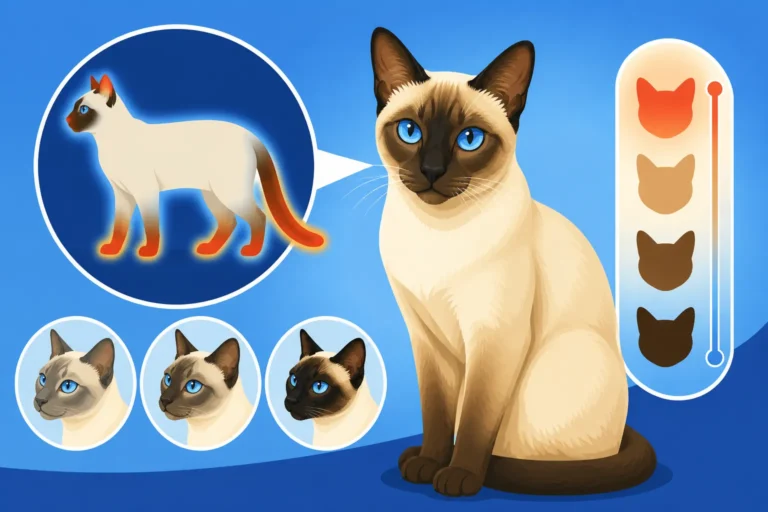
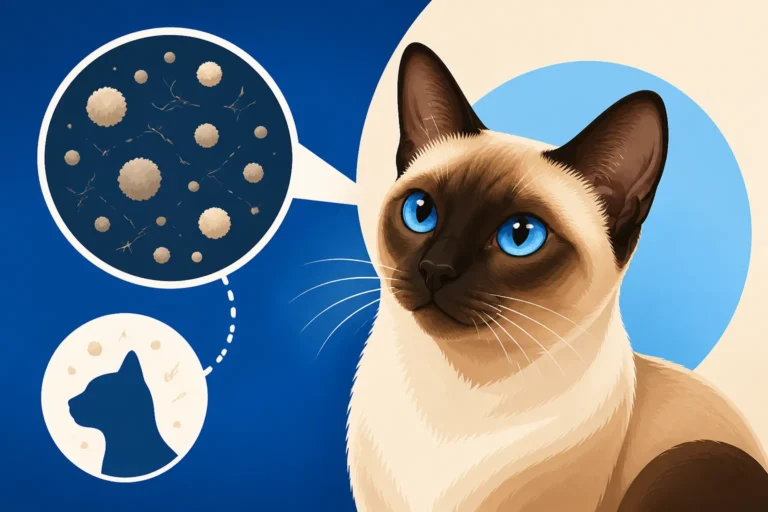
"Point coloration" refers to a pattern where an animal's pigment is restricted to the coolest parts of its body. Think of it like a natural heat map. The extremities—the ears, nose, paws, and tail—are naturally cooler than the core body. Because the Siamese cat’s specific genetic mutation requires a lower temperature for pigment production, these cooler areas are where the color can develop, leading to the characteristic darker points. The rest of the body, being warmer, produces little to no pigment, resulting in the creamy or ivory base coat. It’s a beautifully intricate dance between genetics and environment, resulting in a pattern that is both distinct and inherently logical once you understand the underlying mechanism. It's not about having different color genes for different body parts, but rather one gene whose expression is spatially determined by temperature. For more on this, you might find What Point Coloration in a Siamese Cat Is insightful.
Why the Siamese Cat is the Poster Child for Points
While other breeds, like the Himalayan or Ragdoll, also exhibit point coloration, the Siamese cat is undeniably the original and most famous "poster child" for this stunning trait. The breed's ancient origins in Siam (modern-day Thailand) and its relatively pure lineage have meant that this specific genetic characteristic has been preserved and celebrated for generations. Early Siamese cats, even those depicted in ancient texts like the Tamra Maew, show signs of this distinct pattern, albeit perhaps less extreme than some modern show lines. Their strong, athletic bodies and piercing blue eyes, combined with the sharp contrast of their points, make them instantly recognizable and deeply appealing. This unique visual identity is a huge part of what makes the Siamese cat so beloved and has cemented its place in popular culture as the quintessential "pointed" cat.
The Tyrosinase Enzyme and Its Role in Color
At the heart of a Siamese cat's coloring lies a crucial enzyme called tyrosinase. This isn't just some obscure biological component; it's the conductor of the orchestra that determines how color is laid down in a cat's fur. In Siamese cats, this conductor has a peculiar sensitivity that sets them apart.
Melanin Production and Temperature Sensitivity
Melanin is the pigment responsible for all fur and skin colors in mammals, including cats. It's produced by specialized cells called melanocytes. Tyrosinase is the key enzyme within these melanocytes that kickstarts the process of melanin synthesis. Without properly functioning tyrosinase, melanin simply cannot be made. Now, here's where the Siamese cat's genetics get really interesting: their version of the tyrosinase enzyme is temperature-sensitive. This means it only functions effectively below a certain temperature threshold. Above that temperature, the enzyme becomes inactive or significantly less efficient, halting melanin production. This is the fundamental reason why a Siamese cat has a lighter body and darker extremities. The cooler parts of their body (like their ears, paws, tail, and face) allow the tyrosinase to do its job, producing pigment, while the warmer core body inhibits it. It’s a remarkable example of how a single genetic tweak can lead to such a dramatic and beautiful visible trait.
How the Enzyme Works Differently in Siamese Cats
In most cats, the tyrosinase enzyme is stable and works efficiently across the cat's normal body temperature range, leading to uniform fur color (assuming no other color-modifying genes are present). But in Siamese cats, a specific mutation in the gene encoding tyrosinase creates an enzyme that is structurally altered. This altered enzyme is functional, but only within a narrower, cooler temperature window. Think of it like a delicate piece of machinery that only runs when the room is cool enough; if it gets too warm, it seizes up. This sensitivity means that pigment cells in the warmer areas of the Siamese cat's body—their torso, belly, and upper legs—struggle to produce melanin. Only where the body temperature drops, even by a few degrees, does the enzyme become active enough to create the darker points we know and love. This isn't a defect, but rather a charming characteristic that has been selectively bred for, giving the Siamese its distinctive appearance. This intricate mechanism is why a Siamese cat's pigmentation is such a clear indicator of localized body temperature. For a deeper dive into this, check out Why a Siamese Cat's Pigment Only Works When Cool.
The Specific Gene Mutation Behind the Points
It's not just any gene; it's a very particular change to a well-known gene that defines the Siamese cat's coat. This mutation is so central to their identity that it's often referred to in genetic terms by its unique allele.
The TYR Gene and Its Alleles
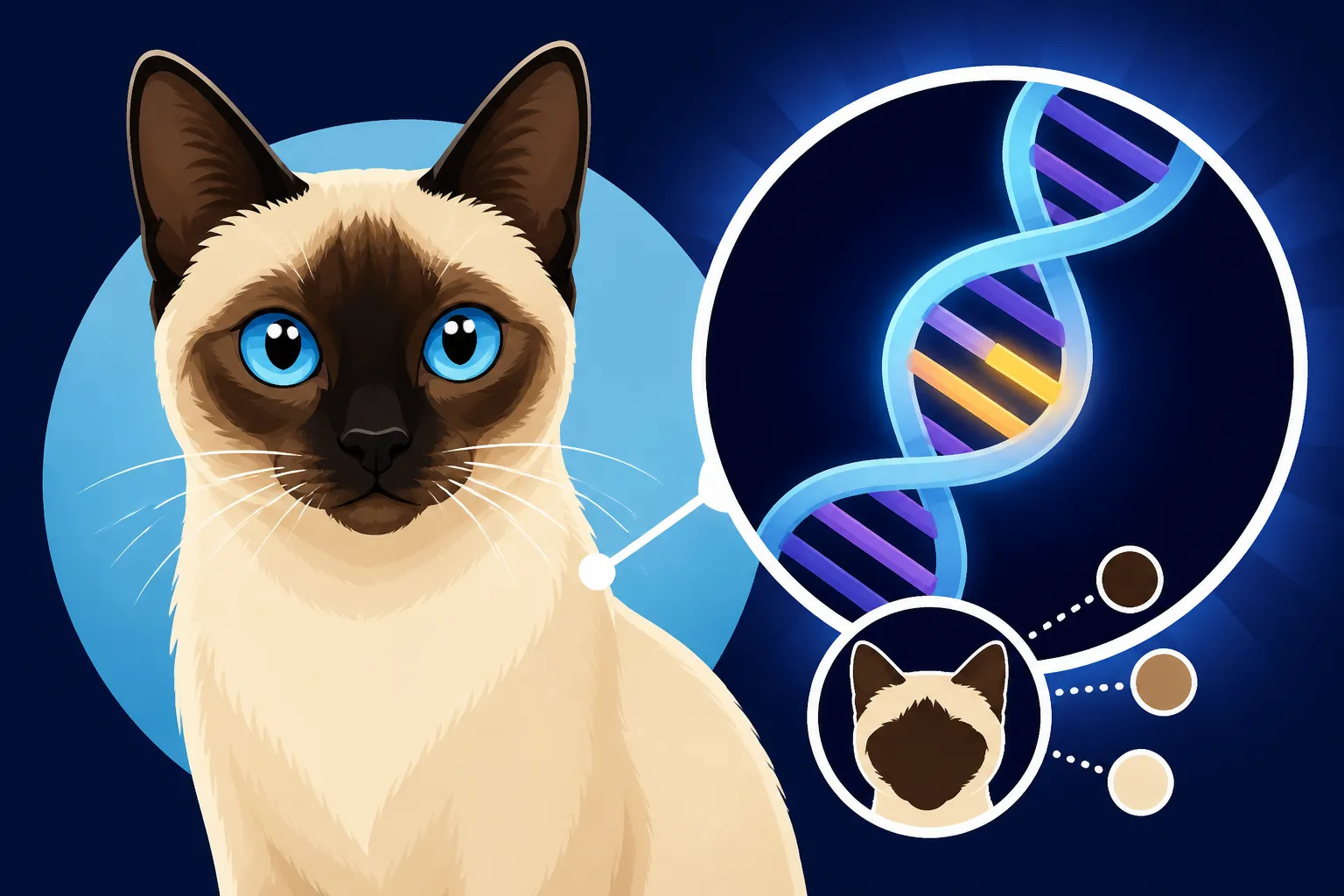
The gene responsible for producing the tyrosinase enzyme is known as TYR. Like many genes, TYR has different versions, or "alleles," which lead to variations in traits. In most cats, the dominant allele, often represented as C (for "Color"), produces a fully functional tyrosinase enzyme that operates normally at all body temperatures, resulting in a full spectrum of color expression across the entire coat, assuming other color genes allow it. However, the Siamese cat carries a specific recessive allele of the TYR gene, often denoted as cs. This cs allele is the star of our show, dictating the temperature-sensitive nature of their pigment production. All cats inherit two copies of every gene, one from each parent. For a cat to exhibit point coloration, it must inherit two copies of the cs allele (i.e., be cscs). Cats with one C and one cs allele (Ccs) will have a full range of color and won't show the point pattern, though they would be carriers of the point gene. This is a fundamental concept in understanding the genetics of Siamese coloration.
The Himalayan Allele (cs) and Its Impact
The cs allele, sometimes referred to as the "Himalayan allele" because it's also responsible for the point coloration in Himalayan rabbits and cats, is what causes the unique temperature-dependent enzyme. This isn't a case of having no tyrosinase; it's having a different kind of tyrosinase. The enzyme produced by the cs allele is less stable at normal body temperatures, effectively "melting" or becoming inactive when it's too warm. The cooler a part of the body is, the more stable the enzyme becomes, allowing it to produce melanin. This explains why the extremities—ears, nose, paws, and tail—are dark: they are cooler than the rest of the body. The body's core, being consistently warmer, inhibits the enzyme's activity, resulting in the pale cream or white base coat. This temperature sensitivity is a fixed genetic trait; it doesn't change throughout the cat's life, though the expression of it can vary with environmental temperature. Knowing this helps us understand Which Tyrosinase Mutation a Siamese Cat Carries.
Why There Isn't a "Siamese Gene" for Points
While we often talk about the "Siamese gene," it's more accurate to say that the Siamese cat possesses a specific allele of the TYR gene that results in point coloration. There isn't a distinct gene only found in Siamese cats that causes this. Rather, it's a variant of a gene present in all cats. This allele is what defines point coloration, and it's shared by other pointed breeds too, indicating their genetic relationship to the Siamese. When you look at the genetic makeup, it's a single point mutation that alters the enzyme's function. This distinction is important because it highlights that breed-specific traits often arise from variations of universal genes rather than entirely unique genetic material. So, while the visual effect is certainly "Siamese," the underlying genetic mechanism is a variation of a widely distributed gene.
Environmental Influence: Temperature is Key
Understanding the genetic basis is one thing, but seeing how profoundly the environment—specifically temperature—interacts with this gene is truly fascinating. It's why no two Siamese cats are exactly alike in their shading, even within the same litter.
Core Body Temperature vs. Extremity Temperature
A cat's core body temperature is pretty consistent, typically ranging from about 100 to 102.5 degrees Fahrenheit (37.8 to 39.2 degrees Celsius). This is the internal temperature of their organs and torso. At this temperature, the temperature-sensitive tyrosinase enzyme in Siamese cats is largely inactive, meaning very little melanin is produced, leading to the light body fur. However, the extremities—the tips of their ears, nose leather, paws, and tail—are naturally cooler. These areas are further from the core, have less muscle and fat insulation, and are more exposed to the ambient air, allowing their surface temperature to drop several degrees below the core. It’s in these cooler zones that the tyrosinase enzyme "wakes up" and becomes active, enabling melanin production. This subtle difference in temperature across the cat's body is precisely what paints the distinct point pattern, creating the beautiful contrast that is the hallmark of the breed. This concept is further explored in How Temperature Controls a Siamese Cat's Color.
The Visible Effects of Temperature on Coat Color
The influence of temperature on a Siamese cat's coat isn't just theoretical; it's something you can visibly observe throughout their life. For instance, a Siamese cat living in a consistently warm environment, perhaps indoors in a heated home year-round, might develop lighter points and a paler body color overall. Conversely, a Siamese cat that spends more time in a cooler climate or a colder house might have darker, more pronounced points and a slightly darker body coat. This is because the cooler ambient temperature allows the enzyme to be active in slightly more areas or for longer periods. It's also why you might notice your Siamese cat's coat darkening slightly in winter and lightening a bit in summer. Even a shaved patch of fur, for example, for a surgical procedure, will often grow back darker than the surrounding fur because the newly exposed skin is cooler during regrowth. Why a Shaved Siamese Cat Grows Dark Fur delves into this curious phenomenon. This sensitivity to external temperature means that the "true" shade of a Siamese cat is a dynamic, ever-changing portrait. This is why sometimes finding cat sweaters on Amazon or Chewy can be a fun way to keep them cozy in cooler months, indirectly affecting their coat expression!
Predicting a Kitten's Final Color
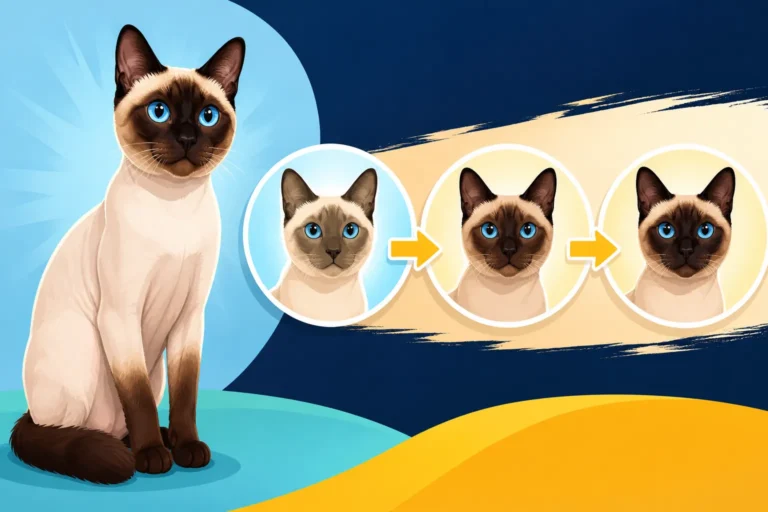
When a Siamese cat kitten is born, it's almost entirely white or a very pale cream. This often comes as a surprise to new owners! The reason is simple: for nine weeks, the kitten was nestled in its mother's womb, where the temperature was uniformly warm. In this consistently warm environment, the temperature-sensitive tyrosinase enzyme couldn't activate, preventing any significant melanin production. Only after birth, when exposed to the cooler outside world, do their extremities begin to cool down enough for the enzyme to become active and start producing pigment. The points gradually emerge and deepen over the first few weeks and months of life. It’s a bit like watching a photographic image slowly develop. Predicting the exact final shade can be tricky, as it depends on the specific genetic "point color" (like seal, blue, chocolate, or lilac) and the environment the kitten is raised in. However, breeders can usually give a good estimate based on the parents' colors and their knowledge of how those specific point colors typically develop. For more on this, check out How Old a Siamese Cat Kitten Is When Points Show.
Beyond the Basics: Genetics in Breeding
The understanding of the TYR gene and its temperature-sensitive allele is not just a scientific curiosity; it's a foundational piece of knowledge for Siamese cat breeders. It guides their choices, helps them manage expectations, and ensures the continuation of this iconic breed's distinctive looks.
Breeding for Specific Point Colors
While the cs allele gives us the point pattern, other genes determine the actual color of those points. The basic coat colors in cats are black (B/b/bl series) and red (O/o series), along with dilution genes (D/d). For example:
- Seal Point: This is essentially a black cat with point restriction. The TYR gene makes the black pigment appear only on the points.
- Blue Point: This is a diluted black cat with point restriction. The dilution gene turns the black into a cool blue-grey.
- Chocolate Point: This is a brown cat with point restriction, resulting from another allele in the B/b/bl series.
- Lilac Point: This is a diluted chocolate cat with point restriction, creating a soft, pinkish-grey point color.
Breeders carefully select parent cats with known genetic backgrounds to produce kittens with specific point colors. They understand that while the cs allele provides the canvas for point coloration, the underlying color genes paint the actual picture. This is a complex interplay of genetics, and experienced breeders have a deep understanding of how these genes combine to create the desired aesthetic.
The Ethical Considerations of Extreme Temperature Manipulation
While temperature does influence a Siamese cat's coloration, it's crucial to understand that intentionally manipulating a cat's environment to alter its color drastically is generally not recommended and can be unethical. For example, keeping a cat in an uncomfortably cold environment just to achieve darker points could compromise its health and welfare. Siamese cats, with their short, single coats, are already more sensitive to cold than many other breeds. Providing a warm, comfortable living space should always be the priority for any cat owner. The subtle color changes that occur with seasonal temperature shifts or a shaved patch are natural expressions of their unique genetics. There are many cozy beds and blankets available on platforms like Chewy or Amazon that allow your Siamese to stay warm without forcing extreme conditions. Our aim as guardians of these beautiful creatures should always be to provide them with a healthy, loving environment, not to treat them as an experiment in color modification.
The Unique Genetics of the Siamese Family
The cs allele is a defining characteristic not just of the traditional Siamese cat, but also of many breeds that originated from the Siamese or share its genetic heritage. These include:
| Breed Name | Point Coloration Trait | Genetic Relationship to Siamese |
|---|---|---|
| Siamese | Classic Pointed | Original source of the cs allele |
| Himalayan | Pointed | Developed by crossing Siamese with Persians |
| Ragdoll | Pointed | Developed with Siamese ancestry |
| Birman | Pointed | Believed to have Siamese ancestry |
| Colorpoint Shorthair | Pointed | Siamese with additional colors/patterns |
| Balinese | Pointed | Long-haired Siamese variant |
| Javanese | Pointed | Long-haired Colorpoint Shorthair variant |
This table clearly illustrates how foundational the cs allele is to a whole family of cat breeds, each retaining the distinctive point coloration while developing other unique traits, such as fur length or additional color variations. Understanding this shared genetic link reinforces the Siamese cat's historical importance in the development of many modern breeds. The Breeds a Siamese Cat Founded offers more context on this fascinating lineage.
In conclusion, the gene that makes a Siamese cat's points is the TYR gene, specifically its cs allele. This allele produces a temperature-sensitive tyrosinase enzyme that dictates where pigment can and cannot form on the cat's body. It's a beautiful example of how a subtle genetic variation can lead to one of the most iconic and recognizable coat patterns in the feline world.
Disclaimer
This article is for general informational purposes only and does not constitute professional advice. Laws, prices and regulations vary by location and change over time. Consult a qualified professional for guidance on your specific situation.