What a Lynx Point Siamese Cat Is
One of the most common questions I hear from fellow Siamese enthusiasts, especially those new to the breed, revolves around the "Lynx Point." You might have seen pictures online, or even met one, and found yourself wondering, "Is that really a Siamese cat?" It's a fair question, because while they share that unmistakable Siamese charm and vocal prowess, their appearance is undeniably distinct. This guide is here to unravel the mystery of the Lynx Point Siamese, explaining what makes them unique, where they fit in the Siamese family tree, and what you can expect if one of these beautiful, striped wonders joins your home.
The Unique Appearance of a Lynx Point Siamese Cat
When you picture a Siamese cat, you probably envision those deep, solid color points against a creamy body, right? Think Seal Point, Blue Point, Chocolate Point, or Lilac Point. The Lynx Point throws a delightful curveball into that classic image, adding a layer of intricate tabby striping to the equation. It's like someone decided to take the elegant Siamese and give it a wild, subtle makeover.
Unpacking the "Lynx Point" Pattern
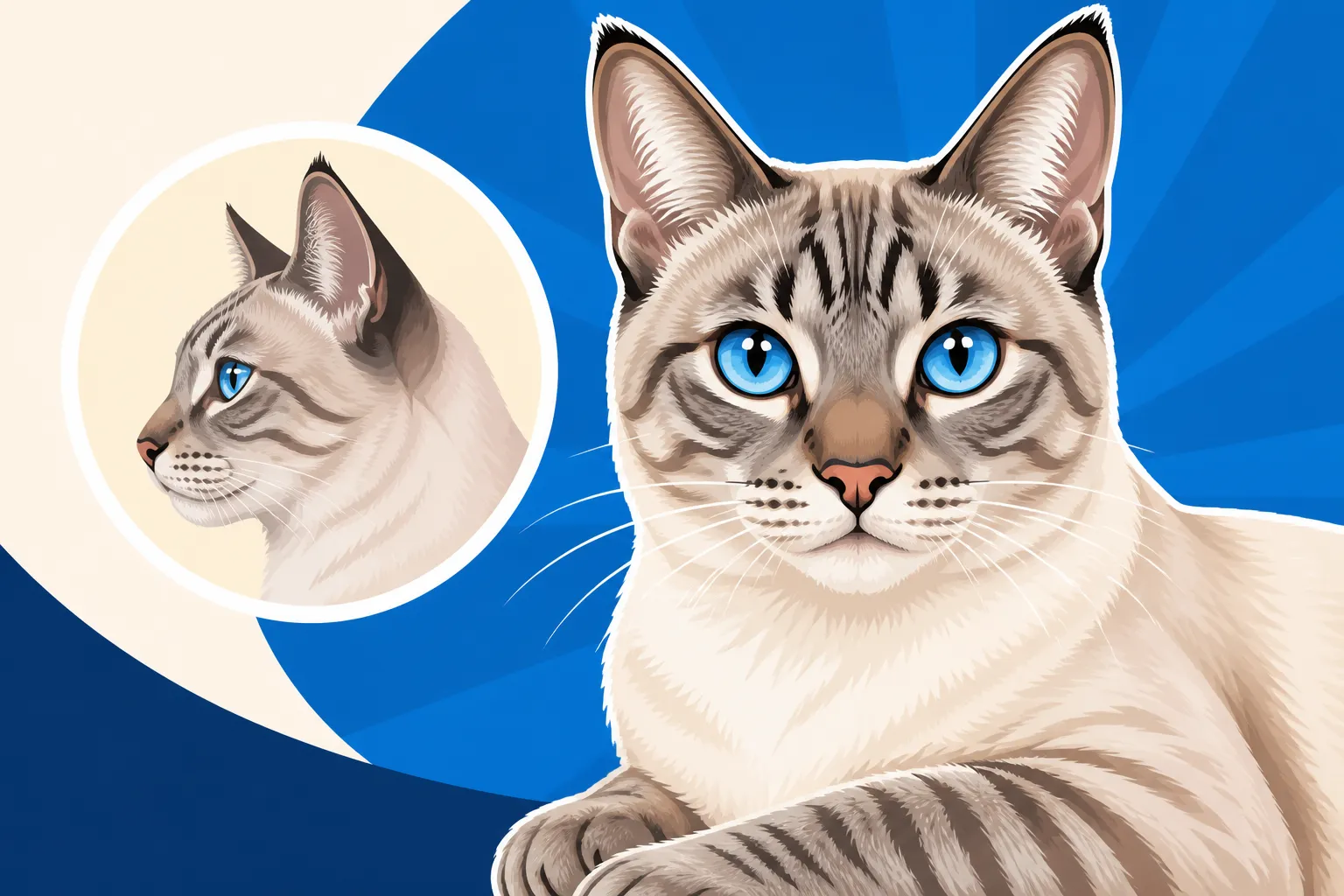
The defining characteristic of a Lynx Point Siamese is, without a doubt, the tabby pattern that's superimposed onto their point coloration. Instead of solid colored ears, face mask, legs, and tail, you'll see clear, distinct stripes. Imagine the 'M' marking on a classic tabby's forehead, but within the Siamese mask. Those delicate pencil lines tracing around their eyes, the rings on their legs and tail, and sometimes even faint ghost striping on their body – that's the magic of the Lynx Point.
These stripes aren't just a random splash of color; they follow the genetic rules of the tabby pattern. You might see mackerel stripes (thin, vertical lines), classic tabby blotches (swirls), or even ticked patterns, all contained within the point areas. Their ears will often have a thumbprint marking, and their paw pads will often be mottled pink and the color of their points, rather than a solid dark color. It's this fusion of two distinct patterns – the colorpoint gene and the tabby gene – that creates such a striking and memorable look. It’s like having two beautiful patterns rolled into one elegant package.
The Classic Siamese Coloration Beneath the Stripes
Despite the tabby overlay, the Lynx Point Siamese still adheres to the fundamental principles of Siamese coloration. They possess the same temperature-sensitive albinism that gives all Siamese cats their distinctive "points." This means their extremities – the cooler parts of their body like their ears, face, paws, and tail – develop pigment, while their warmer torso remains lighter. The 'Lynx' part just refers to the tabby pattern within those pigmented areas.
So, you won't just see a "Lynx Point"; you'll encounter specific variations like a Seal Lynx Point, a Blue Lynx Point, a Chocolate Lynx Point, or a Lilac Lynx Point. A Seal Lynx Point, for instance, will have the dark brown tabby stripes on points that would otherwise be solid seal brown. A Blue Lynx Point will showcase slate-grey tabby stripes on its points, while a Chocolate Lynx Point displays warmer, milk-chocolate stripes. Lilac Lynx Points are the palest of the bunch, with delicate, frosty grey-pink striping. Just like their solid-point relatives, a Lynx Point Siamese kitten is born white or very pale, and their points develop over time as they are exposed to cooler temperatures. This process is fascinating to watch, seeing those faint stripes emerge as they grow. To learn more about this, check out Why a Siamese Cat's Points Are Made by Temperature.
| Feature | Classic Siamese Point (e.g., Seal Point) | Lynx Point Siamese (e.g., Seal Lynx Point) |
|---|---|---|
| Point Pattern | Solid color on ears, mask, paws, tail | Tabby stripes on ears, mask, paws, tail |
| Forehead Marking | No distinct 'M' marking | Clear 'M' marking present on forehead |
| Eye Liner | No striped "eyeliner" effect | Delicate striped lines around the eyes |
| Leg/Tail Pattern | Solid colored legs and tail | Rings and stripes on legs and tail |
| Paw Pad Color | Solid dark color (e.g., dark brown/black) | Mottled pink and point color |
| Body Markings | Generally clear, unpatterned body | May have faint "ghost" tabby markings on body |
| Core Genetics | Colorpoint gene (cs/cs) | Colorpoint gene (cs/cs) + Tabby gene (A) |
Are They "True" Siamese Cats? A Look at Genetics and Registries
This is where the debate often sparks! For some purists, a "true" Siamese adheres strictly to the four original point colors (Seal, Blue, Chocolate, Lilac) without any pattern. However, the world of cat breeds is a dynamic place, and genetics often leads the way.
The Genetic Story: How Lynx Point Happens
At its heart, the Lynx Point Siamese is indeed a Siamese cat, genetically speaking. They possess the fundamental genetic mutation responsible for the colorpoint pattern (the cs/cs allele at the C locus, which is a form of temperature-sensitive albinism). What makes them "Lynx" is the addition of another common feline gene: the agouti gene (A allele at the A locus), which is responsible for creating tabby patterns.
In a cat without the agouti gene (a non-agouti cat, aa), any color pigment produced will be solid. This is why a classic Seal Point has solid brown points. However, if a cat inherits the agouti gene (A), it allows for the expression of tabby markings. When you combine the colorpoint gene with the agouti gene, the result is a Lynx Point. The tabby pattern, which would cover the entire cat if it were a solid color, is restricted to the pigmented "point" areas by the Siamese gene. So, essentially, a Lynx Point Siamese is a colorpoint cat that also carries the gene for tabby striping. It’s a beautiful genetic collaboration!
Registry Recognition and Breed Standards
The acceptance of Lynx Points as part of the "Siamese" family varies depending on which cat registry you're looking at. This can sometimes cause confusion for potential owners and even experienced breeders.
Historically, the Siamese breed standard was very strict, allowing only the four traditional solid points. When tabby points (later termed Lynx Points) began appearing in litters, they were initially considered "non-standard" or even a fault. However, their striking beauty and the fact that they clearly descended from Siamese lines led to their eventual recognition, often under a different breed name.
For instance, the Cat Fanciers' Association (CFA), one of the largest cat registries, recognizes Lynx Points not as Siamese, but as Colorpoint Shorthairs. The Colorpoint Shorthair is essentially a Siamese cat with a wider range of colors and patterns, including the Lynx Point, Red Point, and Tortie Point. In their eyes, a Siamese is strictly one of the four traditional colors.
On the other hand, The International Cat Association (TICA) takes a more inclusive approach. TICA recognizes the Lynx Point as a Siamese color variation, allowing them to be registered and shown directly within the Siamese breed. This difference often leads to cats being called "Siamese" by their owners, but "Colorpoint Shorthair" by some show circuits. It highlights how breed definitions can be somewhat fluid and dependent on the specific organizational rules. Ultimately, regardless of the classification, the cat itself carries the Siamese heritage, temperament, and much of its distinctive look. If you're looking into specific colors or patterns, it's always worth checking the specific registry's guidelines. For more on accepted colors, you can read Which Siamese Cat Colors the Registries Accept.
Temperament and Care: What to Expect from a Lynx Point Siamese
Beyond their captivating appearance, what truly defines a Lynx Point Siamese is the personality that comes with their Siamese lineage. These aren't just pretty faces; they are intelligent, vocal, and deeply affectionate companions who demand (and deserve!) your attention.
The Classic Siamese Personality with a Twist
If you're drawn to the Siamese breed, you're likely aware of their reputation for being incredibly communicative and social. A Lynx Point Siamese will embody these traits wholeheartedly. They are known for their loud, distinctive "Meezer yowl" and will engage in full-blown conversations with you, telling you all about their day, their opinions on your dinner, or their desperate need for cuddles. Don't expect a quiet, aloof lap cat; these felines want to be at the center of your world. The Siamese Cat Talks and Expects an Answer gives you a deeper dive into their vocal nature.
They are also incredibly intelligent and curious. A Lynx Point Siamese will explore every nook and cranny of your home, figure out how to open cupboards, and learn routines with astonishing speed. This intelligence means they thrive on interaction and mental stimulation. They love to play, and interactive toys are a must. Laser pointers, feather wands, and puzzle feeders are often big hits. You might even find them enjoying a game of fetch! Because of their high energy and need for engagement, ensuring they have plenty of outlets for their clever minds is key. Companies like Chewy offer a fantastic array of interactive toys and puzzle feeders that can keep a smart Siamese entertained for hours. If they don't get enough attention, a bored Siamese can become a mischievous one, so be prepared to dedicate time to play and companionship. For a full picture of their personality, check out What a Siamese Cat's Temperament Is Really Like.
Health Considerations Specific to the Siamese Line
When considering a Lynx Point Siamese, it's important to be aware of the general health predispositions that affect the entire Siamese breed, rather than anything specific to the Lynx pattern itself. These are generally robust cats, capable of living long and healthy lives, often reaching The Fifteen to Twenty Years a Siamese Cat Gets. However, like many purebreds, they do have a genetic propensity for certain conditions.
Some of the conditions occasionally seen in the Siamese line include:
- Amyloidosis: This is a serious inherited condition where an abnormal protein (amyloid) is deposited in organs, most commonly the liver in Siamese cats, which can lead to organ failure. While relatively rare, it's something responsible breeders aim to minimize.
- Progressive Retinal Atrophy (PRA): A genetic eye disease that can lead to blindness. Reputable breeders should screen for this.
- Dental Disease: Siamese cats can be prone to dental issues, making regular dental care crucial. How Often a Siamese Cat Needs a Dental provides more insight into this.
- Asthma: Some Siamese cats can develop feline asthma, which requires ongoing management.
It's always crucial to choose a reputable breeder who screens their breeding cats for known genetic conditions and can provide health clearances for the parents of your kitten. Regular veterinary check-ups are also essential to catch any potential issues early. Considering pet insurance from providers like Healthy Paws can also offer peace of mind, helping to cover unexpected veterinary costs should any health issues arise throughout your Lynx Point's life. This proactive approach ensures your beloved companion stays as healthy and happy as possible. Read more about breed health in general with How Healthy the Siamese Cat Actually Is.
Grooming and Maintenance for Their Unique Coat
One of the many joys of owning a Siamese cat, including a Lynx Point, is their relatively low-maintenance coat. Their fur is short, fine, and lies close to the body, making grooming a breeze. You won't find yourself battling mats or excessive shedding, which is great news for busy owners!
Despite their minimal shedding, a weekly brush with a soft rubber brush or a grooming mitt is still beneficial. It helps to remove loose hairs, distribute natural oils, and, perhaps most importantly, provides a lovely bonding experience between you and your cat. Many Siamese cats adore being brushed, viewing it as a prolonged petting session. Grooming a Siamese Cat Takes Five Minutes a Week elaborates on how simple this routine can be.
Beyond brushing, standard feline care applies: regular nail trims, occasional ear cleaning (their large ears can sometimes accumulate wax), and consistent dental hygiene. While a Lynx Point's appearance is unique, their overall care needs are very much aligned with that of any other beloved Siamese cat. Providing a high-quality diet is also important, ensuring they receive the best fuel for their energetic lives.
Disclaimer
This article is for general informational purposes only and does not constitute professional advice. Laws, prices and regulations vary by location and change over time. Consult a qualified professional for guidance on your specific situation.