Which Siamese Cat Colors the Registries Accept
If you've ever found yourself scrolling through pictures of adorable Siamese kittens, you've probably noticed a rainbow of "colors" advertised – from the classic dark brown points to stunning reds and silvers. It can get really confusing, especially when you start diving into pedigrees and breed standards, trying to figure out which of these beautiful variations are actually considered a "Siamese cat" by the official registries. It feels like everyone has a different name for the same color, or sometimes a beloved color isn't even acknowledged in the main breed lists! This guide is here to clear up that confusion, breaking down exactly which point colors the major cat registries formally accept under the coveted Siamese name and why those distinctions exist.
The Foundation Four: Universally Accepted Siamese Colors
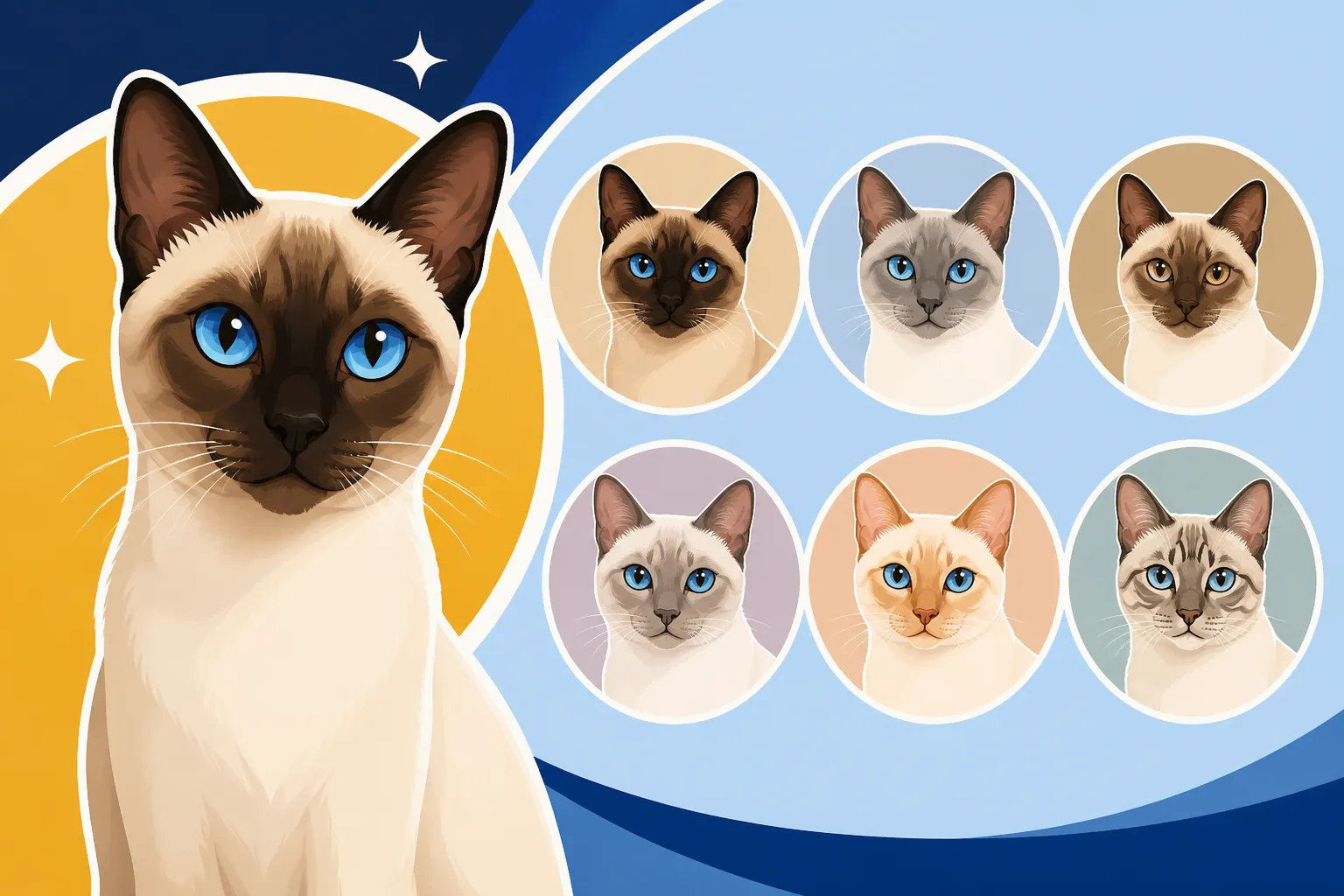
Let's start with the undisputed kings and queens of the Siamese world. Across virtually all major cat registries globally, four specific point colors are universally recognized as the true Siamese standard. These are the colors that have defined the breed for generations, and they carry a certain classic elegance that's immediately identifiable. When you hear "Siamese," these are often the shades that first come to mind.
Seal Point: The Iconic Dark Beauty
Ah, the Seal Point! This is the granddaddy, the original, the one that started it all. If you've ever seen an old photograph of a Siamese cat, chances are it was a Seal Point. They possess a truly striking appearance that commands attention.
The Seal Point Siamese is characterized by deep, dense seal brown points—meaning their ears, face mask, paws, and tail are a rich, dark brown, almost black in some lighting. The body color is a warm, creamy fawn or pale beige, creating a beautiful contrast with the dark extremities. As they age, it's completely normal for a Seal Point's body fur to darken, often developing a rich tan or brown tone, particularly across their backs and sides. This darkening is a natural process unique to point-colored cats, influenced by environmental temperatures over their lifespan. Understanding What a Seal Point Siamese Cat Is helps appreciate its historical significance and classic appeal.
Blue Point: A Softer, Cool Elegance
Moving from the bold intensity of the Seal Point, we find the sophisticated allure of the Blue Point. This color variant emerged later but quickly became a favorite for its delicate, ethereal beauty. Think of it as the diluted, softer version of the Seal Point.
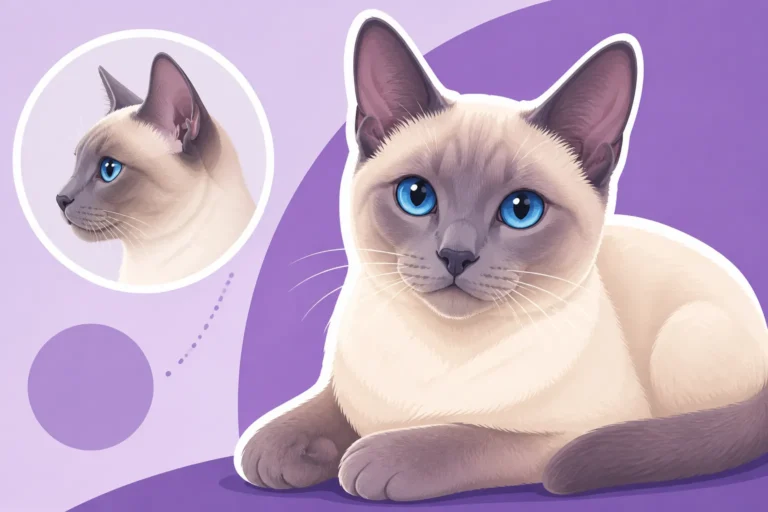
A Blue Point Siamese features slate-blue or deep grey points on the ears, face, paws, and tail. The body fur is a cool, glacial white or a light bluish-white, often with a subtle shading that complements the points without creating a stark contrast. The overall impression is one of gentle, smoky elegance. Just like Seal Points, Blue Points will also experience some darkening of their body color as they mature, but their core blue-grey points and cool undertones always remain distinct. They offer a refined aesthetic for those who appreciate a less dramatic, more understated beauty. To learn more about this serene coloration, check out What a Blue Point Siamese Cat Is.
Chocolate Point: Warmth and Richness
The Chocolate Point offers a delightful warmth to the Siamese palette, often described as a cozy, inviting hue. These cats can sometimes be mistaken for Seal Points at first glance, especially by an untrained eye, but there's a distinct difference in their underlying pigmentation.
A true Chocolate Point Siamese showcases warm, milk-chocolate brown points. Crucially, these points are a lighter, softer brown than the intense, almost black-brown of the Seal Point. The body color is typically an ivory or cream, which provides a striking yet harmonious contrast. A good way to differentiate a Chocolate Point from a Seal Point is to look at the nose leather and paw pads; on a Chocolate Point, these will be cinnamon or pinkish-brown, rather than the dark brown or black of a Seal Point. Their beauty lies in their rich, inviting tones. You can dive deeper into this gorgeous shade by reading What a Chocolate Point Siamese Cat Is.
Lilac Point: The Delicate Pastel Dream
If you're looking for ultimate subtlety and understated beauty, the Lilac Point is often considered the epitome of pastel elegance in the Siamese world. This color is the dilute form of the Chocolate Point, creating an incredibly soft and refined appearance.
Lilac Point Siamese cats have points that are a delicate, frosty grey or pinkish-grey. Imagine a dove grey with a hint of blush, and you're getting close. The body fur is an ethereal glacial white, almost pure white, which serves to highlight the delicate points. Like the Chocolate Point, their nose leather and paw pads will also reflect this lighter pigmentation, appearing lavender-pink. Lilac Points are particularly cherished for their rare and exquisite coloring, often looking like a living sculpture made of snow and moonlight. Their soft presentation makes them truly unique. For a full appreciation, explore What a Lilac Point Siamese Cat Is.
Beyond the Classics: Understanding Other Pointed Colors
Now, this is where the waters can get a little murky and where a lot of the confusion for prospective Siamese owners truly begins. You might see gorgeous cats advertised as "Red Point Siamese," "Lynx Point Siamese," or "Tortie Point Siamese" and wonder why they're not listed above with the universal four. The answer lies in how different cat registries classify and name these beautiful variations.
The "Other" Point Colors: Red, Cream, Lynx, and Tortie
Many of these stunning colors exist because the original Siamese gene pool was eventually outcrossed to other domestic cats to introduce new colors and patterns. The result? Cats that have the distinctive Siamese point coloration but with a broader range of hues and patterns.
-
Red Point and Cream Point: These cats have the warm, ginger tones you'd associate with orange or marmalade cats, but expressed only on their points. Red Point refers to vibrant, fiery orange-red points, while Cream Point is its softer, diluted counterpart, displaying pastel cream or apricot points. While undeniably beautiful and with the classic Siamese build and personality, many primary Siamese registries (like the CFA) do not recognize them as "Siamese." Instead, they are typically registered as Colorpoint Shorthairs. Understanding Whether a Red Point Is a Siamese Cat according to different registries is key.
-
Lynx Point (or Tabby Point): This is another captivating variation that many people fall in love with. A Lynx Point Siamese has distinct tabby markings (stripes, spots, or swirls) within their point colors. You'll see these tabby patterns on their face mask, ears, legs, and tail, sometimes with a contrasting 'M' on their forehead. They come in all the basic Siamese colors (Seal Lynx Point, Blue Lynx Point, Chocolate Lynx Point, Lilac Lynx Point, Red Lynx Point, Cream Lynx Point). This pattern is another that, while incredibly popular, often falls under the "Colorpoint Shorthair" umbrella in stricter registries. Want to know more? Check out What a Lynx Point Siamese Cat Is and Whether a Lynx Point Registers as a Siamese Cat.
-
Tortie Point (or Tortoiseshell Point): Imagine the beautiful patched and mottled patterns of a tortoiseshell cat, but confined to the points! Tortie Point Siamese cats have patches of red or cream intermingled with one of the primary point colors (Seal, Blue, Chocolate, or Lilac) on their ears, face, paws, and tail. This pattern is genetically linked to the X chromosome, meaning almost all Tortie Points are female. Like the Red and Lynx Points, these too are often classified as Colorpoint Shorthairs by some registries.
It's vital to understand that a "Colorpoint Shorthair" is essentially a Siamese-type cat with a color or pattern not accepted under the strict Siamese standard of some registries. They are often from the same lines, share the same captivating personality, and have the same sleek body type. The distinction is purely administrative for showing and breeding within certain organizations.
Registry Differences: Navigating the Varied Standards
The biggest reason for the confusion around Siamese colors comes down to the individual rules and standards of different cat registries. What one registry accepts as a "Siamese" in terms of color, another might not.
Let's break down some of the major players:
-
The Cat Fanciers' Association (CFA): This is one of the most well-known cat registries, particularly in North America. The CFA has a very strict and traditional definition of the Siamese. For a cat to be registered as a Siamese by the CFA, it must have one of the four classic point colors: Seal Point, Blue Point, Chocolate Point, or Lilac Point. Any other point coloration—like Red Point, Cream Point, Lynx Point, or Tortie Point—is registered as a Colorpoint Shorthair. While genetically closely related and sharing the same body type, they are considered separate breeds for show purposes by the CFA.
-
The International Cat Association (TICA): TICA is generally more inclusive and recognizes a wider array of colors under the Siamese breed name. In addition to the four classic points, TICA accepts Red Point, Cream Point, Lynx Point (often called Tabby Point by TICA), and Tortie Point as valid Siamese colors. This means a cat that would be a Colorpoint Shorthair in the CFA could be a fully recognized Siamese in TICA. This broader acceptance reflects a more modern approach to breed standards.
-
The Governing Council of the Cat Fancy (GCCF) (UK): In the United Kingdom, the GCCF also takes a more expansive view than the CFA. They recognize the traditional four, but also accept a host of other colors, often including Caramel, Apricot, Cinnamon, Fawn, Red, Cream, Tortie, and Tabby Points as variations of the Siamese. This makes it much simpler for UK breeders and owners who appreciate the wider color palette without needing a separate breed designation.
This table gives a simplified overview of how these major registries approach Siamese color acceptance:
| Registry | Accepted Siamese Colors (Directly) | Other Recognized Pointed Breeds | Notes on Siamese Color Policy |
|---|---|---|---|
| Cat Fanciers' Association (CFA) | Seal Point, Blue Point, Chocolate Point, Lilac Point | Colorpoint Shorthair (Red Point, Cream Point, Lynx Point, Tortie Point) | Strict interpretation; only traditional four points for Siamese. |
| The International Cat Association (TICA) | Seal Point, Blue Point, Chocolate Point, Lilac Point, Red Point, Cream Point, Lynx Point, Tortie Point | Balinese, Oriental Shorthair | More inclusive; accepts a wider range of colors under Siamese. |
| Governing Council of the Cat Fancy (GCCF) | Seal Point, Blue Point, Chocolate Point, Lilac Point, Caramel, Apricot, Cinnamon, Fawn, Red, Cream, Tortie, Tabby Point | Oriental, Balinese | Very broad acceptance of colors as Siamese. |
This difference in classification is a common point of confusion for new owners. It's why a cat can be a "Siamese" in one country or organization, and a "Colorpoint Shorthair" in another, despite being from very similar genetic stock. If you're curious about the lineage and distinctions between related breeds, you might find Which Registries Split the Siamese Cat From the Colorpoint Shorthair particularly enlightening.
Why Does Color Recognition Matter?
You might be thinking, "Who cares what a registry says? My cat is my cat!" And you'd be absolutely right on a personal level. However, for serious breeders, show enthusiasts, and even just for understanding the history and future of the breed, these distinctions are quite important.
Showing and Breeding Implications
For anyone hoping to show their beautiful Siamese cat, or to participate in a responsible breeding program, registry acceptance of color is paramount. If your gorgeous Red Point Siamese is destined for a CFA show ring, it won't be competing in the Siamese category; it will be shown as a Colorpoint Shorthair. This isn't a judgment on its beauty or quality, but a adherence to breed standards.
Breeders rely on these standards to ensure they are producing cats that align with the established characteristics of the breed. If a breeder is aiming for a "true" CFA Siamese, they will meticulously select for the four classic point colors. Breeding animals from unregistered lines or lines with unaccepted colors can complicate the registration of future offspring and might limit their ability to compete in certain shows. It's a world where precision and adherence to established rules are highly valued, all in the effort of preserving the specific traits outlined in What the Siamese Cat Standard Asks For.
Understanding Your Cat's True Pedigree
Even if you're a pet owner with no interest in showing or breeding, understanding the nuances of color recognition can enrich your appreciation for your cat's heritage. Knowing that your Lynx Point, while maybe not a "Siamese" by CFA standards, still shares the same ancient lineage and spirited personality is fascinating.
It also helps you have more informed conversations with breeders, veterinarians, and other cat enthusiasts. You can confidently explain your cat's background, even if its official registry name differs from the common perception of a "Siamese." It underscores that while these classifications exist, the bond with your cat transcends any label.
The Science Behind Siamese Coloration
To truly appreciate the point colors of a Siamese, it helps to understand a little bit of the science behind how they get their unique look. It's all rather fascinating and explains why their colors change with temperature!
The Temperature-Sensitive Gene
The distinctive point coloration of a Siamese cat is due to a fascinating genetic quirk. They carry a specific gene (a mutation of the tyrosinase enzyme) that only produces pigment (color) in cooler parts of their body. In warmer areas, this enzyme is inactive, resulting in lighter fur.
This is Why a Siamese Cat Kitten Is Born White! Inside the warmth of their mother's womb, their entire body is too warm for the pigment to develop. It's only after birth, when exposed to the cooler ambient air, that their extremities—ears, nose, paws, and tail—become cool enough for the enzyme to activate and start producing color. Over the first few weeks and months of life, these points gradually darken. You can truly see How Temperature Controls a Siamese Cat's Color in action as they grow. It's a natural wonder that makes each Siamese uniquely beautiful, and it's also Why a Siamese Cat's Pigment Only Works When Cool.
Point Color Genes and Dilution
Beyond the basic point gene, other genes determine the specific hue of those points.
- Black vs. Brown Pigment: The foundation colors (Seal and Chocolate) come down to whether the cat is genetically programmed to produce black pigment or brown pigment. Seal Points carry the genes for black pigment. Chocolate Points carry a gene that modifies black pigment into a rich brown.
- Dilution Genes: The Blue Point and Lilac Point colors are created by a "dilution gene" (often denoted as 'd/d'). This gene essentially dilutes the intensity of the base pigment. So, a Blue Point is a diluted Seal Point (black pigment diluted to blue-grey), and a Lilac Point is a diluted Chocolate Point (brown pigment diluted to a pinkish-grey).
- Other Genes for Non-Classic Points: The other point colors we discussed—Red, Cream, Lynx, and Tortie Points—are introduced by additional genes. The "Red" gene (which gives ginger coloration) is responsible for Red and Cream points. The "Agouti" gene, which creates tabby patterns, is what gives Lynx Points their stripes. When these genes combine with the Siamese point coloration gene, you get these beautiful, diverse patterns and colors. However, as discussed, whether they are still considered "Siamese" by a specific registry depends entirely on that registry's historical and genetic interpretation of the breed.
Ultimately, whether your Siamese has classic Seal Points or a more exotic Lynx Point pattern, the bond you share and the incredible personality they bring to your home are what truly count. Understanding the intricacies of registry-accepted colors simply adds another layer of appreciation for this magnificent breed.
Disclaimer
This article is for general informational purposes only and does not constitute professional advice. Laws, prices and regulations vary by location and change over time. Consult a qualified professional for guidance on your specific situation.