Whether an Applehead Siamese Cat Can Be Shown
An applehead Siamese can sometimes be shown, but the answer depends on what “applehead” means, the cat’s registration, and the rules of the show organization. The nickname alone does not determine eligibility. This guide explains how breed standards, pedigree paperwork, and alternative show classes affect whether your cat can compete as a Siamese.
What “applehead Siamese” means in the show world
Applehead is a descriptive nickname, not a universal show category
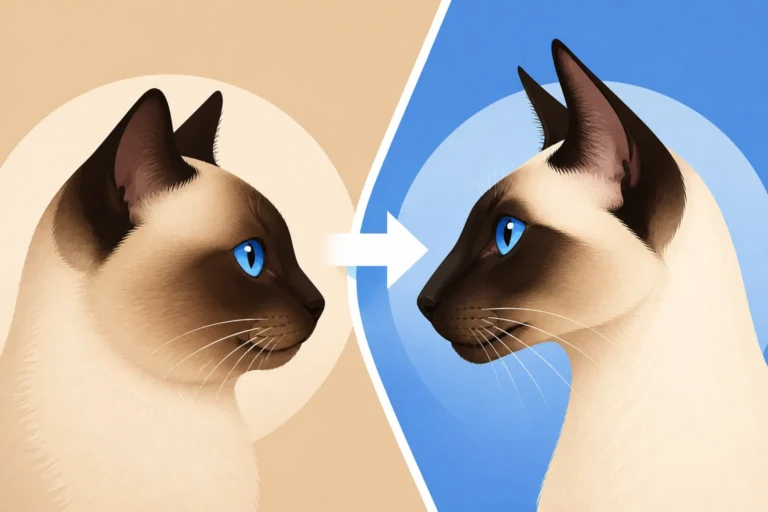
“Applehead” usually describes a Siamese-type cat with a rounder, broader head and a less extreme profile than the modern, wedge-headed show Siamese. It is a familiar phrase among owners and breeders, but it does not automatically name a separate breed recognized by every registry. One owner may use it to describe a traditional-looking purebred Siamese; another may use it for a Siamese-type cat without verified pedigree.
That distinction matters because judges do not decide eligibility from a nickname. They apply the rules and breed standard of the organization running the show. A registered cat may be eligible to enter a Siamese class if its paperwork and physical characteristics meet that organization’s requirements. A cat that looks like an applehead Siamese but has no qualifying pedigree may need to enter a household pet or other suitable class instead.
If you are unsure what the term means in your cat’s case, start with What an Applehead Siamese Cat Looks Like. It can help you describe your cat’s appearance, but appearance alone cannot establish pedigree or show eligibility.
Breed standards can favor different head shapes
Many modern Siamese breed standards call for a long, refined, wedge-shaped head, with a profile and overall structure that fit a slender, elegant body. A visibly rounder head may be considered less typical under that standard, even if the cat is healthy and clearly Siamese-type in appearance. In a conformation class, judges assess the cat against the published standard—not against whether an owner’s cat is attractive, affectionate, or a good example of a different historical type.
The exact wording and requirements depend on the registry. The CFA and TICA, for example, publish their own rules and standards, and other national organizations may use different terminology or recognize different categories. Check the current rules of the organization hosting the show before making plans. The overview in What the Siamese Cat Standard Asks For is useful background, but the show’s own official standard is the one to follow.
A more moderate-looking cat is not automatically disqualified from every possible competition. It may be eligible for a different breed category, a novice or household pet class, or another division offered by that particular show. The important point is to find the right class rather than assume that “applehead” either guarantees entry or rules it out.
Traditional type and registration are separate questions
People often use “traditional Siamese” and “applehead Siamese” interchangeably, but the terms do not always mean the same thing. “Traditional” may refer to a breeding style, a claimed history, or a cat with a less extreme appearance. Neither label by itself proves that a cat is registered as a Siamese under a particular organization’s rules.
It helps to keep two questions separate: What does the cat look like, and what breed or class can the cat officially enter? A cat may have a rounded head and a Siamese-like coat pattern but lack the documented ancestry required for a pedigree class. Conversely, a pedigreed Siamese might not fit every detail of the conformation standard closely enough to be highly competitive.
For a clearer explanation of the terminology, see Whether a Traditional Siamese Cat Is the Same Breed. If your cat’s paperwork calls it a Thai, rather than a Siamese, confirm how that distinction is handled by the show organization. What the Thai Cat Is Next to a Siamese Cat offers useful context on why those names can point to different registration pathways.
When an applehead Siamese may be eligible
Check pedigree and registration before assessing the head shape
For a pedigree conformation class, the first practical step is to check the cat’s registration documents. Look for the registering organization, the breed recorded on the paperwork, and any restrictions or conditions attached to the registration. If you bought the cat as a pet, the breeder may have registered it with limitations that prevent breeding or showing in certain classes. Those terms are not all the same, so read the actual paperwork rather than relying on a verbal description.
If you adopted your cat or do not have complete records, ask the relevant registry or show secretary what documentation is needed. A vet record, microchip record, or a resemblance to a Siamese does not usually substitute for pedigree records in a breed class. Depending on the event, a household pet class may be a more realistic route for a cat without qualifying registration.
The distinction between pet and show quality can be confusing, especially when a breeder uses the word “show” casually. What Separates a Pet From a Show Siamese Cat explains why registration, the sales agreement, and conformation potential are not interchangeable. If you are choosing a kitten, ask the breeder to explain exactly what the papers allow.
The organization’s rules decide which class fits
An applehead-looking cat may be eligible to compete as a Siamese if the registry recognizes the cat as that breed and the cat meets the show’s entry requirements. However, a rounder head may be considered a departure from the Siamese standard in organizations that favor the modern wedge type. Eligibility and competitiveness are different things: a cat can be allowed into a class without being a strong match for the standard.
Some registries recognize or distinguish related types and breeds differently. That is why a cat described as “old-style,” “traditional,” or “applehead” by a breeder should not automatically be entered under a particular breed name. The organization’s accepted breed list, registration records, and show rules determine the correct entry.
If you are comparing organizations, look up the exact breed and class names in each rulebook. Which Registry Accepts the Applehead Siamese Cat is a helpful starting point, but confirm the details directly with the registry or show organizer before submitting an entry. Rules can change, and individual shows may have additional requirements.
| Your cat’s situation | Possible show route | What to confirm |
|---|---|---|
| Registered Siamese with qualifying pedigree | Siamese conformation class, if accepted | Breed registration, entry rules, and how the standard treats head shape |
| Registered under a different recognized breed | The class for that registered breed | Whether the paperwork and show organization recognize that breed |
| Siamese-type cat without qualifying pedigree | Household pet or similar class, if offered | Whether the show has that class and what records are required |
| Cat with incomplete or unclear paperwork | Do not assume eligibility | Ask the registry or show secretary what documentation can be accepted |
A show secretary can clarify the decision before entry
If you still have questions after reading the rules, contact the show secretary before paying an entry fee or traveling. Describe the registration name on your cat’s papers, the organization that issued them, and the class you are considering. If the paperwork is unclear, ask whether the registry can confirm the cat’s status.
Be specific in your question. “Can I show an applehead?” may not give the secretary enough information because the term is informal. A more useful question is: “My cat is registered as a Siamese with this organization. Is that registration accepted for the Siamese class at your show, and are there any additional entry requirements?” If your cat is unregistered, ask whether a household pet division is available.
This small bit of preparation can save a lot of frustration. It is disappointing to groom your cat, arrange transport, and arrive at an event only to learn that the entry belongs in a different class. A clear answer in advance also lets you choose a show that welcomes the kind of participation you are looking for.
What judges assess and how to prepare
Conformation judging is more than a head-shape comparison
In a breed class, a judge assesses the whole cat against the applicable standard. That may include body shape, head and profile, ears, eyes, coat, color, condition, and how the cat presents. The importance of each feature depends on the standard. A rounder head may attract attention in a class where a wedge is expected, but it is only one part of the overall assessment.
The judge is not deciding whether your cat is lovable or whether it makes a wonderful companion. Show judging is a comparison against defined breed characteristics. A cat that does not closely match a particular standard may still be an excellent pet and may be able to participate in a different class. Keeping those goals separate makes the experience much less personal.
If your goal is to learn about the breed standard, watch a show before entering. Ask the organizer whether spectators can observe judging and read the rules beforehand. Seeing how cats are handled and evaluated can make the terminology easier to understand than trying to interpret every line of a standard at home.
Grooming should support comfort and coat condition
Siamese cats have short coats, so routine preparation is generally straightforward. A gentle brush or grooming glove can remove loose hair, while a calm nail trim and a quick check of the ears and eyes help your cat look tidy. Do not try a new grooming routine immediately before a show; a cat that finds handling stressful will benefit more from gradual practice than from a rushed bath or intensive grooming session.
You can compare basic combs and grooming gloves through pet retailers such as Chewy, but choose a tool your cat tolerates and follow the show’s grooming rules. Chewy may also be one place to look for nail-care basics, though it is sensible to check the show’s own guidance about what products or grooming methods are allowed. Avoid anything that irritates the skin or changes the coat’s appearance.
For an applehead Siamese, grooming cannot change the features that a judge evaluates structurally. Do not try to reshape the head, coat, or body with products or handling. Prioritize a clean carrier, familiar bedding, water, and a calm trip to the venue. If you want to practice gentle handling, you can also look at basic supplies from Chewy, but introduce each item at home well before show day.
Help your cat feel safe at the venue
A show environment can be noisy and unfamiliar, with new smells, other cats, and people moving around. Some cats settle quickly; others feel overwhelmed. Before entering, consider your cat’s temperament and comfort with travel, handling, and busy spaces. A cat that is distressed throughout the event may not benefit from the experience, even if it is technically eligible to enter.
Practice short carrier trips and gentle handling at home. Bring any permitted familiar bedding, and follow the organizer’s instructions on check-in, health requirements, and how cats must be housed. Never force a cat to interact with a judge or visitor if it is showing clear signs of fear. Ask event staff what to do if your cat becomes unsettled.
You can also attend a show as a spectator first. That gives you a chance to see the layout, listen to the announcements, and learn how the day flows without putting your cat through the experience. If you later enter, you will have a more realistic idea of what to expect—and your cat may benefit from a calmer, better-planned first visit.
Choosing the right show path for your cat
Decide what you want from showing
Before deciding whether your cat “can be shown,” think about what you hope to get from the experience. If you want a conformation title, breed registration and close alignment with the relevant standard matter. If you want to participate, meet other cat owners, or celebrate your companion, a household pet class may be more suitable if the event offers one.
Those are both worthwhile goals, but they call for different expectations. A pedigreed cat may be eligible for a breed class and still receive a modest evaluation if its type differs from the standard. A non-pedigreed cat may not qualify for that class but could be welcomed in a pet division. Neither outcome says anything about the cat’s value at home.
If your cat is registered but has a visibly rounder head, ask the registry or show staff for guidance before deciding. If your cat has no pedigree papers, ask specifically about non-pedigree classes rather than assuming there is no way to participate. For broader background on breed identity, How to Tell a Siamese Cat From a Mixed Breed explains why physical appearance alone is not definitive.
Use a simple eligibility checklist
Before entering, work through these steps:
- Read the registration papers. Confirm the registered breed, issuing organization, and any show restrictions.
- Identify the show organization. Locate its current breed standards, entry rules, and class descriptions.
- Check the class requirements. Find out whether the Siamese class requires particular registration or pedigree documentation.
- Ask about other divisions. If the cat is not eligible for a breed class, see whether household pet or another suitable class is available.
- Contact the show secretary. Share the exact registration details and ask for a clear answer before submitting an entry.
- Consider your cat’s comfort. Make sure travel, handling, and a busy venue are reasonable for your individual cat.
This process is more reliable than trying to infer eligibility from photos or from a breeder’s use of “applehead.” If the rules seem complicated, ask the registry to explain the specific point that is unclear. It is better to clarify one detail early than to discover a paperwork problem at check-in.
The practical answer
An applehead Siamese can be shown in some circumstances, but “applehead” by itself neither qualifies nor disqualifies a cat. For a Siamese conformation class, registration and the rules of the specific organization matter, and a rounder head may not match a standard that emphasizes a wedge-shaped head. A cat without the right pedigree may still have another route, such as a household pet class, if the show offers one.
Treat the breed label, the paperwork, and the cat’s appearance as separate pieces of the puzzle. Check the relevant standard, confirm the entry class with the show secretary, and choose an event that suits both your goals and your cat’s comfort. That way, whatever class you enter, you can focus on a positive experience rather than an avoidable eligibility surprise.
Disclaimer
This article is for general informational purposes only and does not constitute professional advice. Laws, prices and regulations vary by location and change over time. Consult a qualified professional for guidance on your specific situation.