What the Siamese Cat Standard Asks For
It’s a common misconception that a "purebred" cat is simply one that looks like the pictures you see online or in books. But for anyone serious about the Siamese cat breed, whether you're a prospective owner, an aspiring breeder, or just a deeply curious enthusiast, understanding the official breed standard is crucial. This isn't just a guide to what makes a Siamese cat pretty; it's a meticulously crafted blueprint that defines the ideal physical characteristics, temperament, and overall presentation of this magnificent feline, helping to preserve its unique traits for generations to come.
Understanding the Essence of the Siamese Standard
When you delve into the world of purebred cats, you quickly learn that a "breed standard" isn't just a suggestion; it's the very foundation upon which the breed is maintained and judged. For the Siamese cat, a breed steeped in history and distinct aesthetics, this standard is particularly important. It dictates everything from the shape of their head to the set of their eyes, ensuring that each generation of Siamese cats continues to embody the characteristics that make them so beloved and recognizable.
More Than Just Aesthetics: The Purpose of a Standard
Think of the breed standard as the ultimate reference manual for what a Siamese cat should be. It's developed by cat registries like the Cat Fanciers' Association (CFA) and The International Cat Association (TICA) to outline the perfect specimen of the breed. This isn't just about winning ribbons at a show, although that's certainly part of it. More profoundly, the standard serves several vital purposes. It guides ethical breeders in their selection of breeding pairs, ensuring they're working towards maintaining the breed's health, type, and temperament. It helps judges evaluate cats fairly and consistently, and it educates the public on what constitutes a true Siamese. Without a standard, breeders might pursue different aesthetic goals, leading to a fragmented and inconsistent breed over time. It's about preserving the integrity and heritage of the Siamese cat.
Evolution of the Siamese Ideal: From Traditional to Modern Wedge
The look of the Siamese cat hasn't always been what we see today in the show halls. If you look back at historical photos, particularly from the early 20th century, you'll see what many now refer to as "traditional" or "applehead" Siamese cats. These cats had rounder heads, sturdier bodies, and sometimes less extreme features. Over time, breeders began to select for a more elongated, refined, and angular look. This intentional breeding led to the "modern wedge" Siamese, characterized by a striking, triangular head, large flaring ears, and a super-svelte body. This evolution wasn't accidental; it was a concerted effort by breeders to push the boundaries of elegance and refinement. You can delve deeper into this fascinating transformation by reading about How the Siamese Cat's Head Changed Shape in Fifty Years, which really brings to life the journey of this breed's appearance.
Different Registries, Slight Nuances: CFA vs. TICA
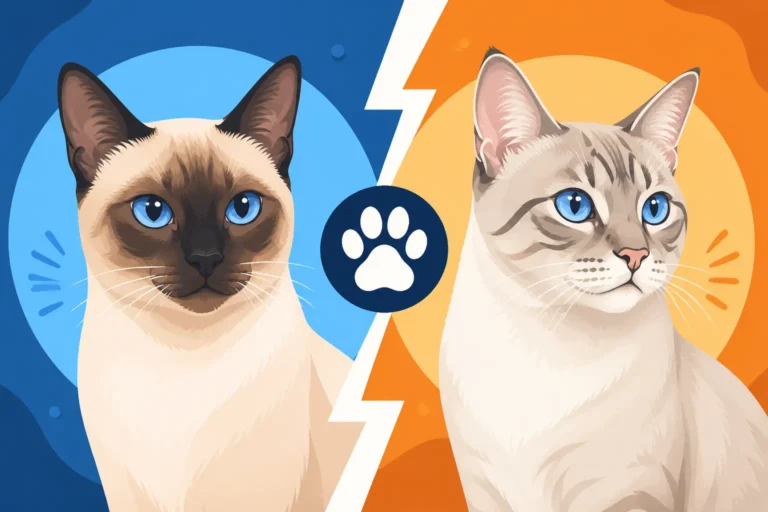
While most breed standards for the Siamese cat share a great deal of common ground, it's worth noting that different cat registries might have subtle variations in their specific wording or emphasis. The two largest registries in North America, the Cat Fanciers' Association (CFA) and The International Cat Association (TICA), both recognize the Siamese, and their standards are largely in agreement about the core characteristics. However, a breeder might tell you that one emphasizes a certain angle of the wedge more, or another might have slightly different language regarding body condition. These nuances, though minor to the casual observer, can be critical to a serious exhibitor aiming for perfection in the show ring. For instance, while both demand brilliant blue eyes, the exact description of the 'almond shape' might be phrased slightly differently. Understanding these subtle distinctions is part of the dedication involved in breeding and showing.
The Signature Head: Wedge, Eyes, and Ears
The head of a Siamese cat is arguably its most defining feature, instantly recognizable and a true testament to the breed's elegance. It’s where much of the breed standard's focus lies, detailing every angle and curve that contributes to its iconic appearance.
The Distinctive Wedge Shape and Profile
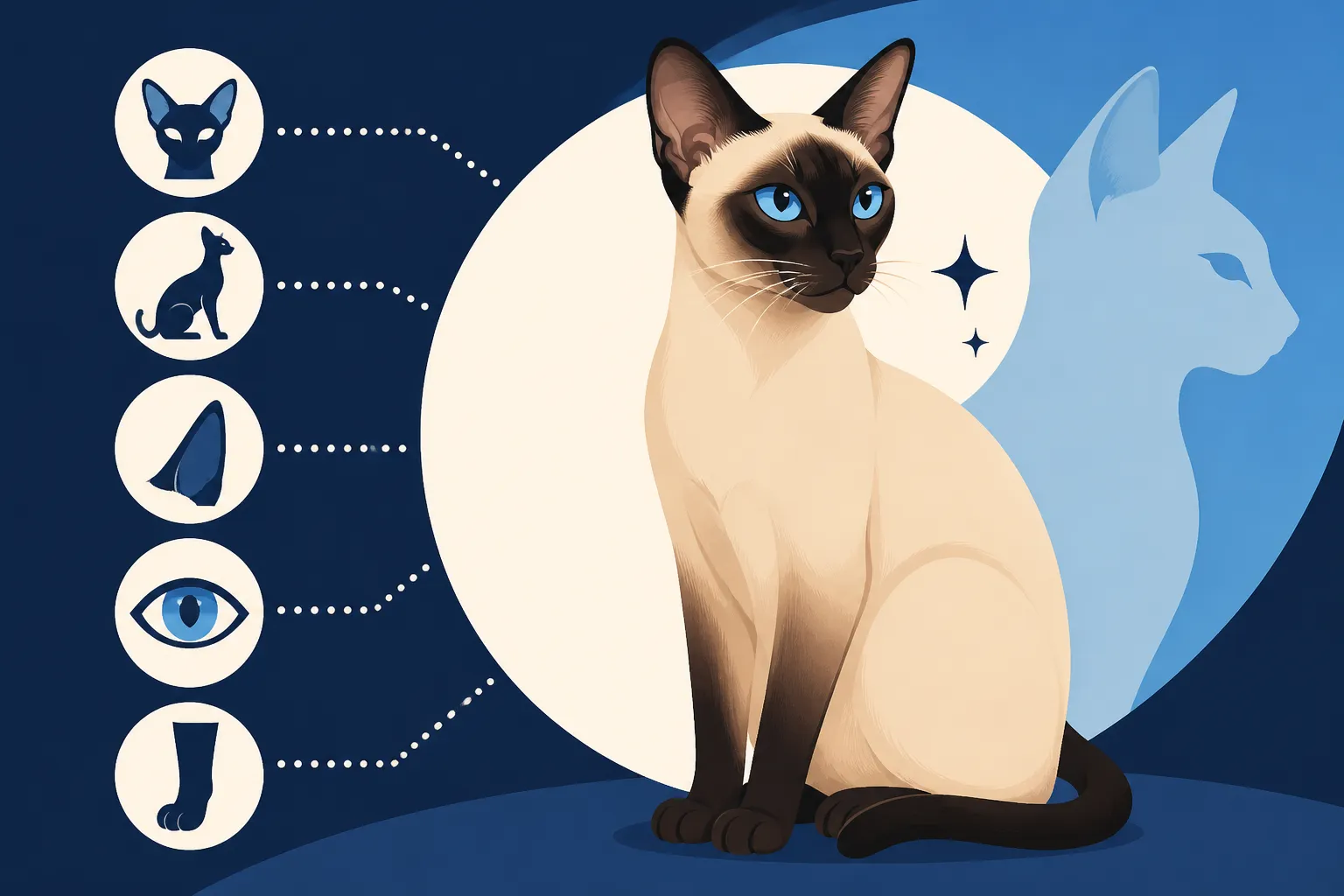
When we talk about the Siamese head, the first thing that comes to mind is that unmistakable wedge. The standard calls for a long, tapering wedge, starting from a narrow muzzle and flaring out in straight lines to the tips of the ears, forming a perfect triangle. There should be no pinch at the muzzle, nor should there be any break in the straight lines from the cheekbones to the ears. This isn't a subtle point; it's a cornerstone of the breed's aesthetic. Along with the wedge, the profile is also critical. The standard describes a straight profile from the forehead to the tip of the nose, with no break or bump, known as a "Roman nose." This creates an incredibly sleek, almost architectural look. Deviations from this precise wedge and profile are considered faults, showcasing how strictly this feature is interpreted. If you want to understand this visual better, check out What a Modern Wedge Siamese Cat Looks Like.
Piercing Blue Eyes: Shape, Set, and Color
The eyes of a Siamese cat are legendary: vivid, deep sapphire blue, almond-shaped, and set to slant towards the nose, aligning with the wedge of the head. The intensity of the blue is highly prized, with paler shades being less desirable. This deep blue hue is a direct result of the same genetic mutation that causes their point coloration. The standard demands that the eyes be neither too round nor too oriental, striking a delicate balance. They should be clear, bright, and expressive, truly drawing you in. While crossed eyes were once a common trait and even part of the breed's folklore, they are now considered a fault in the show standard, although some older lines or traditional types might still exhibit them. This is a common point of confusion for new owners, wondering Why a Siamese Cat's Eyes Cross and if it's a health issue. It's not usually a health issue, but it does deviate from the modern ideal. The specific genetic reason for their blue eyes is quite fascinating, as explored in Why a Siamese Cat Has Blue Eyes at All.
Large, Alert Ears: Placement and Proportion
Completing the striking headpiece are the Siamese cat's ears. The standard dictates that they should be strikingly large, wide at the base, and distinctly pointed. They should be set so that they continue the lines of the wedge, creating a harmonious triangular outline with the head. This means they're neither too high nor too low-set; rather, they flow seamlessly from the lines of the face. The ears should also be alert and expressive, framing the face beautifully. Their size is a crucial element of the modern Siamese look, contributing significantly to the overall impression of refinement and elegance. Small or round-tipped ears would be considered a major deviation from the ideal, detracting from the sleek, angular aesthetic that defines the breed.
An Elegant Physique: Body, Legs, and Tail
Beyond the captivating head, the Siamese standard meticulously describes a body built for grace and agility. Every element, from the length of their torso to the taper of their tail, contributes to the overall picture of lithe elegance.
Long, Svelte Body and Fine Boning
The Siamese cat is known for its distinctly tubular, athletic body. The standard emphasizes a body that is long and svelte, showcasing fine boning and firm musculature. This isn't a cat built for heft; rather, it’s designed for lean power and agility. When you pet a Siamese, you should feel a solid, well-conditioned body, but without any excess bulk. This creates an impression of incredible lightness and grace. A stocky or cobby build would be considered a serious fault, as it goes against the very essence of the Siamese physique. Think of them as feline supermodels, all sleek lines and elegant curves. This is part of what contributes to How Big a Siamese Cat Gets – they are long and tall, but not heavy-set.
Graceful Legs and Delicate Paws
Complementing the long body are equally long and slender legs, in perfect proportion to the rest of their physique. The standard specifies that the hind legs should be slightly longer than the front, giving them a graceful, almost tiptoeing stance. The paws are delicate, small, and oval-shaped, neither round nor splayed. Each paw should contribute to the overall impression of refinement, with firm, tidy toes. These features underscore the breed's elegance, ensuring that the cat's movement is as fluid and poised as its static appearance. Any signs of heaviness in the legs or large, clumsy paws would be considered a departure from the desired type.
The Whip-Like Tail: Length and Taper
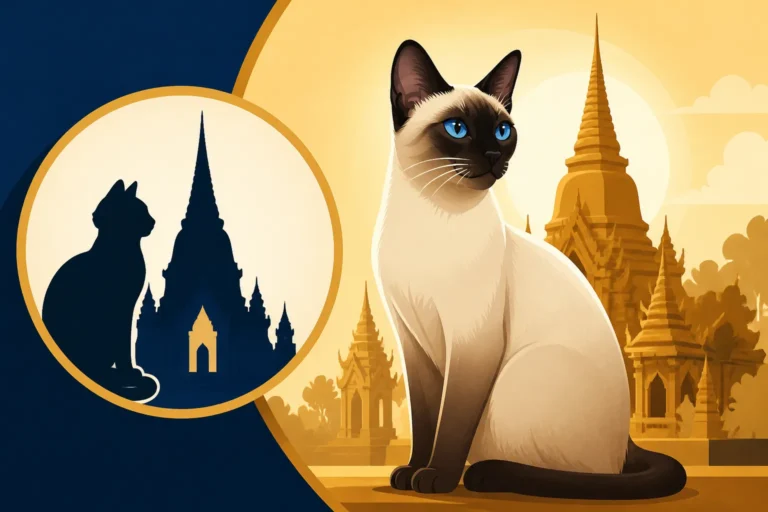
The Siamese tail is a final flourish to its elegant form. The standard requires a tail that is long and thin, tapering to a fine point, much like a whip. It should be free of kinks or abnormal formations, flowing smoothly from the rump. The length should be proportionate to the body, adding to the cat's overall sense of balance and grace. A short, blunt, or kinked tail is considered a fault. Historically, some Siamese cats did have kinks in their tails, often attributed to charming legends of temple cats guarding ancient treasures. However, in the modern show standard, these kinks are now considered undesirable, representing a deviation from the refined ideal. This is a fascinating bit of history that many new owners might not realize.
The Silken Coat and Striking Point Coloration
The Siamese cat's coat and its distinctive point coloration are perhaps its most iconic visual traits, instantly setting it apart from other breeds. The standard meticulously describes both the texture of the fur and the precise placement and intensity of its color points.
Short, Fine, and Close-Lying Coat
The coat of a Siamese cat is one of its sensory delights. The standard calls for a coat that is very short, fine in texture, and lies incredibly close to the body. It should feel silky and luxurious to the touch, almost like velvet. There should be no sign of a woolly undercoat, nor should the fur feel coarse or harsh. This close-lying coat accentuates their sleek, muscular physique and highlights their elegant lines. When you run your hand over a Siamese cat, the fur should offer minimal resistance and instantly spring back into place, reflecting their well-conditioned status. This low-maintenance coat is one of the joys of owning a Siamese. You'll find it easy to keep them looking sharp with just a quick brush from a grooming mitt or even a damp cloth, which you can easily find on sites like Chewy.
The Classic Point Colors: Seal, Blue, Chocolate, Lilac
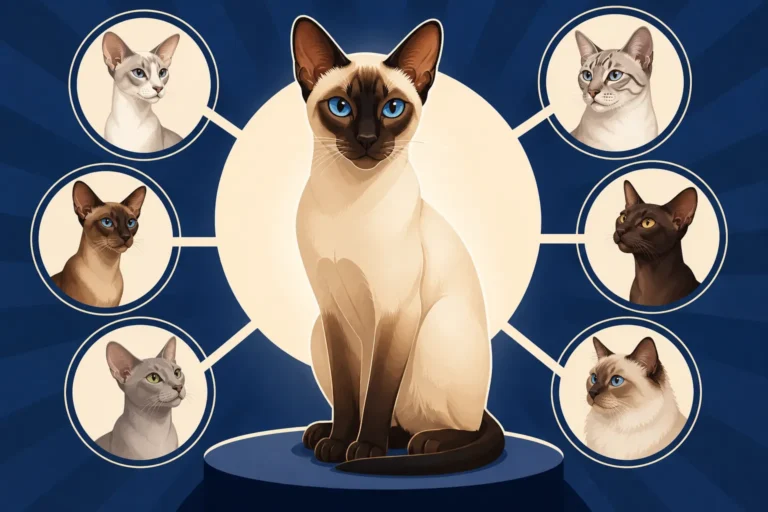
The defining characteristic of the Siamese cat's coloration is its "points." The standard recognizes four classic point colors: Seal Point, Blue Point, Chocolate Point, and Lilac Point.
- Seal Point: The darkest and most dramatic, with deep seal brown points and a creamy, warm-toned body.
- Blue Point: A softer, cooler variation, with deep slate blue points and a bluish-white body.
- Chocolate Point: Rich milk chocolate points with an ivory body.
- Lilac Point: The palest of the points, with frosty grey-pink points and a glacial white body.
Each color has its own specific requirements for intensity and contrast against the body. Other point colors like Red Point or Lynx Point are typically found in related breeds like the Colorpoint Shorthair, which originated from crossing Siamese with other cats, rather than in the purebred Siamese standard itself, though different registries might classify them differently. To learn more about this, Which Colors a Siamese Cat Comes In provides an excellent overview.
Body Color and Point Contrast: The Ideal Balance
Beyond the color of the points themselves, the standard places a strong emphasis on the overall balance and contrast between the points and the body color. The body color should be even, with gradual shading that blends harmoniously into the darker points. There should be a distinct contrast, with the points clearly visible against the lighter body. Excessive shading or "smudging" on the body, or points that are too pale and indistinct, would be considered faults. The standard demands that the cat's color should be clear and distinct. It's also a fascinating fact that a Siamese cat's points are temperature-sensitive, meaning their coloration can literally change with the climate or even if they're shaved. This is why Why a Siamese Cat's Points Are Made by Temperature is such an interesting read for owners. Maintaining this striking contrast and clear body color is part of the challenge and beauty of the breed, requiring a keen eye from both breeders and judges.
Temperament, Condition, and Disqualifications
While physical attributes are paramount in the breed standard, the Siamese cat's personality, overall health, and freedom from certain faults are equally important for a complete picture of the ideal specimen.
The Characteristic Siamese Personality
A Siamese cat is much more than just a beautiful face; their personality is as legendary as their appearance. The standard doesn't just describe physical traits; it also includes a temperament clause, emphasizing that the Siamese should be intelligent, inquisitive, and highly social. They are known for being vocal, demanding attention, and forming strong bonds with their human companions. This isn't a shy, aloof cat. Rather, a well-socialized Siamese should be outgoing, engaging, and confident, though never aggressive. When a judge handles a Siamese in the show ring, they are looking for a cat that is cooperative, personable, and demonstrates the breed's characteristic charm and communicative nature. Anyone who has lived with a Siamese knows The Siamese Cat Talks and Expects an Answer – it's part of their undeniable appeal!
Overall Condition and Presentation
The best physical traits and temperament can be undermined if a cat isn't presented in peak condition. The standard specifies that a Siamese cat should be in excellent physical condition, clean, and well-groomed. This means a healthy weight (neither too thin nor overweight), bright, clear eyes, clean ears, and a soft, gleaming coat. A cat that is sickly, excessively thin, or carries too much weight would not meet the standard, regardless of its other qualities. This also extends to general care; nails should be trimmed, and teeth should be clean, reflecting responsible ownership. A truly "show quality" Siamese cat represents a significant investment of time and care, including regular veterinary check-ups and a high-quality diet, available from places like Chewy. Responsible breeders will also have done their due diligence in screening for inherited conditions, which is why it's so important to know What a Siamese Cat Breeder Should Have Screened.
Faults and Disqualifications to Be Aware Of
To ensure the integrity of the breed, the standard also explicitly lists faults and disqualifications. Faults are minor deviations from the ideal, such as slight body shading or a less-than-perfect wedge. They will result in points being deducted in a show. Disqualifications, however, are major deviations that mean a cat cannot be awarded any titles. These often include serious health concerns or traits that fundamentally alter the breed's identity. For the Siamese, common disqualifications might include:
- Incorrect eye color: Any color other than blue (e.g., green, yellow).
- Physical deformities: Polydactyly (extra toes), severe tail kinks, or deformities of the spine.
- Incorrect number of toes.
- White spots or patches anywhere on the body or points: The Siamese should only have point coloration.
- Extreme aggression or shyness: A cat that cannot be handled by a judge.
- Evidence of ill health or parasites.
- Any evidence of surgical alteration to change natural appearance.
Understanding these specific criteria is vital, particularly for breeders, as it guides their efforts in selecting appropriate breeding stock to maintain the health and purity of the Siamese line.
Summary of Key Siamese Standard Traits
| Trait | Ideal Description (Modern Wedge) | Common Faults / Disqualifications |
|---|---|---|
| Head | Long, tapering wedge; straight profile; no pinch at muzzle. | Rounded or cobby head; pinched muzzle; Roman nose break; extreme applehead. |
| Eyes | Brilliant, deep sapphire blue; almond-shaped; slanted towards nose. | Any color other than blue; round or oriental shape; crossed eyes (fault). |
| Ears | Strikingly large; wide at base; pointed; continuing lines of wedge. | Small or low-set ears; round tips. |
| Body | Long, svelte, tubular; fine boning; firm musculature. | Stocky or cobby build; heavy boning; thick neck. |
| Legs & Paws | Long, slender legs; hind slightly longer; small, delicate, oval paws. | Short or heavy legs; large, splayed or round paws; extra toes. |
| Tail | Long, thin, whip-like; tapering to fine point; free of kinks. | Short, blunt, or kinked tail. |
| Coat | Very short, fine, close-lying, silky texture; no woolly undercoat. | Coarse or woolly texture; long coat. |
| Color | Clear, distinct point colors (Seal, Blue, Choc, Lilac); body color clear, even, good contrast. | Muddy or indistinct points; excessive body shading; white spots/patches. |
| Temperament | Intelligent, inquisitive, social, vocal, affectionate, confident, amenable to handling. | Aggression, extreme shyness, fearfulness, lack of interactive personality. |
| Condition | Excellent physical condition; healthy weight; clean; well-groomed. | Poor health; emaciation; obesity; neglected appearance. |
Ultimately, the Siamese cat standard provides a fascinating insight into the efforts required to preserve and celebrate this unique and cherished breed. It’s a testament to the dedication of breeders and the enduring allure of these magnificent felines.
Disclaimer
This article is for general informational purposes only and does not constitute professional advice. Laws, prices and regulations vary by location and change over time. Consult a qualified professional for guidance on your specific situation.