Whether a Pale Siamese Cat Kitten Stays Pale
It’s a common moment for new Siamese kitten owners: you bring home that tiny, adorable fluffball, and their coat is surprisingly pale, almost entirely white or cream. You might have envisioned the striking, dark points you see on adult Siamese, and now you’re left wondering, "Is my kitten ever going to get those beautiful markings? Will this pale Siamese cat kitten stay pale forever?" It’s a completely understandable concern, especially when you're dreaming of that classic Siamese elegance. Rest assured, this guide is here to shed light on exactly why your Siamese kitten starts off so light and what you can expect as they grow.
The Unique Genetic Code Behind Siamese Coloration
The distinctive point coloration of a Siamese cat is one of its most defining features, a beautiful contrast of dark extremities against a paler body. This isn't just a random aesthetic; it's the result of a fascinating genetic quirk that's deeply tied to temperature. Understanding this genetic blueprint is the first step to truly grasping why your little one is currently so pale.
The Tyrosinase Enzyme and Temperature Sensitivity
At the heart of the Siamese cat's unique coloring lies a specific genetic mutation affecting the tyrosinase enzyme. This enzyme is crucial for producing melanin, the pigment responsible for color in fur and skin. In most cats, this enzyme works efficiently regardless of body temperature. However, in Siamese cats (and related breeds like Himalayan and Colorpoint Shorthairs), the mutated tyrosinase enzyme is temperature-sensitive. This means it only functions effectively and produces pigment in cooler parts of the cat's body.
Think of it like a tiny, internal thermostat for color. The parts of your kitten's body that are naturally cooler – the tips of their ears, nose, paws, and tail – allow this enzyme to "turn on" and create melanin, resulting in those darker points. Conversely, the warmer core of their body inhibits the enzyme, leaving the fur in those areas pale. It's truly a marvel of genetics, explaining What Point Coloration in a Siamese Cat Is with such precision. This is also why a Siamese cat’s core body stays relatively pale, a beautiful creamy white, ivory, or warm fawn, depending on the specific point color genes. Without this understanding, it might seem like a mystery, but it’s a perfectly normal and expected part of being a Siamese.
How Points Develop from Birth
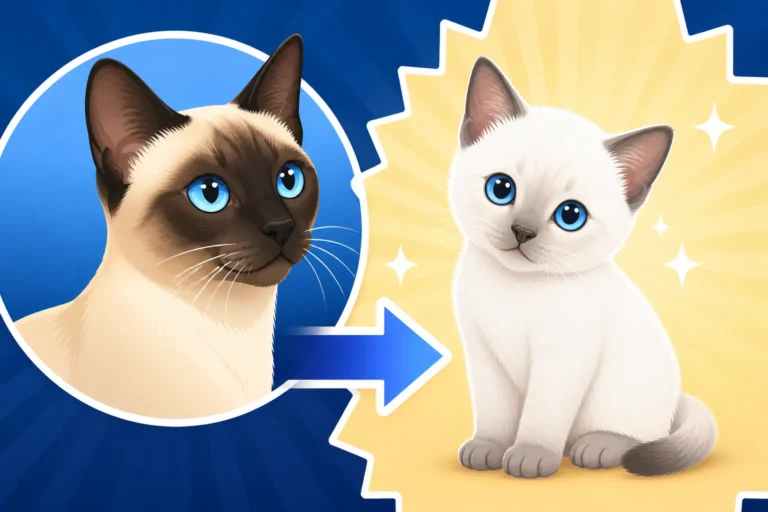
When a Siamese kitten is born, they are typically almost entirely white or a very light cream color. This isn't a fluke; it's a direct consequence of their time in the womb. Inside their mother's uterus, the temperature is consistently warm and even, creating an environment where the temperature-sensitive tyrosinase enzyme is largely inactive across their entire body. Therefore, very little pigment is produced, and the kittens emerge looking like little albino furballs, a fascinating phenomenon that often surprises first-time owners. It’s exactly Why a Siamese Cat Kitten Is Born White.
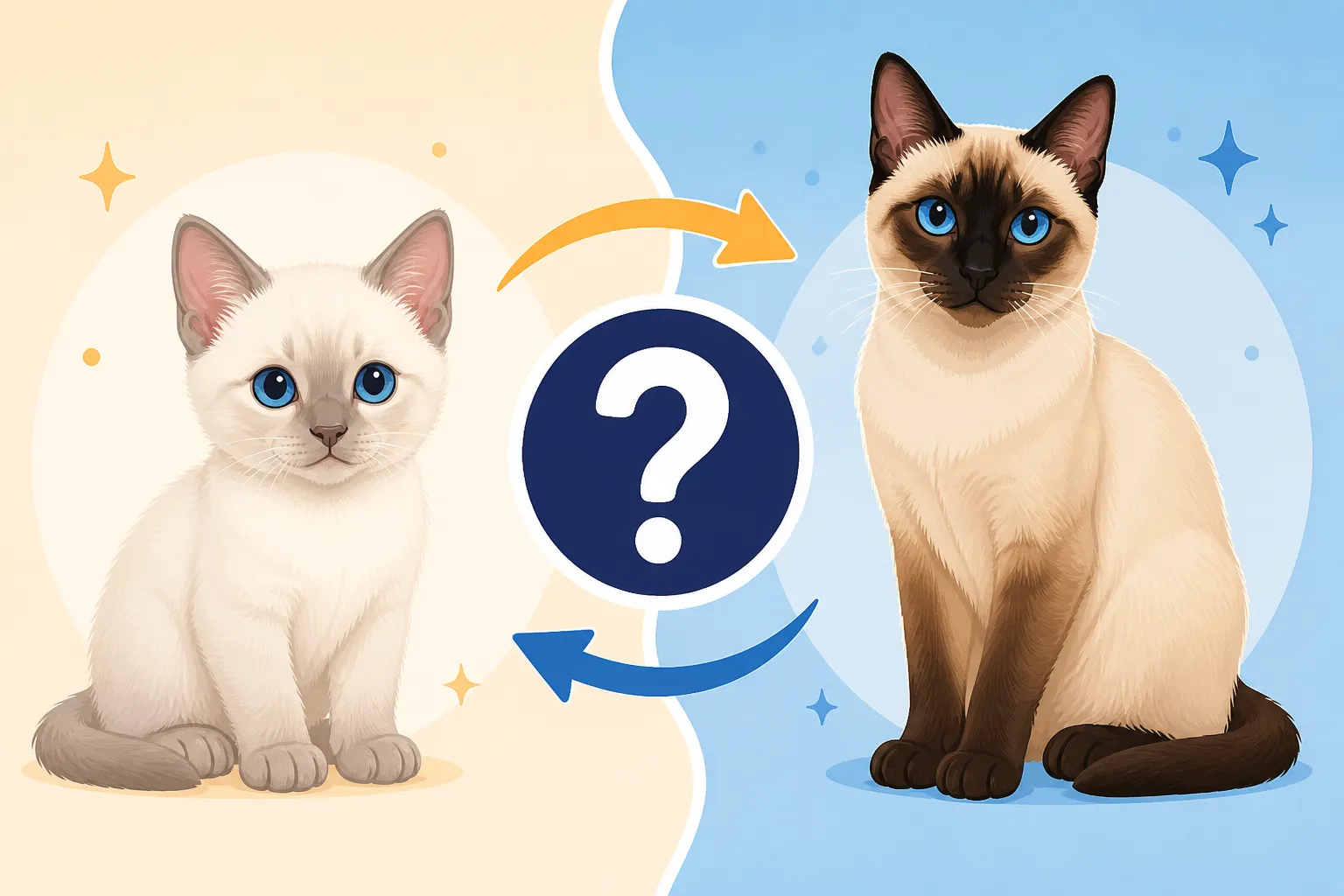
Once they are born into the cooler ambient air, the magic begins. Their ears, nose, paws, and tail, being the furthest extremities and thus naturally cooler, start to activate the enzyme, and pigment production slowly kicks in. You won't see dramatic changes overnight, but over the first few weeks and months, the points will gradually darken. It's a slow reveal, like watching a photograph develop in an old darkroom. Initially, you might just notice a subtle smudge of color on their nose or ears, and then it progresses to the tail and paws. The process of How Old a Siamese Cat Kitten Is When Points Show can vary, but generally, by a few weeks old, you'll start to see definitive signs. This gradual darkening is a natural and healthy part of their development, reflecting their unique genetic heritage.
Factors Influencing a Siamese Kitten's Final Color
While genetics lay the foundation for a Siamese cat's point coloration, several factors can influence the eventual shade and intensity of those points. It's not just a simple on/off switch; it's a spectrum influenced by both inherited traits and environmental conditions. This variability is part of what makes each Siamese cat so unique and captivating.
Genetics and Parental Influence
The primary determinant of your Siamese kitten's ultimate point color is, unsurprisingly, genetics. Just like human hair color, a kitten inherits its base color genes from its parents. For Siamese cats, these base colors are expressed as "points." The classic Seal Point, with its deep, dark brown points, is genetically distinct from a Blue Point (slate grey), a Chocolate Point (warm brown), or a Lilac Point (pale, frosty grey). The intensity of the darkening, and the specific hue it takes, is all predetermined by the genes passed down from mom and dad.
For instance, if your kitten's parents were both Lilac Points, it's highly likely your kitten will also mature into a Lilac Point, known for its softer, more delicate coloration compared to the robust Seal Point. A kitten from Seal Point parents will almost invariably develop much darker points. While environmental factors can influence the degree of darkening, they can't change a Seal Point into a Lilac Point. Understanding the parentage can give you a strong clue as to Whether a Siamese Cat Kitten's Final Color Can Be Predicted with some accuracy regarding the type of point color, if not the exact shade. Breeders often track these lines meticulously, which can give you some insight into what your kitten might look like as an adult.
Environmental Temperature During Development
Here's where things get really interesting and where the pale kitten question truly finds its answer. Because the tyrosinase enzyme is temperature-sensitive, the ambient temperature of your home during your kitten's growth plays a significant role in how dark their points become, and even how dark their body fur gets over time. A kitten raised in a consistently warmer environment may develop lighter points and a paler body than one raised in a cooler home, all else being equal.
Consider a Siamese cat living in a drafty old farmhouse compared to one luxuriating in a consistently warm apartment. The farmhouse cat is likely to develop deeper, richer points and potentially more overall body shading as the slightly cooler temperatures activate the enzyme more broadly. This is a key reason Why a Siamese Cat Darkens Every Winter and lightens slightly in summer. It’s not just the points that are affected; even the body fur can take on a creamier, fawn, or even light brown hue, especially in older cats or those in colder climates, as the core body temperature naturally drops slightly with age or environmental exposure. This isn't a sign of ill health; it's simply their unique biology at play. So, if your pale kitten is in a warm home, their points might take a bit longer to fully develop their rich color.
The Role of Point Color in Color Intensity
The specific "point color" gene a Siamese carries also dictates the ultimate intensity of the darkening. As mentioned, Seal Points are genetically coded for the deepest, darkest brown-black pigment, while Lilac Points are coded for a much diluted, almost frosty grey-pink. Therefore, a pale Lilac Point kitten, even at full maturity, will likely remain much paler overall than a Seal Point kitten that was equally pale at birth.
Let's look at it this way:
- Seal Point: Born creamy white, develops deep dark brown points. Will never stay pale like a Lilac.
- Chocolate Point: Born creamy white, develops warm milk-chocolate points. Generally lighter than Seal, but still distinct.
- Blue Point: Born silvery white, develops slate-grey points. A diluted version of Seal.
- Lilac Point: Born pure white, develops frosty grey-pink points. The palest of the traditional points.
Even within these categories, there are variations. Some Seal Points will be almost black, while others are a dark espresso. The same goes for Lilacs; some are truly pastel, while others have a slightly deeper grey tone. This is part of the charm of the breed, but it also means that a very pale kitten might always be a relatively pale adult if it's genetically a Lilac Point, for example. Understanding Which Point Color Shows Up First on a Siamese Cat can sometimes give a clue, but the full picture takes time to reveal.
Predicting Your Siamese Kitten's Adult Shade
It’s completely natural to be eager to see what your little Siamese will look like when they’re fully grown. While we can’t give you a precise paint swatch, understanding the development process allows for some educated guesses and sets realistic expectations. The key is to be patient and observe the subtle changes over time.
Observing Point Development Over Time
The most reliable way to predict your Siamese kitten's adult shade is to simply watch and wait. The darkening process isn't immediate, and it happens in stages. Typically, you'll see the ears and nose tip start to color first, followed by the tail and then the paws. This can begin as early as a few days to a week old, though it might just be a faint smudge initially. By 4-6 weeks, the points should be distinctly visible, giving you a better idea of the primary point color (e.g., is it starting to look brown for a Seal, or more grey for a Blue?).
The points will continue to darken and intensify over the first year of life, sometimes even longer. A Siamese cat's full color, including any body shading, often isn't fully set until they are 18 months to two years old, and even then, it can continue to deepen with age and exposure to cold. So, that pale kitten you brought home at 12 weeks still has a long way to go in terms of color development. You might notice, for example, that the pads of their paws are already showing the true color, even before the fur is fully pigmented. This can be a good early indicator. The timeline of How Long a Siamese Cat's Points Take to Finish is really quite extended.
Understanding the "Warmth" Factor
As we’ve discussed, environmental temperature plays a crucial role. If your kitten is kept in a very warm home, their points might develop more slowly and remain somewhat lighter than if they were in a cooler environment. This isn't to say you should intentionally expose your kitten to cold – definitely not! Their comfort and health come first. But it does explain why two kittens from the same litter, raised in different homes, might develop slightly different shades of points.
For example, a Seal Point kitten raised in a consistently 75°F (24°C) home might have points that are a rich dark chocolate rather than a deep, almost black-brown, simply because the enzyme isn't quite as active. The body fur might also remain incredibly pale. Conversely, a Siamese cat that loves to nap on a cold windowsill or spends time in a slightly cooler room might show deeper point coloration and more overall body shading. This phenomenon is why Whether an Indoor Siamese Cat Stays Paler is a valid question; often, a cat kept entirely indoors in a temperature-controlled home will stay a bit lighter overall than one who experiences wider temperature fluctuations.
Patience is Key: The Timeline for Full Color Development
The most important advice when wondering about your pale Siamese kitten's future color is patience. They are not like other breeds where the color you see at 8-12 weeks is largely what you get. The Siamese is a slow-blooming flower when it comes to color. Your kitten will go through many subtle shifts as they grow.
Here's a general timeline to manage expectations:
| Age of Kitten | Expected Color Progression | Notes for Owners |
|---|---|---|
| Birth | Entirely white or cream | No points visible due to warm womb environment. |
| 0-4 Weeks | Subtle point darkening on ears/nose, maybe tail | First faint smudges of color appear. Hard to discern true point color. |
| 4-12 Weeks | Points become more distinct on ears, nose, tail, paws | Point color (Seal, Blue, Chocolate, Lilac) usually identifiable. Body still very pale. |
| 3-6 Months | Points deepen significantly. Body fur may show first hints of shading. | Color becoming much more prominent. Growth spurts may temporarily affect color. |
| 6-12 Months | Points nearing full adult depth. Body shading becomes more apparent. | Most of the adult color is present, but still room for intensification. |
| 1-2 Years | Full adult point color achieved. Body shading fully developed. | Color is mature, but continuous slight darkening can occur over time. |
| 2+ Years | Points maintain intensity, body fur may slowly darken further with age/coolth | Older cats, especially those in cooler environments, often develop extensive body shading. |
It's truly a process that unfolds over months, not weeks. So don't despair if your kitten still looks very pale at four or five months old. Give them time, keep them healthy and loved, and watch their true colors emerge. After all, the journey of watching them develop their beautiful markings is part of the unique joy of owning a Siamese. You can look forward to seeing the transformation, and know that The Age a Siamese Cat Starts Darkening is usually just the beginning of a beautiful journey.
Practical Implications for Owners
Knowing the science behind Siamese coloration is one thing, but what does it mean for you, the owner of a pale Siamese kitten? Should you try to influence their color? And what's the most important takeaway regarding their unique appearance? Let's explore some practical considerations.
Environmental Control and Point Color
Given that temperature influences pigment production, you might be tempted to wonder if you should try to keep your home cooler to get darker points, or warmer to keep them paler. My strong advice is to resist this urge. Your cat's comfort and well-being should always come first. Maintaining a consistent, comfortable room temperature (typically between 68-75°F or 20-24°C) is far more important for their overall health than attempting to manipulate their coat color. Drastically altering your home's temperature can lead to discomfort, stress, or even health issues for your feline friend. They feel the cold more keenly than many other breeds due to their single coat, so keeping them warm is paramount.
Plus, the genetic predisposition for their point color (Seal, Blue, Chocolate, Lilac) is ultimately dominant. While temperature can influence the shade's intensity, it won't fundamentally change a pale Lilac Point into a dark Seal Point. Focus on providing a cozy home with plenty of warm sleeping spots – a soft bed, a cozy blanket from Amazon, or even a heated cat bed if they enjoy it. How Warm a Siamese Cat's House Should Be is about comfort, not color. If your Siamese loves to burrow under blankets, it's because they naturally seek warmth, which will keep their body fur lighter. This is a perfect example of their natural instincts at play.
Appreciating the Beauty of All Shades
Ultimately, whether your Siamese kitten grows into a deeply pigmented Seal Point or a strikingly ethereal Lilac Point, their beauty is undeniable. Every Siamese cat, regardless of the intensity of their points or the amount of body shading, possesses that unmistakable elegance, intelligence, and vocal charm. The unique genetic trait that causes their points is a part of their identity, a conversation starter, and a source of endless fascination.
Don't let the quest for a particular shade overshadow the joy of getting to know your individual cat. Their personality, their playful antics, their demanding conversations, and their deep bond with you are what truly define them. Whether your pale Siamese cat kitten stays somewhat pale or darkens considerably, they are still 100% Siamese. Embrace the journey of watching them mature, and celebrate the unique beauty of their evolving coat. A well-nourished Siamese on a quality diet will always look magnificent, regardless of whether they have a very dark body or retain a lighter, creamier coat. The color evolution is just another chapter in their incredible life story. Even if you consider Whether a Darkened Siamese Cat Can Be Lightened, it’s often a minor change in intensity, not a complete reversal. Your cat's health and happiness are what truly matter most.
Disclaimer
This article is for general informational purposes only and does not constitute professional advice. Laws, prices and regulations vary by location and change over time. Consult a qualified professional for guidance on your specific situation.