Why a Siamese Cat Kitten Is Born White
It's a moment that often takes new Siamese cat owners by surprise: you've envisioned that stunning, elegant feline with its distinctive dark points and piercing blue eyes, but when you pick up your kitten, it's… completely white. You might even find yourself wondering if you've been given the wrong cat, or if something is amiss with your precious little bundle of fur. Rest assured, this is not only normal but a fundamental and fascinating characteristic of the Siamese breed. This guide will walk you through the incredible science behind why your Siamese kitten starts life as a little ghost and how its famous coloration gracefully blossoms over time.
Understanding the Siamese Cat's Unique Coloration
When most people picture a Siamese cat, they immediately think of that striking contrast: the deep, rich 'points' of color on their ears, face mask, paws, and tail, set against a much paler body. It's an iconic look that defines the breed and makes them instantly recognizable. However, this defining feature isn't something they arrive with right out of the gate, and that can be a real head-scratcher for new owners.
The initial shock of seeing a pure white or very pale cream Siamese kitten can be confusing. You've seen pictures, you know the breed, and yet here's this little marshmallow that doesn't quite fit the image in your mind. This initial appearance often leads to questions about their breed authenticity or even their health, creating a moment of understandable frustration for those who are unprepared for this unique aspect of their development. It's a completely valid reaction to expect one thing and encounter another, especially when it comes to such a distinct-looking cat.
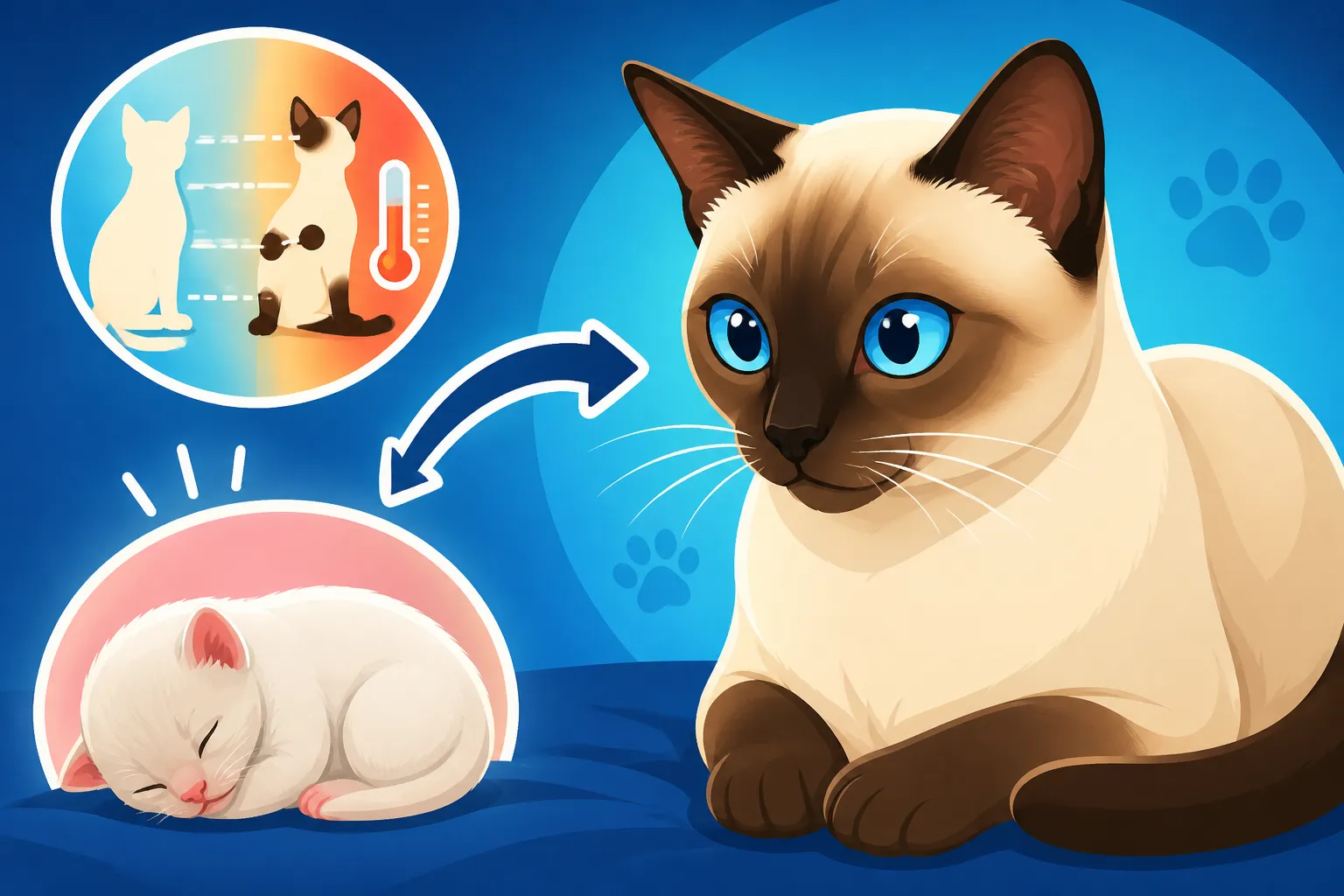
What many don't realize is that this striking pattern isn't just a random genetic lottery; it's a specific, temperature-sensitive form of partial albinism. This means the ability of their bodies to produce pigment is directly influenced by heat. Their genes are programmed to only allow color to develop in cooler parts of their body, and this mechanism isn't 'turned on' until they experience the outside world.
So, while that adorable white kitten might not yet look like the classic Siamese you've always imagined, it holds the blueprint for that beauty within its genes. This temporary pale stage is actually a physiological marvel, a testament to the unique biology of the breed, and sets the stage for a delightful transformation you'll witness over the coming weeks and months. Knowing this helps alleviate any worry and lets you appreciate the unfolding wonder.
The Striking Contrast: Points and Body Color
The hallmark of the Siamese cat is, without a doubt, its distinctive color pattern: dark brown, blue, chocolate, or lilac points on the extremities, contrasting sharply with a creamy or ivory body. This exquisite coloration is what makes a Siamese a Siamese, drawing admirers from all corners of the globe. It's a look of refined elegance and ancient mystique, utterly unique in the feline world.
However, the expectation that Siamese kittens will arrive looking like their adult counterparts is a common misconception. Imagine bringing home your first Siamese kitten, full of excitement, only to find a tiny, snow-white creature gazing up at you. It can be a moment of genuine confusion, making you second-guess if you've really adopted a true Siamese. This surprise is perfectly natural, as our visual references for the breed are almost exclusively of their fully colored, mature forms.
The key to understanding this initial paleness lies in the genetic makeup of these cats, which dictates a temperature-sensitive form of pigment production. While not true albinism in the sense of a complete absence of pigment, it’s a specific genetic trait that restricts color expression based on heat. This particular genetic quirk means that for a period, typically the first few days and weeks of life, a Siamese kitten simply doesn't have the biological conditions to express its full range of colors.
This guide will delve into the scientific underpinnings of this phenomenon, explaining precisely why these kittens enter the world as little white wonders and detailing the fascinating process by which their signature points gradually emerge. Understanding this journey from white to wondrously colored will not only deepen your appreciation for the breed but also assure you that your pale kitten is exactly what it's meant to be.
The Genes at Play: A Brief Introduction
At the heart of the Siamese cat's unique coloration is a specific genetic mutation that affects the production of melanin, the pigment responsible for color in skin and fur. This mutation involves an enzyme called tyrosinase, which is crucial for synthesizing melanin. In most animals, this enzyme works consistently across the entire body, leading to a uniform coat color or a pattern not dependent on temperature.
However, in Siamese cats, the tyrosinase enzyme has a flaw: it's heat-sensitive. This means it only functions effectively at lower temperatures. At warmer temperatures, the enzyme becomes inactive, and no melanin is produced. This isn't a complete absence of the enzyme, just a conditional one. You might hear this gene referred to as the Himalayan gene or the "cs" allele, and it's present in all Siamese cats, regardless of their specific point color.
This particular genetic scenario is why Siamese cats are considered to have a form of partial albinism. True albinism involves a complete inability to produce melanin, resulting in pure white fur and often red or pink eyes. Siamese cats, however, can produce melanin, but only under specific thermal conditions. Their blue eyes are also a result of this same genetic pathway, as the temperature sensitivity extends to eye pigment as well, giving them that characteristic icy gaze.
It’s this precise genetic coding that dictates the iconic Siamese pattern. Every Siamese cat, whether it's a traditional Seal Point, a striking Blue Point, a warm Chocolate Point, or a delicate Lilac Point, shares this fundamental genetic mechanism. The variations in point color come from other modifier genes that influence the type of melanin produced, but the distribution of that melanin—only in the cool spots—is due to this foundational temperature-sensitive gene. For a deeper dive, check out Which Gene Makes a Siamese Cat's Points.
The Science Behind Temperature-Sensitive Albinism
To truly grasp why a Siamese kitten is born white, we need to delve a bit deeper into the fascinating biological process that underpins their unique color. It’s all about a delicate enzyme and the temperatures at which it thrives, or rather, the temperatures at which it completely shuts down. This isn't just a quirky trait; it's a beautiful example of how genetics and environment interact to create a distinctive phenotype.
Think of it like a tiny, intricate color factory inside each hair follicle. This factory has a specific worker – the tyrosinase enzyme – and that worker is incredibly fussy about its working conditions. If the temperature isn’t just right, it goes on strike. The result is no color, which is exactly what happens in the warmth of the womb.
This particular genetic characteristic is what gives the Siamese its renowned pointed pattern. It's a scientific wonder that makes them stand out, not just for their stunning looks, but for the biological story their coat tells. Understanding this science helps us appreciate every stage of their development, from their pristine white beginning to their richly pointed maturity.
The Tyrosinase Enzyme and Its Sensitivity
The star of our coloration story is the tyrosinase enzyme. In all mammals, tyrosinase is the rate-limiting enzyme in the production of melanin, which is the pigment responsible for the color of skin, hair, and eyes. It converts an amino acid called tyrosine into various forms of melanin, giving us everything from black to brown to red pigments. Without a functional tyrosinase enzyme, an animal cannot produce color.
In Siamese cats, however, there's a specific mutation in the gene that codes for this tyrosinase enzyme. This mutated enzyme isn't completely dysfunctional, but it's incredibly sensitive to temperature. It works perfectly well at cooler temperatures, typically below about 98°F (37°C), but becomes largely inactive at warmer body temperatures. This is a classic example of a thermolabile, or heat-sensitive, enzyme.
This explains the distinct point coloration so perfectly. The extremities of a cat's body – the ears, nose, paws, and tail – are naturally cooler than the core body temperature. In these cooler regions, the mutated tyrosinase enzyme is active, diligently producing melanin, which then gets deposited into the growing fur shafts. This results in the dark coloration we associate with the points. For a detailed explanation of this phenomenon, you might want to read Why a Siamese Cat's Pigment Only Works When Cool.
Conversely, the main trunk of a Siamese cat's body, its torso, shoulders, and belly, maintains a higher, warmer temperature closer to its internal core. In these warmer areas, the heat-sensitive tyrosinase enzyme becomes inactive. With the enzyme on hiatus, no melanin is produced in the fur follicles of the body, leading to the characteristic pale, cream, or ivory coat color. It’s a remarkable biological adaptation that creates their stunning visual appeal. At What Temperature a Siamese Cat Stops Making Pigment goes into more detail.
Melanin Production: What Happens Where and When
Understanding the tyrosinase enzyme's sensitivity is key to piecing together the Siamese cat's color development. Imagine millions of tiny hair follicles across a cat's body, each acting as a mini-factory for hair growth and pigment production. In a Siamese, each of these factories has the potential to produce color, but whether they do so depends entirely on the local temperature around them.
When the temperature is cool enough, the tyrosinase enzyme within the melanocytes (pigment-producing cells) of the hair follicle springs into action. It begins the complex biochemical process of synthesizing melanin granules. These granules are then transferred to the keratinocytes, the cells that form the hair shaft, and as the hair grows, it emerges with color. This continuous process explains why the points gradually deepen in color over time as the cat matures and spends more time in ambient temperatures.
This selective activation explains the precise gradient of color you see on a Siamese cat. The very tips of the ears, nose leather, paw pads, and the end of the tail are typically the darkest because they are the furthest from the body's warm core and thus experience the lowest temperatures. As you move inward from these extremities, the temperature gradually increases, and the enzyme's activity correspondingly decreases, resulting in the paler body color.
The beauty of this system is that it’s dynamic. It's not a fixed pattern but one that can subtly respond to environmental conditions. This explains why a Siamese cat living in a cooler climate might develop darker points overall than one living in a consistently warm environment, or why an older cat’s body fur might darken more as its metabolism slows and its body temperature might fluctuate slightly. It's a living, breathing testament to genetic expression.
From Womb to World: The Journey of Color Development
The birth of a Siamese kitten is a truly miraculous event, and one of its most striking features is their initial lack of color. This pristine white coat isn't a fluke or an anomaly; it's a perfectly natural and expected stage in their development, directly linked to the unique genetic traits we've been discussing. For first-time Siamese owners, it can be a surprising revelation, contrasting sharply with the iconic image of the breed.
The journey from a uniformly pale newborn to a beautifully pointed adult is a gradual unfolding, a quiet transformation that captivates anyone lucky enough to witness it. It’s a period of anticipation and wonder, watching as the unique pattern of a Siamese slowly emerges, almost like a photograph developing before your eyes. This section explores why they start white and how their colors begin to show.
Understanding this initial phase can alleviate any concerns and enhance your appreciation for these magnificent creatures. It's a reminder that their beauty is not just skin deep; it's a product of intricate biological processes that begin long before they ever open their eyes.
The Warmth of the Womb: Why Kittens are Born White
Here's the absolute core of the mystery: why are Siamese kittens born white? The answer lies in the remarkably consistent and warm environment of their mother's uterus. Inside the womb, a pregnant cat maintains a body temperature typically ranging from 100 to 102 degrees Fahrenheit (38 to 39 degrees Celsius). This is an ideal, cozy environment for fetal development, but it's also a temperature at which the Siamese cat's heat-sensitive tyrosinase enzyme is completely inactive.
Because the enzyme responsible for producing melanin is essentially "switched off" by the warmth, no pigment can be produced in the developing hair follicles of the unborn kittens. Every single hair shaft, across their entire tiny body, grows without any color whatsoever. It's a uniform state of non-pigmentation, making them appear entirely white or, sometimes, a very faint cream, purely due to the texture of their fur.
So, when a Siamese kitten makes its grand entrance into the world, it arrives as a pristine, uncolored canvas. There are no dark ears, no chocolate paws, no seal-brown tail – just a soft, pale fuzz. This physiological reality is incredibly consistent across the breed; it's how all Siamese kittens are supposed to be born. It's truly fascinating to consider that their most defining characteristic is temporarily hidden by the very conditions that allowed them to develop safely. For more on this, see Why a Siamese Cat Kitten Comes Out White.
This initial white stage can indeed be quite surprising, especially if you've never encountered it before. You might find yourself peering closely at the tiny ears or tail, searching for any hint of the points you expect. But those hints won't appear until the kitten is exposed to the cooler ambient temperatures outside the womb, allowing that special enzyme to finally begin its work. It's a unique start to life that perfectly illustrates the breed's genetic marvel.
The First Weeks: Observing the Points Emerge
Once those adorable white bundles of fluff are born and exposed to the cooler ambient air of your home, the magic truly begins. The environmental conditions shift, and the temperature-sensitive tyrosinase enzyme, which was dormant in the mother's womb, starts to awaken in the cooler extremities of the kitten's body. This is when you'll begin to see the first subtle whispers of color.
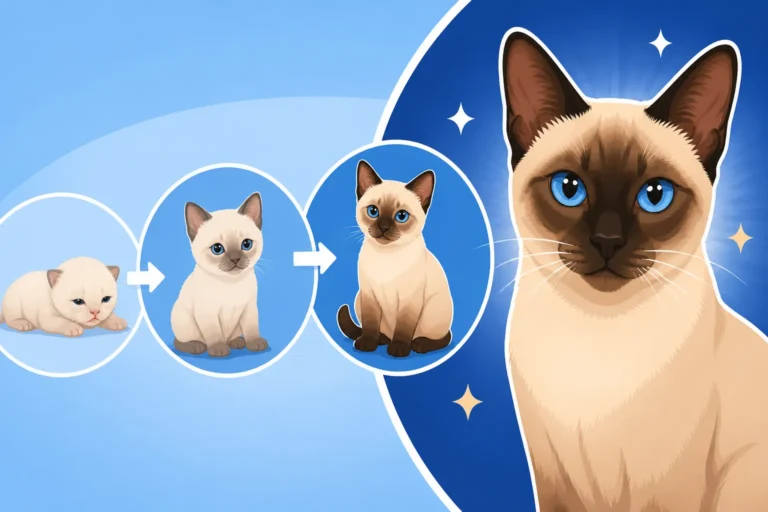
Typically, the first areas to show any sign of pigmentation are the nose leather and the paw pads. These are often followed closely by the very tips of the ears and the end of the tail. You might notice a very faint shading, a slight darkening that wasn't there before, almost like a shadow. It's not an instant transformation; rather, it's a gradual process, like watching a picture slowly come into focus. Each day, the color might seem a tiny bit more defined, a little richer.
The timeframe for this emergence can vary. Some kittens might show faint signs within a few days of birth, while others might take a week or two for the points to become noticeable. The full development of the point coloration, reaching its mature shade and intensity, won't happen overnight. It's a journey that extends over several weeks and even months. By the time they are around 3-4 weeks old, the points are usually distinct enough for an experienced eye to determine their general color, though the final shade will still take time.
This period of observation is one of the most charming aspects of raising a Siamese kitten. It's a constant delight to watch their true colors literally bloom before your eyes. You’ll see the delicate shading on their little faces slowly morph into the classic mask, and their once-pale paws take on their destined hue. If you're curious about the specific timeline, How Old a Siamese Cat Kitten Is When Points Show provides more detail on what to expect.
Why Temperature is Key for Point Development
The unique color of a Siamese cat isn't just a pretty pattern; it's a dynamic, living demonstration of genetic science interacting with the environment. The reason their points develop and deepen isn't solely about their internal genetic code, but how that code responds to the world around them. Temperature, both internal and external, plays an absolutely pivotal role in shaping their distinctive appearance.
This constant interplay means that a Siamese cat’s coat color isn't static. It's a reflection of their history – where they've slept, how warm their home is, and even temporary changes to their body. It's a fascinating aspect of their care and personality, reminding us that these cats are truly unique in the feline kingdom. Understanding this thermal sensitivity helps owners appreciate the nuanced beauty of their Siamese companion.
Environmental Factors and Color Intensity
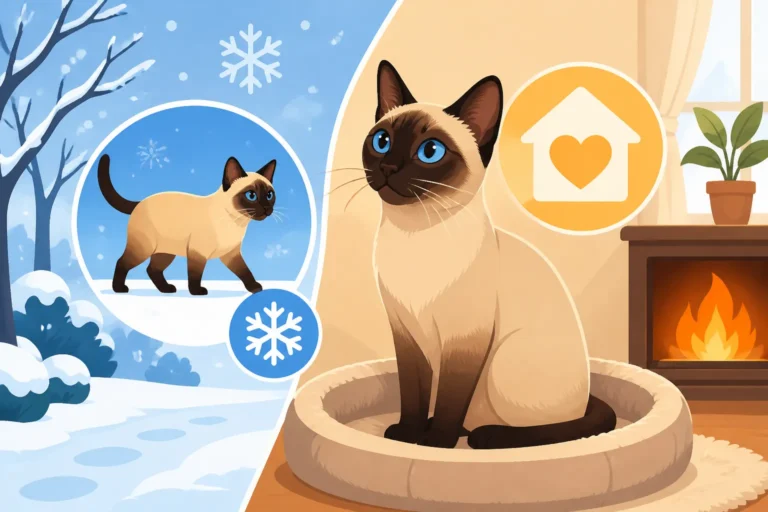
The environment in which a Siamese kitten is raised can have a noticeable impact on the intensity and speed of its point development. For instance, a kitten born and spending its early weeks in a cooler household or a region with naturally lower ambient temperatures might develop darker points more quickly and intensely than a kitten raised in a perpetually warm, tropical climate. The consistent exposure to cooler air encourages the tyrosinase enzyme to work overtime, laying down more pigment.
It's not just the absolute temperature that matters, but also the differential between the cat's core body temperature and the temperature of its extremities. This difference is what truly drives the contrast that defines the Siamese look. If a cat is consistently warm all over, even its points might be slightly lighter than those of a cat that experiences more variation in its environmental temperature, allowing the cooler areas to truly stand out.
Consider a hypothetical scenario: a Siamese kitten that loves to burrow under warm blankets or sleep in direct sunlight might temporarily have slightly paler points in those areas due to the localized warmth inhibiting pigment production. Conversely, a cat that enjoys exploring cooler parts of the house or even an outdoor cat (though indoor is always safer for Siamese) might develop richer, darker points. These are subtle changes, but they illustrate the principle beautifully. This is why many owners observe phenomena like How Much a Siamese Cat Darkens in a Cold House and How Much a Siamese Cat Lightens in a Warm House throughout their pet's life.
This environmental sensitivity is part of the charm and mystery of owning a Siamese. Their coat is a subtle barometer of their surroundings, constantly adjusting and developing. It makes each Siamese cat's coloration uniquely its own, influenced by both its genes and its personal lived experience of temperature.
The "Shaved Patch" Phenomenon and Other Color Changes
Perhaps one of the most dramatic and illustrative examples of the Siamese cat's temperature-sensitive genetics is what's commonly known as the "shaved patch" phenomenon. If a Siamese cat needs a patch of fur shaved, perhaps for surgery, an ultrasound, or a blood draw, you might notice something remarkable when that fur grows back: it often comes in significantly darker than the surrounding body coat.
This isn't a fluke; it's a direct, undeniable demonstration of the tyrosinase enzyme at work. When an area of fur is shaved, that patch of skin and the underlying tissue become temporarily cooler than the rest of the cat's core body. Without the insulating layer of fur, heat dissipates more rapidly from that spot. This localized drop in temperature is just enough to reactivate the heat-sensitive tyrosinase enzyme in the hair follicles of that shaved area, causing the new fur to grow back with a darker pigment. The body is essentially trying to re-insulate itself, and in the process, it activates color. For a deeper explanation, you can read The Shaved Patch That Grows Back Dark on a Siamese Cat.
This phenomenon isn't limited to intentional shaving. Any situation that causes a localized cooling of the body can have a similar effect. A long-term bandage, an ice pack applied for an injury, or even a chronic skin condition that leads to hair loss and exposure can result in darker fur growing back in that specific area. It's a constant, dynamic process, showing just how responsive their coloration is to even subtle thermal shifts.
The intriguing aspect is that this darker fur usually isn't permanent. As the fur grows back and provides insulation, or as the underlying reason for the cooling resolves, the area will eventually warm up again. Once the temperature returns to normal for that part of the body, new hair growth will revert to the paler body color. It's a fascinating, temporary tattooing by nature, unique to the pointed breeds, and a clear testament to their remarkable genetic makeup.
What to Expect as Your Siamese Kitten Grows
The journey of color development for a Siamese cat doesn't end after the first few months. Their coats are not static; they continue to evolve and deepen throughout their lives, adding another layer of intrigue to owning these magnificent creatures. This ongoing transformation is influenced by a combination of genetics, environmental factors, and simply the passage of time.
It's part of the unique bond you form with a Siamese, watching them change and mature, not just in personality but in appearance too. This section will prepare you for the beautiful, subtle shifts you’ll observe, ensuring you understand that their evolving coat is a sign of a healthy, aging cat, not a cause for concern.
Gradual Darkening and Maturation of Color
One of the most common observations among Siamese cat owners is that their cats tend to darken over time. While kittens start white and develop their points, the body fur, which begins as a pale cream or ivory, will gradually deepen in shade as the cat ages. This isn't just anecdotal; it's a well-documented characteristic of the breed, a natural progression in their unique coloration.
Several factors contribute to this age-related darkening. As cats get older, their metabolism can slow down slightly, potentially leading to a minuscule drop in overall body temperature, or at least a less efficient regulation of warmth. This subtle shift can allow the heat-sensitive tyrosinase enzyme to become slightly more active in areas that were previously too warm, leading to more melanin production across the body. Additionally, prolonged exposure to ambient temperatures over years simply gives the enzyme more opportunity to produce pigment.
You might notice that a Siamese cat at five or ten years old looks considerably darker than it did as a spry one-year-old. The creamy body might have transitioned to a soft fawn, tan, or even a light brown, depending on its genetic point color. A Seal Point, for example, might develop a deeper beige body, while a Lilac Point might go from a pristine white to a beautiful off-white or light mushroom gray. This darkening is entirely normal and a part of their natural aging process, lending them a dignified, mature look. For further reading, check out How Dark a Siamese Cat Gets With Age.
Embrace these changes! The gradual deepening of your Siamese's coat is a testament to their longevity and a unique aspect of their beauty. It means that the cat you share your life with today might look subtly different in a few years, adding another layer of charm and individuality to your beloved companion.
Predicting Your Kitten's Final Point Color
When you're looking at a litter of pristine white Siamese kittens, it can feel like a guessing game trying to figure out what their ultimate point color will be. Can you really tell a Seal Point from a Lilac Point when they all look like little snowballs? For the average person, it’s quite challenging to say for certain in the very early days. The subtle differences in the nascent pigment are often too faint for an untrained eye to distinguish.
However, experienced breeders usually have a very good idea of what colors to expect. This isn't magic; it comes from their deep understanding of the parents' pedigrees and genetic backgrounds. Knowing the genetic lineage allows them to predict the possible point colors that can be produced in a litter. Even with this knowledge, the precise shade and intensity can sometimes hold a little surprise, as individual environmental factors and even subtle genetic modifiers can play a role.
It's also worth noting that different point colors tend to emerge at slightly different rates and with varying degrees of initial visibility. Seal and Blue Points, which are genetically denser pigments, often show up faster and appear darker in those initial weeks. Chocolate and Lilac Points, being dilute colors, tend to take a bit longer to become clearly visible and appear as softer, warmer shades when they do emerge. This can mean a Lilac Point kitten might appear white for longer than a Seal Point sibling. Whether a Siamese Cat Kitten's Final Color Can Be Predicted discusses this further.
Ultimately, while the early weeks might be a bit of a mystery, patience is key. The joy comes from watching the colors slowly, beautifully bloom. By the time your kitten is a few months old, their point color will be clearly established, showcasing the unique genetic masterpiece that is your Siamese cat. It’s a wonderful aspect of their growth, a living masterpiece unfolding before your eyes.
The Myth of the "White Siamese" (and why it's not the same)
The initial white appearance of Siamese kittens sometimes leads to confusion about the existence of "white Siamese" cats. It's a common misunderstanding that needs clarification: while Siamese kittens are born white, they are not, and will not become, truly white cats in the same way a dominant white cat or an albino cat is white. This distinction is crucial for understanding the breed's genetics and avoiding potential misinformation.
The allure of a permanently white Siamese can be strong, leading to questions about rare variations or special breeding. However, it's important to differentiate between a temporarily unpigmented kitten and a cat whose genetics dictate a lifelong white coat. This section aims to clear up these misconceptions, emphasizing the fundamental truth of Siamese coloration.
True White Cats vs. Siamese Kittens
It's important to draw a clear distinction between a Siamese kitten, which is born white due to its temperature-sensitive albinism, and a true white cat. A true white cat owes its coloration to entirely different genetic mechanisms. These can include the dominant white gene (W), which masks all other color genes, or sometimes specific genes that result in complete albinism. A dominant white cat will remain white throughout its life, with no points developing, and often has blue eyes (though sometimes odd eyes or gold eyes, depending on associated genes like deafness).
A Siamese cat, by its very definition, possesses the Himalayan gene (cs gene) that dictates its pointed pattern. This means that every genuine Siamese cat will, without fail, develop points. It's not a matter of "if" they will get their color, but "when" and "how dark" those points will be. The white birth coat is simply a temporary phase, a consequence of the warm environment of the womb. Once exposed to cooler temperatures, the points begin to emerge, proving the cat's Siamese heritage.
Therefore, if a cat never develops any points and remains entirely white throughout its life, it is, by definition, not a Siamese cat. It might be a domestic short-haired cat with the dominant white gene, an Oriental Shorthair that happens to be white, or another breed entirely. While beautiful in their own right, these true white cats are genetically distinct from Siamese cats. The only exception would be a cat that is genetically Siamese (carrying the cs gene) but also carries the dominant white gene, in which case the dominant white gene would mask the points, making it appear entirely white. But even then, its underlying genetics are more complex.
This clarification is vital because sometimes individuals might mistakenly market a true white cat as a "rare white Siamese." Understanding the genetic basis helps you appreciate that the Siamese cat's journey from white kitten to pointed adult is a unique and defining characteristic of the breed, one that sets it apart from all other white-coated felines.
Why Health and Breeding Matters for Color
While the development of a Siamese cat's points is a fascinating and beautiful process, it's critical to remember that responsible breeding goes far beyond just predicting or influencing coat color. The primary focus for any ethical breeder must always be the health, temperament, and overall well-being of their cats. A kitten's initial white coat is a normal part of its development, but its long-term health is paramount.
When looking for a Siamese kitten, it’s far more important to inquire about the health screenings of the parent cats than to worry about how quickly the kitten's points are developing. Reputable breeders will be transparent about the health histories of their breeding lines, screening for common hereditary conditions that can affect Siamese cats. Things like hypertrophic cardiomyopathy (HCM) or progressive retinal atrophy (PRA) are far more significant than the shade of a point color. What a Siamese Cat Breeder Should Have Screened is an excellent resource for understanding these health considerations.
Furthermore, be wary of anyone who tries to sell you a "permanently white Siamese" as something rare or special. As we've discussed, a true Siamese will develop points. Such a claim often indicates either a misunderstanding of Siamese genetics or, unfortunately, a deliberate misrepresentation. While a very pale Lilac or Cream Point might appear almost white in warm conditions, they still possess the characteristic points upon closer inspection, especially on the nose and paw pads.
Ultimately, the beauty of a Siamese cat's coat is undeniably part of its appeal, but it should never overshadow health and ethical breeding practices. Focus on finding a kitten from a breeder who prioritizes robust health and a good temperament, and then enjoy the natural, beautiful unfolding of your Siamese's unique coloration as a bonus. The true joy of ownership comes from a healthy, happy companion.
Caring for Your Color-Changing Companion
Living with a Siamese cat is an experience filled with lively chatter, devoted companionship, and a fascinating, ever-so-subtly changing appearance. Since their coat color is so intrinsically linked to temperature, understanding how to best care for your Siamese involves more than just food and play – it also means considering their environmental comfort.
Don't worry, you don't need to live in a refrigeration unit to keep your Siamese looking perfectly pointed! But a mindful approach to their living conditions can contribute to their overall well-being and, as a bonus, showcase their beautiful coat to its fullest potential. This section offers practical advice for nurturing your unique, color-shifting feline friend.
Maintaining Optimal Environment for Your Siamese
Given that a Siamese cat's coat color is so influenced by temperature, it's natural to wonder if there's an "ideal" environment you should maintain. The good news is that no extreme measures are required! Generally, if your home is comfortable for you, it will be comfortable for your Siamese. They thrive in consistent, moderate indoor temperatures, avoiding extremes of heat or cold.
While you don't need to obsess over the thermostat, understanding their thermal sensitivity can help you ensure their comfort. Siamese cats are known for their sleek, short coats with very little undercoat, which means they can feel the cold more acutely than some fluffier breeds. Providing them with cozy, warm sleeping spots, especially during cooler months, is always appreciated. Think soft blankets, a sunny windowsill, or even a heated bed for ultimate comfort. Keeping a Siamese Cat Warm offers excellent tips on this.
Maintaining a relatively stable indoor temperature won't drastically alter their genetically determined point color, but it can help prevent their body fur from darkening too quickly. While age will naturally cause some body darkening, consistent warmth means the enzyme is less active on the body, preserving that lovely contrast longer. Think of it as gently nurturing their natural beauty.
Ultimately, providing a comfortable, safe, and stable indoor environment is paramount for any cat, and particularly appreciated by the temperature-sensitive Siamese. It ensures they are happy and healthy, which will always shine through in their vibrant personality and naturally beautiful coat, whatever shade it may be.
Grooming and General Care Considerations
When it comes to grooming, the Siamese cat's sleek, short coat is wonderfully low-maintenance, making them an excellent choice for owners who prefer less fuss. Unlike long-haired breeds that require daily attention to prevent mats and tangles, a Siamese cat typically needs only minimal assistance to keep their coat in pristine condition. Their short hair also means less shedding compared to many other breeds.
A quick brush a couple of times a week is usually sufficient to remove any loose hairs, distribute natural oils, and keep their coat shiny and healthy. You don't need fancy tools; a soft bristle brush, a rubber grooming mitt, or even just a damp cloth can work wonders. Many owners find their Siamese cats actually enjoy these short grooming sessions, turning them into a bonding opportunity. Products readily available from retailers like Chewy or Amazon make it easy to find suitable grooming tools, like a simple rubber curry brush that's gentle but effective. For comprehensive details, check out Grooming a Siamese Cat Takes Five Minutes a Week.
Beyond grooming, a high-quality diet plays an enormous role in maintaining a healthy coat and overall well-being. Good nutrition provides the essential fatty acids, vitamins, and minerals needed for healthy skin and fur. Whether you choose a premium kibble, wet food, or even a fresh food option, ensuring your Siamese receives a balanced diet will contribute to a vibrant, healthy coat that truly shines. Remember, a healthy cat is a beautiful cat, regardless of the nuances of its point color.
Finally, while the color changes are natural, always be observant of your cat's general health. Sudden, drastic changes in coat texture or excessive shedding not typical for the breed, or any accompanying signs of illness, should always warrant a visit to your veterinarian. While their color is a fascinating genetic trait, their overall health is always the most important aspect of their care.
Common Questions and Concerns About Siamese Kitten Color
It's completely normal to have questions and even a few worries when you first encounter the unique color development of Siamese kittens. Given how striking and defined their adult coloration is, the initial white stage can spark a lot of curiosity and sometimes, a little apprehension. You want to ensure your new family member is healthy and developing as expected.
This section aims to address some of those frequently asked questions and soothe common concerns. We'll reiterate that the "white start" is perfectly natural and explain what to do if you have genuine worries about your kitten's development. Understanding these points will help you confidently enjoy the transformation of your Siamese companion.
Is a White Kitten Healthy?
This is perhaps the most common question and concern new Siamese owners have when presented with a litter of uniformly pale kittens. Let me put your mind at ease immediately: yes, a white Siamese kitten is absolutely, unequivocally normal and healthy! It is precisely how Siamese cats are meant to begin their lives. Their initial lack of pigment is a genetic hallmark of the breed, not a defect or a sign of illness.
The absence of color at birth is a direct consequence of the warm uterine environment suppressing the activity of the temperature-sensitive tyrosinase enzyme. As discussed earlier, it’s a temporary physiological state. Once the kitten is born and exposed to cooler ambient temperatures, the enzyme will activate in the extremities, and the points will gradually begin to appear. This process is part of their healthy development, not an indicator of a problem.
When assessing the health of a white Siamese kitten, focus on the universal signs of a thriving young cat. Look for alertness, playfulness, a good appetite, clear bright eyes, and a healthy weight for its age. Their breathing should be regular, and they should be active and curious. These are the true indicators of a healthy kitten, regardless of its initial coat color. A reputable breeder will also be able to provide health records and demonstrate a history of robust health in their breeding lines.
So, if you bring home a snow-white Siamese kitten, celebrate its unique start! It's a beautiful, natural part of its journey to becoming the strikingly pointed cat you anticipate. The white fur itself is not a cause for concern, but if you have any worries about your kitten's general well-being or behavior, a visit to your veterinarian is always a wise decision.
What if the Points Don't Develop?
While it's exceedingly rare for a purebred Siamese cat to never develop its points, it's a concern that sometimes crosses a new owner's mind. After all, if they start white and their unique genetics mean they should get points, what happens if they don't? Generally, if a cat truly never develops any points at all, it's highly probable that it isn't a purebred Siamese, or it might carry a different genetic mutation (like the dominant white gene) that masks the point coloration.
In reality, for a true Siamese, the points will develop. Sometimes, however, they can be incredibly faint, especially in very pale point colors like Lilac or Cream Points, or if the kitten has been kept in a particularly warm environment during its crucial early weeks. These lighter points might take longer to become clearly visible and may never reach the same depth of color as a Seal Point, for example. Patience is genuinely a virtue here, as some points might take several months to fully bloom.
If you've waited several months, and your "Siamese" kitten remains completely white without any discernible darkening on its ears, nose, paws, or tail, it's a good idea to revisit your kitten's pedigree papers and communicate with the breeder. A reputable breeder should be able to provide documentation of parentage and ideally, show you photos of other kittens from similar pairings or previous litters to illustrate their typical development. For guidance on what to expect from a breeder, consider What a Siamese Cat Breeder Should Have Screened.
In such an extremely rare scenario, a veterinarian might be able to confirm the absence of melanin production in the extremities, but typically, the white appearance of a Siamese kitten is just a transient phase. Trust in the genetics of this remarkable breed; the points are almost certainly there, just waiting for the right conditions to reveal their full, elegant glory.
Disclaimer
This article is for general informational purposes only and does not constitute professional advice. Laws, prices and regulations vary by location and change over time. Consult a qualified professional for guidance on your specific situation.