Whether a Puzzle Feeder Slows a Siamese Cat
If you're a Siamese cat owner, you've probably witnessed it: your beautiful, sleek feline friend devouring their meal in mere seconds, only to look up at you expectantly, or worse, regurgitate their hastily eaten dinner. This incredibly fast eating can be a real headache, leading to digestive issues and leaving your intelligent cat bored and under-stimulated. This guide will dive into why your Siamese eats so quickly, how puzzle feeders can be a game-changer, and how to choose and introduce the best options to turn mealtime into a rewarding activity rather than a speed-eating contest.
The Siamese Cat's Voracious Appetite: Why They Eat So Fast
It's not just your imagination; many Siamese cats truly seem to inhale their food. This isn't necessarily a fault in their character, but rather a combination of their unique physiology and deep-seated instincts. Understanding these factors can help you appreciate why they behave this way and how to best address it.
Instinctual Drive and Metabolism
Siamese cats are renowned for their lean, athletic builds and boundless energy. This isn't just an aesthetic trait; it's indicative of a highly efficient, fast metabolism that burns through calories at an impressive rate. For these active felines, food is fuel, and their bodies are wired to consume it quickly to keep their internal engines running optimally. You might have noticed your Siamese darting around the house with bursts of energy, playing intensely, or vocalizing with gusto – all activities that expend a lot of energy and necessitate rapid refueling. This fast metabolic rate means they feel genuine hunger more frequently and intensely than some less active breeds, prompting them to eat with a sense of urgency.
Beyond their metabolism, their wild ancestors had to hunt for every meal, and the process of catching and consuming prey was a vital part of survival. While our beloved house cats don't need to stalk a mouse to get their dinner, that primal programming remains strong. A bowl of kibble, to a Siamese, can represent a valuable resource that, in their instinctual mind, could be snatched away if not consumed swiftly. This innate drive, combined with their naturally energetic disposition, often means they're not ones for leisurely dining. They dive in with enthusiasm, which, while endearing, can lead to digestive upset, such as vomiting shortly after eating, or simply not feeling truly satisfied because the meal was over before their brain registered fullness. It’s a common scenario: your Siamese finishes their plate in under a minute, then looks at you as if to ask, "Is that all there is?" This hurried eating often involves swallowing a lot of air, which can contribute to gas and discomfort.
The Link Between Boredom and Eating Speed
Siamese cats are incredibly intelligent creatures, and with that sharp mind comes a need for significant mental and physical engagement. A Siamese who isn't sufficiently stimulated can quickly become bored, and boredom, for a cat, often manifests in various undesirable behaviors. Sometimes, this includes turning to food as a form of entertainment or comfort. If their day consists largely of napping, and then suddenly a bowl of food appears, only to vanish just as quickly, it hardly provides the rich cognitive challenge their breed craves. The act of eating becomes a fleeting distraction rather than an engaging, fulfilling activity. This can be particularly true if your Siamese spends extended periods alone; the arrival of food can become the primary highlight of their day, leading them to rush through it in a desperate attempt to prolong the excitement, only to find it gone in an instant.
Consider a common scenario: you prepare their meal, and before you've even fully turned away from the food bowl, your Siamese has finished and is now pacing, vocalizing, or perhaps even initiating mischievous behaviors like batting at objects or exploring forbidden countertops. This isn't necessarily due to continued hunger; it's often a clear signal that their intelligent minds are not adequately occupied. They yearn for a "job," and historically, the most natural job for a cat is hunting and foraging for its food. When mealtime lacks this inherent challenge, eating becomes a mechanical, rapid process that fails to provide the mental workout they deeply desire. This leaves them with a surplus of mental energy that can then translate into demanding attention, excessive meowing—that distinctive What the Siamese Cat's Meezer Yowl Sounds Like—or even destructive actions, as explored in What a Bored Siamese Cat Destroys.
When meals are served in a straightforward bowl, the entire process is devoid of problem-solving. This can create a cycle where the cat eats rapidly, becomes bored again almost immediately, and then continues to seek out attention or additional food, even if their caloric needs have been met. This isn't solely about managing their weight; it’s fundamental to their overall happiness and behavioral health. A Siamese that is actively engaged during mealtime often emerges from the experience feeling much more content and calm, having satisfied both their physical hunger and their mental drive.
How Puzzle Feeders Work to Slow Down a Siamese Cat
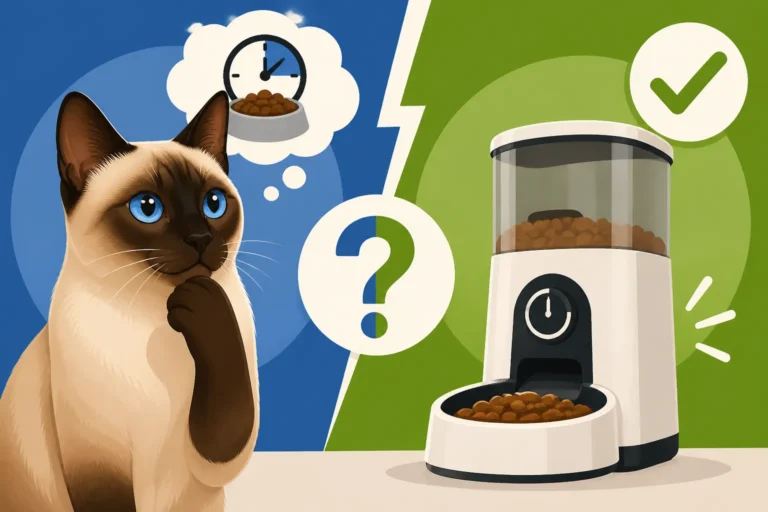
Puzzle feeders are a brilliant invention for breeds like the Siamese, perfectly designed to combat rapid eating by engaging their natural instincts and intellect. They transform mealtime from a quick gulp into an enriching activity.
Engaging Their Natural Hunting Instincts
At its core, a puzzle feeder is designed to simulate the natural hunting and foraging behaviors that cats have evolved over millennia. In the wild, a cat never encounters a ready-made bowl of food; they must actively stalk, chase, pounce, and manipulate their prey to secure a meal. This entire process is incredibly stimulating, both physically and mentally. When you introduce a puzzle feeder, you're essentially bringing a scaled-down version of this primal hunt into your home. Your Siamese is required to problem-solve: how to extract the kibble from intricate mazes, through various obstacles, or out of cleverly designed compartments. This forces them to slow down considerably, as each piece of food demands effort, thought, and physical dexterity.
Instead of consuming their entire portion in one frantic rush, they must bat, paw, nudge, or slide the feeder to release individual pieces of kibble. This extends mealtime from what could be a mere minute or two into a focused engagement lasting ten, fifteen, or even twenty minutes. This extended duration allows their brain to catch up with their stomach, giving their body time to register fullness more effectively. It turns a mundane necessity into a form of active play and mental exercise. I've often observed even the most food-driven Siamese cats shift their approach dramatically once they understand they need to employ their intelligence, rather than just brute speed. It’s fascinating to watch them concentrate, their large ears twitching, eyes fixed on the task, like a tiny predator meticulously working for its prize.
This deep engagement is particularly crucial for a highly intelligent breed like the Siamese. They thrive on challenges and derive immense satisfaction from solving problems. A puzzle feeder provides a consistent, rewarding challenge that not only satisfies their intrinsic hunting drive but also offers a positive outlet for their high energy levels within the safety and comfort of your home. If you've noticed your Siamese constantly seeking out mischief, getting into cabinets, or being overly insistent on interactive play, a puzzle feeder could very well be the "job" they’ve been craving. It truly transforms a basic daily activity into a deeply enriching and fulfilling experience for them. How Much Play a Siamese Cat Needs reinforces the idea that these cats need constant engagement.
Different Types of Puzzle Feeders
The market for puzzle feeders is surprisingly vast and varied, offering a solution for every feline personality and level of cleverness. You'll find everything from basic designs to highly intricate, multi-stage challenges. This diversity means you can usually find something that perfectly suits your Siamese cat's needs and keeps them engaged.
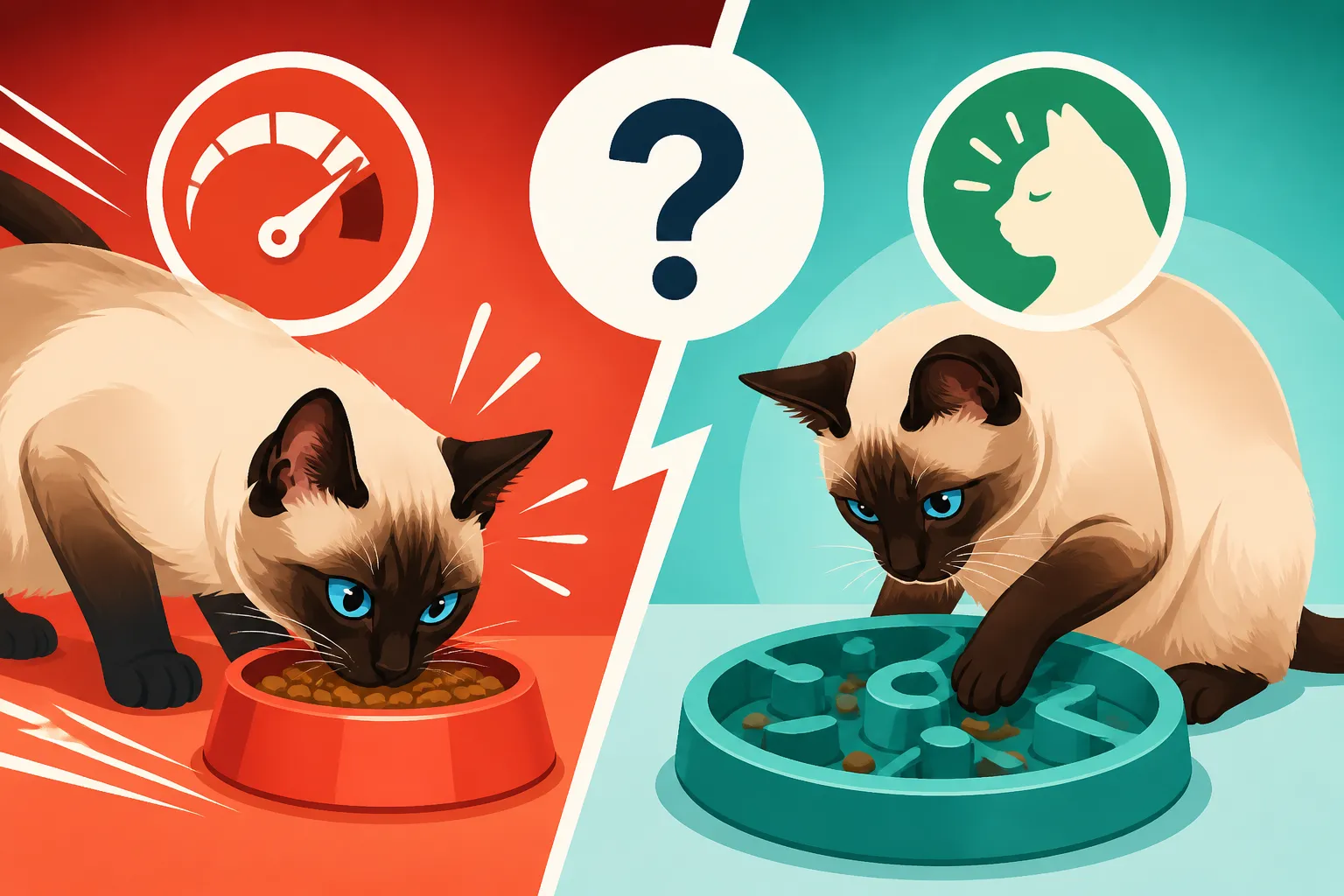
A great starting point for many cats is a "slow-feed bowl." These aren't traditional puzzles but bowls designed with internal ridges, bumps, or maze-like patterns that prevent a cat from gulping large mouthfuls of food. They physically separate the kibble, forcing the cat to work around the obstacles with their tongue or paws. These are ideal for introducing the concept of slower eating without overwhelming a cat that’s new to the idea. They're often made of ceramic or sturdy plastic and are usually easy to clean.
Moving up the complexity scale, you’ll find more interactive puzzle feeders that require your cat to actively manipulate parts to release food. These might include feeders where your Siamese has to bat at balls, push sliders, or flip levers. Some popular designs include towers with multiple levels where kibble falls through openings as the cat paws at it, or flat trays with various nooks and crannies to explore. These are fantastic for encouraging fine motor skills and strategic thinking. Then there are dispensing toys, which are hollow balls or other shapes that release a few pieces of kibble as your cat bats them around the room. These are particularly great because they combine mental stimulation with physical activity, turning mealtime into a playful hunt. Imagine your Siamese chasing a rolling ball, and every now and then, a tasty morsel drops out—it’s a full-body workout and a brain teaser all in one! You can find a huge selection of these on platforms like Chewy and Amazon, with options ranging from simple, single-opening designs to more intricate ones that require more precise movements. Which Toys a Siamese Cat Actually Plays With lists other items they might enjoy.
For the truly advanced or exceptionally intelligent Siamese, there are multi-level or "game board" style feeders that demand a higher degree of problem-solving. These might involve a sequence of actions: pushing a button, then sliding a panel, and finally pawing food out of a narrow channel. These are like mini-quests for dinner and can keep a Siamese engaged for a significant amount of time. The key with all types is to observe your cat's reactions. Too easy, and they might still eat too fast; too difficult, and they might become frustrated and abandon the feeder altogether. The goal is to find that sweet spot of challenge that keeps them interested and stimulated without causing discouragement.
Here's a quick overview of common puzzle feeder types:
| Puzzle Feeder Type | Description | Difficulty Level | Best For | Common Materials |
|---|---|---|---|---|
| Slow-Feed Bowl | Bowl with ridges/obstacles to separate kibble. | Easy | Beginners, slightly fast eaters, wet food | Plastic, Ceramic, Stainless Steel |
| Dispensing Ball/Toy | Hollow toy that releases kibble when batted/rolled. | Easy to Medium | Encouraging movement, dry kibble, active cats | Plastic |
| Maze/Tower Feeder | Multi-level design where cat paws kibble down/out. | Medium | Cats who enjoy batting, dry kibble, mental stimulation | Plastic |
| Slider/Tray Feeder | Flat board with covers that cat slides to reveal food. | Medium to Hard | Intelligent cats, problem-solvers, dry kibble/treats | Plastic, Wood |
| Foraging Mat | Fabric mat with folds/pockets to hide food. | Easy to Medium | Nose-work, smaller kibble, any cat | Fabric |
Choosing the Right Puzzle Feeder for Your Siamese
Selecting the perfect puzzle feeder for your Siamese involves a bit more than just picking the prettiest one off the shelf. Given their intelligence and specific needs, thoughtful consideration of a few key factors will make all the difference in its success.
Factors to Consider: Material, Difficulty, and Cleaning
When you're ready to invest in a puzzle feeder for your quick-eating Siamese, several practical considerations will help you make the best choice. First and foremost, think about the material. You want something durable enough to withstand a determined Siamese's paws and teeth, yet non-toxic and safe for them to interact with daily. Most feeders are made from sturdy, food-grade plastic, which is generally lightweight and easy to mold into intricate designs. However, you can also find options in silicone, which is softer and more flexible, or even ceramic, which is heavier and more stable but can be brittle. Ensuring the material is food-safe is paramount, as your cat will be directly contacting it with their mouth and paws.
Equally important is ease of cleaning. Food residue, especially if you're using wet food or treats, can accumulate quickly in the nooks and crannies of a puzzle feeder, creating a breeding ground for bacteria. Look for feeders that can be easily disassembled, have wide openings, or are explicitly labeled as dishwasher-safe. A puzzle feeder that’s too complicated to clean will quickly become unsanitary and defeat its purpose. You certainly don't want a clever device that ends up jeopardizing your cat's health because you can't keep it hygienic.
Next, consider the difficulty level. While Siamese cats are incredibly intelligent, you don't want to start with a feeder that's so complex it causes immediate frustration. Think of it as teaching a new skill – you start with basics and build up. Begin with a relatively easy feeder, such as a simple slow-feed bowl with shallow ridges or a dispensing ball with larger, more forgiving openings. This allows your Siamese to experience quick success and build confidence. As they master the initial challenge and show increased interest, you can gradually introduce more complex designs with smaller openings, more intricate mazes, or multi-step mechanisms. It’s a learning journey, and positive reinforcement through achievable goals is essential. An initial defeat might cause them to give up on puzzle feeders entirely. How Clever a Siamese Cat Is gives you an idea of their capabilities, but patience is still key.
Finally, consider the size and stability of the feeder. An energetic Siamese can easily knock over a lightweight or small feeder, scattering food everywhere and completely undoing your efforts to slow them down. Look for options with a wide, stable base or non-slip feet. The openings and compartments should also be appropriately sized for your cat's kibble – too small, and the food won't dispense; too large, and it won't provide enough challenge to slow them down effectively. Online retailers like Chewy and Amazon often provide detailed product specifications and customer reviews that can be invaluable in assessing these practical aspects before you buy. Remember, the ultimate goal is to make mealtime an engaging and rewarding challenge, not an exercise in frustration.
Introducing the Puzzle Feeder Successfully
Introducing a new feeding method, especially one that requires effort, needs a strategic and patient approach, particularly with a smart and sometimes opinionated Siamese. You can't just swap out their regular bowl for a puzzle feeder and expect instant acceptance. Start slowly and make the transition a positive one.
Begin by placing a small amount of their favorite dry kibble or a few high-value treats in the easiest parts of the puzzle feeder. Think of this as "baiting" the feeder. You can even place the puzzle feeder right next to their regular food bowl, or for a slow-feed bowl, integrate it as an insert within their existing setup. The objective here is to allow your Siamese to investigate the new object, discover it contains treats, and experience immediate success without feeling threatened or deprived. This initial positive association is crucial. The idea is to associate the feeder with yummy rewards and fun, not with hunger or frustration.
For the very first few sessions, you might even need to "seed" the feeder more generously, making sure there are pieces of kibble visibly and easily accessible. You could gently nudge the feeder yourself to demonstrate how a piece might fall out, without making it a scary or confusing experience for your cat. Once your Siamese shows interest and begins to successfully retrieve food, you can gradually reduce the amount of food in their traditional bowl and increase the portion within the puzzle feeder. Over time, as they become proficient and comfortable, you can transition all their dry food meals to the puzzle feeder. Patience is truly key during this phase; some Siamese cats will take to it instantly, while others may need a few days or even weeks to fully adjust and embrace the challenge. Don't get discouraged if they don't get it right away.
If at any point your Siamese seems reluctant, frustrated, or simply ignores the puzzle feeder, don't force it. This is a sign to step back and re-evaluate. Try a different type of feeder, or perhaps simplify the current one even further. You could also try using it only for a portion of their meal, or as a fun treat dispenser between meals, to continue building those positive associations without it being their sole food source. Remember, the aim is to make mealtime an enjoyable and engaging activity, not a stressful one. Some experienced owners find that rotating through a few different types of puzzle feeders helps keep their Siamese continually challenged and interested, preventing boredom with a single design. This keeps their clever minds guessing and their mealtime enriching.
Beyond Slower Eating: Additional Benefits and Considerations
While the primary goal of a puzzle feeder for a Siamese cat is often to slow down rapid eating, the advantages extend far beyond just digestion. These feeders offer a host of benefits that contribute significantly to a Siamese cat's overall well-being.
Mental Stimulation and Reduced Behavioral Issues
The benefits of incorporating puzzle feeders into your Siamese cat's routine go far beyond merely mitigating fast eating. For a breed as exceptionally intelligent and energetic as the Siamese, adequate mental stimulation is absolutely paramount for their overall health and happiness. A puzzle feeder provides this in spades, acting as a consistent "job" that channels their sharp minds and innate problem-solving abilities into a productive and rewarding activity. This sustained engagement can dramatically reduce boredom, which, as many Siamese owners can attest, is often the underlying cause of various unwanted behaviors. Instead of resorting to curtain-climbing, incessant Why a Siamese Cat Meows So Much, or destructive acts, your Siamese might be calmly and contentedly engaged in working for their meal.
Many Siamese owners report a noticeable decline in problematic behaviors such as excessive vocalization, destructive scratching, or even signs of anxiety once puzzle feeders become a regular part of their day. A cat whose mind is consistently engaged and satisfied is generally a calmer, happier, and more content feline. It provides a healthy outlet for their abundant mental energy, effectively mimicking the cognitive demands of hunting. This isn't just theoretical; I've personally observed cats who previously demanded constant attention or woke their owners at inconvenient hours become significantly more settled and well-adjusted once they had the regular mental workout that a puzzle feeder provides. It helps them to feel genuinely fulfilled, a crucial component for a breed that thrives on interaction and challenges.
Furthermore, for Siamese cats prone to overeating or quickly gaining weight, a puzzle feeder can be an invaluable tool for promoting healthy portion control and effective weight management. By requiring them to actively work for each piece of kibble, it naturally slows down their consumption and can help them feel satiated for longer, as the meal itself is extended. This prolonged engagement can effectively prevent them from eating purely out of boredom, a very common issue for indoor cats who might otherwise lack sufficient mental stimulation. It represents a holistic approach to their care, simultaneously addressing their physical digestive needs and their critical mental and behavioral requirements. How to Feed a Siamese Cat That Begs Constantly offers more solutions if you deal with a very food-motivated cat.
Potential Challenges and Troubleshooting
While puzzle feeders are a fantastic tool, they aren't a one-size-fits-all solution, and you might encounter a few minor hurdles along the way. One of the most common challenges is that some cats, especially highly food-motivated Siamese, can become frustrated if the puzzle is too difficult or if they aren't quickly rewarded for their efforts. If you observe your cat giving up too easily, batting at the feeder aggressively out of annoyance, or simply walking away and ignoring it, these are clear indicators that the challenge level might be too high. In such cases, it's crucial to simplify the puzzle. This could mean starting with an easier type of feeder, using highly palatable, high-value treats initially, or even manually showing them how to extract food a few times. The goal is to build their confidence and success, not to discourage them; an early negative experience can make them wary of puzzle feeders in the future.
Another critical consideration, often overlooked, is hygiene. As we've discussed, if you're not diligent about regularly cleaning the puzzle feeder, particularly if you're using wet food or sticky treats, it can quickly become a breeding ground for bacteria. This is especially important for Siamese cats who might be prone to feline chin acne or other skin sensitivities around their face. Always make sure to select feeders that are designed for easy cleaning, ideally those that can be disassembled easily or are safe for the dishwasher. Commit to a consistent cleaning schedule; treating it like you would your own dinnerware is a good rule of thumb to ensure your cat's health.
Finally, it's important to remember that not every cat will embrace every type of puzzle feeder, and that's perfectly normal. Some Siamese cats might prefer stationary bowls with internal mazes, others might be captivated by dispensing toys that roll and require active play, while some may only engage with specific textures or designs. It often requires a bit of trial and error to discover what truly resonates with your individual Siamese. Don't be afraid to experiment with different brands or styles available from retailers like Chewy or Amazon. The initial investment in a few different types of feeders is typically quite small when weighed against the long-term benefits of a happier, more engaged, and healthier cat. The key is perseverance and flexibility; keep trying until you find the sweet spot that makes mealtime a joyous and stimulating experience for your beloved Siamese. You might find even more Enrichment for a Siamese Cat That Gets Bored in an Hour by exploring various options.
Disclaimer
This article is for general informational purposes only and does not constitute professional advice. Laws, prices and regulations vary by location and change over time. Consult a qualified professional for guidance on your specific situation.