How Much a Siamese Cat Lightens in a Warm House
Many Siamese cat owners find themselves wondering why their beloved feline's beautiful coat seems to shift in hue, sometimes looking lighter than it did before. This isn't your imagination! A Siamese cat's striking color pattern is directly influenced by temperature, and a consistently warm house can absolutely lead to a noticeably paler coat, which this guide will explain in detail.
The Unique Science Behind Siamese Cat Coloration
The magic behind a Siamese cat's distinctive "points" – those darker areas on their ears, face, paws, and tail – and their ever-so-slightly changing body color isn't magic at all; it's fascinating genetics at play. Understanding this scientific marvel is key to appreciating why your Siamese might appear lighter in a cozy home.
The Tyrosinase Enzyme and Temperature Sensitivity
At the heart of a Siamese cat's unique coloring is a specific genetic mutation. This mutation affects the tyrosinase enzyme, which is crucial for producing melanin, the pigment responsible for coat color. Unlike in most other cats, the tyrosinase enzyme in a Siamese cat is temperature-sensitive. This means it only works efficiently at cooler body temperatures.
Think of it like a tiny, built-in thermometer for pigment production. In areas where a Siamese cat's body is naturally cooler, like the extremities – the ears, the tip of the nose, the paws, and the tail – the enzyme is active and produces plenty of melanin. This results in the characteristic dark points. However, on the warmer parts of their body, closer to their core temperature, the enzyme becomes less active or even inactive, leading to less pigment production and a lighter, creamier body coat. This is the fundamental reason A Siamese Cat's Points Are Made by Temperature.
Why Siamese Cats are Born White
One of the most charming facts about Siamese cats is that they are all born pure white or a very pale cream. This often surprises new owners who expect a kitten to already display its seal, blue, chocolate, or lilac points. The reason for this pristine, uncolored birth coat ties directly back to the temperature-sensitive tyrosinase enzyme.
While nestled in their mother's womb, kittens are kept at a uniformly warm and consistent temperature. This warm environment effectively "switches off" or severely inhibits the tyrosinase enzyme across their entire body, preventing any melanin from being produced. Therefore, without active pigment production, every Siamese kitten enters the world looking like a little snowball. It’s only after they are born and exposed to the cooler ambient temperatures of the outside world that their points begin to develop, slowly darkening over the first few weeks and months of their lives. Why a Siamese Cat Kitten Is Born White really highlights this early stage of development.
Point Colors and Their Development
While all Siamese cats share this temperature-dependent gene, the specific type of point color they develop depends on other underlying genetic factors. The most common and widely recognized point colors are seal, blue, chocolate, and lilac, though other variations like red point and lynx point also exist (though some registries classify these as Colorpoint Shorthairs, not true Siamese).
- Seal Point: This is the most classic and darkest point color, appearing as a deep, rich brown-black on the extremities, with a warm cream or fawn body.
- Blue Point: A dilute version of seal, resulting in slate-grey points and a bluish-white body.
- Chocolate Point: A lighter, warmer brown point color, often compared to milk chocolate, with an ivory or creamy white body.
- Lilac Point: The dilute version of chocolate, presenting as a frosty grey or pinkish-grey points with a magnolia white body.
Regardless of the specific point color, the process of development remains the same: the cooler areas of the body will produce more pigment. As a kitten grows, its points will gradually deepen in color. A kitten born with the genetics for seal points will typically show visible darkening sooner and more intensely than a kitten genetically destined for lilac points, simply because the underlying pigment is inherently darker. The color will continue to develop and can even deepen slightly for the first couple of years of life, and then, as we'll explore, shift based on environmental factors. What Point Coloration in a Siamese Cat Is offers a fantastic overview of these variations.
How Indoor Temperature Influences Coat Color
Now that we understand the science, let's talk about the practical side of things: how your home environment directly affects your Siamese cat's coat. It's a common observation among Siamese owners, and it's all about that sensitive tyrosinase enzyme.
The Impact of a Consistently Warm Environment
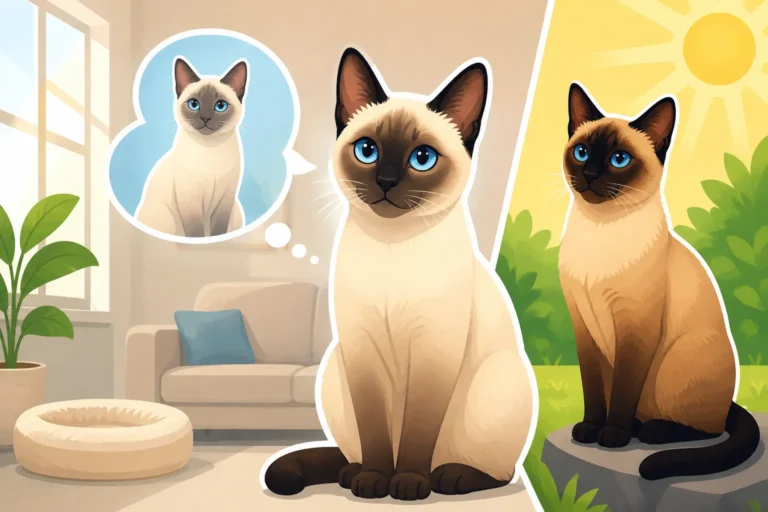
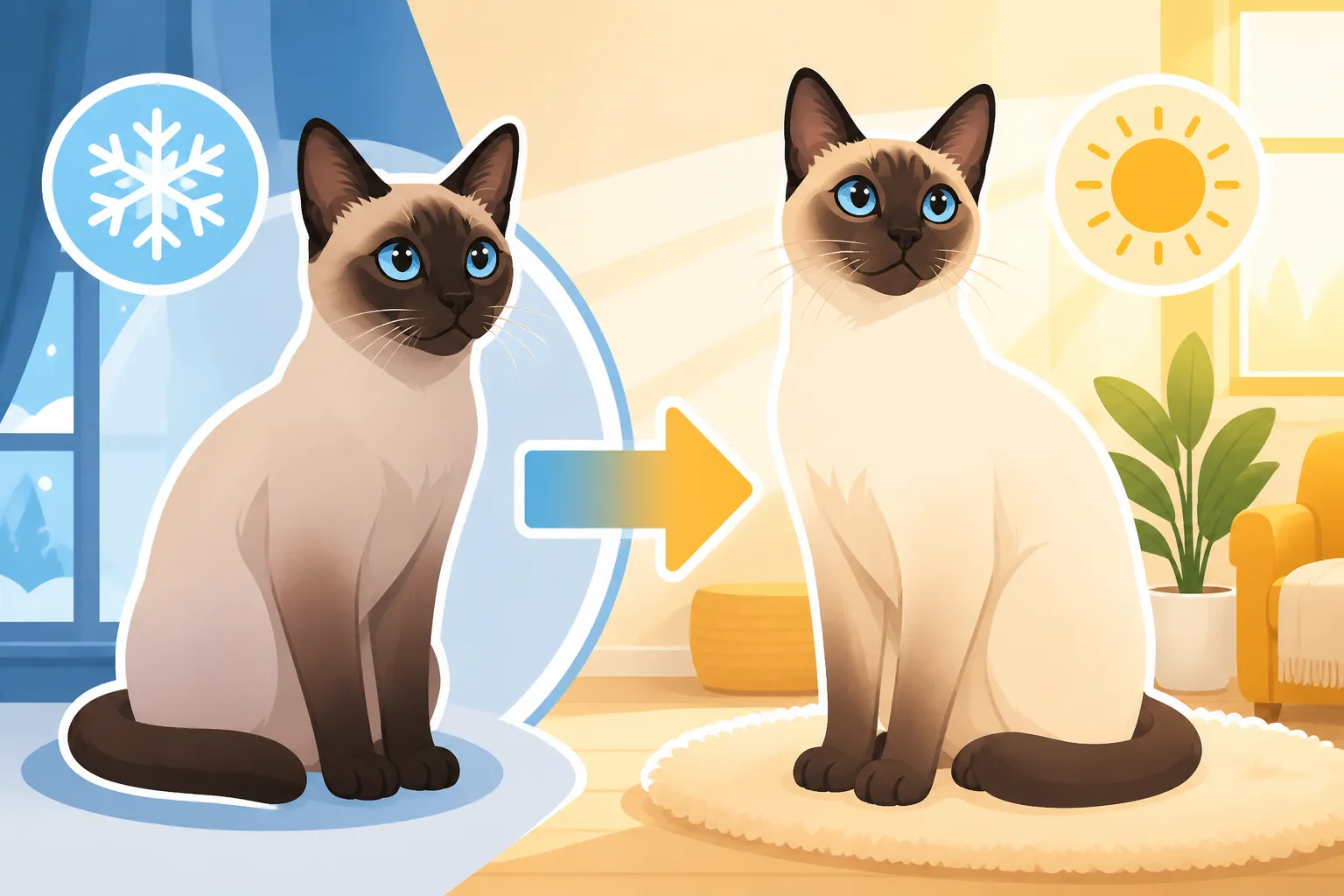
If you keep your home consistently toasty, especially during the colder months, you might notice your Siamese cat’s body coat remaining lighter or even becoming paler than you’ve seen it before. The reason is straightforward: if the ambient temperature around your cat's main body is perpetually warm, the tyrosinase enzyme won't be as active there. This reduces the amount of melanin produced, leading to a lighter overall body color.
Imagine a Siamese cat living in a climate-controlled home where the temperature rarely dips below a comfortable 75-78°F (24-26°C) year-round. This cat would likely maintain a much paler body coat compared to a Siamese living in a drafty old house with fluctuating temperatures. The warmer the environment, the less pigment is produced across the cat's torso, flanks, and belly. These are the areas most susceptible to lightening due to warmth, while the extremities (ears, nose, paws, tail) will largely retain their darker point coloration because they are naturally cooler than the core body. It's a subtle but definite effect.
Seasonal Changes and Coat Lightening
Many Siamese owners report seeing their cats get a little darker in winter and lighter in summer. This isn't just a trick of the light; it's a direct reflection of seasonal temperature changes impacting their unique coat. Why a Siamese Cat Darkens Every Winter delves into the opposite effect, but it truly illustrates the same principle.
When summer arrives, and the temperatures rise, your cat's body temperature, and the surrounding air, will also increase. This warmer environment can cause the tyrosinase enzyme to slow down even further, leading to a reduction in pigment production. Consequently, the fur that grows in during the warmer months will be lighter. You might notice your cat's cream or ivory body turning almost white, especially on their sides and back, as the summer progresses. Conversely, when the cooler temperatures of autumn and winter set in, the enzyme becomes more active again, and the new fur growing in will be darker, leading to that rich winter coat. This beautiful, natural fluctuation is one of the charming aspects of owning a Siamese.
Factors Beyond Ambient Room Temperature
While the general ambient temperature of your home is a major player, it's not the only factor that influences your Siamese cat's coat color. Individual habits and comfort spots also contribute to localized color shifts.
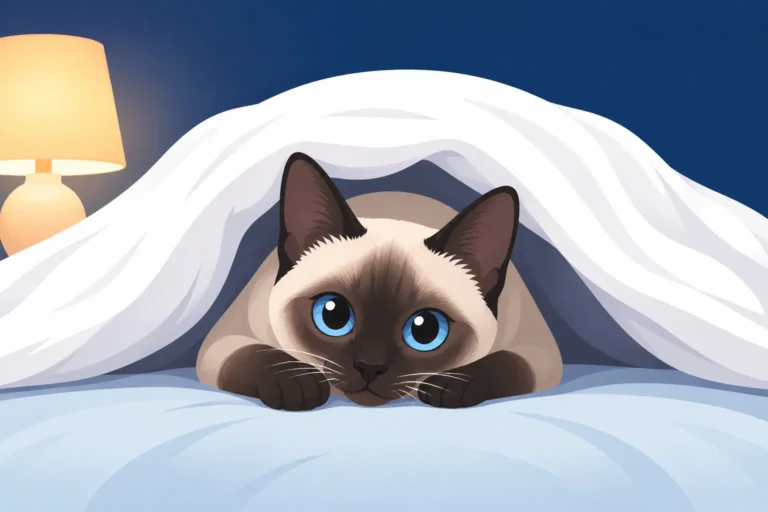
Consider where your cat loves to nap. Does your Siamese spend hours sunbathing in a warm window, curled up on a heated cat bed, or snuggled under a blanket? These consistently warm areas on their body will further inhibit pigment production. A cat that perpetually seeks out the warmest spots might have a slightly paler belly or a lighter patch on their back where the sun hits the most. Conversely, a cat that loves to sprawl out on cool tile floors might retain a slightly darker undercoat. Even their own individual body temperature can play a role. A cat that tends to run a little warmer naturally might always have a slightly paler body coat than a cat of the same genetics who runs a bit cooler. These micro-climates created by their habits and chosen sleeping spots contribute to the unique tapestry of their coat color.
Observing Color Changes in Your Siamese Cat
It's truly a delight to watch the subtle shifts in your Siamese cat's coat. They're like living canvases, their colors subtly changing with the seasons, their age, and even their favorite sleeping spots. But it's important to know what to expect and what those changes really mean.
Gradual Shifts vs. Dramatic Changes
The color changes in a Siamese cat due to temperature are almost always gradual. You're not going to wake up one morning and find your seal point has suddenly turned into a lilac point. Instead, you'll observe a slow, subtle lightening of the body fur over weeks or months, especially if there's a sustained change in environmental temperature, such as the transition from winter to summer. The effect is often more noticeable when comparing photos taken several months apart.
It's also important to distinguish these temperature-induced changes from the natural darkening that many Siamese cats experience with age. As a Siamese cat gets older, their tyrosinase enzyme might become slightly more active or simply have more time to lay down pigment, leading to a general deepening of their body color, particularly on their back and sides. This is a common and normal part of aging for the breed. So, if your cat seems to be getting darker overall, it might be age, but if specific areas lighten during warmer periods, that's likely the temperature at work. Why an Older Siamese Cat's Body Goes Brown covers this aspect of aging.
Areas Most Affected by Warmth
When it comes to lightening due to a warm environment, the prime real estate for these changes is typically the main body of the cat. Think of their torso, flanks, back, and belly. These are the largest surface areas, and they are also the warmest parts of the cat's body, where the temperature-sensitive enzyme is most prone to inactivation by heat.
The characteristic "points" – the ears, mask, lower legs, paws, and tail – are naturally the coolest parts of a Siamese cat's body. Because of this, the tyrosinase enzyme in these areas generally remains active enough to produce strong pigmentation, even if the rest of the house is quite warm. You might see a slight softening of the contrast between the points and the body in a very warm environment, but the points themselves usually retain their distinct dark hue. It’s the canvas in between those points that gets painted with lighter shades when the heat is on! How Much a Siamese Cat Lightens in Summer offers more insights into this seasonal phenomenon.
Documenting Your Cat's Color Journey
For many Siamese owners, tracking these color changes becomes a fun hobby. Since the shifts are often subtle and occur over time, it can be hard to remember exactly how light or dark your cat was at a particular point. This is where a simple practice of taking regular photos can be incredibly rewarding.
Try to take a photo of your cat in similar lighting conditions every few months, or perhaps at the start of each new season. Focus on capturing their entire body, not just close-ups of their face. Over a year or two, you'll build up a fascinating visual diary of their color journey. You'll be amazed to see how their coat truly does adapt to the changing temperatures in your home. This practice also helps you notice any unusual or rapid color changes, which, while rare for temperature, might occasionally warrant a vet visit if accompanied by other symptoms. It's a lovely way to appreciate the dynamic beauty of your Siamese companion.
Common Misconceptions and Owner Concerns
As fascinating as the Siamese cat's color-changing ability is, it can sometimes lead to misunderstandings or unnecessary worries for owners. Let's clear up some common concerns.
Is a Lighter Coat a Sign of Illness?
One of the most frequent questions I hear from concerned Siamese owners is whether a lighter coat indicates their cat is sick. It's a natural worry when you see a change in your pet, but in most cases, a lighter body coat in a Siamese cat is a perfectly normal, healthy response to a warm environment. It simply means the pigment-producing enzyme isn't as active due to the heat.
However, it's always crucial to observe your cat's overall health and behavior. If a lightening of the coat is accompanied by other symptoms such as lethargy, loss of appetite, changes in litter box habits, vomiting, or diarrhea, then it's absolutely time for a veterinary check-up. In very rare cases, certain medical conditions could potentially affect coat quality or color, but typically, these would present with a range of other, more pressing symptoms. For the vast majority of Siamese cats, a paler summer coat is just a beautiful, healthy adaptation. Whether a Siamese Cat's Color Says Anything About Health is a good resource if you have deeper health concerns.
Can I Control My Cat's Color?
The short answer is no, not really, and it's generally not something you should try to do. While it's true that temperature influences their coat, deliberately trying to manipulate your home's temperature to make your cat darker or lighter is not advisable. Your primary goal should always be your cat's comfort and well-being, not their aesthetic.
Your Siamese cat needs a comfortable, stable environment. Extreme temperatures, whether too hot or too cold, can cause stress and health issues. Instead of trying to “design” their coat color, focus on providing a cozy home, proper nutrition, and plenty of love. Their natural coat changes are part of their charm, and trying to force a particular outcome could inadvertently compromise their health. The changes are a natural phenomenon, not a feature you can toggle on and off. Whether Heating Affects a Siamese Cat's Color further explains this concept.
The "Shaved Patch" Phenomenon
This is perhaps one of the most striking examples of how temperature affects a Siamese cat's coat, and it often catches owners by surprise. If your Siamese cat ever needs to be shaved for a medical procedure, or if they have an IV inserted, you'll likely notice that the fur that grows back in that shaved area is significantly darker, often appearing almost black, regardless of their usual point color.
This happens because shaving exposes the skin to the cooler ambient air. The sudden drop in local skin temperature "activates" the tyrosinase enzyme in that specific spot, prompting it to produce more melanin. As the new hair grows in, it will be much darker until it's covered by the surrounding fur, and the skin beneath warms up again. Over time, that dark patch will usually lighten back to match the body color, but it can take many months. It’s a vivid demonstration of the temperature-sensitive gene in action. The Shaved Patch That Grows Back Dark on a Siamese Cat provides a complete guide to this unique occurrence.
Living with a Color-Changing Companion
Embracing the dynamic nature of your Siamese cat's coat color is part of the joy of owning one of these magnificent felines. It's a reminder of their unique genetics and their beautiful adaptation to their environment.
Appreciating the Unique Siamese Trait
Instead of viewing the lightening or darkening of their coat as a problem, try to see it as a unique, living art form. Your Siamese cat isn't static; their coat is subtly changing, reflecting the seasons and the warmth of your home. It's a distinctive characteristic of the breed, something that sets them apart and adds to their mystique. Every picture tells a story, and with a Siamese, every season tells a story on their fur.
It's a conversation starter, too! When friends notice the changes, you get to share the cool science behind it. This appreciation for their unique traits extends beyond their coat, to their vocalizations, their intelligence, and their deep bond with their humans.
Ensuring Your Siamese Cat's Comfort
While we've established that you shouldn't try to manipulate your cat's coat color through temperature control, you absolutely should prioritize their comfort. Siamese cats, with their sleek, single coats, can sometimes feel the cold more acutely than breeds with thick undercoats. This means keeping your home at a comfortable temperature for them is important, irrespective of how it affects their fur color.
Provide cozy sleeping spots, like soft blankets, cat beds, or even a heated bed if they seem to appreciate extra warmth in a cooler room. Ensure there are sunny spots for them to bask in when they choose, and shady spots for them to cool down. A stable, comfortable environment is paramount for their overall health and happiness. Remember, a happy, healthy cat will naturally have a healthy-looking coat, whatever its shade. How Warm a Room a Siamese Cat Needs gives excellent guidance on creating an ideal living space for them.
Grooming for Coat Health (Regardless of Color)
Regardless of whether your Siamese cat is sporting a deep winter coat or a pale summer shimmer, proper grooming remains essential for their overall coat health. Luckily, Siamese cats are famously low-maintenance in the grooming department due to their short, fine, single coat.
A quick brush once or twice a week is usually all it takes to remove loose hairs and distribute natural skin oils. This simple routine helps to keep their coat sleek, shiny, and healthy, whether it's a deep cream or an almost white hue. While products from Amazon or Chewy can help maintain coat health, nothing beats a consistent, gentle brushing schedule. This isn't about altering their color, but about ensuring their skin and fur are in top condition, which contributes to their overall well-being. A healthy coat, whatever its color, is a sign of a well-cared-for cat.
| Factor | Effect on Coat Color | Speed of Change | Areas Affected | Control by Owner? |
|---|---|---|---|---|
| Warm House | Body lightens, points remain dark | Gradual | Torso, flanks, back, belly | Minimal/Indirect |
| Cold House | Body darkens, contrast with points less stark | Gradual | Torso, flanks, back, belly | Minimal/Indirect |
| Aging | Overall body may darken | Very gradual | General body color | None |
| Shaving | Shaved patch grows back much darker | Rapid initially | Shaved area only | None |
| Genetics | Determines base point color (Seal, Blue, Chocolate, Lilac) | Constant | All pigmented areas | None |
| Sunlight | May cause slight lightening in areas of direct exposure | Gradual | Specific sun-exposed areas | Minimal/Indirect |
Disclaimer
This article is for general informational purposes only and does not constitute professional advice. Laws, prices and regulations vary by location and change over time. Consult a qualified professional for guidance on your specific situation.