How Often a Siamese Cat’s Claws Need Cutting
It’s a common frustration for so many Siamese cat parents: you notice your beloved feline's claws are getting a little too long, maybe snagging on carpets, or worse, digging into your skin during a cuddle. You know you should trim them, but the thought of the struggle, the potential for pain, and the sheer indignant drama that often accompanies the process can make you procrastinate. This guide is here to walk you through everything you need to know about keeping your Siamese cat's claws healthy and manageable, from understanding their unique needs to establishing a stress-free trimming routine, so you can both enjoy a more comfortable life.
Why Regular Claw Trimming Is Non-Negotiable for Your Siamese Cat
Let's be honest, nobody loves trimming their cat's nails. But with a Siamese, whose energy and playful nature often mean they're constantly on the go, it's not just a matter of aesthetics; it's a critical part of their health and well-being. Unlike outdoor cats who might naturally wear down their claws on rough surfaces, most indoor Siamese cats rely entirely on us to keep their nails in check. Overgrown claws can lead to a host of uncomfortable and even painful issues that can seriously impact their quality of life.
The Dangers of Overgrown Claws
Imagine trying to walk on tiptoes all the time, but your toes are constantly getting caught on things. That’s a bit like what an indoor Siamese experiences with excessively long claws. When nails get too long, they start to curve back into the paw pad. This isn't just uncomfortable; it can be incredibly painful, leading to infection if the nail breaks the skin. I’ve seen cats develop painful limps and even become reluctant to jump or play because their feet hurt.
Beyond the physical discomfort, overgrown claws are a menace to your home. They can snag on blankets, pull threads from your favorite sofa, and turn your legs into a pin cushion during playtime. While a good scratching post helps, it often isn't enough to manage the full growth cycle of a Siamese cat's claws, especially the dewclaws (those little thumbs higher up on their front paws) which don't even touch the ground. This is where your careful attention becomes absolutely essential.
How Siamese Activity Levels Affect Nail Wear
Siamese cats are renowned for their high energy levels. They love to climb, jump, and engage in vigorous play sessions. However, even with all this activity, their claws, especially those on their back feet and the aforementioned dewclaws, may not wear down naturally at a sufficient rate. If your Siamese spends most of its time indoors, romping on soft carpets, or sleek hardwood floors, there’s simply not enough friction to grind those nails down.
Think about it: a Siamese might climb their What a Cat Tree for a Siamese Cat Costs multiple times a day, but the action of climbing usually involves hooking the claw, not grinding it. While good scratching posts are vital for mental and physical enrichment and help shed outer layers, they don't replace the need for regular trims, particularly if your cat isn't using them as much as you'd hoped. Their active lifestyle makes it even more important to ensure their nails are short and safe, preventing accidental injuries to themselves and their human companions during enthusiastic play.
Determining the Right Trimming Schedule for Your Siamese
So, how often is often enough? There’s no hard and fast rule that applies to every single Siamese cat, because each feline is an individual with their own habits, age, and health factors. However, you can learn to read the signs your cat gives you and adjust your routine accordingly. The goal is consistent maintenance, not just waiting until their claws become a problem.
Signs Your Siamese Cat's Nails Are Too Long
Your Siamese cat will usually give you some pretty clear indicators when their nails are getting out of hand. One of the most common signs is a distinct "click-clack" sound as they walk across hard floors. If you can hear their nails tapping, they are definitely too long. Another tell-tale sign is when their claws snag on fabric, like carpets, throws, or even your clothing. They might struggle to pull their paw free, or you might find little snags all over your soft furnishings.
Pay close attention to how they interact with their scratching posts. Are they struggling to get a good grip? Are they avoiding certain types of scratching surfaces? Sometimes, they might start chewing at their own claws excessively, which can be a sign of discomfort. For the dewclaws, which often grow unchecked because they don't make contact with surfaces, periodically lift their front paws and inspect them. If you see the claw starting to curve inwards towards the paw pad, it's definitely time for a trim.
Factors Influencing Trimming Frequency
Several factors play a role in how often your specific Siamese cat will need a nail trim. Younger, more active Siamese cats, particularly kittens, might naturally wear their claws down a bit more through vigorous play and climbing. However, as cats age, their activity levels often decrease, and their nails can become thicker and grow faster, necessitating more frequent trims. The Age a Siamese Cat Is Considered Senior often brings changes that mean you might need to step up your grooming routine.
Diet and overall health also subtly influence nail growth. While less direct than activity levels, a well-balanced diet supports healthy nail growth that isn't overly brittle or prone to splitting. Certain medical conditions or medications can also affect nail texture and growth rate. For example, some Siamese with Hyperthyroidism in an Older Siamese Cat might have faster metabolism that could impact nail growth, though this is less common. Environmental factors, like the types of scratching surfaces available in your home, also play a crucial role. If you only have vertical scratching posts and your cat prefers horizontal scratching, their nails might not get the wear they need.
| Factor | Impact on Nail Growth/Wear | Recommended Trimming Frequency |
|---|---|---|
| Age: Kitten/Young | High activity, faster metabolism | Every 2-3 weeks |
| Age: Adult (1-10 yrs) | Moderate to high activity | Every 3-4 weeks |
| Age: Senior (10+ yrs) | Lower activity, thicker nails, slower wear | Every 2-3 weeks |
| Activity Level: High | More natural wear (if using scratchers) | Every 3-4 weeks |
| Activity Level: Low | Less natural wear, nails grow faster | Every 2-3 weeks |
| Scratching Habits: Excellent | Good wear on scratching posts | Every 4-5 weeks |
| Scratching Habits: Poor | Minimal wear on inappropriate surfaces | Every 2-3 weeks |
| Health Status: Healthy | Normal growth rate | As needed, usually 3-4 weeks |
| Health Status: Conditions | May vary, consult vet | Varies, closer monitoring |
Note: This table provides general guidelines. Always observe your individual Siamese cat.
The "Goldilocks" Zone: Not Too Long, Not Too Short
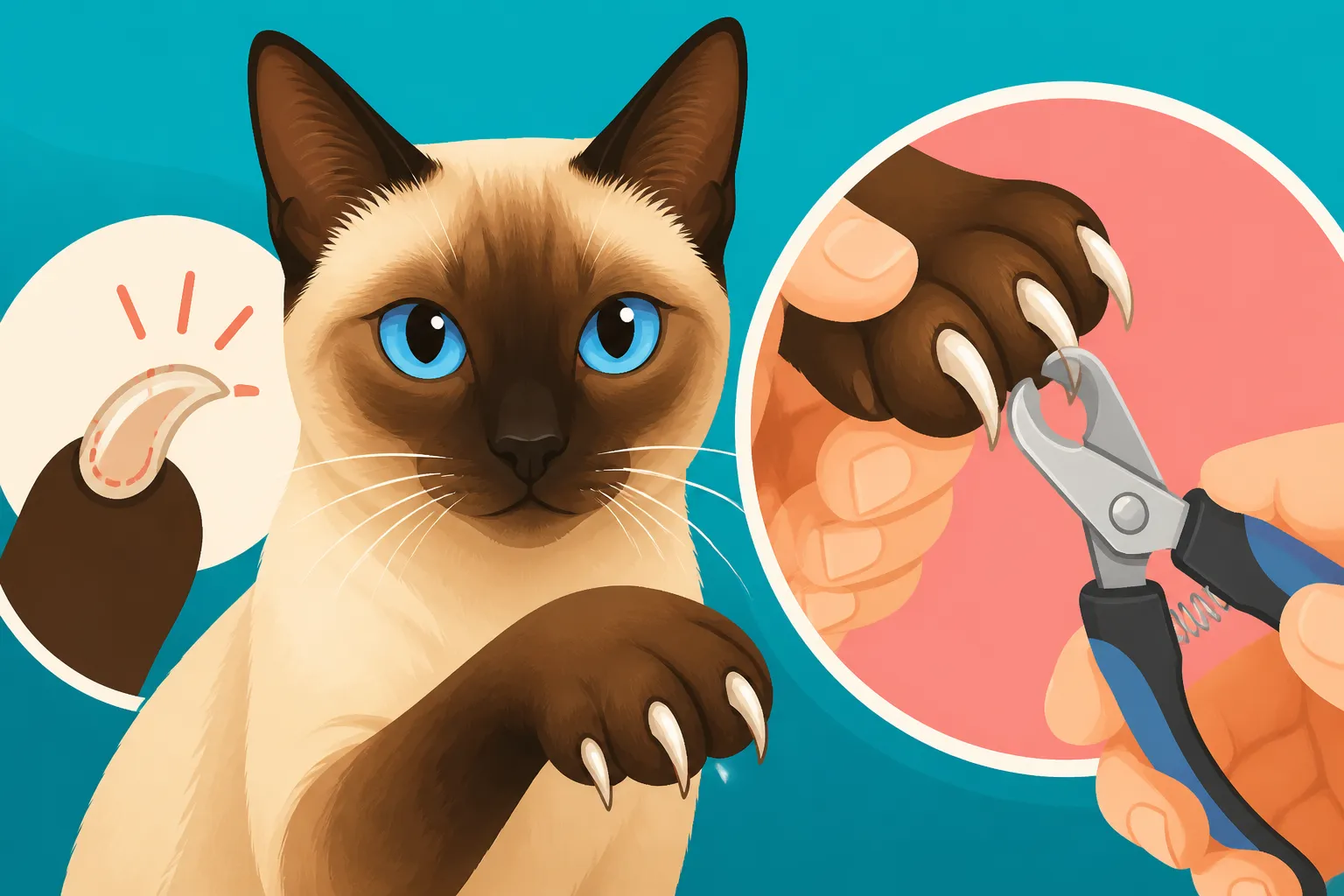
Finding that sweet spot for nail length is key to preventing problems and making trimming a less dreaded experience for both of you. Ideally, when your Siamese cat is standing on a hard, flat surface, their claws shouldn't be touching the ground. If they are, it means their toes are being pushed up, which can cause discomfort and gait issues over time. The goal is to trim only the sharp, clear tip of the nail, avoiding the "quick" – the pinkish part within the nail that contains blood vessels and nerves.
Cutting into the quick is painful for your cat and will cause bleeding, making future trimming sessions much harder. If you can see the quick, you're usually safe to trim just a millimeter or two beyond it. If their nails are very dark or you're unsure, it's always better to take off less than too much. Over time, with consistent trimming, the quick may recede slightly, allowing you to take off a bit more each time. Regularity helps keep the quick shorter, which in turn makes trimming easier and less stressful.
The Process: Making Nail Trimming a Breeze (or at least tolerable)
Let's face it, nail trimming is rarely a spa day for a Siamese cat. Their intelligence often means they know exactly what you're up to, and their vocal nature means you'll hear all about their displeasure! But with the right approach, patience, and a bit of planning, you can make the experience much less stressful for everyone involved. Consistency is your best friend here.
Gathering Your Tools
Before you even think about grabbing your cat, make sure you have all your supplies ready. Rushing around looking for clippers while holding a squirming Siamese is a recipe for disaster. You'll need a good pair of cat-specific nail clippers. There are several types: scissor-style, guillotine-style, and even pliers-style for very thick nails. Experiment to see which one you find most comfortable and effective. Many pet supply stores, like Chewy, offer a wide variety, so you can pick one that fits your hand well.
Crucially, always have styptic powder or a styptic pencil nearby. This is a must-have for any cat owner, as even the most experienced trimmers can nick the quick accidentally. This powder quickly stops bleeding and helps prevent pain. Finally, don't forget the treats! High-value treats are essential for positive reinforcement and turning the experience into something your cat associates with good things. Keep them small and irresistible.
The Art of the Quick: Avoiding Pain
The biggest fear for most cat owners (and their cats!) is cutting into the quick. The quick is a soft, pinkish area inside the nail that contains blood vessels and nerves. If your Siamese has clear or light-colored claws, you'll be able to see the quick as a pink triangle extending from the base of the nail. You want to cut the sharp, clear tip beyond the quick.
For cats with dark nails, seeing the quick can be challenging. In this case, aim to trim only the very tip, where the nail starts to curve, or where it appears hollow. It’s always safer to take off tiny slivers frequently than to attempt a big cut and risk hitting the quick. If you do accidentally nick it, apply pressure with a clean cloth, then dab the styptic powder onto the bleeding nail. Don't panic; it happens, but try to remain calm to avoid stressing your cat further. They'll pick up on your anxiety immediately.
Training and Positive Reinforcement
The key to less stressful nail trims is starting early and making it a positive experience. If you have a Congenital Defects in a Siamese Cat Kitten, begin handling their paws gently from day one. Massage their paw pads, gently press on their toes to extend the claws, and give them a treat. Don't even introduce the clippers at first. Just make paw handling a routine part of your bonding.
Once they're comfortable with paw handling, introduce the clippers. Let them sniff them, and if they're curious, give a treat. Then, without actually clipping, gently press a toe, extend a claw, and pretend to clip, followed by an immediate treat. Gradually, you can work up to actually clipping one nail, then two, always ending with a shower of praise and treats. Companies like Amazon sell specialized calming treats or sprays that contain feline pheromones, which can sometimes help reduce anxiety during these sessions. Don't try to do all twenty nails at once if your cat is resistant. Just get one or two done at a time, and build up slowly. Persistence and patience will pay off in the long run.
Long-Term Claw Care and When to Seek Help
Nail trimming isn't just about the occasional snip; it's part of a holistic approach to your Siamese cat's well-being. By integrating good habits and knowing when to ask for professional help, you can ensure their paws stay healthy and happy throughout their The Fifteen to Twenty Years a Siamese Cat Gets.
The Role of Scratching Posts and Other Enrichment
Scratching is an absolutely natural and essential behavior for cats. It allows them to stretch, mark their territory visually and with scent, and remove the dead outer layers of their claws, revealing fresh, sharp ones underneath. This is why having appropriate scratching outlets is paramount for a Siamese cat, whose intelligence and energy mean they need plenty of mental and physical stimulation to prevent What a Bored Siamese Cat Destroys. Provide a variety of scratching surfaces and textures – vertical posts, horizontal pads, cardboard scratchers, sisal, carpet, even wood.
Place scratching posts in prominent areas where your cat likes to lounge or stretch, and near areas they might be tempted to scratch inappropriately (like your sofa!). Encourage use with toys, catnip, or by simply demonstrating the scratching action yourself (using your fingers, not your nails!). While scratching posts won't eliminate the need for nail trims, they will certainly help manage nail length and health between sessions. Which Scratching Post a Siamese Cat Uses will vary, so offer options.
When to Consult Your Vet or a Professional Groomer
Sometimes, despite your best efforts, nail trimming can feel overwhelming. If your Siamese cat is particularly resistant, aggressive, or prone to extreme stress during trims, it's perfectly okay to ask for help. Your veterinarian or a professional groomer can often perform nail trims quickly and efficiently, using techniques that may be less stressful for your cat. They can also demonstrate proper technique, which can boost your confidence for future home attempts.
Moreover, if you notice any unusual changes in your cat's nails or paw pads – such as discolored nails, swelling, tenderness, limping, or persistent ingrown nails – it's crucial to consult your vet. These could be signs of underlying health issues that need medical attention, like infection or injury. Never hesitate to seek professional advice; your vet is there to help keep your Siamese healthy and comfortable. They can offer invaluable guidance on all aspects of your cat's care, from How Often a Siamese Cat Needs a Wellness Exam to specialized grooming concerns.
Disclaimer
This article is for general informational purposes only and does not constitute professional advice. Laws, prices and regulations vary by location and change over time. Consult a qualified professional for guidance on your specific situation.