When the Tamra Maew That Names the Siamese Cat Was Written
One of the most profound joys of sharing your life with a Siamese cat is feeling that connection to an ancient lineage. But when we talk about their origins, especially the famous "Tamra Maew" manuscripts, it can be really frustrating to get a straight answer on exactly when these pivotal texts were penned. You want to understand the true historical foundation of your beloved Meezer, but the dates often feel vague or contradictory. This guide is here to untangle that historical timeline, giving you a clearer picture of when the Tamra Maew, which so vividly describes the ancestors of our Siamese cats, was most likely created, and why those dates matter.
Unraveling the Ancient History of the Siamese Cat
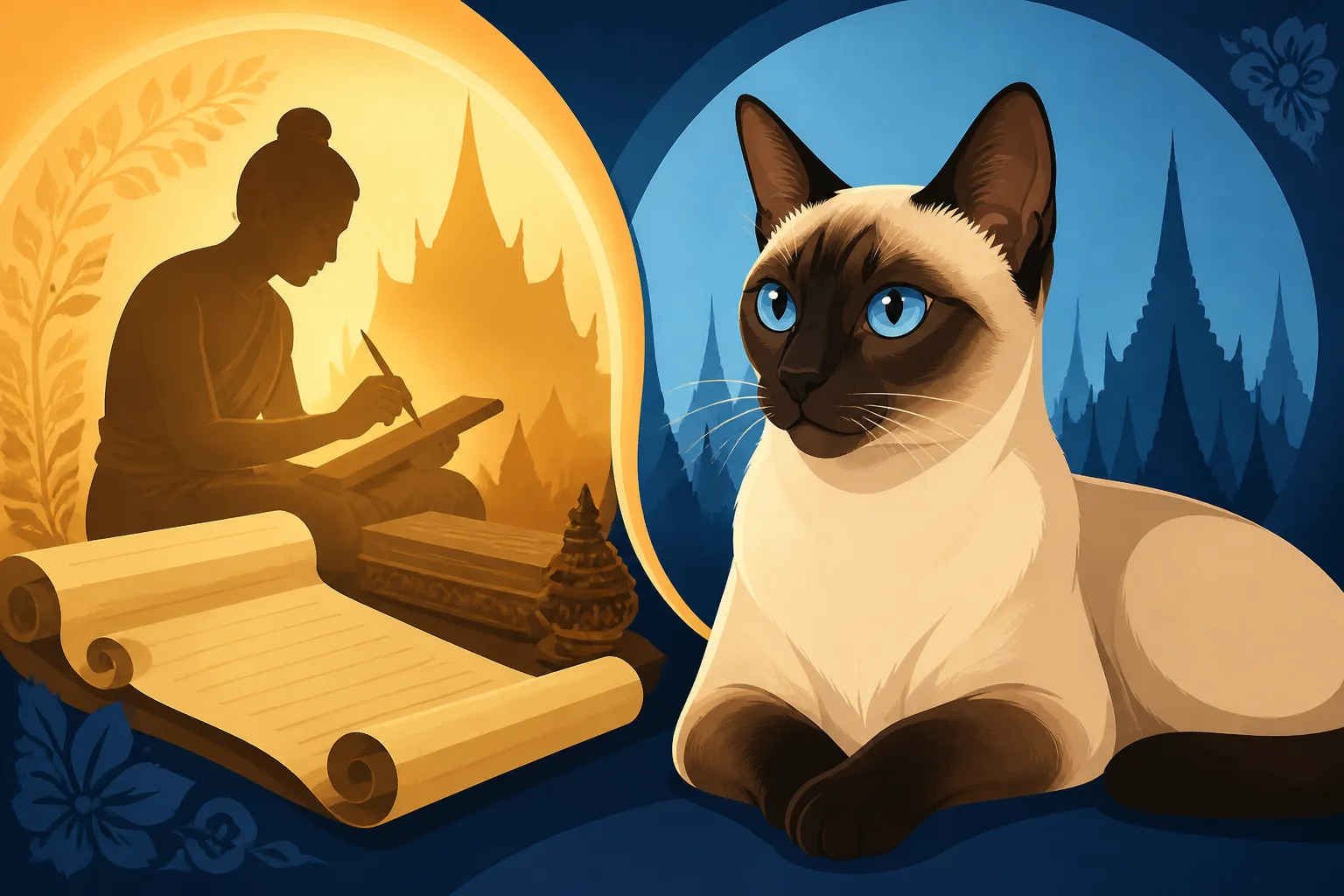
The history of the Siamese cat is steeped in the mystique of ancient Siam, a place now known as Thailand. Unlike many modern breeds with clear, documented origins in specific breeding programs, the Siamese cat's story begins centuries ago, woven into the cultural fabric of a distant land. The quest to understand its true beginnings often leads us to the Tamra Maew, or "Cat Book Poems," ancient manuscripts that are considered the original source of information about these revered felines.
The Elusive Nature of Exact Dates in Ancient Texts
Pinpointing an exact year for the creation of ancient texts like the Tamra Maew is often an exercise in informed estimation, not precise dating. These weren't like books published today with a specific author, date, and ISBN number. Instead, they were often copied, recopied, and sometimes amended over generations by various scribes. Imagine trying to find the precise "publication date" of a folk tale that has been passed down orally for centuries before finally being written down by different people at different times. It's a similar challenge with these historical documents.
Furthermore, the materials used, like palm leaves or mulberry paper, and the methods of preservation weren't always designed for longevity, making complete, original copies rare. Over time, wars, natural disasters, and the simple decay of organic materials mean that what we have today are often copies of copies, sometimes with variations. This makes it incredibly difficult to say, "This exact Tamra Maew was written on October 12, 1750." Instead, scholars look for clues within the text and historical context to establish a broad timeframe, acknowledging that individual manuscripts might vary in age.
Historical Context of the Tamra Maew
To understand when the Tamra Maew was likely written, we need to place it within the historical context of Siam. The Ayutthaya Kingdom, which existed from 1350 to 1767, was a significant period for Siamese art, culture, and literature. This era saw a flourishing of religious texts, epic poems, and various treatises, including those detailing animals and their characteristics. It was a time when the written word held great importance, often tied to royalty, temples, and scholarship.
The cats described in the Tamra Maew were not just pets; they held cultural and often spiritual significance. They were frequently associated with the royal court and temples, reflecting a deep respect and admiration for certain feline types. The idea that these cats were special, perhaps even sacred, aligns with the hierarchical society of ancient Siam. Understanding this backdrop helps us appreciate why such a detailed compendium of cat descriptions would have been created and meticulously maintained. What the Tamra Maew Manuscripts Show About the Siamese Cat gives a more in-depth look at the content.
The Estimated Timeframe of the Tamra Maew's Creation
While an exact date is a historian's dream, the reality is that the Tamra Maew is generally understood to be a collection of works that emerged over a span of several centuries. There isn't one single "Tamra Maew" but rather a family of similar manuscripts, each contributing to our understanding of ancient Siamese cat breeds.
Scholar Consensus and Dating Methods
Most scholars agree that the earliest versions of the Tamra Maew manuscripts date back to the Ayutthaya Period in Siamese history. The methods used to arrive at this consensus are fascinating and intricate. Historians and linguists meticulously examine the language, script styles, and any specific historical references or events mentioned within the texts. For instance, certain royal titles, place names, or even specific cultural practices described can provide clues, allowing them to cross-reference with known historical timelines.
Beyond linguistic and historical cues, art historians also play a role. The illustrations within some Tamra Maew manuscripts, depicting the cats and sometimes their human companions or settings, offer stylistic indicators that can be compared to other dated works of art from the period. This multi-disciplinary approach helps build a robust, albeit approximate, dating framework for these treasured documents.
The 14th to 18th Century Window
Based on the cumulative evidence, the most widely accepted timeframe for the creation of the various Tamra Maew manuscripts spans from the 14th century to the 18th century. This means that the earliest parts could have been written as early as the late 1300s, with later additions and copies continuing to be made until the fall of Ayutthaya in 1767, and possibly even after. It’s important to remember that during this long period, different versions and interpretations of the "Cat Book Poems" would have been created, reflecting evolving literary styles and perhaps even slightly changing perceptions of the cats themselves.
For example, a copy found in a temple might be from the 17th century, but the text it contains might have roots in a much older oral tradition or an even older, now-lost manuscript. This broad window emphasizes that the Tamra Maew is not a singular event but rather a continuous cultural tradition that helped preserve the descriptions of cats like the Wichianmat, the direct ancestor of the Siamese cat we know and love today. How Long Siamese Cats Have Lived in Thailand further explores their ancient roots in the region.
| Estimated Period | Key Historical Context | Significance for Tamra Maew |
|---|---|---|
| 14th Century | Dawn of Ayutthaya Kingdom; cultural flourishing begins | Potential start of early cat descriptions, possibly oral traditions turning to written form. |
| 15th-16th Century | Ayutthaya's golden age; royal and temple patronage | Growth and refinement of cat manuscripts, formalizing descriptions of royal or sacred cats. |
| 17th-18th Century | Continued cultural output; before Ayutthaya's fall | Widening circulation and copying of existing Tamra Maew texts, adding minor variations. |
Why the Tamra Maew Matters for Siamese Cat History
Understanding the origins of the Tamra Maew is more than just an academic exercise; it's crucial for appreciating the unique heritage of the Siamese cat. These ancient texts provide an invaluable window into how these cats were viewed and described centuries before they ever set paw on Western soil.
Documenting the "Wichianmat" and Other Ancient Breeds
The primary reason the Tamra Maew is so significant to Siamese cat enthusiasts is its detailed descriptions of a cat known as the "Wichianmat." This is the specific cat breed that is universally recognized as the direct ancestor of the modern Siamese cat. The manuscripts don't just mention the Wichianmat in passing; they provide poetic and descriptive accounts that clearly outline its distinctive features. They talk about its "points" – the darker coloration on the ears, paws, tail, and face – against a lighter body, a characteristic that remains the hallmark of the Siamese breed today.
But the Tamra Maew isn't only about the Wichianmat. It describes 17 "good luck" cats and 6 "bad luck" cats, each with their own unique traits and associated superstitions. This broader context helps us understand that the Wichianmat was one among several esteemed felines in ancient Siam, but it was the one whose characteristics truly captivated and endured, eventually leading to the development of the Siamese breed we adore. What the Wichianmat Behind the Siamese Cat Is delves deeper into this fascinating ancestral connection.
Glimpses into Early Siamese Cat Characteristics
Beyond mere identification, the Tamra Maew provides rich details about the physical appearance and even the perceived personality traits of these ancient cats. The descriptions are vivid, often using metaphors and poetic language to highlight their beauty. For instance, the text often notes their striking blue eyes, which are still a defining feature of the Siamese cat. It also describes their sleek bodies and intelligent, inquisitive nature, which resonates strongly with anyone who has ever lived with a Siamese.
These descriptions confirm that the key characteristics we associate with the Siamese today were present and valued centuries ago. They weren't traits selectively bred into them purely for modern show standards; they were inherent qualities that made the Wichianmat distinct and desirable in its homeland. This continuity over hundreds of years is truly remarkable and speaks to the robustness and unique genetic blueprint of these cats. This is where you can see the deep historical roots of What Point Coloration in a Siamese Cat Is.
The Legacy of the Tamra Maew in Modern Siamese Cat Understanding
The enduring influence of the Tamra Maew extends far beyond its historical creation date. It serves as a foundational text that bridges the gap between the ancient reverence for these cats in Siam and their global popularity today.
Connecting Ancient Descriptions to Modern Standards
When early Siamese cats were first brought to the Western world in the late 19th century, breeders and enthusiasts looked to these ancient descriptions, whether directly or indirectly through their cultural reputation, to establish the breed standards. The ideal Siamese cat, as defined by cat fancy organizations, often mirrors the very traits admired and documented in the Tamra Maew centuries ago. The point coloration, the blue eyes, the elegant body, and even aspects of their vocal and interactive personality can all be traced back to the original Wichianmat descriptions.
It's a testament to the accuracy and significance of the Tamra Maew that its ancient descriptions still hold sway in the modern era. When you see a Siamese cat winning an award at a cat show, you're essentially seeing a living embodiment of the ideals set forth in these ancient Thai manuscripts. This connection gives the breed a depth and history that few others can claim, grounding their modern appearance in centuries of tradition and admiration. You can find out more about how the breed came to the west in The Siamese Cat Came From Siam, Not Thailand.
The Enduring Mystery and Charm
Even with scholarly efforts to date and interpret them, the Tamra Maew manuscripts retain an air of mystery and charm. They remind us that our Siamese companions are not just pets but living links to a fascinating past, once cherished by royalty and revered for their unique beauty and character. This long history adds an extra layer of appreciation for those of us who share our homes with these vocal and intelligent felines.
Whether your Siamese is an active member of your household, supervising your every move, or cuddled up next to you on a blanket from Chewy, knowing that their ancestors were described in such loving detail in texts penned hundreds of years ago brings a unique sense of connection. The "when" of the Tamra Maew isn't just a date; it's a testament to the enduring allure of the Siamese cat throughout history. Where the Siamese Cat Comes From expands on their ancient origins.
Disclaimer
This article is for general informational purposes only and does not constitute professional advice. Laws, prices and regulations vary by location and change over time. Consult a qualified professional for guidance on your specific situation.