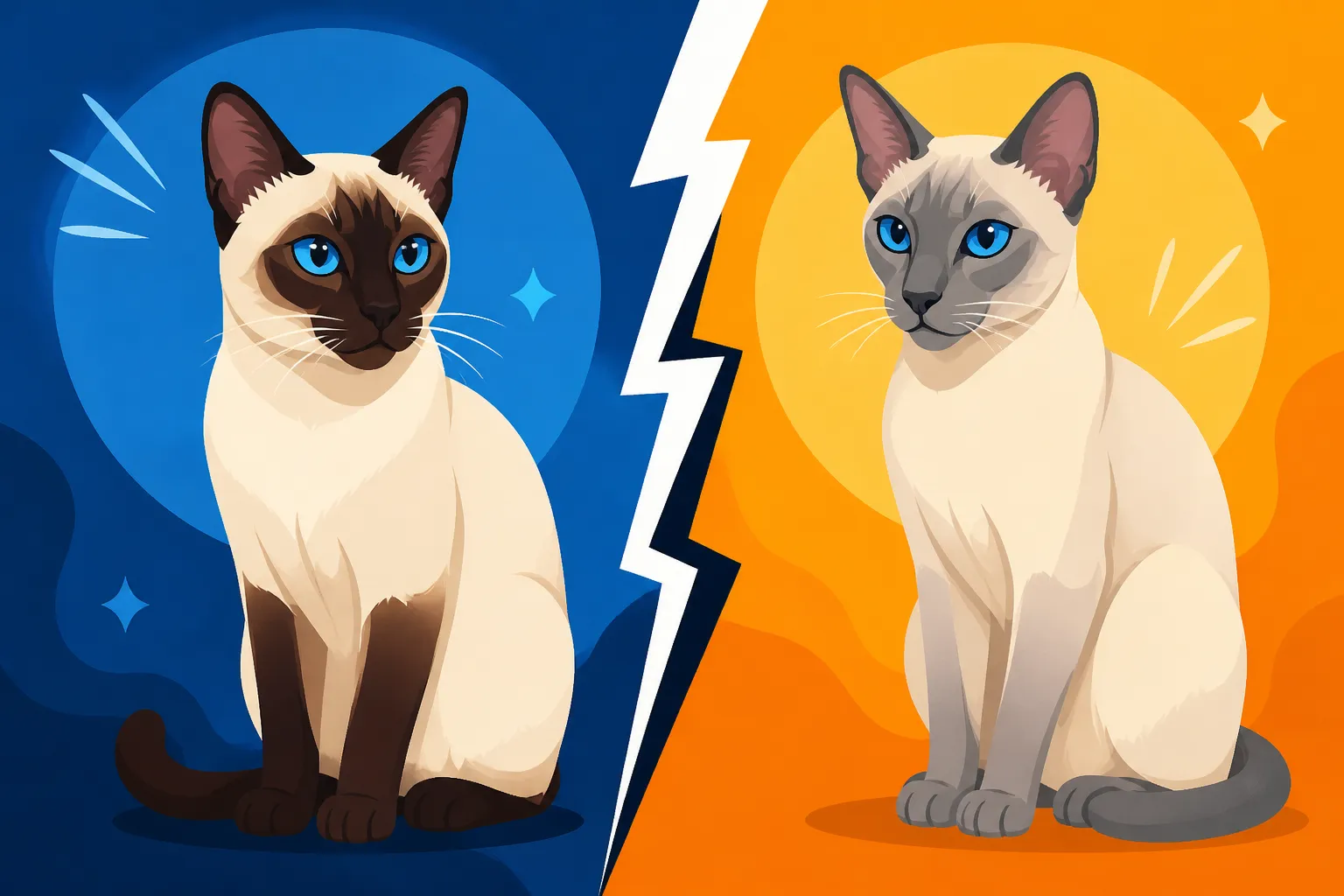
Why Two Siamese Cat Types Split at All
A Siamese cat with a rounded head and sturdy build can look so different from a long, fine-boned show cat that people assume they must be separate breeds. The split grew out of changing show preferences, breeding choices, and registry rules. Understanding those forces helps you tell appearance apart from ancestry—and avoid assuming that every “traditional” Siamese belongs to one formally recognized breed.
The Siamese cat did not begin with one fixed look
Early Siamese cats varied more than modern show cats
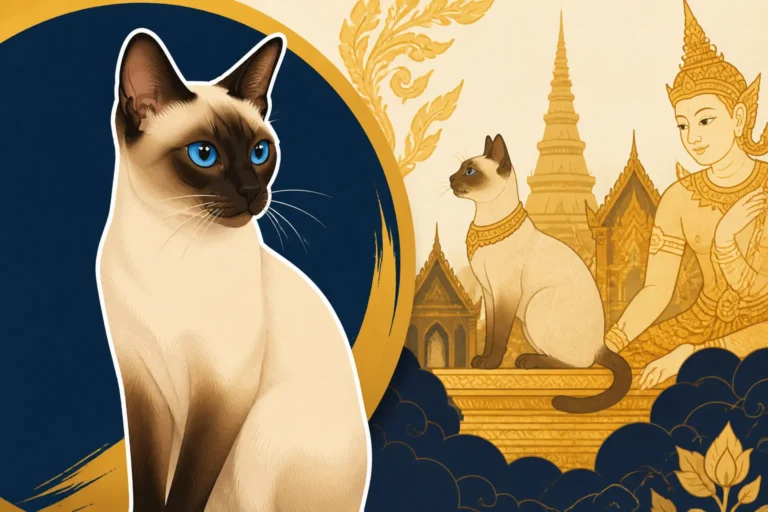
The cats brought from Siam, now Thailand, were not all identical in shape. Like cats in any naturally occurring population, they varied in head shape, body proportions, and build. Early imported and bred Siamese cats could look more moderate than the very slender, angular cats often associated with modern show rings.
That variation matters because the “old-style” or “traditional” Siamese people talk about today is not simply a photograph of one original, perfectly uniform type. Those labels describe a range of looks, usually with a rounder head, a more substantial body, and less extreme proportions than the modern wedge-shaped show type. A cat may fit that description without being a registered member of a separate breed.
The Siamese cat’s defining color pattern and blue eyes are a different matter from its head shape. The pointed coat comes from a temperature-sensitive pigment pattern, which is why the cooler ears, face, paws, and tail are darker than the warmer body. For a closer look at that color pattern, see Why a Siamese Cat Has Dark Points.
Show standards turned some differences into a direction
When cat shows and formal breed standards became influential, breeders had a clearer target to select toward. A standard describes the features judges are expected to reward, and breeders who wanted to do well in shows tended to choose breeding cats that displayed those features strongly. Over generations, that kind of selection can make one version of a breed more visually consistent.
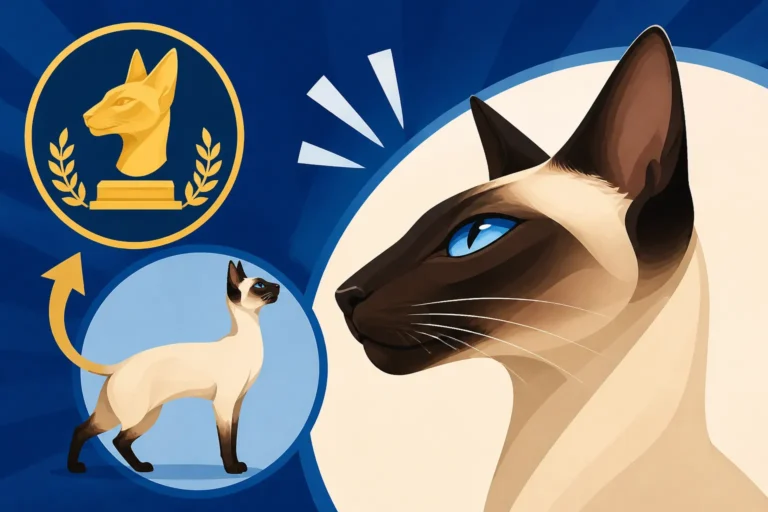
In the Siamese, many show breeders favored a longer, more elegant outline: a narrow wedge-shaped head, large ears, long legs, and a fine body. As those traits were emphasized, the show-line Siamese became increasingly distinct in appearance from cats with rounder heads and heavier builds. That did not mean every Siamese breeder made the same choices, or that every cat changed at once. It meant the show population increasingly reflected the look the standard rewarded.
This is part of a wider breed-history story. The modern Siamese’s head shape did not emerge from a single decision or a sudden change; it developed through accumulated preferences. How the Siamese Cat's Head Changed Shape in Fifty Years explores that transformation in more detail.
How two familiar Siamese looks took shape
The modern wedge Siamese
The modern wedge Siamese is generally described as long, lean, and angular. Its head forms a long wedge from the nose toward the ears, with a fine muzzle and prominent, wide-set ears. The body is athletic and graceful rather than bulky, and the legs and tail contribute to an overall impression of length.
These features are not just styling choices made by a groomer or the result of a cat being underweight. They are inherited traits that have been selected within lines of breeding. A healthy, well-cared-for Siamese can be naturally slender, but a visibly bony cat or one losing weight still deserves veterinary attention. Shape alone does not tell you whether a cat is healthy.
The word “modern” is a description of type, not a guarantee of one universal registry definition. Show standards and breed terminology can differ between organizations and countries. If you are choosing a kitten, ask which registry the breeder uses and what standard the cats are bred to, rather than relying on a seller’s use of “modern” as if it were a precise pedigree category.
The applehead or old-style Siamese
“Applehead” is a popular term for Siamese-type cats with rounder heads and a more substantial appearance. People may also use “traditional Siamese” or “old-style Siamese.” These labels often point to a less extreme silhouette than the modern wedge, but they are not interchangeable with a formal pedigree designation in every registry.
A rounder head does not, by itself, prove that a cat has a particular ancestry. Nor does it establish that the cat is healthier, quieter, or more affectionate. Individual temperament and health depend on many factors, including the cat’s genetics, early socialization, medical history, and daily care. Breed labels can be useful shorthand, but they do not replace records or a close look at the individual animal.
The distinction between appearance and official breed status can be confusing for adopters and buyers. A rescue may call a cat “applehead Siamese” because the cat resembles that type, while a registered breeder may use a different name for a similar-looking cat. If you are also trying to understand what a rounded type means in a show context, Whether an Applehead Siamese Cat Can Be Shown explains why the answer depends on registry and standard.
| Description | Common appearance | What the label usually tells you | What it does not prove |
|---|---|---|---|
| Modern or wedge Siamese | Long, fine-boned, angular head and body | The cat resembles a show-oriented Siamese type | That every registry uses the same wording |
| Applehead or old-style Siamese | Rounder head and more substantial build | The cat resembles a less angular Siamese type | A separate pedigree or guaranteed health advantage |
| Thai | A distinct breed name used by some registries for a traditional-looking type | The cat may have formal recognition under that registry | That every traditional-looking cat is registered as Thai |
| Siamese mix | Siamese-like features with uncertain or mixed ancestry | The cat resembles a Siamese in some visible traits | A purebred pedigree |
Why the Siamese and Thai became separate labels
The split was shaped by registry decisions
As modern show breeding emphasized the wedge-shaped look, some breeders and enthusiasts wanted to preserve a more moderate Siamese appearance. Over time, a formal distinction developed in some registries between the show-oriented Siamese and a breed called the Thai, which is intended to represent a more traditional type.
That distinction is not applied identically everywhere. One registry may recognize a Thai as a separate breed, while another may not recognize that category in the same way. Some organizations use different rules for registration, showing, or naming. So the answer to “Are these two types separate breeds?” depends partly on which registry’s system you mean.
This is why an online listing that calls a cat “traditional Siamese” may not be describing a formal breed. It might refer to appearance, lineage, marketing language, or a registry category. Before relying on the label, ask for the registration paperwork and clarify which organization issued it. How the Thai Split From the Siamese Cat looks more closely at the breed distinction and how the names are used.
A breed name is not the same as a look
A cat’s appearance can be described without making a claim about its pedigree. For example, “round-headed Siamese-type cat” is a description of visible features. “Registered Thai” is a claim about an animal’s status within a particular registry. The two phrases may refer to cats that look similar, but they do not mean the same thing.
This distinction is especially useful when adopting. A shelter may have little or no verified ancestry for a cat, even if its blue eyes, color points, and body shape look very Siamese. That cat can still be a wonderful companion; the uncertainty simply means you should treat breed as an informed guess rather than a documented fact. The same caution applies to online advertisements that use breed labels without showing registration records.
If you are comparing a Siamese with a Thai, ask practical questions as well as appearance questions. What is known about the cat’s parents? Which registry, if any, recognizes the line? What health care has the cat received? How does the individual behave around people and other animals? These answers are more useful than assuming a specific personality from the head shape.
What the split means when choosing a cat
Focus on the individual, not the silhouette alone
A wedge-shaped cat and a rounder-headed cat may both be active, talkative, affectionate, or reserved. Breed tendencies can offer context, but they cannot reliably predict how one particular cat will behave in your home. If possible, spend time with the cat and ask the breeder, rescue, or foster caregiver about its daily routines, comfort with handling, and response to household activity.
Health decisions should be grounded in veterinary records rather than appearance-based promises. A breeder should be willing to discuss the health history of the line and explain which screening is available for the cats they produce. Some inherited conditions do not have a straightforward screening test, so transparency about family history is valuable even when a breeder cannot offer a definitive test result. For broader questions to ask, see What a Siamese Cat Breeder Should Have Screened.
For adopted cats, request any available vaccination, dental, and examination records, and arrange a veterinary check after bringing the cat home. A rescue may not know the cat’s family history, and that is not a reason to dismiss the animal. It is simply a reason to make decisions based on observed health and ongoing care rather than pedigree assumptions.
Make the home fit the cat you bring home
Whether your cat is called Siamese, Thai, applehead, or a mix, its everyday needs matter more than the label. Provide comfortable resting spots, a clean litter area, scratching options, play, and opportunities for interaction. A lean, short-coated cat may seek warm sleeping places, while a curious, energetic individual may need more climbing and puzzle-based activities. Watch what your cat actually enjoys and adjust accordingly.
When you are gathering routine supplies, make a list based on the cat’s real needs rather than buying every product marketed for a breed. Retailers such as Chewy can be one place to compare basics like litter, carriers, and enrichment items; check the product details and choose what suits your home and your cat. If food changes are needed, make them gradually and follow veterinary guidance, especially for a cat with a medical condition or a sensitive stomach.
Chewy may also be useful when you need to replace an everyday item or compare different litter and feeding options, but product selection cannot resolve uncertainty about breed ancestry. For that, documentation from a breeder or registry is the relevant evidence. If a cat’s history is unknown, it is perfectly reasonable to describe its appearance without insisting on a pedigree label.
The split between the modern Siamese and the traditional-looking type reflects decades of breeding preferences and differences in registry rules. It is not a simple story of one type being “real” and the other being wrong. A cat’s shape can help you understand what people mean by these labels, but pedigree, health, and temperament need to be considered separately. For a wider view of how the Siamese is described and classified, see What a Siamese Cat Looks Like by the Standard and Whether the Traditional Siamese Cat Still Exists.
Disclaimer
This article is for general informational purposes only and does not constitute professional advice. Laws, prices and regulations vary by location and change over time. Consult a qualified professional for guidance on your specific situation.