What the Tamra Maew Manuscripts Show About the Siamese Cat
If you've ever gazed into the striking blue eyes of a Siamese cat and wondered about their origins, you're not alone. So many of us are fascinated by the ancient history whispered about these magnificent felines, often tracing back to tales of Siam. This guide will dive deep into the Tamra Maew manuscripts, the historical texts that offer us a remarkable window into the early perception and characteristics of the Siamese cat, far before they graced our modern homes.
The Tamra Maew: An Ancient Window into Thai Cats
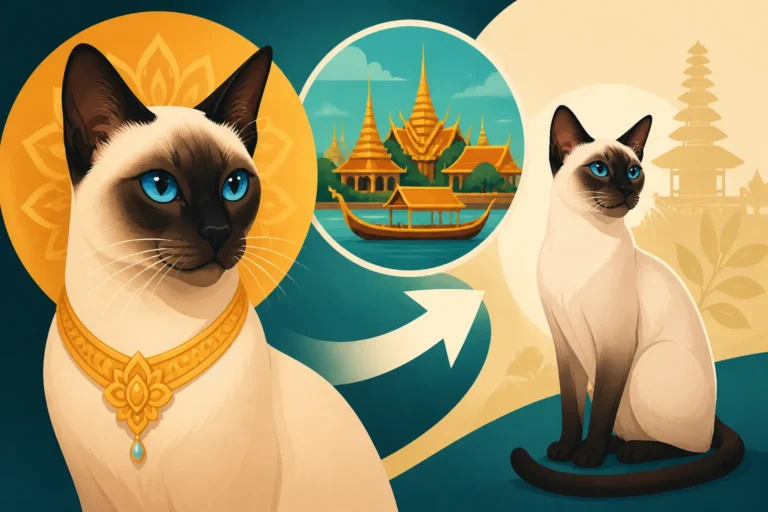
The history of the Siamese cat is often shrouded in enchanting legends, but to truly understand their roots, we need to turn to the invaluable Tamra Maew manuscripts. These aren't just old books; they are vivid, poetic, and beautifully illustrated documents that provide us with the earliest known descriptions of cats native to Siam (modern-day Thailand). Imagine a world where the characteristics of a cat weren't just about their looks, but about the very essence of their being and the luck they brought into a home.
What Exactly Are the Tamra Maew?
The Tamra Maew, which translates to "Treatise on Cats" or "Cat Poems," are ancient compilations of poetry and illustrations detailing various types of cats considered auspicious in the Kingdom of Siam. These manuscripts date back several centuries, with some scholars suggesting their origins could be as early as the 14th century, though most surviving copies are from the 18th and 19th centuries. They weren't scientific journals as we know them today, but rather cultural and spiritual guides, often hand-copied and passed down through generations. Each cat depicted in these texts is accompanied by verses describing its physical appearance, temperament, and, crucially, the fortune or misfortune it was believed to bestow upon its owner. These weren't casual descriptions; they were deeply revered accounts, hinting at a society that held cats in high regard, albeit with specific classifications.
The texts often describe not just the colors and patterns but also the unique vocalizations or behavioral quirks that defined each type of feline. For anyone interested in the foundational history of the Siamese cat, understanding these manuscripts is key. They really highlight a time when cats weren't just pets but integral parts of the cultural fabric, holding symbolic weight. If you're looking for modern resources on cat care and behavior that honor these historical roots, even everyday essentials like food and toys can be found on sites like Chewy, a testament to how far our understanding and care for felines has come.
The Cultural Significance of These Manuscripts
In ancient Siam, cats weren't merely furry companions; they were seen as spiritual beings, capable of influencing the fate of households and even kingdoms. The Tamra Maew manuscripts reflect this profound cultural reverence. Certain cats, like the Wichianmat (which we’ll get to in a moment), were considered incredibly lucky, symbolizing prosperity, health, and protection. Owning such a cat was a sign of status and good fortune, often reserved for royalty and temple priests. Conversely, other cat types were deemed unlucky, associated with poverty or ill omen, and were to be avoided. This intricate system of classification speaks volumes about the deep spiritual connection people had with their feline counterparts.
The manuscripts weren't just about aesthetics; they were moral and spiritual guides. The presence of specific markings or a certain eye color wasn't just a physical trait; it was a divine indicator. For instance, a cat with a very specific, pure coloration or an unusual pattern might be believed to carry the soul of a departed elder or even offer guidance. This cultural context helps us appreciate why certain cat types, like the Siamese, were so carefully documented and cherished. It underscores the belief that cats were living harbingers of fate, deserving of respect and careful observation. This rich tapestry of belief is part of the allure of The Siamese Cat Came From Siam, Not Thailand, connecting our modern pets to an ancient, mystical past.
Identifying the Wichianmat in the Manuscripts
When we talk about the Siamese cat in the context of the Tamra Maew, we're really talking about the "Wichianmat" cat. This is the star of the show, the specific type whose characteristics align most closely with what we recognize as the earliest forms of the Siamese breed. It's a fascinating journey to see how these ancient descriptions foreshadow the beloved companions we share our lives with today.
Descriptions of the "Moon Diamond" Cat
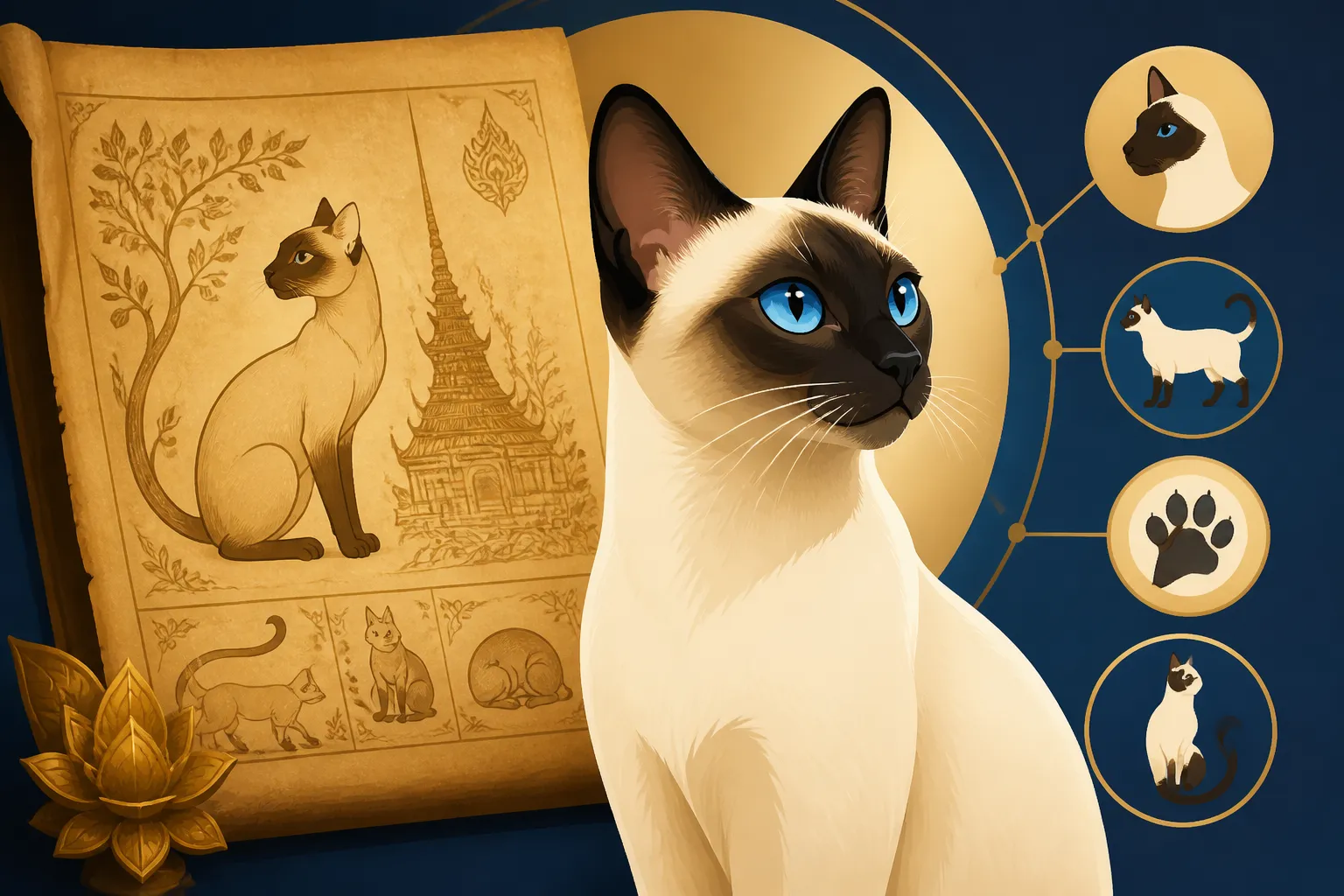
The Wichianmat cat, often translated as "Moon Diamond" or "Diamond Gold," is consistently depicted and described in the Tamra Maew with characteristics that are unmistakably Siamese. The poems speak of a cat with a pale body, often a creamy or light fawn color, adorned with distinct dark points on its ears, face, paws, and tail. This "point coloration" is the hallmark of the Siamese breed. The manuscripts also emphasize their striking blue eyes, a feature that remains a defining trait of the breed today. Imagine the vibrant contrast of those sapphire eyes against a pale face, a description that still holds true. The body type, while perhaps not as extremely slender as the modern "wedge" Siamese, was typically described as elegant and graceful, not bulky or heavy.
These detailed descriptions were crucial for identifying an auspicious cat. For instance, a cat whose points were too faint or whose body color was too dark might not fit the ideal "Moon Diamond" profile. The poems also often mention specific postures or movements, adding to the holistic picture of this cherished feline. It’s truly remarkable how closely these ancient verses match what we understand about the traditional Siamese. This deep historical documentation provides a fantastic foundation for understanding What the Wichianmat Behind the Siamese Cat Is and how its traits were valued centuries ago.
The Name "Wichianmat" and its Meaning
The name "Wichianmat" itself is steeped in cultural significance, offering a deeper understanding of why this particular cat was so revered. As mentioned, it often translates to "Moon Diamond" or "Diamond Gold," a name that evokes images of preciousness, rarity, and celestial beauty. The "moon" part could refer to the pale body color, reminiscent of moonlight, while "diamond" or "gold" speaks to the cat's perceived value and the immense fortune it was believed to bring. It wasn't just a descriptive label; it was an honorific title, reflecting the cat's esteemed position in Siamese society.
This poetic naming convention suggests that the cat wasn't just appreciated for its unique appearance, but for its symbolic power. Owning a Wichianmat was like having a living jewel, a bringer of prosperity and good luck. This is a far cry from simply picking up a bag of cat food from Chewy today; it represents a profound connection between pet and owner that transcends mere companionship. The name alone tells us that this was not just any cat; it was a feline of destiny, a prized possession that connected its owner to good fortune and spiritual well-being.
Beyond the Physical: Temperament and Traits
While the physical descriptions of the Wichianmat cat in the Tamra Maew are invaluable, the manuscripts also offer glimpses into their perceived personalities and behaviors. This helps us understand not just what they looked like, but what it was like to share a home with these ancient felines, and how those traits resonate with the Siamese cats of today.
Behavioral Traits Attributed to the Wichianmat
Beyond their stunning appearance, the Wichianmat cats in the Tamra Maew are often subtly described with characteristics that align remarkably well with the well-known Siamese temperament. While not as explicit as modern behavioral guides, the poetry hints at their intelligence, vocal nature, and affectionate disposition. These cats were clearly seen as engaging and interactive companions, not just silent observers. The emphasis on their "voice" or "song" in some interpretations of the texts could be an ancient nod to the famously vocal nature of the Siamese, a trait that makes them so distinct even now.
Their intelligence might be inferred from their revered status; a cat considered auspicious would likely be perceived as clever and perceptive. Stories and legends surrounding these cats often depict them as active, playful, and deeply attached to their human companions, especially those of high rank. This parallels the modern Siamese's reputation for being highly social, intelligent, and even a bit demanding of attention. It paints a picture of a cat that was very much a part of the household, actively participating in the daily lives of its owners, rather than just being a decorative feature.
The "Royal" or "Temple Cat" Connection
The Tamra Maew manuscripts, by their very nature, strongly suggest that the Wichianmat, or early Siamese, cats held a special, elevated status within Siamese society. While they don't explicitly state "this cat lives in the palace" or "this cat guards the temple," the fact that these manuscripts were created, preserved, and often associated with the royal court and religious institutions speaks volumes. It implies that these auspicious cats were either owned by royalty, cared for in temples, or at the very least, highly valued by these prominent societal pillars. The legends of Siamese cats guarding sacred scrolls or acting as companions to monks and kings derive much of their foundation from these historical documents.
This elevated status meant they were far from common house pets. Their care and lineage would have been meticulously observed, perhaps even dictating their breeding. The deep respect shown in the manuscripts suggests that if you were lucky enough to possess a Wichianmat, it was a profound honor, possibly even a spiritual duty. This is where the historical significance truly shines, moving beyond mere physical description to paint a picture of a cat deeply woven into the spiritual and social fabric of ancient Siam. It’s part of the captivating story of Whether the Siamese Cat Was a Temple Cat, a legacy that continues to intrigue cat lovers today.
Other Auspicious Cats in the Tamra Maew
While the Wichianmat, or early Siamese, holds a special place, the Tamra Maew manuscripts are not solely dedicated to them. These ancient texts catalog a fascinating array of other cat types, each with its own unique descriptions and associated fortunes. Exploring these other felines helps us appreciate the diverse cat population of ancient Siam and provides context for the Wichianmat's distinct characteristics.
A Glimpse at the Broader Spectrum of Thai Cats
The Tamra Maew describes 23 specific types of auspicious cats, and five considered unlucky. Among the lucky ones, in addition to the Wichianmat, we find descriptions of cats like the Konja, a sleek, solid black cat often associated with good fortune and protection from evil. There's also the Suphalak, a golden-brown cat that, in some interpretations, might be related to the modern Burmese or Tonkinese, symbolizing wealth and royal status. The Korat, known as the "Si-Sawat," is described as a shimmering silver-blue cat, whose fur is said to resemble the clouds before rain, signifying prosperity. Each description is incredibly vivid, often poetic, focusing on the quality of their fur, the color of their eyes, and specific physical markings.
These detailed accounts show that ancient Siamese culture had a sophisticated appreciation for feline diversity, far beyond just one "perfect" cat. They meticulously categorized and cherished different appearances, associating each with specific blessings. This isn't too different from how we might, even today, appreciate the variety of breeds and temperaments available, perhaps even searching for specific traits or breeds on platforms like Chewy to find the perfect match for our homes. The manuscripts remind us that while the Siamese is iconic, it was part of a larger, cherished feline ecosystem.
How These Other Cats Relate to Modern Breeds
The descriptions of these other cats in the Tamra Maew manuscripts offer tantalizing clues about the lineage of several modern Thai cat breeds. The most obvious connection, besides the Siamese, is the Korat. The description of the Si-Sawat in the Tamra Maew matches the modern Korat breed almost perfectly, right down to its silver-blue coat and green eyes. The Konja, a solid black cat, could be an ancestor of the modern Bombay or even an early form of the all-black Oriental Shorthair, which has Siamese in its ancestry. The Suphalak, with its warm brown coat, is often linked to the Burmese cat, known for its rich sable coloring.
It's a testament to the accuracy and enduring nature of these ancient texts that we can still recognize these distinct types today. While selective breeding has undoubtedly refined and standardized these breeds, the core characteristics laid out in the Tamra Maew remain evident. It highlights a continuous thread of feline appreciation and distinct breeding that spans centuries, showing how deeply ingrained these specific cat types were in the region's history. Understanding these connections helps us appreciate Which Thai Cats Are Related to the Siamese Cat and the incredible genetic legacy that continues to thrive.
Understanding the Evolution of the Siamese Cat from the Manuscripts
The Tamra Maew manuscripts provide an invaluable starting point for understanding the Siamese cat's ancestry, but they are just that – a starting point. The journey from these ancient, revered texts to the globally recognized breed we know today involves centuries of natural selection, cultural exchange, and, eventually, intentional breeding programs.
The Journey from Ancient Text to Modern Breed Standard
When the first Wichianmat cats made their way from Siam to the Western world in the late 19th century, they were met with fascination. Early Western breeders and cat fanciers were undoubtedly influenced by the exotic tales and perhaps even direct translations of the Tamra Maew, which likely shaped their initial perception of the breed's ideal form and temperament. However, once in the West, the interpretation of the "ideal" Siamese began to evolve. Early breeders in Europe and America started selectively breeding for specific traits, often emphasizing and exaggerating certain features they admired. This led to a gradual shift from the more moderate body type described in the Tamra Maew, which would be closer to what we now call the "traditional" or "applehead" Siamese, towards the longer, more angular, and often more vocal "modern wedge" Siamese.
The early breed standards, created by organizations like the Siamese Cat Club in Britain, formalized these desired traits, moving away from the poetic descriptions of the Tamra Maew towards precise measurements and aesthetic ideals. This process, while preserving many core Siamese characteristics like point coloration and blue eyes, also introduced new interpretations of what the "perfect" Siamese should look like. This fascinating transformation illustrates How the Applehead Siamese Cat Became the Wedge, a significant chapter in the breed's history.
Bridging the Gap: Traditional vs. Modern Siamese
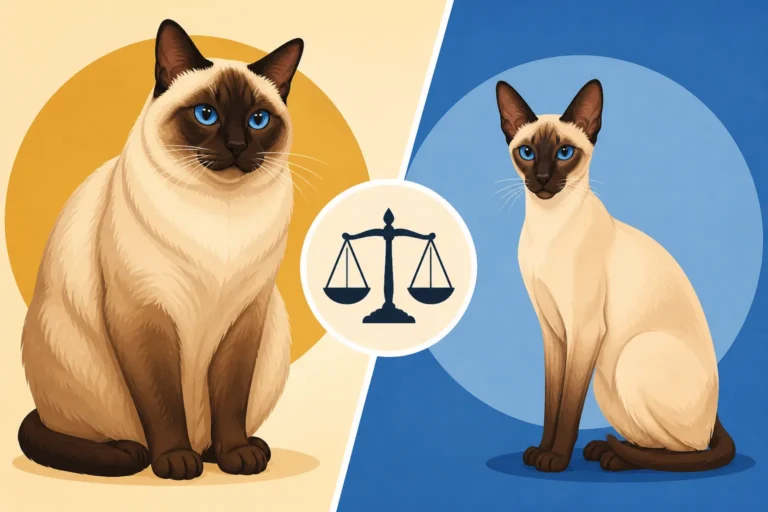
Today, the legacy of the Tamra Maew and the subsequent Western breeding efforts have resulted in a diverse appreciation for the Siamese cat. We now often speak of "traditional" or "old-style" Siamese cats, which are considered to be closer in appearance to the Wichianmat cats depicted in the ancient manuscripts. These cats typically have a rounder head, a more robust body, and a less extreme, but still elegant, physique. In contrast, the "modern" or "wedge-headed" Siamese has a much more elongated body, slender legs, large ears set wide apart, and a distinct wedge-shaped head. Both types trace their ancestry back to the same ancient Thai felines, but their appearance has diverged due to different breeding priorities over the last century.
The existence of the "Thai cat" as a distinct breed also reflects this desire to preserve the original appearance. The Thai cat standard specifically aims to represent the traditional Siamese type, harkening back directly to the animals that inspired the Tamra Maew. This means that while some might find the sleek, angular look of the modern Siamese captivating, others seek the robust charm of the type celebrated in ancient texts. It’s a wonderful example of how historical documents continue to influence modern breeding and appreciation for these captivating cats, sparking conversations like What the Thai Cat Is Next to a Siamese Cat. No matter the style, providing high-quality nutrition, perhaps found on Chewy's diverse offerings, remains a universal priority for all Siamese owners, ensuring these historical breeds thrive in contemporary homes.
Here's a quick comparison of some cat types mentioned or implied in the Tamra Maew:
| Cat Type | Primary Description (from Tamra Maew Interpretation) | Associated Fortune | Modern Breed Connection (potential) |
|---|---|---|---|
| Wichianmat | Pale body, dark points on face, ears, paws, tail; striking blue eyes. | Prosperity, wealth, high status | Siamese (Traditional/Applehead) |
| Konja | Pure black, sleek, with gleaming eyes. | Protection from evil, good fortune | Bombay, Oriental Shorthair (Black) |
| Suphalak | Golden-brown coat, deep brown eyes, lustrous fur. | Wealth, royal blessings, prosperity | Burmese, Tonkinese |
| Si-Sawat | Silver-blue coat, like rain clouds, bright green eyes. | Prosperity, good luck, fertile harvests | Korat |
| Kao Manee | Pure white, usually with striking blue or odd-colored eyes. | Long life, good luck, high status | Kao Manee |
Disclaimer
This article is for general informational purposes only and does not constitute professional advice. Laws, prices and regulations vary by location and change over time. Consult a qualified professional for guidance on your specific situation.