Whether Siamese Cats Guarded Temples
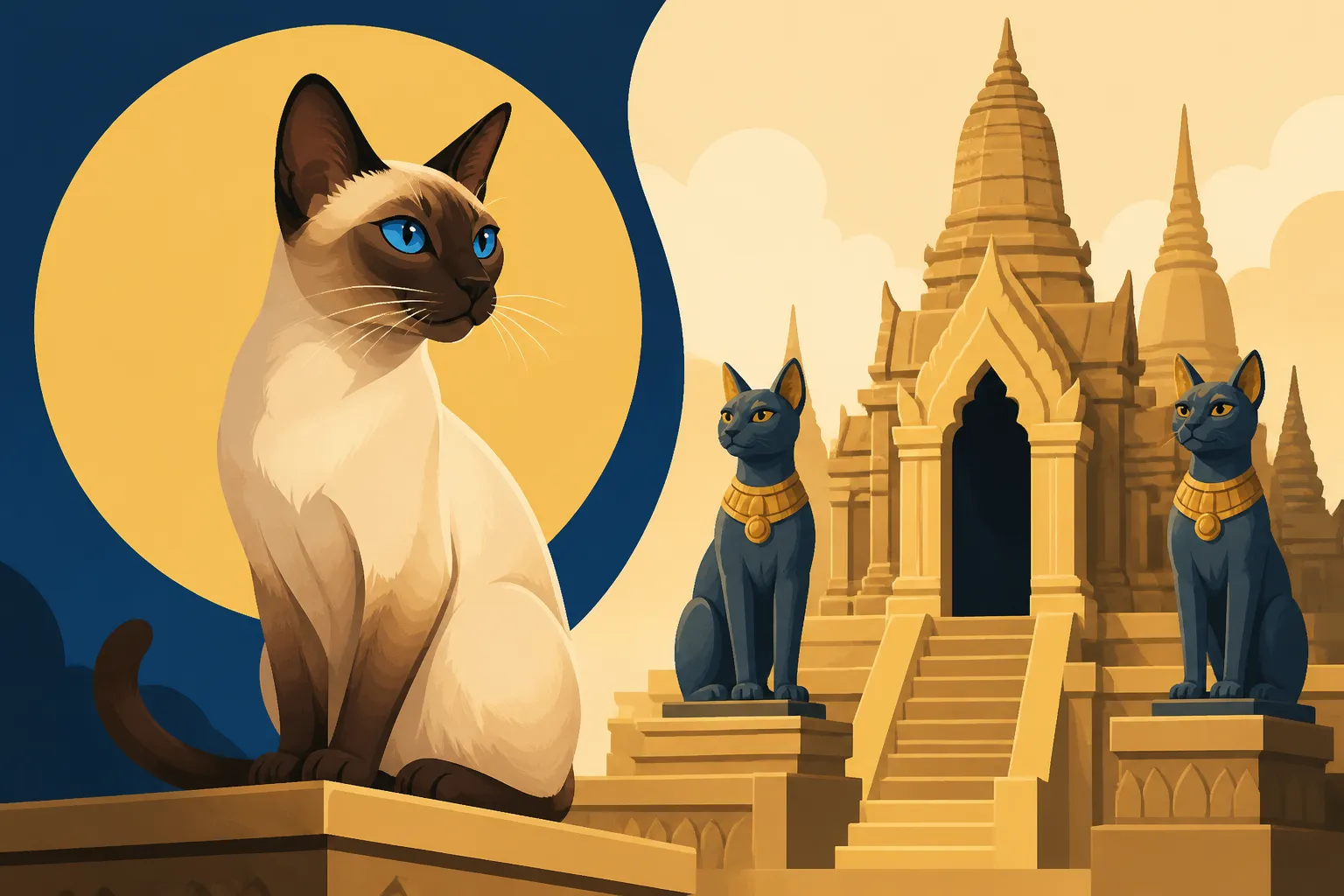
We've all heard the captivating tales, haven't we? The whispered legends of exotic, ancient felines, eyes gleaming in the torchlight, diligently guarding priceless artifacts and sacred spaces. It’s a powerful image, the Siamese cat, with its striking looks and intense gaze, serving as a silent, watchful protector of ancient temples in its homeland. But how much truth lies behind this romantic notion? In this guide, we're going to delve deep into the history and folklore surrounding these magnificent cats to separate fact from the enchanting tales.
The Allure of the Ancient Siamese Cat Legend
There's something incredibly appealing about the idea of a cat guarding anything, especially something as grand and mysterious as a temple. For the Siamese cat, this particular myth has woven itself tightly into its identity, creating an aura of regal importance and ancient wisdom.
Tracing the Origins of the Myth
Let's be honest, the moment you see a Siamese cat, with its elegant form, piercing blue eyes, and distinctive coloring, your mind can't help but wander to distant, exotic lands. The breed’s very name, "Siamese," evokes images of ancient Siam, a place rich in history, intricate temples, and royal traditions. It's only natural that a cat from such a place would be imbued with extraordinary stories. This romantic vision often leads people to believe that the cats were not just companions, but had a functional role beyond mere pest control or affection.
Many ancient cultures held cats in high esteem, often associating them with divinity, protection, and good fortune. In Egypt, cats were revered and mummified; in other cultures, they were seen as guardians of the spiritual world. Given this global context of feline reverence, it’s not a huge leap for people to imagine the Siamese cat, specifically, taking on a similar, elevated role in its homeland. The idea is so captivating that it has been passed down through generations of cat lovers, adding to the mystique of the breed. We know definitively that The Siamese Cat Came From Siam, Not Thailand, grounding these tales in a specific historical region.
Understanding the Role of Cats in Ancient Thai Society
While the notion of a 'temple guardian' sounds incredibly dramatic and important, historical records and the oldest known texts about Siamese cats, like the Tamra Maew (or "Cat-Book Poems"), paint a slightly different picture. These ancient manuscripts, dating back centuries, meticulously describe the appearance and characteristics of various types of cats native to Siam, including the Wichianmat, which is the direct ancestor of what we now know as the Siamese cat.
The Tamra Maew certainly highlights the beauty and auspicious qualities of these cats. They were considered good luck, brought prosperity, and were prized possessions, particularly by royalty and noble families. The texts elaborate on their unique coat patterns, eye color, and even temperament, associating them with wealth and protection in a spiritual or symbolic sense. For instance, a cat with specific markings might be believed to ward off evil spirits or bring good fortune to a household. This is a far cry from a literal guard cat, standing watch against intruders or protecting physical objects. To understand more about these crucial texts, you might enjoy reading What the Tamra Maew Manuscripts Show About the Siamese Cat. The cats were undoubtedly cherished members of the household, elevated above common strays, but their role was more one of esteemed companion and lucky charm rather than active security personnel.
The Reality vs. Romanticism of Temple Guardianship
When we peel back the layers of romanticism, we find that the practical realities of cats, even incredibly intelligent and devoted ones, guarding temples don't quite align with their natural instincts or capabilities.
The Practicalities of "Guarding" for a Feline
Let's consider what "guarding" truly means. For a dog, it might involve barking at strangers, chasing away perceived threats, or even physically restraining an intruder. Cats, on the other hand, are masters of stealth, observation, and often, indifference to human-centric matters. While a Siamese cat is undeniably clever, and How Intelligent a Siamese Cat Is Compared to Other Cats is truly remarkable, their intelligence usually manifests in opening cupboards, solving puzzle feeders from Chewy, or manipulating their humans for treats and attention, not in protecting valuable temple artifacts from thieves.
Imagine a Siamese cat attempting to "guard" a temple. Would it challenge an armed intruder? More likely, it would observe from a high vantage point, perhaps letting out a piercing yowl if startled, then disappear into the shadows. Their natural instinct when faced with a threat is often to flee or hide, not to confront. While a cat's presence could deter small pests like rodents from damaging scrolls or structures, this is a far cry from guarding against human trespassers or defending sacred relics. The idea of them being tethered or trained for such a specific, active defensive role goes against almost everything we know about feline behavior and independence. We can even see in some of the legends, like Which Legend Explains a Siamese Cat's Kinked Tail, that their unique physical traits were attributed to more whimsical, less militaristic activities.
What the Tamra Maew and Historical Accounts Suggest
As mentioned, the Tamra Maew describes Siamese cats as treasured companions and symbols of good fortune. There is no mention within these ancient poems or other historical accounts that explicitly details Siamese cats being trained or employed as temple guardians. Instead, they were seen as beautiful, elegant creatures whose presence brought blessings and were cherished for their unique appearance and affectionate nature. They were often depicted sitting near royalty or in serene settings, enjoying a life of comfort and appreciation.
The legends that do exist about Siamese cats and temples often speak of them being present at royal funerals, or that their crossed eyes and kinked tails (traits that were once common) came from diligently watching over royal chalices, wrapping their tails around the stems for security. While charming, these tales are more symbolic origin stories for physical traits than evidence of a sustained, active guarding duty. The idea of Whether Siamese Cats Really Guarded Temple Vases is a popular one, but it's important to differentiate between a charming legend explaining a physical characteristic and historical evidence of a protective role. If anything, their perceived sacredness or connection to royalty would have been their "protection," deterring anyone from harming them, rather than them being the protectors themselves. The records suggest they were Whether Siamese Cats Were Only Owned by Kings, further elevating their status without assigning them a guard role.
Why This Myth Endures
Despite the lack of concrete historical evidence, the legend of the temple-guarding Siamese cat persists. Why does this particular story hold such sway over our imaginations?
The Exotic Appeal of the Siamese Cat
One major reason this myth continues to thrive is the sheer exoticism and unique personality of the Siamese cat itself. From the moment they were introduced to the Western world in the late 19th century, these cats captivated audiences with their striking appearance – the vibrant blue eyes, the contrasting "points" of color on their extremities, and their sleek, muscular bodies. They looked and sounded unlike any other domestic cat. This inherent uniqueness made them prime candidates for extraordinary tales.
Their highly vocal nature and demanding, engaging personalities also contribute to the perception of them as something more than just a house cat. A Siamese doesn't just meow; it converses, yowls, and chirps, often seeming to expect a response. This communicative quality can easily be interpreted as intelligence, vigilance, and a deep connection to their surroundings. When you have a cat that is so intensely focused on you and its environment, it's easy to project a sense of purposeful watchfulness onto them. Many owners will tell you What a Siamese Cat's Temperament Is Really Like – they are deeply involved in your life, not passive observers. This intense engagement lends itself to the idea of them being natural guardians, even if their "guarding" is really just intense observation and a very loud commentary on squirrels in the yard.
Marketing and Storytelling Through the Years
It's also worth acknowledging the role of marketing and storytelling in perpetuating this myth. When Siamese cats first arrived in Europe and America, they were a novelty, a curiosity from a distant, mysterious land. Breeders and enthusiasts naturally leaned into the exotic origins of the breed to enhance its appeal. Stories of royal cats, temple guardians, and sacred animals added an undeniable allure, making these cats even more desirable.
These narratives created a mystique around the breed, making them not just pets, but living pieces of ancient history. Who wouldn't want a cat with such a storied past? Even today, many people encountering a Siamese for the first time will bring up these legends. It's part of the breed's charm, a delightful bit of folklore that makes the Siamese cat even more fascinating. While the primary goal of ancient Siamese cats was likely companionship and pest control within royal and wealthy households, the romantic embellishments have become an integral part of their identity. So, next time your Siamese is intensely staring at a dust bunny under the sofa, you can imagine they’re actually guarding ancient scrolls, with a side order of keeping those dust bunnies from multiplying, of course!
| Feature | Legendary "Temple Guardian" Role | Historical & Cultural Role in Siam |
|---|---|---|
| Primary Function | Active protection, sentinel | Companion, good luck charm, pest control |
| Objects Protected | Sacred artifacts, temple treasures | Royal families, noble households |
| Behavior | Vigilant, confrontational (implied) | Affectionate, observant, independent |
| Evidence | Folklore, romanticized tales | Ancient texts (Tamra Maew), oral history |
| Perception | Exotic, mysterious protector | Sacred, cherished, symbol of prosperity |
Disclaimer
This article is for general informational purposes only and does not constitute professional advice. Laws, prices and regulations vary by location and change over time. Consult a qualified professional for guidance on your specific situation.