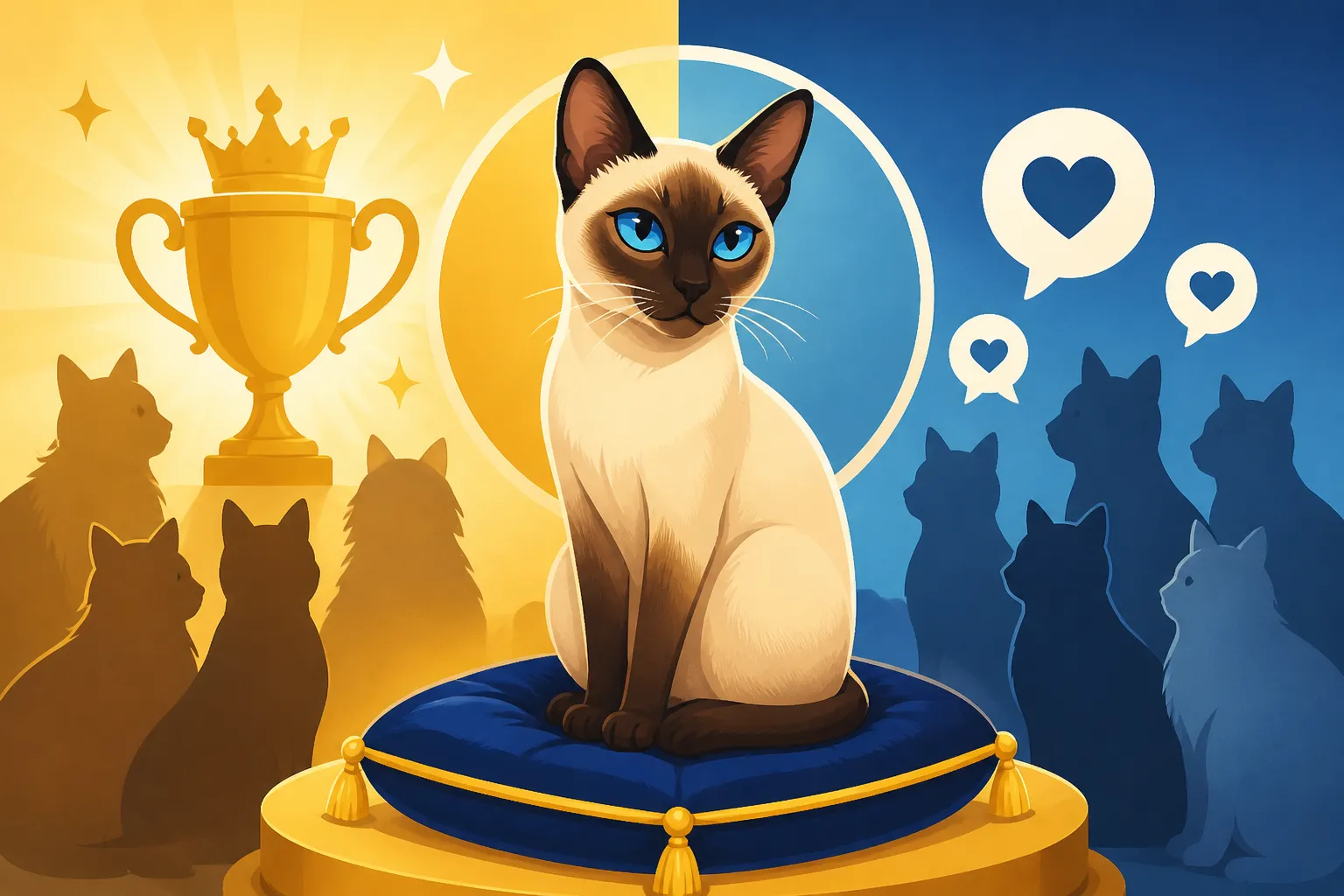
Whether the Siamese Cat Was Once the Most Popular Cat
The Siamese cat has been called one of the most popular pedigree cats, but that does not necessarily mean it was ever the most popular cat overall. The answer depends on the country, the time period, and whether “popular” means registered with a cat association or simply living in people’s homes. This guide explains what the historical claim gets right—and where it overstates the evidence.
Was the Siamese cat ever the most popular cat?
Popularity depends on what is being counted
There is no single, universally accepted ranking of the most popular cats across all places and periods. Cat registries record pedigreed cats entered under their rules; they do not count every household cat. A registry’s annual rankings can show which pedigreed breeds people are registering, but they cannot establish which type of cat was most common in homes overall.
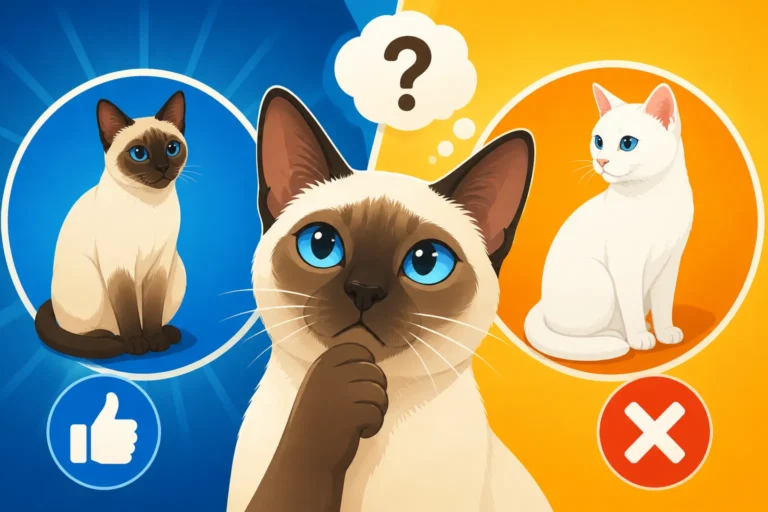
That distinction matters because most pet cats are not registered as pedigree animals. A family might call its blue-eyed, color-pointed cat a Siamese even if it has no pedigree papers or is a mix. Those cats may be part of the breed’s wider cultural popularity, but they do not necessarily appear in Siamese registration totals.
The phrase “most popular cat” can also mean several different things: the best-known breed, the most frequently registered breed, the most sought-after kitten, or the most common type of cat owned. A breed may lead in public recognition without topping a registry list. For a closer look at how those lists work, see Where the Siamese Cat Ranks in Registrations.
A major pedigree breed, not always the number-one breed
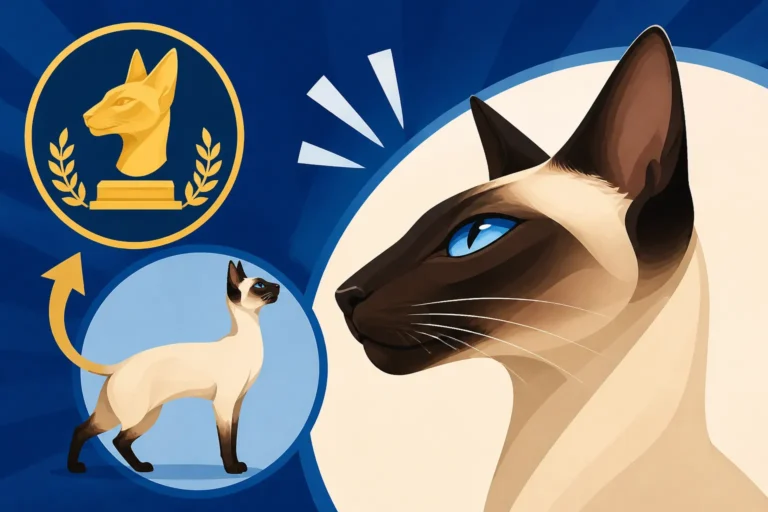
The Siamese became one of the most recognizable and influential pedigree cats in the West. Its striking color points, blue eyes, and distinctive voice made it memorable, while its status as a relatively rare imported cat added to its appeal in the early years of its popularity.
But “one of the most popular” is not the same as “the most popular.” In many accounts of cat-breed history, the Persian is a major rival for the top position, particularly in the early and middle decades of organized cat showing. Rankings also differ between registries and can change from one period to another. Without specifying a country, registry, and year, it is not possible to give a careful, universal answer that the Siamese held the number-one spot.
A more accurate description is that the Siamese was among the leading and best-known pedigree breeds during important stretches of the twentieth century. It held a prominent place in shows, breeding programs, popular culture, and public imagination—even when a different breed led a particular registration chart.
How the Siamese became so well known
A rare imported cat drew attention
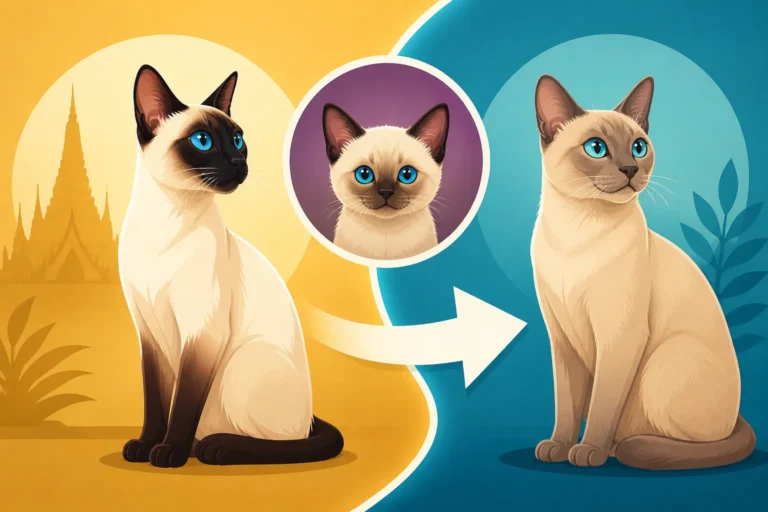
The Siamese’s early reputation in Britain and the United States was shaped partly by its origins as an imported cat. Siamese cats began appearing in Western cat shows during the late nineteenth century, when unfamiliar breeds could attract considerable attention simply because audiences had rarely seen them before. Their pale bodies and darker face, ears, legs, and tail looked unlike the cats many visitors knew.
That novelty helped the breed stand out. Show audiences and newspaper readers could recognize a Siamese from its appearance, and stories about the cats’ origins added an air of distinction. The first Siamese cats shown in Britain were talked about in part because they were unusual, not because they were already a common household breed. The history of those early appearances is covered in Which Show the First Siamese Cats Appeared At.
The breed also gained a foothold in the United States through notable early arrivals, including a Siamese cat given to the White House in the nineteenth century. Such events made the breed newsworthy, though they should not be mistaken for proof that Siamese cats were already widespread. To understand that early American story, see Which Siamese Cat Reached America First.
Recognition grew beyond the show ring
Over time, the Siamese became familiar to people who had never attended a cat show. Its color-point pattern was easy to spot, and its dramatic look translated well into illustrations, films, advertising, and household conversation. A breed can become culturally prominent this way even if it is not the most numerous cat in the country.
The Siamese also contributed to the development of other breeds. Breeders used Siamese cats in programs that helped establish several related or color-pointed breeds, extending the Siamese influence beyond cats registered under the Siamese name. That legacy is one reason the breed’s importance in cat history can exceed what a single ranking might suggest. Read more in Which Breeds Came Out of the Siamese Cat.
Popular media added to the breed’s visibility, although not every portrayal was flattering or accurate. A character in a film can make a breed instantly recognizable, but screen presence does not tell us how many people owned that breed at the time. For examples of the breed’s pop-culture profile, see Which Films Feature a Siamese Cat.
How rankings changed over time
Registration charts reflect changing tastes
A breed’s position on a registry list can rise or fall as people’s preferences change. Show standards, breeder availability, fashion, and public familiarity all play a part. A breed that is highly sought after in one decade may face more competition in another, especially as new breeds become established and owners have more choices.
Rankings can also shift because the registry’s population changes. If more breeders register a different breed, the Siamese may drop a place even if the number of Siamese cats being bred remains steady. A lower position therefore does not automatically mean that people stopped liking Siamese cats; it may mean that another breed grew faster within that registry.
| What “popular” means | What it can tell you | What it cannot tell you |
|---|---|---|
| Registry registrations | Which pedigreed breeds were registered with that organization | How many cats of each breed lived in all households |
| Show entries | Which breeds were being exhibited and promoted | How common those breeds were as pets |
| Public recognition | Which breeds people could identify or recall | Which breed had the most owners |
| Household ownership | Which cats people kept as pets, if measured by a reliable survey | The breed’s ranking in a registry |
| Kitten demand | Which breeds prospective owners were seeking in a particular market | Long-term ownership numbers or worldwide popularity |
For this reason, a claim such as “the Siamese was the most popular cat in the 1960s” needs supporting details: which country, which registry, and what measure of popularity? If those details are missing, treat the statement as a broad description of strong popularity rather than a precise historical ranking.
A later decline in rank does not erase past prominence
The Siamese’s position in registrations has changed over time, as has the popularity of other established breeds. That shift can be influenced by changing preferences in appearance, the growth of competing breeds, and the difference between pedigree registration and the broader pet-cat population. The topic is explored further in Why Siamese Cat Registrations Fell After the 1990s.
It is tempting to read a ranking decline as a verdict on the breed, but that misses what rankings measure. A breed may become less prominent in one registration table while remaining recognizable, beloved, and influential. Siamese cats continue to be familiar to many people, and the breed’s distinctive appearance has left a lasting mark on how the public imagines a pedigree cat.
It is also worth remembering that popularity can bring trade-offs. Greater demand may encourage responsible breeding, but it can also create pressure to breed for a fashionable look without enough attention to health and temperament. Anyone considering a Siamese should look beyond its historic reputation and ask about care, health, and the individual cat’s needs.
The most accurate answer to the historical claim
“One of the most popular” is safer than “the most popular”
Was the Siamese cat once the most popular cat? It may have led particular lists in particular places or periods, but the broad claim cannot be confirmed without those specifics. What is well supported is that the Siamese became one of the most famous and influential pedigree breeds in the West. It was unusual, highly recognizable, frequently discussed, and important in the development of other breeds.
That distinction is not just wordplay. Saying the Siamese was “among the most popular pedigree breeds” communicates its historical stature without implying that it was more common than every other breed—or more common than mixed-breed and unregistered cats. The broader overview Where the Siamese Cat Ranks Among Cat Breeds can help put its standing in context.
The claim also depends on whether “Siamese” refers only to cats formally registered as Siamese or to any cat people identify as Siamese-looking. The latter group is harder to count. A blue-eyed, color-pointed cat without documented pedigree may be called Siamese by its owner, but appearance alone does not establish breed registration or ancestry.
Why the distinction matters to prospective owners
Historical popularity can make a breed sound like an obvious choice, but it cannot tell you whether a Siamese will suit your home. These cats are often known for being social and communicative, and individual cats can differ greatly in energy, confidence, and vocalness. A breed’s reputation is a starting point for research, not a promise about any particular cat.
If you are considering a Siamese, focus on the individual animal and the quality of its care. Ask a breeder or rescue about health history, early socialization, and the cat’s behavior when left alone. Spend time with the cat if possible, and think honestly about whether its activity level and communication style fit your household.
It is also useful to separate pedigree popularity from the popularity of the breed’s look. Many cats with color-point coats are mixed-breed pets, and adoption can be a good option if you are drawn to that appearance rather than needing a specific pedigree. For a broader account of the breed’s changing public profile, see How Fast the Siamese Cat Spread in America and What People Get Wrong About the Siamese Cat.
The clearest conclusion is that the Siamese was a major popular breed, especially in the history of Western pedigree cats. Whether it was the most popular depends on the exact place, period, and measure being used. Without those details, “one of the most popular” is the more responsible—and more useful—description.
Disclaimer
This article is for general informational purposes only and does not constitute professional advice. Laws, prices and regulations vary by location and change over time. Consult a qualified professional for guidance on your specific situation.