Which Thai Cats Are Related to the Siamese Cat
It can be incredibly confusing to untangle the true origins of our beloved Siamese cats, especially when you hear about different "Thai cats" and wonder how they all fit together. Many people assume "Siamese" is just another name for any cat from Thailand, but that's not quite right. This guide will dive deep into the fascinating history and relationships of the Siamese cat, exploring the indigenous felines of Thailand and explaining which ones are truly related to the elegant Meezers we adore today, clearing up the common misconceptions along the way.
The Ancient Roots: Understanding the Siamese Cat's Thai Heritage
When we talk about the Siamese cat, it's easy to forget that this breed has a rich, ancient history rooted in what was once the Kingdom of Siam, now known as Thailand. These cats weren't just randomly picked up; they were cherished members of society, often associated with royalty and temples. Their unique appearance and vocal nature have been documented for centuries, long before they ever graced Western shores.
The Wichianmat: The Original Siamese Template
If you've ever wondered where the modern Siamese cat truly comes from, you need to look to the Wichianmat. This is the cat that Thai people would recognize as the direct ancestor of our Siamese. In fact, in Thailand, they still refer to the cats with the distinctive point coloration as Wichianmat. This isn't just a fancy name; it literally translates to "moon diamond," a beautiful homage to their striking appearance. These were natural cats, thriving in their homeland for hundreds of years, before selective breeding began to shape them into the various types we see today.
The Wichianmat was a landrace breed, meaning it developed naturally in its geographic region without intensive human intervention, at least not in the way modern cat breeds are developed. They were common enough to be seen in homes but special enough to be immortalized in ancient texts. Their survival was due to their hardiness and their intrinsic charm. Imagine a bustling Thai village, and you'd likely see cats roaming around with these familiar dark points, slender bodies, and piercing blue eyes. The Siamese Cat Came From Siam, Not Thailand goes into more detail about this historical context, explaining how the cat's origin is tied to the country's past identity.
The Tamra Maew: Documenting Thai Cats
The history of Thai cats, including the Siamese, is beautifully preserved in ancient manuscripts known as the Tamra Maew, or "Cat Poems." These incredibly old texts, some dating back hundreds of years, describe and illustrate various types of cats native to Siam. They weren't just whimsical poems; they served as detailed guides, outlining the physical characteristics, colors, and even perceived personality traits of different felines considered lucky or auspicious.
Within these treasured scrolls, the Wichianmat is prominently featured. The descriptions of its pointed coat, blue eyes, and slender form perfectly match what we recognize as the foundational Siamese cat. These manuscripts are invaluable because they offer a glimpse into how these cats were viewed and understood in their native land, long before European and American breeders started developing the breed. They confirm that the distinct "Siamese look" is not a recent invention but an ancient genetic trait that captivated people centuries ago. Understanding What the Tamra Maew Manuscripts Show About the Siamese Cat truly helps us appreciate the depth of their heritage.
The Modern Thai Cat: A Story of Rediscovery and Divergence
The "Thai cat" as a recognized breed is where things get a bit more complex, and often, confusing for those new to the world of Siamese genetics and history. Essentially, the Thai cat is a newer breed designation that seeks to preserve the look of the original, more moderate Siamese cats that were common before selective breeding in the West pushed the Siamese towards its more extreme, wedge-headed modern form. It's a fascinating example of how a breed can evolve and then have its earlier form "re-created" or championed.
The Split from the Siamese Standard
When Siamese cats were first imported to the West in the late 19th and early 20th centuries, they largely resembled the traditional Wichianmat—a cat with a rounder head, a more robust body, and what we now call an "applehead" appearance. However, as breeders in Europe and North America began to refine the breed, they started selecting for increasingly slender bodies, longer legs, larger ears, and most notably, the distinct wedge-shaped head that is characteristic of the modern show-style Siamese. Over several decades, the breed standard shifted dramatically.
This change meant that the original, more traditional Siamese cat, still prevalent in Thailand and favored by many who loved the classic look, no longer fit the evolving Western show standard. This divergence led to a desire to protect the traditional type. Enter the "Thai" cat breed. This breed was established to specifically maintain the original conformation, essentially allowing enthusiasts to keep breeding cats that looked like the Siamese of old. How the Thai Split From the Siamese Cat offers a deeper dive into this historical separation and the reasons behind it.
Distinguishing the Thai Cat from the Siamese
So, if both come from Thailand, how do you tell a Thai cat apart from a modern Siamese? It all comes down to their physical features, particularly their head shape and body type.
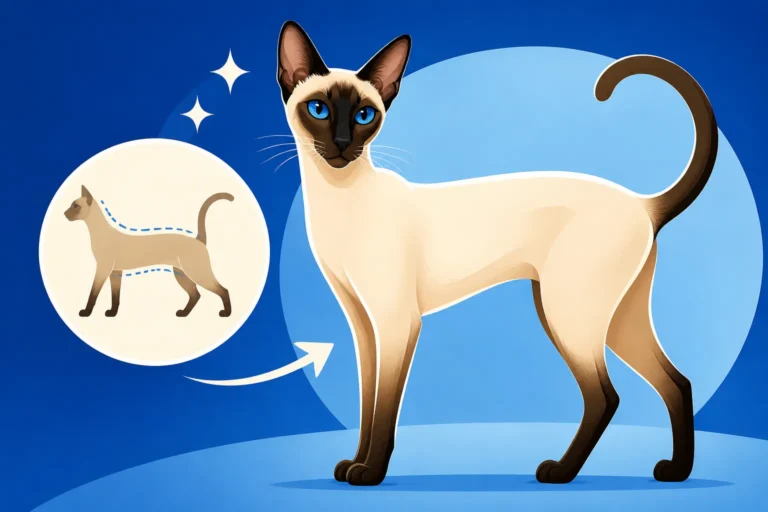
A modern Siamese, often seen in cat shows, boasts a long, tubular body, very slender legs, large, wide-set ears that form a "wedge" with the head, and an extremely refined, angular face. Their eyes are almond-shaped and slanted. They are truly an extreme example of selective breeding.
The Thai cat, on the other hand, presents a more moderate, traditional appearance. They have a rounder, apple-shaped head, a more substantial and muscular body, and ears that are proportionate to their head, not overly large or wide-set. Their eyes are typically more rounded than the modern Siamese. They still have the distinctive pointed coat and striking blue eyes, but their overall structure is much less extreme. Think of it as the difference between a classic sports car and a super-modern concept car – both beautiful, but distinctly different in their aesthetics. What the Thai Cat Is Next to a Siamese Cat provides a visual and descriptive comparison that really helps to solidify these differences.
| Feature | Modern Siamese (Wedge) | Thai Cat (Traditional/Applehead) |
|---|---|---|
| Head Shape | Long, narrow wedge; straight profile | Rounded, apple-shaped; gently curved profile |
| Body Type | Long, slender, tubular; fine-boned | More muscular, substantial; medium build |
| Ears | Very large, wide at base, follow head wedge | Medium to large, proportionate; not overly wide |
| Eyes | Almond-shaped, slanted | More rounded, expressive |
| Muzzle | Fine, pointed | Moderate, well-developed |
| Tail | Long, thin, tapers to a fine point | Medium length, tapers to a point |
| Point Coloration | Classic Seal, Blue, Chocolate, Lilac | Classic Seal, Blue, Chocolate, Lilac (and more) |
| Temperament | Vocal, intelligent, affectionate | Vocal, intelligent, affectionate (similar) |
It's important to remember that while the appearance differs, many core temperament traits remain. Both Thai and Siamese cats are known for being incredibly intelligent, vocal, and deeply affectionate companions. You'll find great enrichment toys and specialized food for both types of pointed cats on sites like Chewy, which caters to all feline friends.
Registries and Recognition
The formal recognition of the Thai cat as a distinct breed has been a journey, primarily driven by dedicated enthusiasts who wanted to preserve the original Siamese type. Various cat registries around the world have handled this differently. Some, like The International Cat Association (TICA), recognize the "Thai" as a separate and distinct breed, with its own specific standard. Other organizations might refer to them as "Old-Style Siamese" or "Traditional Siamese" but not always give them full separate breed status.
This distinction in registries is crucial for breeders and owners. If you're looking for a cat with the classic, more robust "applehead" look, you'll want to seek out breeders who specifically work with Thai cats and register them as such. This ensures that the lineage is clean and adheres to the desired traditional characteristics. It’s not just about aesthetics; it’s about maintaining a historical phenotype. Which Registries Recognize the Thai Separately From the Siamese Cat provides excellent context on this complex aspect of feline pedigree.
Beyond the Siamese: Other Indigenous Thai Breeds
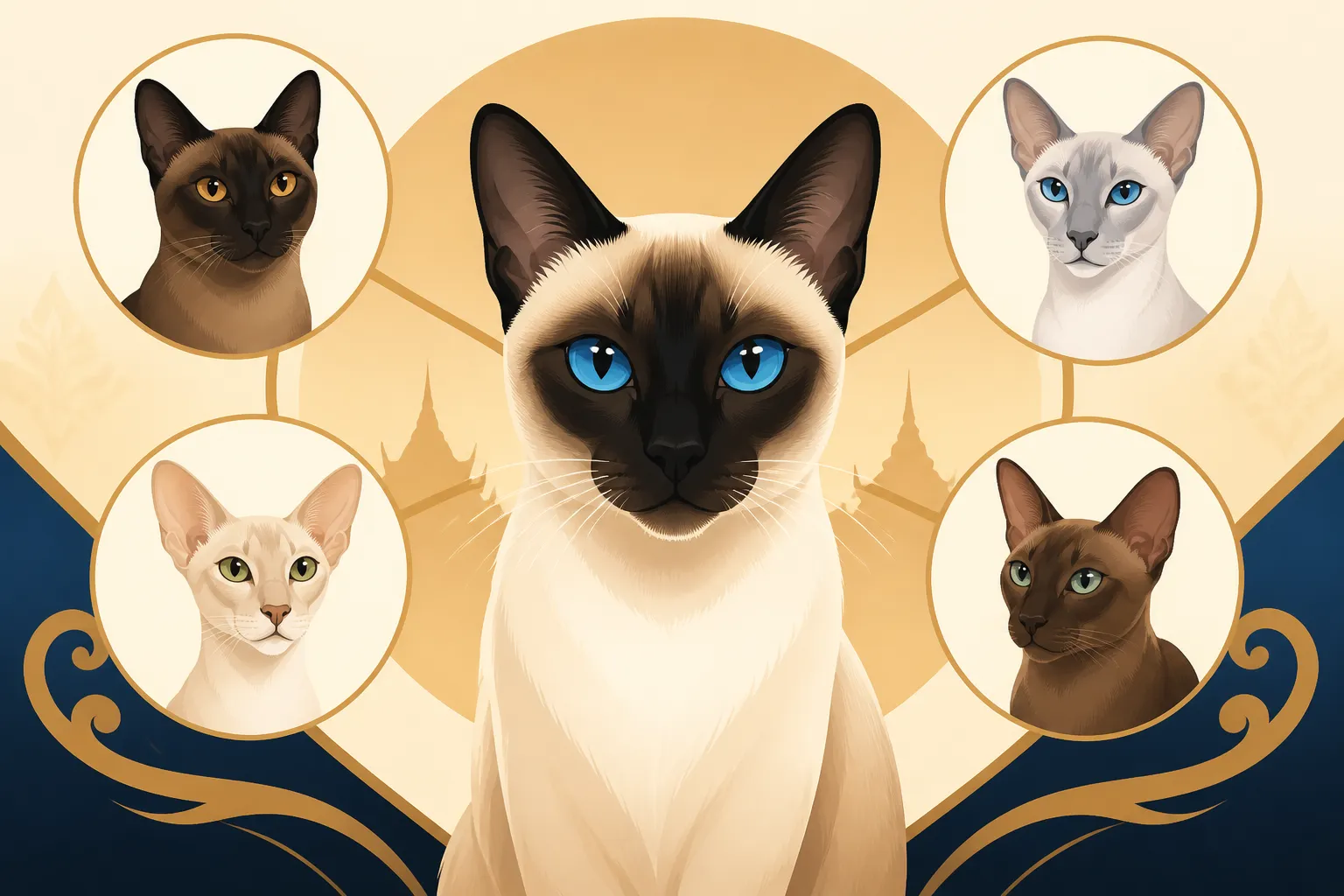
While the Siamese (Wichianmat) is undoubtedly the most famous feline export from Thailand, it's far from the only distinct breed to originate there. Thailand is home to several other historically significant and beautiful cat breeds, each with its own unique characteristics and lore. These cats represent the rich tapestry of feline diversity found in Southeast Asia.
The Korat: The Lucky Silver Cat
One of the most striking and historically significant Thai cats is the Korat. Unlike the Siamese, the Korat is a single-color breed, known for its stunning silver-blue coat and large, luminous green eyes. Originating from the Korat province in Thailand, these cats have been considered symbols of good luck and prosperity for centuries. They are often given as gifts to newlyweds or for other important life events.
The Korat has a different body type than the Siamese, being more compact and muscular, often described as having a "heart-shaped" face. Their short, single coat lies flat and has a shimmering quality, giving them an almost ethereal glow, especially in certain lights. They are known for being intelligent, playful, and deeply affectionate with their families, though perhaps a little less vocally demanding than a Siamese. The Korat also appears in the Tamra Maew, underscoring its ancient roots in Thai culture.
The Sukhothai: A Nod to Ancient Lineage
The Sukhothai cat is another breed gaining recognition, aiming to revive another distinct type of traditional Thai cat. Sometimes called "Thai Lilac" due to its color, the Sukhothai shares some ancestral links but has its own unique characteristics. They are generally described as having a slightly rounder, more sturdy build than the modern Siamese, but perhaps not as stocky as the Korat.
The goal with the Sukhothai is often to preserve cats that resemble illustrations of felines from the ancient Sukhothai Kingdom period, again emphasizing the cultural and historical connection. These cats carry a similar charm and intelligence to their Thai cousins, offering yet another window into the diverse genetics of the region's natural cat population. For families with active cats, toys from Chewy can help keep them entertained, regardless of breed.
The Burmese Cat: A Surprising Connection
Many people are surprised to learn that the Burmese cat, a popular breed worldwide, also has roots in Thailand and Myanmar (formerly Burma). The breed began with a single cat named Wong Mau, brought from Burma to the United States in 1930. While Wong Mau was originally described as a dark brown Siamese-type cat, genetic analysis and breeding efforts revealed she was a distinct breed, carrying a gene for sepia coloration that differs from the Siamese point gene.
While modern Burmese cats are bred for a specific appearance—compact, muscular, with round heads and expressive gold eyes—their ultimate ancestor came from the same region of Southeast Asia that gave us the Siamese. This demonstrates how interconnected the feline populations of this area truly are, with different genetic mutations giving rise to unique and beloved breeds. It's a testament to the rich biodiversity of the region.
The Broader Family: Derived Breeds with Siamese Ancestry
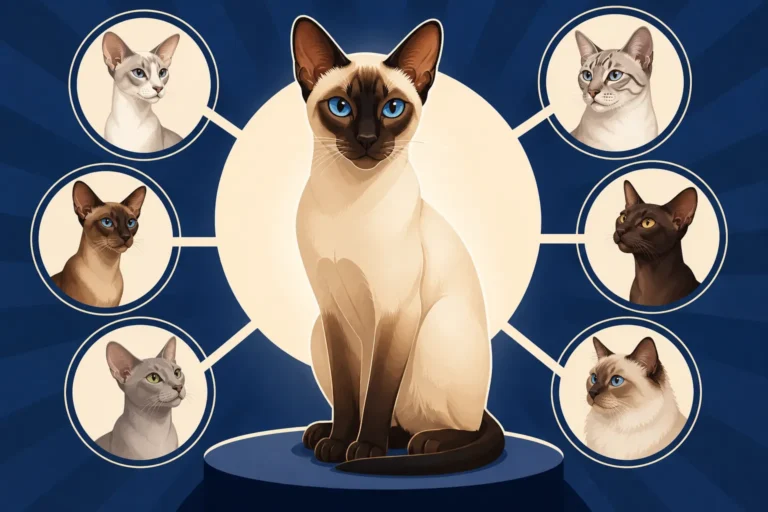
The Siamese cat, due to its striking appearance and strong genetic traits, has been instrumental in the development of many other popular cat breeds around the world. These "derived breeds" inherited certain characteristics from their Siamese ancestors, most notably the pointed coloration or certain aspects of their body type and temperament, but were then bred to develop their own unique identities.
Oriental Shorthair: The Siamese in a Rainbow of Colors
The Oriental Shorthair is perhaps one of the most direct descendants and closest relatives to the Siamese. Essentially, an Oriental Shorthair is a Siamese cat in every aspect except for its color and pattern. They share the same long, lithe body, the elegant wedge-shaped head, large ears, and almond-shaped blue or green eyes. The key difference is that while a Siamese only comes in pointed colors (seal, blue, chocolate, lilac, etc.), the Oriental Shorthair can come in over 300 different colors and patterns, including solids, tabbies, bi-colors, and smokes.
This breed was developed by crossing Siamese cats with other shorthaired breeds, like the British Shorthair and Russian Blue, and then back-crossing to Siamese, to introduce new colors while retaining the distinctive Siamese body type and personality. If you love the Siamese's vocal nature and active intelligence but dream of a solid black or a patterned tabby cat, the Oriental Shorthair is your answer. How a Siamese Cat Differs From an Oriental Shorthair outlines these distinctions beautifully.
Balinese: The Long-Haired Siamese
For those who adore the Siamese look but wish for a softer, more flowing coat, the Balinese offers the perfect solution. The Balinese is, quite simply, a long-haired Siamese. It shares the same body type, wedge-shaped head, blue eyes, and point coloration as its shorthaired cousin. The main difference is its silky, semi-long coat, which often features a plume-like tail.
The Balinese likely originated from spontaneous mutations in Siamese litters, where long-haired kittens would occasionally appear. Instead of being considered faults, these beautiful cats were selectively bred to establish a new, distinct breed. They carry the same conversational personality and deep bond with their human companions as the Siamese. How a Siamese Cat Differs From a Balinese offers further details on this lovely variant.
Other Notable Relatives
The influence of the Siamese extends even further. Breeds like the Colorpoint Shorthair are essentially Siamese cats with a wider range of point colors beyond the traditional four (seal, blue, chocolate, lilac), introducing colors like red point, cream point, and lynx point. The Himalayan, a long-haired, pointed cat with a Persian body type, was created by crossing Siamese with Persians to combine the best of both worlds: the luxurious coat and docile temperament of the Persian with the striking blue eyes and point coloration of the Siamese.
Even the Tonkinese, a hybrid breed, is a direct result of crossing a Siamese with a Burmese. This combination created a cat with a unique "mink" pattern (intermediate between pointed and sepia) and a wonderfully balanced temperament, inheriting traits from both its spirited Siamese and charming Burmese ancestors.
These derived breeds truly highlight the lasting legacy of the Siamese cat. From its ancient origins as the Wichianmat in Thailand to its role as a foundation breed for countless others, the Siamese has left an indelible mark on the world of domestic felines. Whether you prefer the traditional look of a Thai cat, the sleek lines of a modern Siamese, or one of its many colorful descendants, the connection to its fascinating history is always there, waiting to be explored. You can find many types of grooming tools and nutritious food options for all these breeds at reputable retailers like Chewy.
Disclaimer
This article is for general informational purposes only and does not constitute professional advice. Laws, prices and regulations vary by location and change over time. Consult a qualified professional for guidance on your specific situation.