Where the Siamese Cat Ranks in Registrations
It's often a bit of a shock to realize that some of the cat breeds we consider iconic aren't necessarily topping the charts in terms of current registrations. Many people have a strong image of the Siamese cat, perhaps from childhood books or films, and assume it's still one of the most common breeds around. However, the reality of breed popularity is a dynamic thing, constantly shifting with trends, breeding practices, and evolving owner preferences. This guide will dive into the fascinating world of feline breed registries, exploring where the beloved Siamese cat stands today and what factors have shaped its journey through the popularity ranks over the years.
The Shifting Landscape of Feline Popularity
The world of purebred cats is constantly in flux, much like any other aspect of culture or fashion. What was once the pinnacle of feline elegance and desirability can, over time, see its star dim slightly, even if its intrinsic qualities remain just as captivating. For those of us who adore the Siamese, this shifting landscape can be a little disheartening, especially when we remember a time when they seemed to be everywhere.
Once a Household Name: The Siamese Cat's Golden Age
There was a definite period, spanning several decades, where the Siamese cat wasn't just popular; it was the cat. From the mid-20th century through much of the 1980s, these striking felines with their vivid blue eyes and distinctive color points were practically a household fixture. They graced advertising campaigns, appeared in movies, and were frequently featured in books and on television. People were drawn to their elegant, athletic build, their intelligent gaze, and of course, their famously vocal personalities. If you asked someone to name a purebred cat, "Siamese" would likely be one of the first answers. Breeders often had long waiting lists, and getting a Siamese kitten felt like a true achievement. This era established the breed's reputation as a sophisticated, talkative, and highly interactive companion, characteristics that still define them today.
Why Popularity Numbers Matter for Breeds
Understanding where a breed ranks in terms of registration numbers might seem like a trivial detail, but it actually holds significant meaning for the future and health of the breed. High registration numbers often indicate a broad gene pool, which can be beneficial for genetic diversity and overall health. When a breed is widely popular, there's more interest from potential owners, more breeders, and often more resources dedicated to health research and breed preservation. Conversely, a decline in numbers can signal potential challenges, such as a shrinking gene pool, a lack of interest from new breeders, or perhaps a rising prevalence of certain health issues that deter prospective owners. It can also reflect changing lifestyles; for instance, if a breed requires extensive interaction and many people are now working long hours away from home, their numbers might naturally decline. These statistics, therefore, are more than just bragging rights; they're a vital pulse check on a breed's well-being and its place in the modern pet landscape.
Decoding Breed Registries: What Do the Numbers Really Tell Us?
When we talk about a cat breed's "popularity" or "ranking," we're almost always referring to registration data from major cat fancier associations. These organizations play a crucial role in maintaining breed standards, tracking pedigrees, and generally overseeing the world of purebred cats. But it's important to understand what these numbers represent and, perhaps more importantly, what they don't.
The Role of Major Cat Registries
Globally, and especially in North America and Europe, several large cat registries serve as the official record keepers for purebred cats. In the United States, organizations like the Cat Fanciers' Association (CFA) and The International Cat Association (TICA) are two of the most prominent. In the UK, you have the Governing Council of the Cat Fancy (GCCF). These registries maintain comprehensive databases of pedigreed cats, registering new litters and individual cats born from registered parents. When a breeder advertises their kittens as "CFA registered" or "TICA registered," it means they adhere to the standards and lineage tracking of that particular organization. This process ensures the purity of the breed line and helps preserve the distinct characteristics that define each breed. They publish annual statistics on which breeds have the highest number of registered cats, which is how we get our "popularity rankings." These rankings are a snapshot of active breeding and ownership within the purebred cat community, reflecting trends in what types of cats breeders are producing and what new owners are seeking out.
Limitations of Registration Data
While breed registry numbers give us a valuable insight into popularity, it’s crucial to understand their limitations. Firstly, these numbers only reflect registered purebred cats. They don't account for all cats in existence, nor do they include countless mixed-breed cats or purebreds whose owners simply chose not to register them. Many wonderful cats find homes without ever being part of a formal registry. Secondly, the data can be skewed by breeding trends. For instance, a small number of very active breeders of a particular breed might inflate its numbers relative to a breed with more breeders but fewer litters each. It also doesn't always reflect overall household ownership, as many people may own a particular breed but not engage with the registration process, especially if their cat is a beloved pet rather than a show animal or future breeder. For example, an older Siamese cat adopted from a rescue might never be registered by its new owner, even though it's a purebred. Therefore, while these rankings are a good indicator of what's currently thriving in the purebred fancy, they're not a perfect measure of a breed's total presence in our homes and hearts.
The Siamese Cat's Journey Through the Ranks
The story of the Siamese cat in breed registries is one of remarkable highs and a more recent, but understandable, recalibration. It’s a breed with a long and storied history, which gives its popularity arc a certain gravitas.
Peak Popularity: When the Siamese Ruled
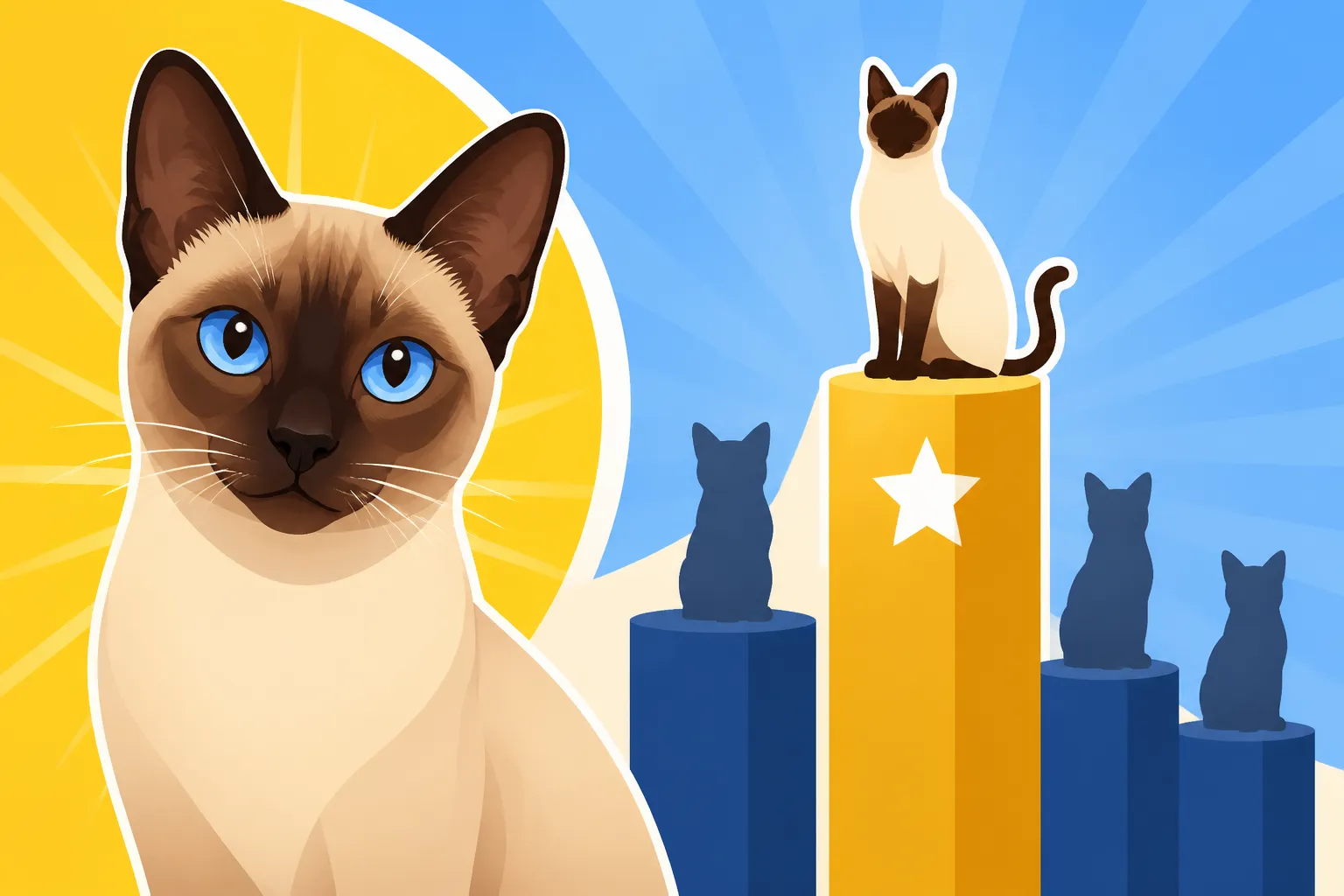
For many years, the Siamese cat was often ranked among the top five, and sometimes even the top three, most popular breeds in major registries like the CFA. This period of peak popularity, roughly from the 1950s through the 1980s, saw the breed become an aspirational pet for many. Its exotic origins, distinct appearance, and famously interactive nature made it incredibly desirable. People were captivated by the tales of its royal heritage from Siam and its unique vocalizations. Getting a Siamese was often a deliberate choice, sought out for its striking looks and engaging personality. Breeders thrived, producing a steady stream of Seal Points, Blue Points, Chocolate Points, and Lilac Points, all eagerly snapped up by enthusiasts. This era cemented the Siamese as an icon of the feline world, a symbol of elegance and intelligence. It was a time when a Siamese cat was truly a star, often recognized instantly by anyone, even those not deeply entrenched in the cat fancy. You can learn more about its historical standing by reading The Siamese Cat Came From Siam, Not Thailand.
The Gradual Decline: Factors at Play
While still a beloved and well-known breed, the Siamese has seen a gradual slip from its top-tier ranking in recent decades. Several factors have contributed to this shift. One significant element is the rise of new, "designer" breeds that have emerged, often with the Siamese as a foundational component. Breeds like the Oriental Shorthair, Balinese, and Tonkinese, all of which share some Siamese ancestry, have gained their own dedicated followings. These breeds offer variations on the Siamese's lean build and vocal personality, sometimes with different coat colors or lengths, appealing to those who love the "look" but want something a little different.
Another factor is the breed's distinctive personality. The Siamese is known for being extremely vocal, demanding of attention, and highly intelligent – traits that not every owner is prepared for. While we adore their chattiness and their need for interaction (as discussed in The Siamese Cat Talks and Expects an Answer), some modern lifestyles might find these traits challenging. People often seek out quieter, more independent companions, or perhaps breeds that are perceived as lower maintenance. The change in the How the Siamese Cat's Head Changed Shape in Fifty Years towards a more extreme wedge can also be a polarizing aesthetic choice for some potential owners who prefer the "applehead" or more traditional look.
Finally, health concerns, while not exclusive to the Siamese, can sometimes play a role. While many Siamese cats live long, healthy lives (How Long a Siamese Cat Lives on Average), the breed does have a predisposition to certain genetic conditions, such as amyloidosis, which can be a difficult reality for owners. While responsible breeders work diligently on health, the overall perception can influence decisions. These combined factors mean that while the Siamese is far from unpopular, it now shares the spotlight with a much broader array of purebred cats.
Modern Realities: Where the Siamese Stands Today
In the current landscape of feline registries, the Siamese cat still holds a respectable position, but it's no longer consistently at the very top. Its enduring legacy ensures it's always recognized, but other breeds have ascended in popularity.
Top Breeds Dominating the Charts
If you look at the most recent rankings from major cat registries, you'll find a few breeds consistently holding the top spots. The Ragdoll often leads the pack, beloved for its docile temperament, stunning blue eyes, and semi-long coat. The Maine Coon, with its majestic size and shaggy fur, is another consistent favorite, appreciated for its gentle "gentle giant" personality. British Shorthairs, with their round faces and plush coats, have also seen a surge in popularity, particularly for their calm demeanor. The Persian, while historically popular, has also maintained a strong following.
These top breeds often share certain characteristics: they tend to have softer, less demanding voices than the Siamese, more relaxed or independent temperaments, and often a more "cuddly" appearance that appeals to a wide audience. Their grooming needs can be higher, but their perceived ease of living in a busy household sometimes outweighs this for many families. This shift doesn't diminish the Siamese; it simply highlights that different attributes are currently in higher demand among those seeking a purebred companion. For someone looking for a cat, comparing a Ragdoll's quiet lap-cat nature to the What a Siamese Cat's Temperament Is Really Like will certainly highlight the differences in lifestyle fit.
Understanding the Siamese Cat's Niche
Despite not being number one, the Siamese cat has carved out a distinct and enduring niche. It remains incredibly popular with those who specifically seek out its unique traits. These are owners who truly appreciate a cat that interacts on a deeply personal level, one that will "talk" to them, follow them from room to room, and become an integral, vocal member of the family. The Siamese is not a background cat; it’s a participant in every aspect of household life. This specific blend of intelligence, vocalization, and affectionate devotion isn't for everyone, but for those who understand and embrace it, there's simply no other cat quite like a Siamese.
They are often the choice for experienced cat owners who appreciate their intellectual prowess and their ability to learn tricks, or for families who want a pet that genuinely engages with them. This niche ensures that the Siamese, while perhaps not reaching the sheer numbers of some other breeds, retains a passionate and loyal following. Finding resources for this unique breed is still easy; for example, you can readily find specialized toys for intelligent and active cats on sites like Chewy, helping to keep your Siamese engaged and happy.
| Trait Category | Top 5 Popular Breeds (e.g., Ragdoll, Maine Coon, British Shorthair) | Siamese Cat |
|---|---|---|
| Vocalization | Generally quiet to moderately vocal | Highly vocal, known for loud "Meezer yowl" |
| Affection Level | High, often very cuddly, lap cats | Very high, interactive, follows owners, demanding of attention |
| Independence | Can be content with moderate alone time | Less tolerant of being alone, prone to Separation Anxiety Looks Like in a Siamese Cat |
| Energy Level | Moderate to low, playful but also relaxed | High, athletic, requires significant play and mental stimulation |
| Grooming Needs | Varies, many have longer coats requiring regular brushing | Low, very short, fine coat, minimal shedding |
| Appearance | Diverse, often fluffy, rounder features, various colors | Distinctive short coat, color points, wedge-shaped head (modern type) |
| Temperament | Generally laid-back, gentle, patient | Bold, inquisitive, highly intelligent, dog-like personality |
Beyond the Numbers: The Enduring Appeal of the Siamese
While registration numbers offer a snapshot of market trends, they certainly don't tell the whole story of a breed's value or beloved status. The Siamese cat, regardless of its current ranking, continues to captivate hearts with its unique qualities.
Why Dedicated Owners Still Choose Siamese
For those who truly "get" the Siamese, there's no substitute. Owners who appreciate their constant chatter find it endearing, a genuine conversation partner. Their intelligence means they're always up for a game, a puzzle, or even learning a new trick, making them incredibly stimulating companions. They form deep, almost dog-like bonds with their human families, often choosing one person as their absolute favorite but showering affection on everyone. Many Siamese owners cherish the way their cat will follow them from room to room, supervising their activities, or demand to be part of every Netflix binge. They offer a level of engagement and personality that many other breeds simply don't. This isn't a cat that's content to simply coexist; a Siamese wants to live life right alongside you. They really do not like being ignored, as you'd find out if you tried to. A Siamese Cat Will Not Be Ignored.
For a Siamese owner, the occasional challenges, like their vocal prowess or their sometimes-mischievous cleverness, are simply part of the package they wouldn't trade. Finding the right Enrichment for a Siamese Cat That Gets Bored in an Hour is key to a happy life with these intelligent felines. You'll find many unique enrichment products on places like Chewy that cater to their specific needs.
The Impact of Breed Diversification
The diversification of cat breeds has undeniably impacted the Siamese's top-tier ranking, but it's not necessarily a negative thing for the breed itself. Instead, it means that the cat fancy has grown to include a wider array of options, catering to an increasingly diverse set of owner preferences. Many of the "newer" breeds that have gained popularity, such as the Oriental Shorthair, are direct descendants or close relatives of the Siamese. These breeds share many of the Siamese's core characteristics – its lean body, active mind, and vocal nature – but offer variations in coat color, pattern, or length. This evolution has allowed the unique "Siamese type" to proliferate in different forms, ensuring its genetic legacy continues to thrive across multiple breeds.
For example, if someone loves the body type and personality of a Siamese but dreams of a solid black cat, an Oriental Shorthair is the perfect fit. If they want the long-haired version, the Balinese steps in. This diversification ensures that the Siamese's genetic contribution and distinctive traits live on, even if the pure, traditional Siamese breed itself doesn't always top the "most popular" list. It's a testament to the strong foundational genetics and compelling personality that the original Siamese brought to the table. In fact, many people often confuse the distinct lineage of the Siamese with its close relatives, prompting discussions like How a Siamese Cat Differs From an Oriental Shorthair.
Ultimately, while the raw numbers might not place the Siamese cat in the top spot it once enjoyed, its impact on the feline world and its place in the hearts of its devoted owners remain undiminished. It's a breed that, once you've experienced it, leaves an indelible mark. Its registrations represent a committed community of enthusiasts who recognize and celebrate its extraordinary charm and unique spirit. When considering How Healthy the Siamese Cat Actually Is or the general What a Siamese Cat Costs to Buy in 2026, these breed insights are very important.
Disclaimer
This article is for general informational purposes only and does not constitute professional advice. Laws, prices and regulations vary by location and change over time. Consult a qualified professional for guidance on your specific situation.