Whether a Siamese Cat and a Thai Can Be Bred Together
A Siamese and a Thai cat can mate biologically because both are domestic cats, but that does not automatically make the pairing acceptable to a registry or responsible for preserving either breed. If you are considering this cross, the key questions are why you want to breed the cats, what health checks they need, and how their kittens could be registered or described honestly.
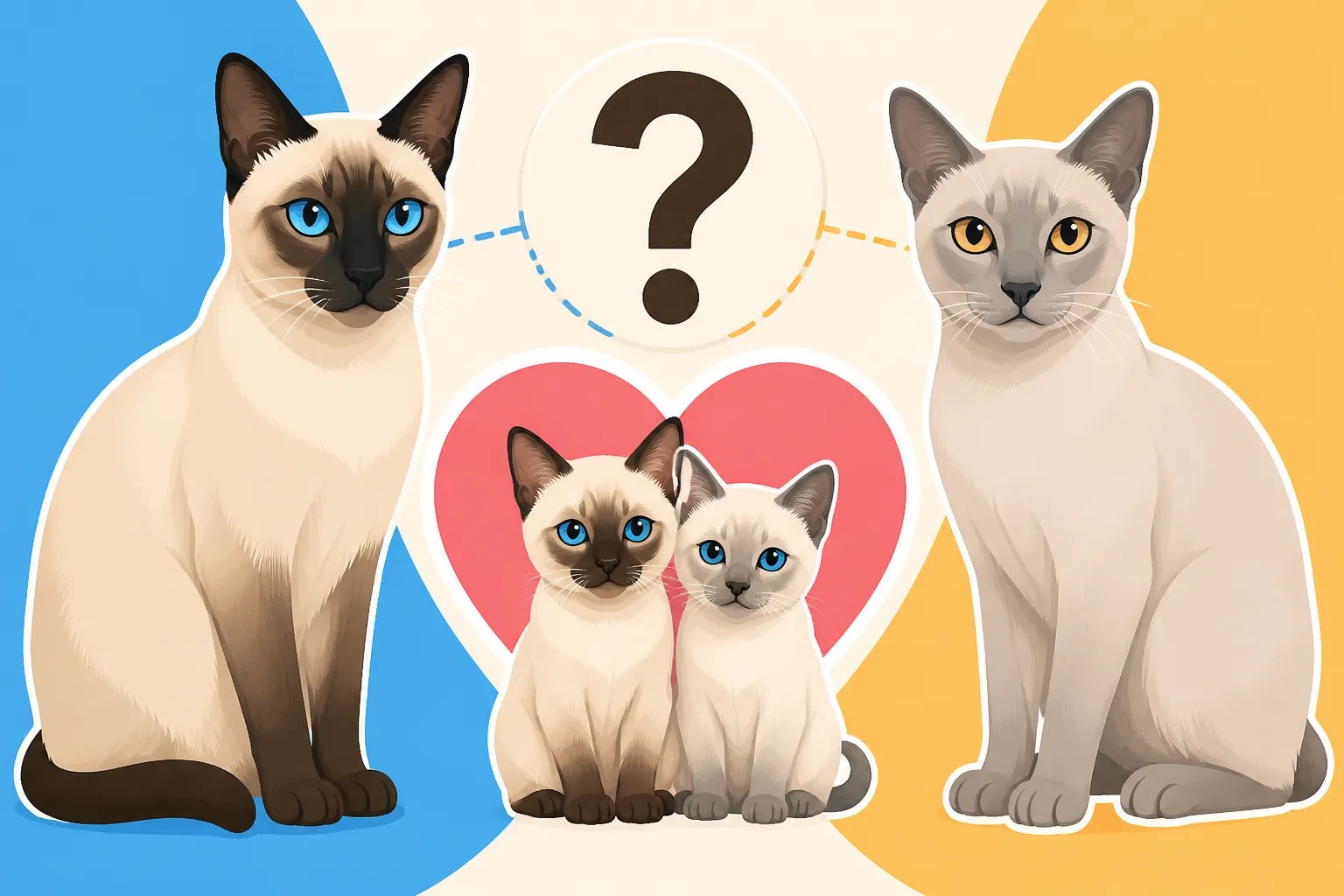
Can a Siamese and a Thai cat have kittens together
There is no biological barrier between the breeds
A Siamese and a Thai cat can reproduce in the same way as other domestic cats. The breed names describe distinct breeding populations and standards; they do not create a biological incompatibility. If both cats are fertile and healthy, a mating can result in a litter.
That simple answer can be misleading, though. A successful mating does not mean the cross is automatically recognized as a Siamese, a Thai, or a new breed. Nor does it establish that the pairing is a good idea. The practical issues are pedigree, health, temperament, the welfare of the mother and kittens, and the rules of the registry connected to the cats.
If your question is about a pet cat who has already mated, contact a veterinarian promptly to discuss the individual cat’s health and next steps. If you are planning a litter, pause before arranging a mating. A vet can help assess both cats, while the relevant registry can explain how a cross would affect pedigree and registration.
Siamese and Thai cats are related but not interchangeable labels
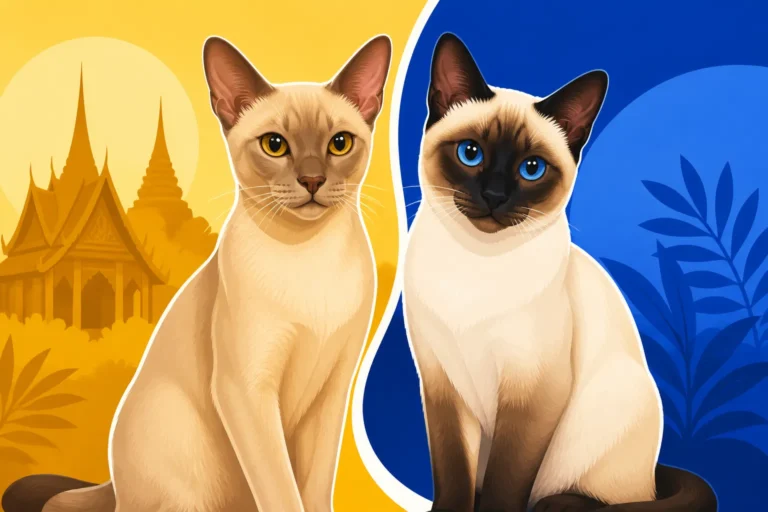
The Thai is generally associated with the more traditional, moderate-bodied appearance historically linked with Siamese cats. The modern Siamese developed along a different show-breeding path, with its own appearance and breed standard. That history is one reason the two names should not be treated as simple synonyms. For background, see How the Thai Split From the Siamese Cat and What the Thai Cat Is Next to a Siamese Cat.
People often use “traditional Siamese” informally, but a familiar look alone does not establish a cat’s registered breed. A cat with a rounded head or sturdier body might be a Thai, a Siamese from a particular line, or a cat with mixed ancestry. Pedigree and registry records matter when making a formal breed claim. Whether the Traditional Siamese Cat Still Exists explains why that distinction can be confusing.
The standards also differ in what they ask breeders to preserve. A cat that resembles one breed’s historical type may not meet another breed’s registry definition. Before discussing a mating, compare the cats’ documented pedigrees and the relevant standards, including What the Siamese Cat Standard Asks For. Appearance can start the conversation, but it cannot settle it.
Pregnancy and kitten care still need veterinary oversight
The same basic pregnancy and kitten-care responsibilities apply to this pairing as to any other. A veterinarian can advise on the queen’s health, nutrition, pregnancy monitoring, delivery planning, and signs that require urgent care. Breeding should not be treated as a casual way to produce kittens that “look a bit of both.”
If a litter is planned, prepare for the possibility that delivery or neonatal care may require veterinary help. Newborn kittens need close observation, warmth, and regular access to their mother. A breeder should know how to recognize a kitten that is not nursing or gaining appropriately, and should have a plan for reaching veterinary care rather than waiting to see whether a problem resolves.
Supplies are secondary to medical planning, but having essentials ready can make routine care easier. A breeder may use a digital scale, clean bedding, and appropriate food recommended by their veterinarian. Retailers such as Chewy may be one place to source ordinary supplies, but product choice should follow the vet’s guidance, especially for a pregnant or nursing cat.
What happens to the kittens’ breed status
Registration depends on the registry’s rules
There is no universal registration answer for Siamese–Thai kittens. Cat registries set their own definitions, pedigree requirements, and rules for permitted matings. Some may have pathways for particular outcrosses or foundation cats; others may not recognize a cross as eligible for registration in either breed. Rules can also depend on the cats’ existing registration status and documented ancestry.
Before any mating, contact the registry that issued each cat’s papers and ask about this exact pairing. Provide the registered breed names, pedigree information, and any relevant registration numbers. Ask how kittens would be recorded, whether the mating is permitted, and what documentation would be required. Do not rely on a breeder’s recollection or an online discussion when the registry can give the applicable rule.
A useful question is not only “Can these cats be bred?” but “How will each kitten be represented on its paperwork and in any future sale?” The answer should be clear before a litter exists. If the kittens are not eligible to be registered as Siamese or Thai, they should not be advertised as pedigreed examples of either breed.
Pedigree, appearance, and breed claims are different things
A kitten can resemble a Siamese or Thai without having the pedigree required for that breed. Likewise, a kitten from two registered parents does not automatically inherit a registration category when the pairing falls outside registry rules. Registration is an administrative record of ancestry and eligibility; it is not a guarantee of health or a prediction of a kitten’s adult appearance.
A mixed pairing can produce a range of features. Kittens may vary in body type, head shape, coat pattern, and temperament, even within one litter. The parents’ appearance can offer clues, but it cannot guarantee that every kitten will meet a particular standard. Be cautious of claims that a cross will reliably produce a specific “best of both breeds” result.
If you are placing kittens, describe their ancestry accurately and keep copies of relevant records. Explain what is known, what is not known, and whether the kittens are registered. Clear wording protects future owners from discovering later that a kitten’s advertised breed status does not match its paperwork.
A cross does not automatically create a recognized new breed
A litter from Siamese and Thai parents is not, by itself, a new breed. Establishing a breed involves sustained, documented breeding and a formal process within a registry or breed organization. It also requires a clear breeding goal and a plan for maintaining health and genetic diversity, not simply a one-time mating between cats with different labels.
If your interest is preserving a traditional appearance, learn how the Thai is defined and bred within the relevant organization. If your interest is producing companion cats, it is still important to avoid implying a recognized pedigree that the kittens do not have. The distinction is about honest description as much as technical paperwork.
| Question | Practical answer |
|---|---|
| Can a Siamese and Thai mate? | Yes. They are domestic cats with no breed-based biological barrier to mating. |
| Will the kittens automatically be Siamese or Thai? | No. Appearance alone does not determine registered breed status. |
| Can the kittens be registered? | It depends on the registry, the parents’ pedigrees, and its rules for the specific pairing. |
| Should you ask the registry before breeding? | Yes. Confirm eligibility and paperwork requirements before arranging a mating. |
| Does crossing the breeds guarantee healthier kittens? | No. A cross does not replace health screening or veterinary care. |
Health and welfare checks before breeding
Start with each cat’s health history
Before breeding, review the health of both cats with a veterinarian who understands feline reproduction. The assessment should consider their age, body condition, vaccination and parasite-prevention history, prior illnesses, medications, and any problems in their close relatives. The vet can recommend checks based on each cat’s history rather than assuming that a breed label tells the whole story.
Ask the breeder or previous owner for records, not just verbal reassurance. If a cat has had recurring respiratory signs, dental disease, unexplained weight changes, or a known inherited condition in its family, share that information with the vet. A planned mating should be reconsidered if either cat’s health, temperament, or family history raises concerns that have not been evaluated.
For a broader checklist, see Which Health Tests a Siamese Cat Breeder Runs and What a Siamese Cat Breeder Should Have Screened. These topics are relevant to breeding decisions, but no general checklist replaces an individualized veterinary assessment. A test that is useful for one line or concern may not answer every question about the cats in front of you.
Understand what screening can and cannot tell you
Health screening helps identify particular risks; it does not certify that a cat is free of every future illness. Some conditions have no simple screening test, and results can be limited by the cat’s age, family history, or the condition being assessed. Even when both parents appear healthy, kittens can still develop medical problems.
Ask what each proposed test detects, whether it is appropriate for the cat’s breed or family line, and how the result would change the breeding decision. Keep the original reports where possible. If a result is unclear, ask the veterinarian or testing provider to interpret it rather than relying on a shorthand label such as “clear.”
Equally important, ask about relatives. A family pattern of serious disease may matter even when the individual cat has no symptoms. Responsible breeding takes the available evidence together: examination, test results, pedigree, and known health history. How Healthy the Siamese Cat Actually Is offers additional context on why breed reputation should not replace individual health information.
Plan for the mother and kittens, not just the mating
Breeding carries responsibilities before conception and long after delivery. Before proceeding, decide who will pay for veterinary care, where the queen will deliver, how you will respond to an emergency, and whether you can keep kittens if suitable homes are not available. A responsible plan includes time for socialization, routine care, careful screening of prospective homes, and support if a placement does not work out.
Do not arrange a mating simply because two cats are available or because someone wants a kitten with a particular look. A breeding plan should have a sound purpose, appropriate health oversight, and a realistic commitment to every kitten. If those pieces are not in place, preventing an unplanned litter and discussing spaying or neutering with a veterinarian is often the more responsible choice.
For routine supplies, some owners use Chewy alongside a local veterinary clinic or pet store. The retailer can help with ordinary items, but it cannot determine whether a breeding is appropriate or interpret medical records. Keep your veterinarian involved when choosing food, supplements, or products for a pregnant or nursing cat.
How to make a responsible decision
Confirm the paperwork before any mating
Contact the registries associated with both cats and ask for a written explanation of the rules that apply to this pairing. Send the pedigree information and ask specifically whether the mating is permitted and how offspring would be classified. If either cat has no pedigree papers, be candid about that; a visual resemblance is not a substitute for documented ancestry.
It is also sensible to ask how kittens may be described in advertisements or transfer documents. If they cannot be registered as Siamese or Thai, use accurate language that explains their ancestry without presenting them as registered purebreds. Ask what records future owners should receive, including veterinary information and any available pedigree documents.
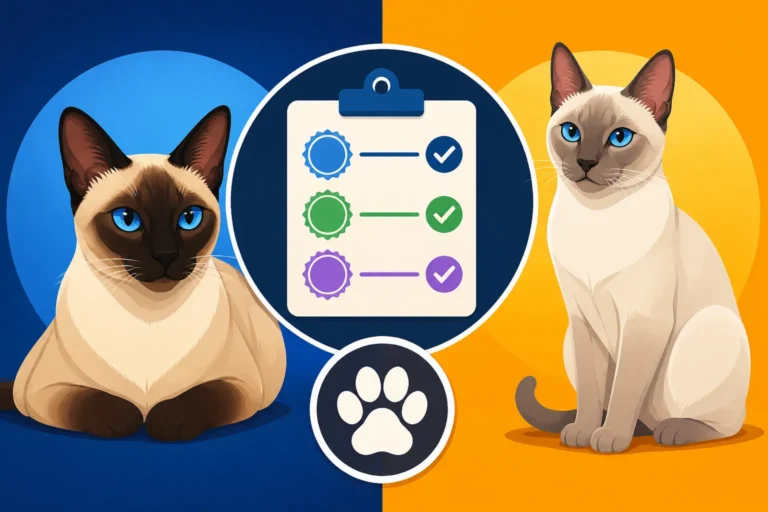
A short checklist can keep the conversation concrete:
- Verify each cat’s identity, pedigree, and registration status.
- Ask both relevant registries how they treat the proposed mating.
- Have a veterinarian evaluate each cat and review family health history.
- Confirm that you can provide pregnancy, delivery, and kitten care.
- Decide how you will describe and place the kittens truthfully.
- Do not proceed if the registry rules, health picture, or care plan remains unclear.
Consider whether breeding serves a clear purpose
A responsible breeder should be able to explain what the pairing is intended to achieve and why these particular cats are suitable. “They are both beautiful” or “I want to see what the kittens look like” is not enough to address genetic, welfare, and placement responsibilities. A clear purpose could involve preserving a documented line within the rules of a breed organization, but that purpose still has to be supported by health and pedigree information.
If your goal is simply to have a Siamese-like companion, adoption or a carefully chosen pet cat may meet that need without creating a litter. If your goal is to participate in breed preservation, speak with established breeders and the relevant breed organization before making plans. Their guidance can help you understand whether this cross aligns with the breed’s accepted program.
If you are not breeding but are caring for a cat who may be pregnant, focus on veterinary advice and a safe plan for the mother and kittens. Chewy may be useful for some everyday supplies, but the important decisions—pregnancy care, nutrition, and emergency planning—should be made with a veterinarian. That distinction keeps shopping separate from medical judgment.
Keep descriptions honest when rehoming kittens
If kittens are born from a Siamese–Thai pairing, be transparent with prospective owners about what is documented. Share the parents’ available records, explain the registry’s decision, and avoid promising a particular adult appearance, health outcome, or temperament. Future owners should know whether kittens are registered, whether their ancestry is documented, and what veterinary care they have received.
A thoughtful placement conversation also covers the realities of living with the individual kitten. Ask about the home, household schedule, other pets, and the adopter’s experience. A kitten should not be treated as a product whose value depends on a breed label. Good matching and honest information matter more than a persuasive description.
For further reading on the history behind the two types, see How the Thai Split From the Siamese Cat, What the Thai Cat Is Next to a Siamese Cat, and Whether the Traditional Siamese Cat Still Exists. The central point is simple: mating may be biologically possible, but responsible breeding depends on health, welfare, pedigree, and registry rules—not appearance alone.
Disclaimer
This article is for general informational purposes only and does not constitute professional advice. Laws, prices and regulations vary by location and change over time. Consult a qualified professional for guidance on your specific situation.