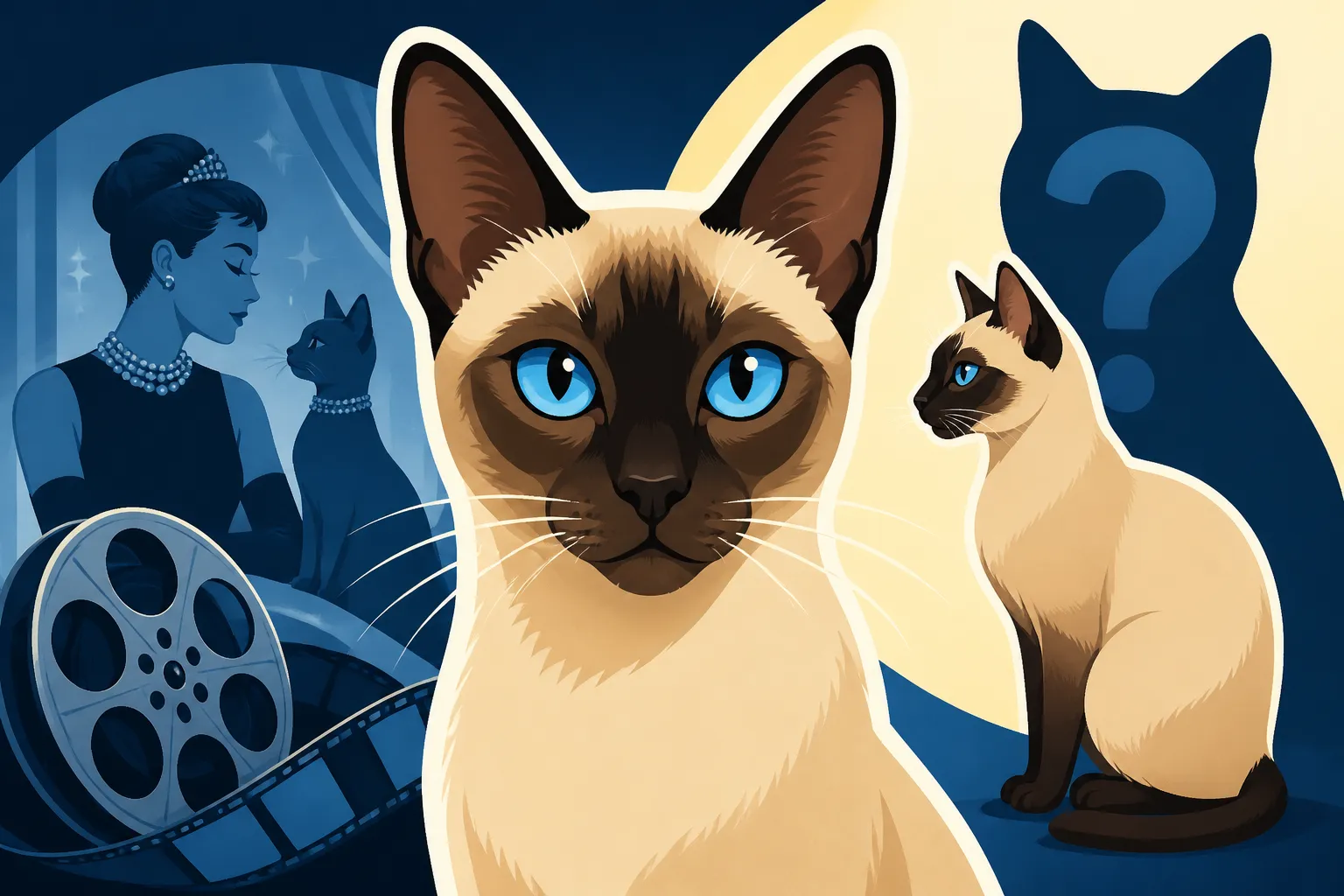
Whether Classic Movie Cats Were Really Siamese
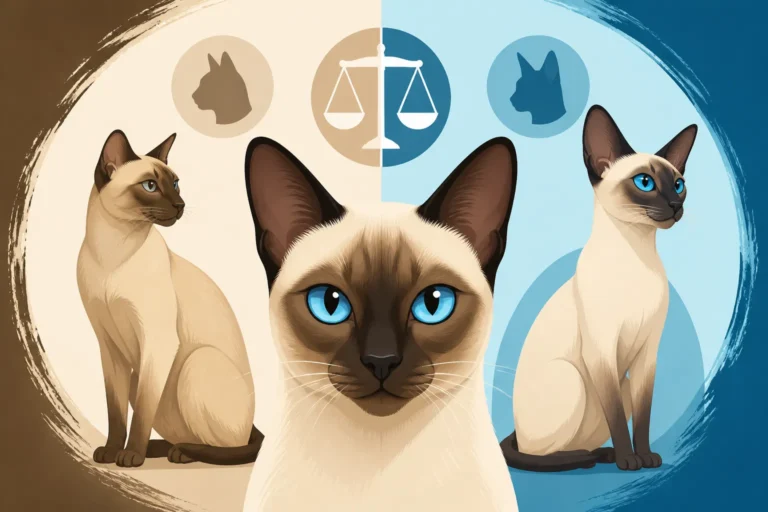
A familiar blue-eyed, dark-pointed cat on screen can look unmistakably Siamese, but film casting, animation, and breed labels do not always tell the same story. This guide separates real Siamese cats from fictional portrayals, explains which classic movie cats were identified as Siamese, and shows where the screen version differs from the living breed.
Which classic movie cats were really Siamese
Si and Am in Lady and the Tramp
Si and Am, the mischievous cats in Disney’s 1955 animated film Lady and the Tramp, are presented as Siamese. Their pale bodies, dark points, blue eyes, and pointed ears make the breed identification clear within the story. If your first picture of a Siamese came from this movie, you’re in very large company.
But Si and Am are animated characters, not portraits of individual cats. Their design takes recognizable Siamese features and pushes them into a highly stylized form. Their sharp expressions and exaggerated behavior serve the plot, not a realistic description of how Siamese cats look or act at home.
The film’s “The Siamese Cat Song” has also drawn criticism for its racial stereotyping. It’s possible to recognize the cats as Siamese while also noticing that the movie’s portrayal reflects dated ideas.
D.C. in That Darn Cat
D.C., short for “Darn Cat,” is the Siamese cat at the center of Disney’s 1965 live-action comedy That Darn Cat. Unlike Si and Am, D.C. is portrayed by a real cat. The plot depends on the cat’s roaming habits and collar, which lead to a mystery involving a kidnapping and a pair of FBI agents.
D.C. is a stronger example of a movie actually featuring a Siamese cat rather than simply drawing one. Still, a trained film animal performing particular actions is not a reliable guide to everyday breed temperament. A cat’s screen behavior is shaped by training, editing, and the needs of the story.
Pyewacket in Bell, Book and Candle
Pyewacket, the cat belonging to Kim Novak’s character in the 1958 romantic comedy Bell, Book and Candle, is identified as a Siamese. The cat has a memorable role in the film’s story, but the real animal’s part is different from the character’s supernatural importance.
It’s easy for a memorable screen animal to become a shorthand for the whole breed. Pyewacket’s composed, mysterious presence suits the film’s atmosphere, but it doesn’t mean Siamese cats are naturally magical, aloof, or unusually wise. Those are character choices, not breed facts.
Tao in The Incredible Journey
The Siamese cat Tao appears in the 1963 film The Incredible Journey, alongside the dog characters Shadow and Chance. Tao’s role is part of an adventure story about animals making their way home, and the film uses the cat’s recognizable appearance to establish the character as Siamese.
This is another case where the breed is more than a visual resemblance: the character is identified as a Siamese in the story. Even so, the journey is fiction. A real cat’s safety depends on secure indoor care, supervised outdoor access, or a properly enclosed space—not on a presumed ability to navigate long distances alone.
For more examples across film and television, see Which Films Feature a Siamese Cat and Which Cartoon Siamese Cats People Remember.
How to tell a Siamese cat from a screen look-alike
Look for more than blue eyes and dark points
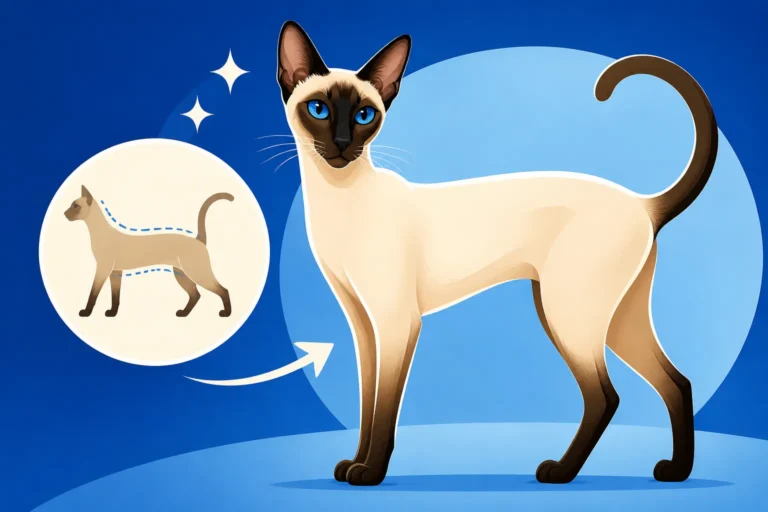
The classic Siamese pattern is called colorpoint: the body is generally lighter, while the face, ears, legs, and tail are darker. Siamese cats also have blue eyes. These features are visually striking, which is one reason the breed is so recognizable in movies.
Still, a pointed coat and blue eyes alone do not prove that a cat is a Siamese. Other breeds and mixed-breed cats can have similar coloring. Film costumes, animation, lighting, and camera choices can make the distinction even less reliable. A fictional cat may be intended as Siamese without matching every detail of a breed standard.
Breed standards describe an ideal appearance for registered cats, not a test that can establish the ancestry of any cat you see on screen. If you’re comparing a movie character with the breed’s typical features, What a Siamese Cat Looks Like by the Standard offers a useful starting point.
Consider the body and head shape
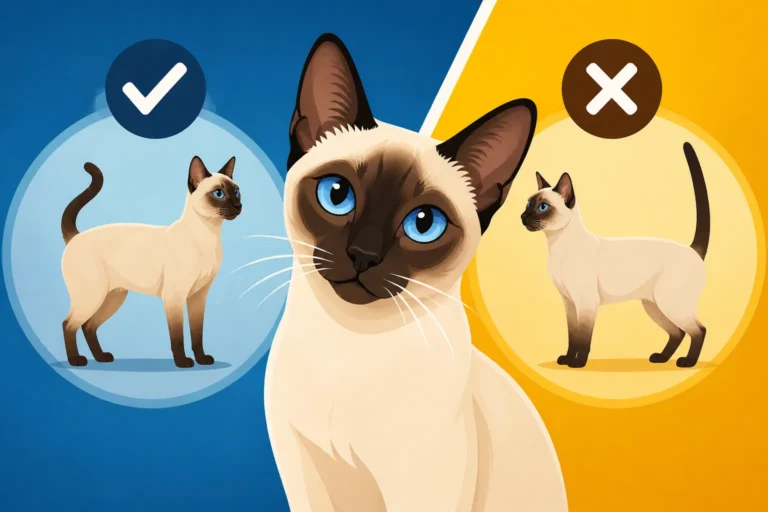
The modern show-style Siamese is typically fine-boned and long, with a wedge-shaped head, large ears, and an elegant profile. Older illustrations and some cats people call “traditional” or “applehead” Siamese may have a rounder head and a sturdier look. A movie design may blend these features, simplify them, or exaggerate whichever traits read clearly on screen.
There is also a difference between visual resemblance and documented breed identity. In a live-action movie, production notes may identify an animal as Siamese; in an animated film, the character’s appearance and the story’s naming are the available clues. Neither a still image nor a fan’s guess can establish the ancestry of an individual cat.
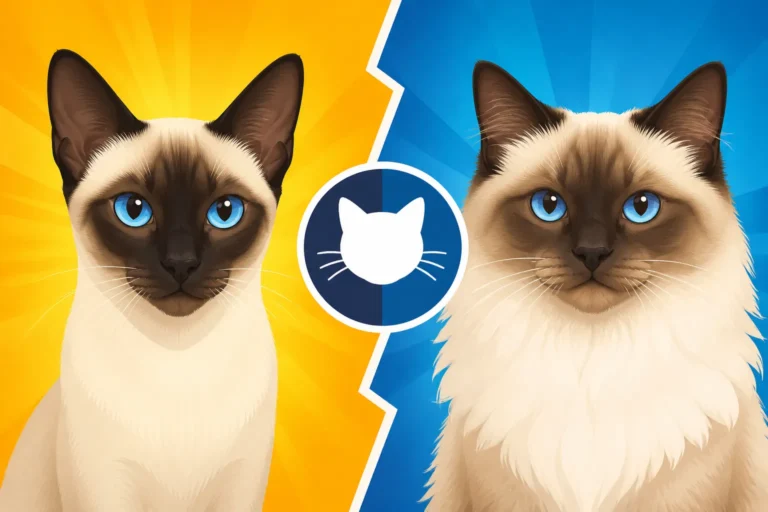
Some cats with a Siamese-like pointed coat may belong to another breed or be mixed-breed cats. The relationship between appearance and breed label can be confusing, especially when names are used casually. What a Colorpoint Shorthair Is Next to a Siamese Cat explains one comparison that often comes up.
Remember that the breed has changed in appearance
Siamese cats shown in older photographs, illustrations, and films may look different from the cats featured in modern breed advertising or show rings. Over time, breeding preferences and registry standards have influenced the appearance associated with the name. That doesn’t mean one familiar type is automatically a “real” Siamese and another is not; it means people may be picturing different styles.
This can make a quick movie comparison misleading. An older cat actor may look rounder or heavier than the modern wedge-headed ideal, while still being described as Siamese. A cartoon may instead emphasize the long ears and narrow face because those features are easy to recognize in a few seconds.
The Siamese is also closely related in appearance to the Oriental Shorthair, though the breeds are not simply interchangeable labels. For that distinction, see How a Siamese Cat Differs From an Oriental Shorthair.
What movies get right and wrong about Siamese cats
The vocal reputation has a real basis, but every cat is different
Siamese cats are often described as vocal and socially engaged. Many do communicate frequently with people, and some have a striking, loud voice. That may help explain why filmmakers return to the breed: an expressive cat can be a memorable character, even when the role is mostly visual.
But movies can turn an individual trait into a rule. Not every Siamese cat is constantly meowing, and cats of other breeds can be talkative, too. A cat’s voice and behavior depend on its personality, health, environment, and experiences—not just its breed name. If a movie has convinced you that all Siamese cats behave like a particular character, What a Siamese Cat's Temperament Is Really Like provides a more grounded perspective.
Intelligence on screen does not mean a cat can perform movie tricks at home
Movie cats may appear to understand a complicated plan, recognize a person instantly, or make a precise choice at exactly the right moment. In real productions, animal behavior is captured through patient training, repeated takes, editing, and sometimes the use of more than one animal. The finished scene can make a difficult behavior look effortless.
Siamese cats are often curious and interactive, and many enjoy learning through play or rewards. That is different from expecting a pet to behave like a scripted character. A cat who ignores a cue or walks away from a training session is not being difficult; the setup may not be rewarding, comfortable, or clear to them.
If a film has inspired you to adopt a Siamese, focus on the individual cat’s needs rather than expecting a miniature version of a movie star. Enrichment toys and puzzle feeders can help provide appropriate activities. If you’re gathering supplies, Chewy is one retailer where you can compare options, but the important part is choosing items that suit your cat’s play style and home.
The “mysterious” cat is a character, not a breed guarantee
Films often use a Siamese cat’s striking coloring to signal elegance, secrecy, or mischief. Those associations are handy storytelling shortcuts, but they can give people unrealistic expectations. A real Siamese may be outgoing, reserved, playful, cautious, or some mixture that changes from one situation to another.
A prospective owner who expects constant conversation or unwavering devotion may be surprised by the everyday reality: cats need rest, quiet, routine, and the chance to choose when they want attention. A cat who seems affectionate in one scene may not enjoy being carried by a stranger in a busy home. If you are preparing to bring a cat home, plan for basics such as a safe carrier, scratching surfaces, litter supplies, and interactive play. Chewy may be useful for comparing some of those everyday products, while a veterinarian or shelter can help with individual care questions.
How to enjoy the movie image without mistaking it for real life
Check the film’s own description of the cat
When a movie’s breed identity matters, start with what the film itself calls the character. A character may be explicitly described as Siamese, as with the well-known examples above, or simply designed with pointed coloring. For a live-action animal, production information may identify the cat used on set; for animation, the character design and dialogue are the evidence available to viewers.
Treat uncertain cases carefully. A cat looking “Siamese-like” does not establish that a real animal was a purebred Siamese. Nor does a character’s name or personality prove its breed. It’s fair to say a film depicts a Siamese when the story identifies the cat that way, while avoiding claims about an animal’s pedigree when the evidence is only visual.
Separate the character from the animal’s welfare
A charming movie scene can make a cat appear comfortable in settings that would be stressful or unsafe for many pets. A cat riding loose in a car, wandering near traffic, or being handled by multiple people is not a model for everyday care. Film scenes are controlled and edited; pet owners need to make decisions based on safety and the cat in front of them.
If a movie prompts you to adopt, visit shelters or responsible breeders with an open mind. Ask about the cat’s health, behavior, and history, and think honestly about the time and interaction a pet needs. Chewy can be a convenient place to look at general supplies once you know what your cat needs, but no product replaces thoughtful introductions, a safe home, and veterinary care.
Movies give us memorable cats, not reliable breed manuals. Enjoy Si and Am as animated characters, D.C. as a clever story cat, and Pyewacket as a film icon—then let real cats be individuals rather than performances. For other common misconceptions, see What People Get Wrong About the Siamese Cat.
Disclaimer
This article is for general informational purposes only and does not constitute professional advice. Laws, prices and regulations vary by location and change over time. Consult a qualified professional for guidance on your specific situation.