Why a Siamese Cat Looks So Slender
A Siamese cat can look surprisingly narrow beside a rounder domestic cat, with long legs, a fine waist, and a sleek coat that leaves little hidden under fluff. That shape is often normal, but a slender outline can also make weight loss harder to spot. This guide explains the breed’s build, how to assess body condition, and when a change deserves a veterinary check.
Why the Siamese cat has a slender outline
A long, fine-boned body is part of the breed’s build
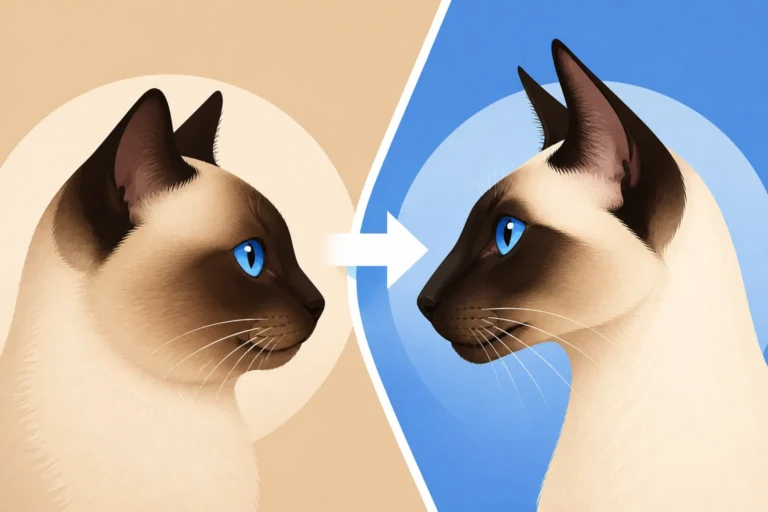
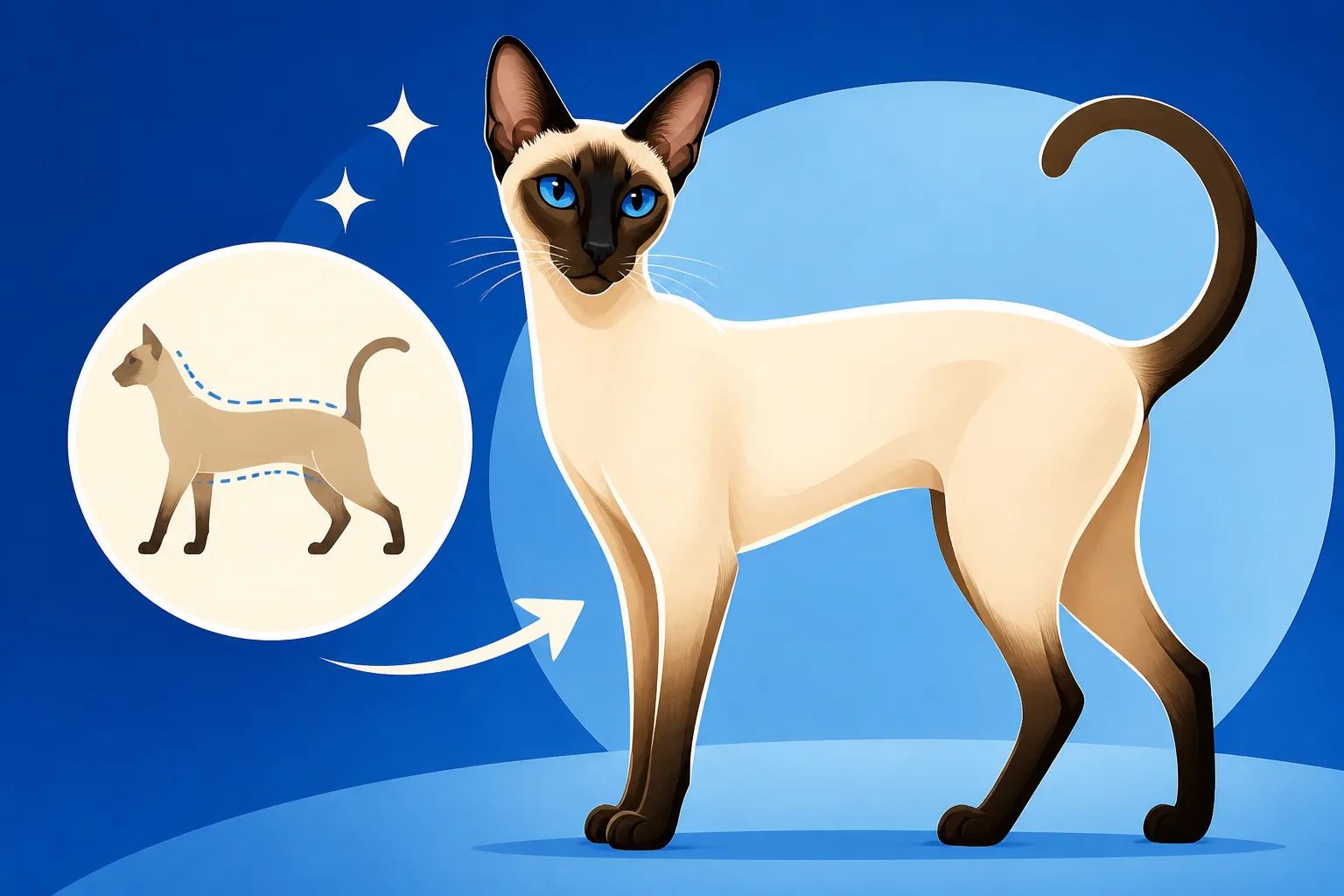
Siamese cats are generally long, lean, and fine-boned, with a narrow torso and long legs. Their shape is not meant to resemble a compact, broad-bodied cat. A healthy Siamese may look elegant and angular even when eating well and maintaining a suitable weight.
The breed standard favors a lithe appearance rather than a heavy or rounded one. That does not mean every Siamese should look identical: individual cats vary in height, frame, sex, and muscle. A larger-framed cat may weigh more and still be lean, while a smaller cat may be healthy at a lower weight.
A sleek, short coat also makes the body’s shape easy to see. Unlike a fluffy cat whose fur softens the outlines of the ribs and waist, a Siamese’s coat lies close to the body. The cat can therefore appear more visibly slim without being underweight. The difference between a breed-typical shape and true thinness is better judged by touch and body condition than by appearance alone.
A lean look is not the same as being underweight
A fit cat usually has a visible waist when viewed from above and a slight upward tuck behind the ribs when viewed from the side. You should be able to feel the ribs beneath a thin covering of tissue, but they should not feel sharply prominent. The spine and hip bones should not stick out conspicuously.
By contrast, an underweight cat may have ribs, vertebrae, or pelvic bones that are easy to see or feel with little padding. The waist may look sharply drawn in, and the muscles over the back and hindquarters may seem reduced. A cat can also lose muscle while retaining some fat, so a single glance at the waist does not tell the whole story.
If you are unsure, ask your veterinarian to assess body condition and muscle condition during an exam. A hands-on assessment is more useful than comparing your cat with a photograph online, especially because age, frame, and coat can change how a cat looks. The guide Whether a Thin Siamese Cat Is Underweight covers the distinction in more detail.
Weight varies between individual cats
There is no single ideal weight that fits every Siamese. Adult cats often fall within a broad range, but the right weight for one cat depends on frame, muscle, age, and overall health. A veterinarian can help establish a useful target for your cat rather than relying on a breed-wide number.
Keep a record of weight over time if you can. Weighing your cat on the same scale under similar conditions makes gradual changes easier to notice. If your cat will not stay still on a household scale, you can weigh yourself holding the cat and then subtract your own weight, though a clinic scale is generally more precise.
| What you notice | What it may suggest | A helpful next step |
|---|---|---|
| Slim body, smooth coat, normal appetite, steady weight | A naturally lean build may be typical | Track weight and discuss body condition at routine visits |
| Ribs easy to feel but not sharply visible, defined waist | Often consistent with a healthy lean body condition | Ask your veterinarian to confirm |
| Prominent ribs, spine, or hips; reduced muscle | Possible underweight or muscle loss | Arrange a veterinary assessment |
| Weight loss despite eating normally or more | Possible health issue or inadequate calorie intake | Contact your veterinarian |
| Sudden loss of appetite, weakness, vomiting, or marked behavior change | Potentially urgent illness | Seek veterinary advice promptly |
How to tell whether your Siamese is at a healthy weight
Use touch as well as sight
Start with a gentle check when your cat is relaxed. Run your hands along the rib cage without pressing hard. In a cat at a healthy body condition, the ribs are usually easy to feel under a light layer of tissue, much like the knuckles on the back of your hand are easy to feel but not sharply exposed. If you must press firmly to find the ribs, your cat may be carrying extra weight. If the ribs feel very sharp, your cat may be too thin.
Next, feel along the spine and hips. These bones should be detectable, but they should not feel like sharp ridges with little muscle or padding around them. Look at your cat from above for a waist behind the ribs, then from the side for a modest abdominal tuck. A naturally narrow body can make these features pronounced, so use the full picture rather than any one sign.
Body condition scoring is a simple way veterinary teams describe whether a cat is too thin, in an appropriate range, or carrying excess weight. It combines what you see and feel. If your hands-on impression differs from your cat’s appearance, or you are worried about a recent change, a clinic can assess the cat and document a baseline.
Watch the trend, not just a single weigh-in
A cat’s weight can vary slightly from one measurement to another, so one number rarely tells the whole story. What matters is the pattern: a steady weight over time is usually more reassuring than a gradual decline, especially when your cat’s appetite and behavior are also stable.
For example, a Siamese who has always been slim, eats normally, plays, and stays near the same weight may simply have a lean frame. A cat who has become bonier over several months, even if the change seems small week to week, deserves more attention. Changes in muscle over the back or thighs can be especially easy to miss under a sleek coat.
Make a note of appetite, thirst, litter-box habits, activity, and vomiting or diarrhea alongside weight. These details help a veterinarian understand whether the change might be related to food intake, digestion, or a health problem. See Signs a Siamese Cat Is Unwell for other changes worth noticing.
Age and muscle can change the silhouette
Kittens grow quickly, so their proportions and body condition change as they mature. A lanky adolescent may look temporarily all legs, and a growing kitten needs an appropriate diet for its life stage. If a kitten’s growth seems to stall, or the kitten is consistently losing weight, ask a veterinarian rather than trying to correct the issue with extra food on your own.
Older cats may lose muscle even when their weight seems stable. This can make the spine or hips more noticeable and can create a thinner appearance. Changes in appetite, dental comfort, mobility, or chronic illness may all play a role. A senior cat that becomes noticeably bony is not simply “getting old” by default; it is worth discussing with a veterinary professional.
For age-related weight and muscle changes, read Why an Old Siamese Cat Loses Muscle and What Changes in a Siamese Cat After Twelve. A veterinarian can help distinguish a normal change in body composition from a problem that needs investigation.
Food, appetite, and weight changes
Make sure meals meet your cat’s needs
A cat’s food should be complete and balanced for the appropriate life stage, and portions should reflect that individual cat’s needs. Feeding directions on packaging are a starting point, not a personalized prescription. Activity level, age, neuter status, health, and body condition can all affect how much food is appropriate.
If you are trying to evaluate how much your cat eats, measure meals rather than estimating by eye. Keep track of treats and food offered by other household members too. A cat that appears to eat a full bowl may actually be eating less if another pet shares it, while frequent snacks can add up unnoticed. Chewy may be useful for comparing food labels or keeping a consistent product on hand, but your veterinarian should guide any diet changes for unexplained weight loss or a medical condition.
Avoid trying to “fatten up” a thin cat by switching foods or increasing portions substantially without advice. If a cat is losing weight because of an underlying illness, simply offering more calories may not address the cause. If your cat is otherwise well but needs a gradual adjustment, your veterinarian can suggest a feeding plan and a sensible way to monitor progress. More feeding guidance is available in How Much an Adult Siamese Cat Eats.
Pay attention to appetite and other symptoms
Weight loss can happen because a cat is not taking in enough food, but it can also occur despite a normal or increased appetite. A cat may eat less because of dental pain, stress, nausea, difficulty accessing food, or a change in the household routine. Other health conditions can affect how the body uses nutrients or cause increased thirst and urination.
Notice whether your cat approaches meals and then walks away, chews oddly, drops food, or seems reluctant to eat dry food. These behaviors may point to discomfort rather than pickiness. Changes in drinking, vomiting, diarrhea, constipation, energy, or coat condition are also helpful details to share with the clinic.
A sudden appetite change or ongoing weight loss should not be managed by repeatedly switching foods and waiting to see what happens. Call your veterinary practice and describe the change, including when it began and whether your cat is still eating and drinking. A physical exam and any recommended tests can help identify what is behind the change.
Make food changes carefully
If a veterinarian recommends changing foods, a gradual transition is often easier on a cat’s digestion than switching abruptly. Mix a small amount of the new food with the familiar food, then increase the proportion over several days as tolerated. If your cat refuses the new food, vomits, or develops diarrhea, contact the veterinary team for guidance instead of letting the cat go without food while you wait for acceptance.
Keep the feeding routine predictable. Some cats do better with measured meals, while others may need a different schedule based on their household and health. A timed feeder can help manage consistent portions when people are away, but it does not replace checking that the cat is actually eating. Chewy is one option for keeping a familiar food available, but the key is choosing food that suits your cat and following professional advice when health concerns are involved.
When a slender Siamese needs a veterinary check
Arrange an appointment for unexplained weight loss
Book a veterinary visit if your cat is becoming thinner, losing muscle, or dropping weight without an obvious explanation. This is especially important if the cat is eating as much as usual or more, because that pattern can still signal illness. Bring any weight notes and a short description of changes in appetite, thirst, energy, and litter-box habits.
A vet may ask about the food and portion size, examine the mouth and body, and recommend tests based on the findings. Not every thin cat needs the same workup. The goal is to understand the pattern and decide whether a diet adjustment, monitoring, or further investigation is appropriate.
Do not wait for a cat to look dramatically thin before asking for help. Gradual changes can be difficult to see day to day, particularly in a naturally slender breed. A simple comparison with an earlier photo or weight record can reveal a shift you had not noticed.
Seek prompt help for serious symptoms
Contact a veterinary clinic promptly if weight loss occurs with persistent vomiting or diarrhea, marked lethargy, weakness, difficulty breathing, or refusal to eat. A cat that seems acutely unwell needs more than a routine feeding adjustment. If your cat is suddenly unable to keep food down or appears distressed, call a clinic and follow its instructions.
Cats often hide discomfort, so a quieter-than-usual demeanor or reduced interest in play may matter even when there is no obvious emergency. A new change in thirst or urination is also worth reporting, especially when it accompanies weight loss. You know your cat’s ordinary habits best; a meaningful change from that baseline deserves attention.
Siamese cats are often naturally slender, but “that’s just how the breed looks” should not be used to explain a clear change. When in doubt, ask your veterinarian to assess your cat’s body condition and weight history. Routine wellness visits can also help catch small shifts before they become difficult to reverse. See How Often a Siamese Cat Needs a Wellness Exam for more on ongoing checkups.
Disclaimer
This article is for general informational purposes only and does not constitute professional advice. Laws, prices and regulations vary by location and change over time. Consult a qualified professional for guidance on your specific situation.