What a Colorpoint Shorthair Is Next to a Siamese Cat
A cat with blue eyes, a pale body, and dark points may be labeled Siamese in one place and Colorpoint Shorthair in another. That can make adoption listings, breeder descriptions, and registry paperwork confusing. The difference is real in some breed registries, but not always obvious from appearance. This guide explains how the names are used, what distinguishes the cats, and what to check before choosing one.
What a Colorpoint Shorthair is
A Colorpoint Shorthair is a shorthaired, pointed cat recognized as a separate breed by some cat registries, including the Cat Fanciers’ Association. It shares a close relationship with the Siamese and can look remarkably similar. In everyday conversation, people may use “colorpoint” more loosely to describe any cat with darker coloring on the face, ears, legs, and tail.
The official distinction often comes down to a registry’s breed standard and which coat colors it accepts under each breed name. That means a cat’s label can depend on the organization that registered it, rather than on a difference that is immediately apparent to someone looking at the cat.
How the Colorpoint Shorthair developed
The Colorpoint Shorthair was developed from Siamese cats and outcrosses with other shorthaired cats to produce pointed coats in additional colors. Breeding programs aimed to create shades beyond the traditional Siamese colors recognized by some registries. Over time, Colorpoint Shorthairs became an established breed category in their own right in those organizations.
The cats still share much of the Siamese’s recognizable look: a sleek body, short coat, blue eyes, and darker points. Their close ancestry also helps explain why the two breeds can have similar personalities and care needs. A Colorpoint Shorthair is not simply a Siamese with a different nickname in every formal context, though; its registration and accepted colors can matter.
If you are curious about the broader family tree, Which Breeds Came Out of the Siamese Cat explains how Siamese cats contributed to the development of several related breeds. The history is useful context, but it does not mean every pointed cat with Siamese-like features is a registered Siamese or Colorpoint Shorthair.
Why the name depends on the registry
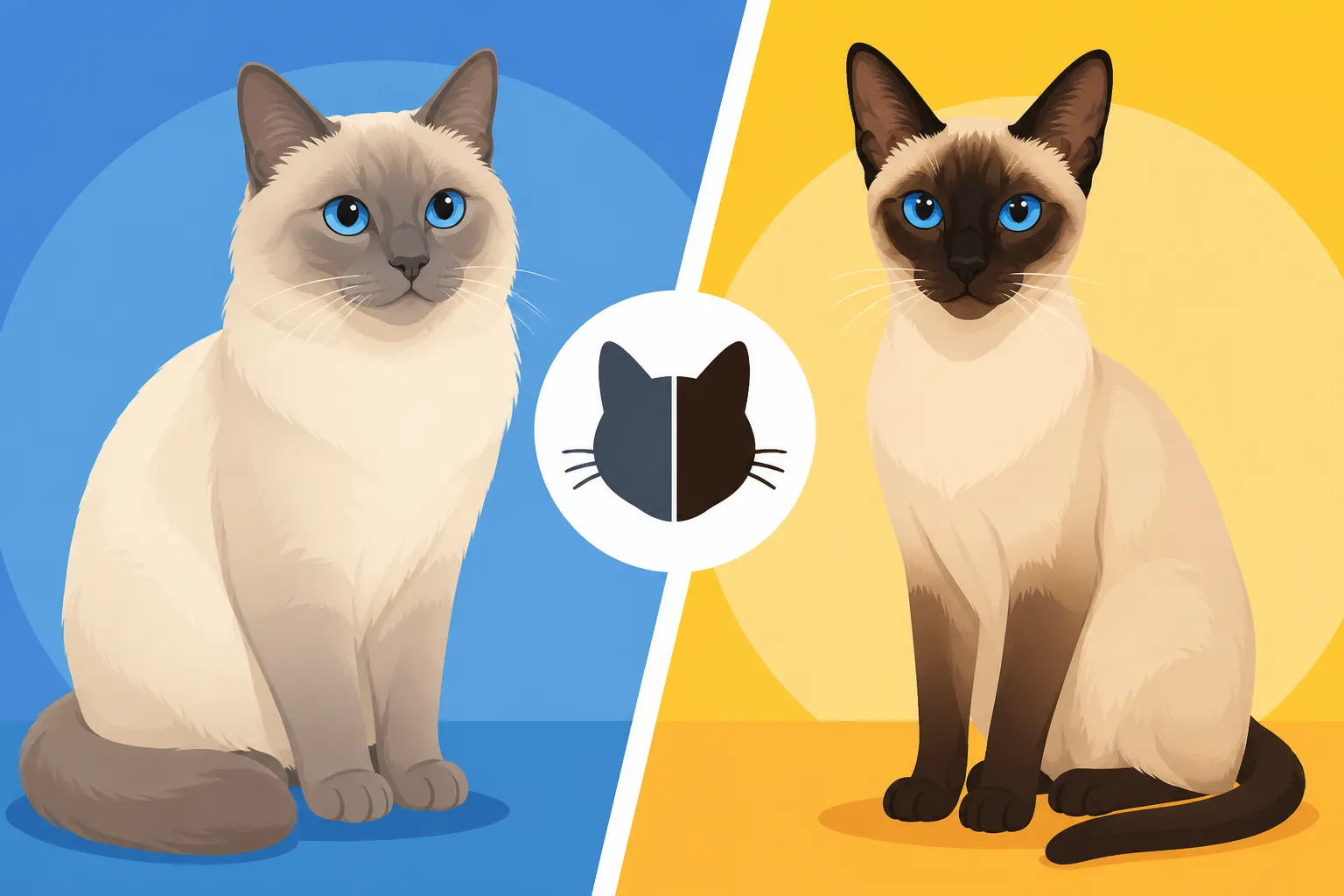
Breed names and color rules are set by registries, and those rules do not all match. In the CFA system, the Siamese and Colorpoint Shorthair are separate breed categories. The CFA Siamese standard is associated with four traditional point colors: seal, blue, chocolate, and lilac. Colorpoint Shorthairs include additional point colors, such as red, cream, tortie, and lynx patterns.
Other registries may classify colors differently or use different breed groupings. As a result, “this is a Colorpoint Shorthair” may be a precise statement about a cat’s registration in one system, while someone using a different registry or speaking casually might describe a similar-looking cat another way. The relevant question is often not just “What does the cat look like?” but “Which registry’s rules are being used?”
For a closer look at the color distinctions, see Which Four Point Colors the CFA Accepts in a Siamese Cat and Which Point Colors Other Registries Accept in a Siamese Cat. Those differences are why a seller’s or rescue’s use of a breed name should be read alongside the cat’s paperwork and history.
How Colorpoint Shorthairs and Siamese cats compare
A Colorpoint Shorthair and a Siamese can be difficult to tell apart by sight alone. Both may have a light-colored body, darker extremities, blue eyes, and a fine, short coat. Even experienced cat lovers may not be able to determine formal breed status just by looking at a photograph.
Color can offer a clue, especially when a cat has a point pattern outside the traditional four colors accepted for Siamese cats by the CFA. But appearance is not proof of registration, and color rules differ among registries. The safest approach is to treat visual clues as clues—not as a definitive breed test.
| Feature | Siamese | Colorpoint Shorthair |
|---|---|---|
| Basic appearance | Short coat, pointed coloring, blue eyes, and a slender build in many modern show lines | Similar short coat, pointed coloring, blue eyes, and often a similar build |
| CFA breed category | Separate breed | Separate breed |
| CFA color distinction | Four traditional point colors | Additional point colors and patterns |
| Temperament | Often social, active, and communicative, though individuals vary | Often similar; personality depends on the individual cat |
| What confirms registration | Pedigree or registration documentation | Pedigree or registration documentation |
Coat color is a clue, not a guarantee
A red-pointed, cream-pointed, tortie-pointed, or lynx-pointed cat may be registered as a Colorpoint Shorthair under CFA rules rather than as a CFA Siamese. But a pointed coat alone does not establish a cat’s breed. Many mixed-breed cats have colorpoint coats, and some registries accept different colors under Siamese-related categories.
The pattern itself results from temperature-sensitive pigmentation: cooler parts of the body tend to develop darker color than warmer areas. That biology helps explain why Siamese and Colorpoint Shorthairs share the same general pointed look, but it does not identify the cat’s pedigree. For more on the pattern, read Which Colors a Siamese Cat Comes In and What the Siamese Cat Standard Asks For.
Lynx points can cause particular confusion because striped markings are visible over the darker areas. Depending on the registry and the cat’s pedigree, a lynx-pointed cat might be described as a Siamese, a Colorpoint Shorthair, or by another label. Whether a Lynx Point Is a Siamese Cat or a Colorpoint Shorthair explores why the answer can depend on the rules being applied.
Body type and personality overlap
Both breeds are generally described as people-oriented, intelligent, and energetic. A cat may follow its person from room to room, solicit attention, or vocalize insistently when dinner is late. Those traits are often associated with Siamese cats, but they are not exclusive to them—and no breed label can predict exactly how chatty or affectionate an individual cat will be.
Body shape can vary, too. Show standards may favor a particular silhouette, while cats from other lines or mixed backgrounds may look sturdier, rounder, or less extreme. A narrow face or long, lean body may fit the image many people have of a modern Siamese, but it cannot confirm a formal breed identity. How a Siamese Cat Differs From an Oriental Shorthair offers another useful comparison when two related, slender cats are being mistaken for each other.
When choosing a cat, spend more time observing its behavior and asking about its needs than trying to infer personality from a coat color. If possible, watch how the cat responds to handling, play, unfamiliar people, and changes in its environment. A confident, outgoing kitten may grow into an affectionate companion, but temperament develops through a mix of inheritance, early experiences, and everyday care.
How to identify one with more confidence
If a breeder describes a kitten as a Colorpoint Shorthair or Siamese, ask which registry the breeder uses and request the registration details for the parents. A pedigree or registry record is more useful than a sales description or a social media caption. Ask what color the kitten is registered under, too, since color names can be applied differently across organizations.
A rescue or shelter may have limited background information, and that is completely normal. Staff often describe a cat by its visible traits rather than claiming verified pedigree status. In that setting, “Siamese mix” or “Colorpoint” may be a practical appearance-based description rather than a confirmed breed.
Use this checklist to sort out what you know:
- Ask which registry is being referenced. A breed name may have a specific meaning under one organization’s standards.
- Request pedigree or registration paperwork. If a cat is represented as a registered purebred, documents should support that claim.
- Ask about the parents. Their registration and coat colors may clarify how the kitten is classified.
- Treat photographs and color as supporting clues only. A pointed coat does not prove pedigree.
- For a rescue cat, focus on health and temperament. Uncertain ancestry does not make a cat less loving or a less suitable companion.
If a cat has no papers, it is more accurate to describe what you can observe—such as “shorthaired, blue-eyed, colorpoint”—than to state a breed as fact. How to Tell a Siamese Cat From a Mixed Breed covers the limits of visual identification, and Whether a DNA Test Confirms a Siamese Cat explains why a DNA result should not be treated as a substitute for formal registration.
Choosing and caring for either breed
For most households, the distinction between a Siamese and a Colorpoint Shorthair matters more for pedigree, show eligibility, and breed history than for day-to-day care. Both need a safe home, regular veterinary attention, play, companionship, and a diet suited to their age and health. Their short coats are generally straightforward to maintain, though routine brushing can still help remove loose hair and make it easier to notice skin changes.
These cats can also be busy, socially engaged companions. A person who works long hours may need to plan for interactive play, puzzle feeders, climbing spaces, or a trusted pet sitter. A second cat is not an automatic fix for loneliness; introductions and personalities matter. The best arrangement is the one that fits the individual cat and the household’s routine.
Make the decision around the cat, not the label
If you are comparing kittens from breeders, prioritize transparency, socialization, health information, and a clear explanation of registration. Ask what the breeder knows about the parents’ health and temperament, and whether the kitten has received appropriate veterinary care. A breed name is not a guarantee of good health or a particular personality.
If you are adopting, it is fine to choose a cat because you love its look, but try not to expect a rescue cat to behave like a breed stereotype. A blue-eyed colorpoint may be loud and outgoing, or it may be quiet and cautious. Spend time with the cat, ask about its history where available, and consider how it responds to your home and household members.
For practical shopping, choosing food should be based on the cat’s life stage and health needs rather than whether a label says Siamese or Colorpoint Shorthair. Retailers such as Chewy may make it easier to compare food options, but a veterinarian is the right person to help with a medical diet or persistent weight concerns. The same principle applies to treats: account for them as part of the cat’s overall feeding routine.
Plan for enrichment and routine care
Both types of cat can benefit from daily play and opportunities to climb, explore, and solve simple food puzzles. If your cat starts pawing at a closed cupboard or launching itself onto a high shelf, that may be a sign it needs a more engaging outlet—not a sign that its breed label is wrong. When browsing toys or puzzle feeders at Chewy, look for options that match your cat’s play style and supervise new toys until you know they are safe.
A short coat does not mean no grooming. Gentle brushing now and then can reduce loose fur, while nail checks, dental care, and regular wellness visits support overall health. If you are building a basic care kit, Chewy is one place to compare everyday supplies such as brushes and nail trimmers; choose tools that suit your cat and introduce them gradually so grooming does not become a wrestling match.
Ultimately, whether the cat is registered as a Siamese or Colorpoint Shorthair, its needs are individual. A relaxed routine, a comfortable resting area, fresh water, appropriate play, and attentive care matter far more to the cat’s daily life than the exact wording on a listing. The breed name can help explain its background, but it should not be the only thing guiding your choice.
Disclaimer
This article is for general informational purposes only and does not constitute professional advice. Laws, prices and regulations vary by location and change over time. Consult a qualified professional for guidance on your specific situation.