What a Lilac Point Siamese Cat Is
When you hear "Lilac Point Siamese," a common thought might be of a cat with purple-ish markings, and honestly, who wouldn't be curious about such a unique hue? But the reality is a little more nuanced and absolutely stunning. Many new or aspiring Siamese owners find themselves scratching their heads, trying to visualize this elegant color. This guide is here to demystify the beautiful Lilac Point Siamese, explaining exactly what sets their delicate coloration apart and what makes them such beloved members of the Siamese family.
The Essence of a Lilac Point Siamese: What Does It Actually Mean?
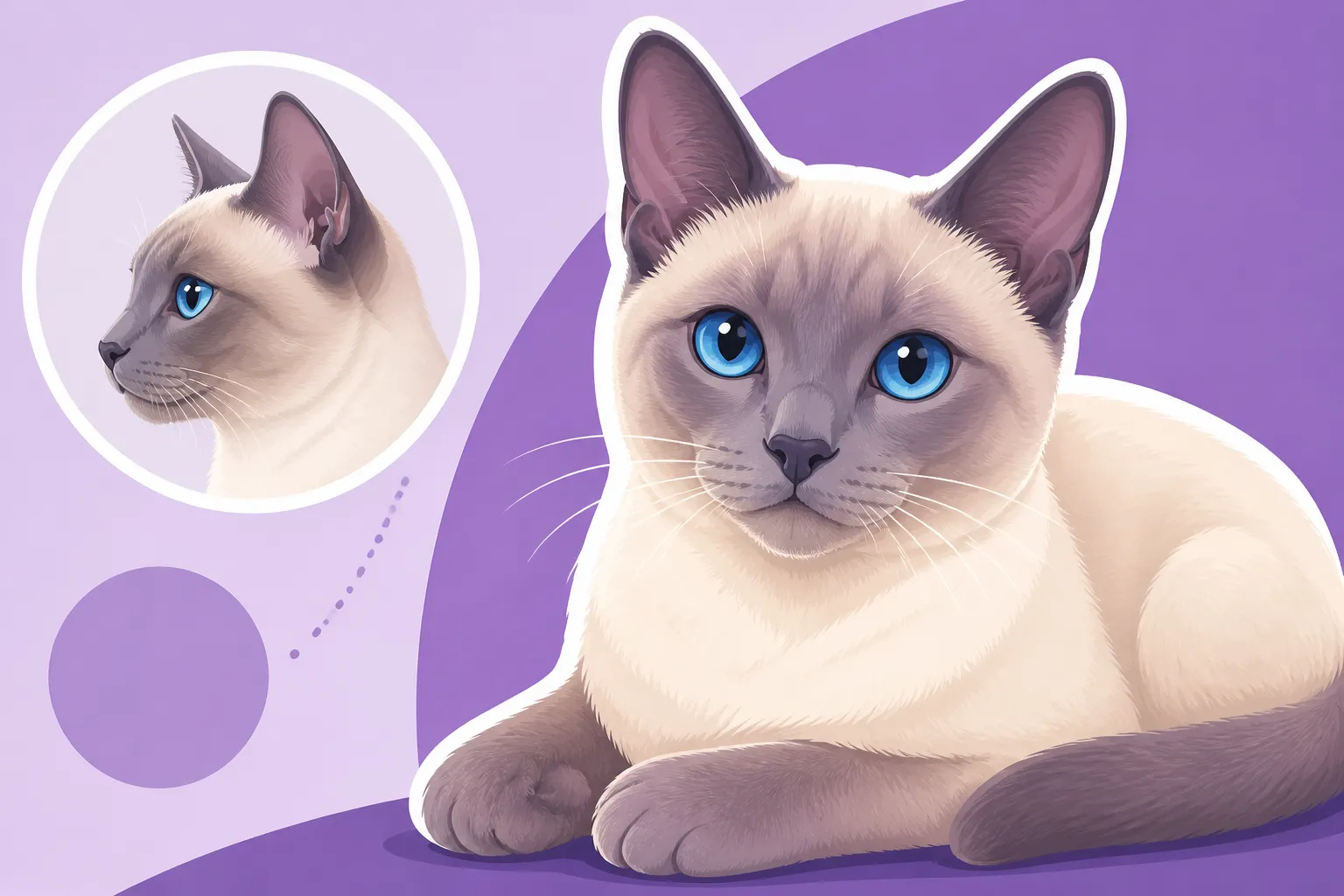
A Lilac Point Siamese is truly a vision of refined elegance, but if you're picturing vibrant purple, you're in for a gentle surprise. The "lilac" in their name refers to a very specific, soft, and delicate shade that emerges from a complex genetic interplay. Instead of bold, dark points like a Seal Point, or a slate gray like a Blue Point, the Lilac Point carries an ethereal, almost silvery-pinkish gray. Their body color is often described as glacial white, with little to no shading, allowing their exquisite points to truly pop.
Imagine a Siamese lounging in a sunbeam, and the tips of their ears, their paws, tail, and mask shimmer with a cool, frosty gray that has a distinct, soft lavender undertone. That's the magic of the Lilac Point. Their nose leather and paw pads reflect this delicate color, appearing a pinkish lavender or an almost faded cocoa hue, rather than the dark brown or blue-gray of other points. This overall lightness gives them a very refined and aristocratic appearance, making them instantly recognizable once you know what to look for. They are truly one of the most subtly beautiful variations in the Siamese cat family.
Understanding the Visual Characteristics
When you look at a genuine Lilac Point Siamese, their most striking feature is this incredible contrast between their incredibly pale, almost pure white body and their subtle points. Unlike some other point colors where the body fur can darken considerably with age or colder temperatures, a true Lilac Point should maintain a very light, cool-toned body. This "glacial white" appearance is highly prized, showcasing the delicate shading of their points to full effect.
The points themselves – ears, mask, legs, and tail – are a frosty, pinkish-gray. Think of a faint, ethereal lavender mixed with silver. It's not a strong color, but rather a soft, smoky blush that makes them look almost iridescent. Their eyes, of course, are always a brilliant, striking sapphire blue, providing a captivating contrast to their delicate coat. This combination creates a cat that looks both ancient and modern, a testament to the selective breeding that has refined these exquisite creatures over generations. You can really see why blue eyes (Why a Siamese Cat's Eyes Are Blue) are such a defining trait for all Siamese.
The Role of Pigmentation in Lilac Points
The unique coloration of a Lilac Point Siamese is entirely due to a specific genetic mutation that affects pigment production. All Siamese cats carry the colorpoint gene, which is temperature-sensitive. This gene limits pigment production to the cooler parts of the cat's body, resulting in the darker "points." However, within the point coloration, there are further genetic modifiers that determine the actual color of those points.
For a Lilac Point, two key genetic factors are at play. First, they inherit the gene for chocolate coloration, which is a diluted form of black. Second, they also inherit the gene for dilution, which further lightens the chocolate to lilac. Without both of these recessive genes, you wouldn't get that characteristic pale, pinkish-gray. This is a crucial distinction that separates them from other point colors. It's a fascinating example of how intricate feline genetics can be, turning simple color genes into a spectrum of exquisite shades. It ties directly into What Point Coloration in a Siamese Cat Is.
Unpacking the Genetics: Why Lilac Isn't Purple
The name "Lilac Point" often conjures images of a deep, rich lavender, but the genetics behind this stunning coat color are all about dilution, not saturation. To truly understand why a Lilac Point is that specific frosty grey with pinkish undertones, we need to talk about the fundamental building blocks of Siamese cat colors. It's less about adding a new color, and more about lightening existing ones in a very particular way.
Think of it like this: all domestic cats start with one of two base colors – black or red (also known as orange). The vast majority of point colors in Siamese cats are derived from the black pigment. A Seal Point, for example, is the full expression of black pigment on the points. Then things get interesting when dilution genes come into play.
The Dilution Gene and Its Effect
The magic of the Lilac Point lies in the double dilution of black pigment. First, the black gene is modified by a "brown" or "chocolate" gene. This recessive gene turns what would be black pigment into brown, which is how you get a Chocolate Point Siamese. Their points are a lovely, warm milk chocolate shade, and their body is usually ivory. This is the first step towards lilac.
Next comes the true "dilution gene." This gene is also recessive, and when a cat inherits two copies of it, it essentially "washes out" or dilutes any existing color. So, if you apply this dilution gene to a Seal Point (black points), you get a Blue Point (a diluted black, appearing slate gray). But when you apply this same dilution gene to a Chocolate Point (brown points), that beautiful brown gets diluted down to the soft, ethereal pinkish-gray we call lilac. This intricate genetic dance is why Which Gene Makes a Siamese Cat's Points is so critical to their appearance.
Recessive Traits and Breeding Lilac Points
Understanding these recessive traits is incredibly important for breeders who aim to produce Lilac Point Siamese kittens. For a kitten to be a Lilac Point, it must inherit two copies of the chocolate gene (one from each parent) and two copies of the dilution gene (one from each parent). If a cat only carries one copy of a recessive gene, it's considered a "carrier" and won't express that color itself, but can pass it on to its offspring.
This is why you'll often see breeders carefully tracking the lineage and color genetics of their cats. Breeding two Blue Point Siamese cats, for example, might produce Lilac Point kittens if both Blue parents are also carriers for the chocolate gene. It's a complex puzzle, but when solved correctly, it results in the stunning beauty of a Lilac Point. It also explains why you might have a Seal Point Siamese mom and dad, but a Lilac Point kitten pops out if they both carry the necessary recessive genes. This genetic intricacy also highlights why understanding Why a Siamese Cat Kitten Comes Out White is crucial – all those color genes are still there, just waiting for the temperature to drop and activate the pigment.
Distinguishing the Lilac Point: How Does It Compare to Other Points?
Once you've seen a Lilac Point Siamese, their unique delicate appearance often makes them quite memorable. However, for those new to the world of Siamese cats, it can sometimes be a bit tricky to differentiate them from other lighter point colors, particularly Blue Points. While all point colors are beautiful in their own right, each has distinct characteristics that set it apart. It’s all in the subtle nuances of hue and warmth.
The easiest way to distinguish a Lilac Point is by comparing them side-by-side with other common Siamese point colors. You'll notice immediately that the Lilac Point has a distinct warmth and softness to its points that isn't present in the cooler, grayer Blue Point. Their body color is also typically whiter and less shaded than a Blue Point, which can often have a slight grayish cast to its fur. Observing these small details can help you appreciate the intricate beauty of each variety.
Lilac vs. Blue Point
This is often the trickiest distinction for beginners. Both Lilac and Blue Points are diluted colors, but they derive from different base pigments.
- Blue Point: The Blue Point is a diluted black. Their points are a deep slate gray, often with a bluish cast, hence the name. Their body color is usually a cool-toned off-white or cream, which can sometimes have subtle shading that matches their points. Their nose leather and paw pads are a dark slate gray.
- Lilac Point: The Lilac Point is a diluted chocolate. Their points are a frosty, pinkish-gray – think of a faded lavender or almost a mushroom color. Their body is a much purer, glacial white, with very minimal, if any, shading. Their nose leather and paw pads are a soft, faded pinkish-lavender or cinnamon pink. The overall impression is softer and warmer than a Blue Point.
Here's a quick comparison table to help visualize the differences:
| Feature | Seal Point | Blue Point | Chocolate Point | Lilac Point |
|---|---|---|---|---|
| Point Color | Dark Seal Brown (Black) | Slate Blue/Gray | Milk Chocolate | Frosty Pinkish-Gray (Lavender) |
| Body Color | Cream/Fawn | Off-white/Cream | Ivory | Glacial White |
| Nose/Paw Pads | Dark Brown/Black | Slate Gray | Cinnamon Pink/Chocolate | Lavender Pink/Cinnamon Pink |
| Overall Feel | Bold, Contrasting | Cool, Elegant | Warm, Earthy | Soft, Ethereal, Delicate |
This table clearly illustrates how each point color, while distinctly Siamese, possesses its own unique charm. Knowing these subtle differences will truly enhance your appreciation for the breed's diverse palette. If you're looking for more detail, you might want to read What a Blue Point Siamese Cat Is or What a Chocolate Point Siamese Cat Is.
Lilac vs. Chocolate Point
Comparing a Lilac Point to a Chocolate Point is generally easier because the base colors are more distinct, even though they share a genetic link.
- Chocolate Point: As mentioned, the Chocolate Point has points that are a warm, milk chocolate brown. Their body color is typically ivory, and it can develop some light fawn shading with age. Their nose leather and paw pads are a rich cinnamon pink to chocolate brown.
- Lilac Point: The Lilac Point, being a diluted chocolate, will always have significantly lighter points than a Chocolate Point. The pinkish-gray is a far cry from the rich brown. The body color is also a much brighter white, in contrast to the ivory or fawn of a Chocolate Point.
While both are incredibly beautiful, the Chocolate Point gives a warm, rich impression, while the Lilac Point is all about delicate, cool elegance. This difference is stark enough that most people can tell them apart without too much trouble, especially when they're side-by-side. It highlights just how important the dilution gene is in creating the Lilac Point's signature look. Understanding the spectrum of colors also brings to mind What a Seal Point Siamese Cat Is, the darkest of the traditional points.
Caring for a Lilac Point: What Makes Their Coat Special?
Caring for a Lilac Point Siamese is, in many ways, just like caring for any other Siamese cat. They are known for their short, sleek coats that don't require extensive grooming. However, their unique coloration does come with some interesting characteristics, particularly regarding how their coat interacts with temperature. This is a common point of fascination for new owners, wondering if their beautiful cat's color will stay consistent.
The delicate nature of their points means that environmental factors can have a visible impact. While you don't need to wrap them in cotton wool, being mindful of their living conditions can help maintain their stunning appearance. A healthy diet, a comfortable home environment, and regular attention will keep your Lilac Point looking and feeling their best. And just like any pet, unexpected health issues can arise, so having a good pet insurance plan from a provider like Healthy Paws can provide peace of mind.
Temperature Sensitivity and Coat Color
All Siamese cats, including Lilac Points, are affected by the temperature-sensitive gene that dictates their point coloration. This means that the cooler parts of their body develop pigment, while the warmer parts remain lighter. For a Lilac Point, this effect is particularly noticeable. If a Lilac Point lives in a colder environment, their body fur might develop more subtle shading, and their points could appear slightly darker or more defined. Conversely, a warmer environment might result in paler points and an even whiter body. This is a topic thoroughly explored in How Temperature Controls a Siamese Cat's Color.
It’s not uncommon to see a Lilac Point's coat fluctuate slightly in color with the seasons. They might be a bit darker and more prominent in winter and lighten up in summer. This isn't a flaw; it's a natural and charming characteristic of the breed's genetics. If your Lilac Point ever has a patch of fur shaved for a medical procedure, that fur will almost always grow back darker because the skin is exposed to cooler air, reactivating pigment production in that area before it eventually fades back to its original shade.
Grooming and Maintaining Their Delicate Coat
Thankfully, caring for a Lilac Point Siamese's coat is relatively simple. Their short, fine fur doesn't typically tangle or mat, so they are considered low-maintenance in terms of grooming. A quick brush once a week with a soft rubber brush or a grooming mitt is usually all it takes to remove loose hairs and distribute natural oils, keeping their coat shiny and healthy. This also makes it a great opportunity for bonding!
While their coat doesn't shed excessively, regular brushing can help minimize any loose fur around the house. You can find excellent grooming tools and even specialized cat food to support coat health at retailers like Chewy. Beyond brushing, ensuring your Lilac Point receives a high-quality diet is paramount. A diet rich in essential fatty acids will contribute to a healthy, lustrous coat. Remember, a healthy cat from the inside out will always have the best coat. Even though their coat is easy to maintain, it's still worth reading Grooming a Siamese Cat Takes Five Minutes a Week for best practices.
Disclaimer
This article is for general informational purposes only and does not constitute professional advice. Laws, prices and regulations vary by location and change over time. Consult a qualified professional for guidance on your specific situation.