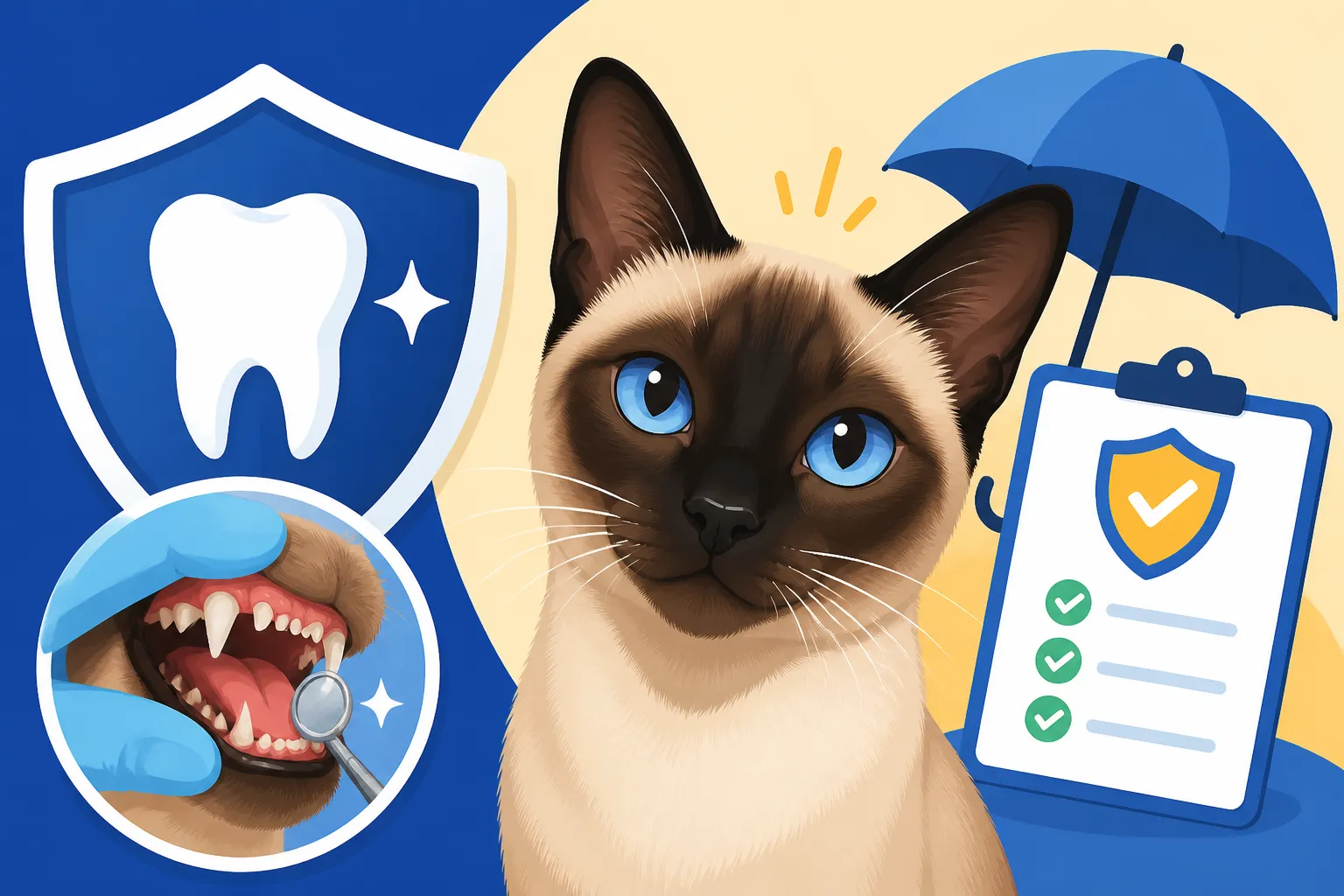
Whether a Siamese Cat Policy Covers Dentals
It's incredibly frustrating when you're doing your best to provide top-notch care for your beloved Siamese cat, and then you're faced with a stack of vet bills, only to wonder if your pet insurance actually covers any of it – especially those routine, but vital, dental procedures. It’s a common worry, and many cat parents find themselves navigating a confusing landscape of policy terms and exclusions. This guide is here to shed some light on whether a typical pet insurance policy will actually cover your Siamese cat's dental needs, helping you understand the nuances so you can make informed decisions for your furry family member.
Understanding Pet Insurance and Dental Coverage
Let's face it, nobody gets pet insurance hoping they'll have to use it, but when unexpected health issues arise, it can be a lifesaver. The trick is knowing what you're actually paying for, especially when it comes to things like dental care, which can be a significant cost for our feline friends.
The Basics of Pet Insurance Policies
At its heart, pet insurance is designed to help you manage the financial burden of veterinary care. Think of it like health insurance for people, but for your cat! Most policies fall into a few main categories. You've got "accident-only" plans, which are pretty self-explanatory – they cover things like broken bones, bites, or injuries from falls. Then there are "accident and illness" plans, which are much more comprehensive, covering accidents and a wide range of illnesses, from infections to cancer. It's in this latter category that you'll start to see variations in dental coverage.
The exact terms and what's covered can vary wildly from one provider to the next. Some might have a higher deductible, meaning you pay more out-of-pocket before the insurance kicks in, while others might reimburse a smaller percentage of the bill. It’s never a one-size-fits-all situation, and the devil is truly in the details of each policy.
Why Dental Care is So Crucial for Siamese Cats
If you've ever owned a Siamese, you know they are unique in so many ways – and sometimes, that includes their predisposition to certain health issues. Dental disease is sadly a common problem across all cat breeds, but Siamese cats can be particularly susceptible. Their genetics and even the shape of their mouths can make them prone to issues like gingivitis, periodontitis, and even Tooth Resorption in a Siamese Cat. These aren't just minor inconveniences; left untreated, dental problems can lead to significant pain, infection, and even impact their overall health, potentially affecting their heart, kidneys, and other vital organs.
Regular dental check-ups and cleanings aren't just a luxury; they're a crucial part of preventative care that can stave off more severe and costly problems down the line. Ignoring bad breath or inflamed gums in your Siamese isn't an option if you want them to live a long, comfortable life. Early intervention is key, and understanding your insurance coverage for these procedures is part of being a responsible pet parent. You might be surprised at how young dental issues can start to show up.
The Distinction Between Accident & Illness and Wellness Plans
This is where a lot of confusion often creeps in. Most standard "accident and illness" policies are designed to cover unexpected, significant veterinary expenses. Think of emergencies, illnesses, and injuries. However, routine and preventative care, like vaccinations, flea treatments, and often routine dental cleanings, generally fall outside the scope of these plans.
This is where "wellness plans" or "preventative care packages" come into play. These are typically separate, optional add-ons or standalone plans that specifically cover things like annual exams, vaccinations, and yes, sometimes routine dental cleanings. They're designed to help you budget for the expected costs of keeping your cat healthy, rather than covering unexpected disasters. It's a key distinction to understand, because if you're hoping your regular accident and illness policy will cover your Siamese's yearly dental cleaning, you might be in for a surprise. Many people find combining an accident and illness policy with a separate wellness plan offers the most comprehensive protection.
What a Standard Pet Insurance Policy Usually Covers for Dentals
It would be wonderful if pet insurance just covered everything, no questions asked, but the reality is a bit more nuanced. When it comes to dental care, standard accident and illness policies typically draw a line between what they consider "medical emergencies" or "illnesses" related to the teeth, and routine preventative care.
Accident-Related Dental Issues
If your adventurous Siamese cat, known for their incredible athleticism and sometimes clumsy leaps, takes a tumble from a bookshelf and chips a tooth, that's often where a standard accident and illness policy shines. Most comprehensive policies will cover dental care that arises directly from an accidental injury. This could include things like:
- Fractured teeth from trauma (e.g., hitting something hard).
- Jaw injuries that impact the teeth (e.g., from an accident).
- Tooth extractions necessitated by an accident.
The reasoning here is that these are unforeseen events, much like a broken leg or an ingestion of something toxic. They are not part of routine wear and tear or preventative maintenance. So, if your Siamese cat gets into an unfortunate incident that damages their pearly whites, you're generally in a better position for your insurance to help with the bill. Always double-check your policy's specific wording regarding "dental accidents" to be sure.
Illness-Related Dental Issues (Often Limited)
Now, this is where it gets a little trickier and often depends heavily on the specific policy you have. Many accident and illness policies will cover dental diseases and conditions, but usually under specific circumstances. For instance, if your Siamese develops severe Gingivitis in a Siamese Cat that progresses to painful periodontitis, leading to infections or necessitating extractions, a policy might cover portions of the treatment. This is because these are considered medical conditions requiring intervention.
However, the key is usually that these issues must be diagnosed and treated as part of an illness or condition, and often, only after the problem has become significant enough to require medical intervention beyond a routine cleaning. Things like extractions due to severe decay, root canals for infected teeth, or treatment for oral tumors might be covered. You'll often find that the policy covers the treatment of the disease itself, rather than the routine preventative measure that could have prevented the disease from progressing. It's a fine line, but an important one to understand when you're looking at What a Siamese Cat's Dental Costs can add up to.
Common Exclusions in Standard Policies
Here’s the part that often catches people off guard. While accident and illness policies are great for unforeseen circumstances, they nearly always have a list of exclusions. For dental care, these commonly include:
- Routine Cleanings/Prophylaxis: This is the big one. Most standard policies do not cover routine dental cleanings, scaling, and polishing, which are considered preventative maintenance. They are not an accident or an illness, but rather a recommended part of ongoing care, much like an annual check-up (which is also usually excluded from standard A&I plans).
- Cosmetic Procedures: Anything done purely for aesthetic reasons, which is rarely a concern for cats anyway, is typically excluded.
- Pre-existing Conditions: This is a crucial exclusion across all pet insurance. If your Siamese cat was diagnosed with gingivitis or had a chipped tooth before your policy's effective date or during its waiting period, any future treatment for that specific condition will likely be excluded. This is a huge reason to get pet insurance for your cat when they are young and healthy.
- Anesthesia for Routine Procedures: While anesthesia for covered dental surgeries might be included, if the underlying procedure (e.g., routine cleaning) is excluded, then the associated anesthesia cost for that procedure will also be excluded.
- Specific Dental Procedures: Some policies might have caps or exclusions for certain advanced dental procedures, or they might limit coverage to a certain number of extractions per year.
It's vital to read the fine print in your policy document. Don't assume anything. If you're unsure, call the insurance provider directly and ask very specific questions about what dental procedures are covered under their standard accident and illness plan, and what is explicitly excluded.
Diving Deeper: Wellness Plans and Dental Riders for Comprehensive Coverage
If your standard accident and illness policy leaves you feeling a bit exposed regarding your Siamese cat's dental health, don't despair! There are often additional options available that can provide that much-needed coverage for routine and preventative dental care.
The Role of Wellness Plans in Dental Health
As we touched upon earlier, wellness plans are designed to help you manage the costs of predictable, preventative care. Think of them as a separate budgeting tool for your cat's annual needs. Many pet insurance providers, including options like Healthy Paws (though their standard policy focuses on accidents/illness), offer optional wellness plans that you can add to your primary policy or purchase as a standalone.
These plans typically reimburse you for a percentage of, or a set amount towards, routine services such as:
- Annual veterinary exams.
- Vaccinations.
- Flea, tick, and heartworm prevention.
- And, crucially, routine dental cleanings.
The idea is to encourage proactive health management, which can actually save you money in the long run by preventing serious conditions from developing. While these plans come with an additional monthly fee, they can provide peace of mind knowing that your Siamese's yearly dental cleaning, which is so important for preventing issues like Dental Disease in a Siamese Cat, won't be a completely out-of-pocket surprise. You'll still want to compare what each plan offers, as some might cover a full cleaning, while others might only contribute a fixed amount.
Dental Riders: An Add-On for Enhanced Protection
Beyond standalone wellness plans, some insurance companies offer "dental riders" or "optional dental coverage" that you can add to your existing accident and illness policy. These riders are specific enhancements designed to boost your dental coverage beyond what the standard policy provides. They bridge the gap between accident-related dental issues and routine preventative care.
A dental rider might cover:
- Routine cleanings and scaling: This is a significant benefit, as it directly addresses the common exclusion in standard policies.
- Preventative procedures: Some might cover sealants or fluoride treatments, if recommended by your vet.
- Advanced dental work: Depending on the rider, it could offer more comprehensive coverage for issues like root canals or even specialized oral surgery that might have limited coverage under a basic illness plan.
Adding a dental rider will, of course, increase your monthly premium. However, for a breed like the Siamese, which can be prone to dental issues, this extra investment might be well worth it. Before committing, compare the cost of the rider against the typical annual cost of a professional dental cleaning for your cat and consider the potential for more extensive dental work down the line. It's about weighing the financial risk against the peace of mind.
How Pre-Existing Conditions Impact Dental Coverage
This is perhaps one of the most critical aspects to understand, and it applies universally across almost all pet insurance policies, including those for dental care. A "pre-existing condition" is any illness or injury that your cat showed symptoms of, or was diagnosed with, before your insurance policy's effective date or during its waiting period.
If your Siamese cat already has noticeable gingivitis, periodontitis, a chipped tooth, or any other dental issue before you enroll them in a policy or dental rider, then any future treatment for that specific condition will almost certainly be excluded from coverage. This is why it's so important to get pet insurance when your cat is young and ideally, free of pre-existing conditions.
Imagine you adopt an adult Siamese cat and later find out they have significant dental disease. If you then try to get insurance, the policy will likely consider that dental disease a pre-existing condition and will not cover the cost of extractions or extensive treatments related to it. However, if a new dental issue arises that is unrelated to the pre-existing condition (e.g., an accidental tooth fracture on a different tooth), that might still be covered. Always be transparent with your insurance provider and vet about your cat's health history to avoid future claim denials.
Choosing the Right Policy for Your Siamese Cat's Dental Needs
Selecting the best pet insurance for your Siamese cat, especially with dental care in mind, can feel like a labyrinth. But with a bit of focused research and a clear understanding of your cat's needs, you can find a policy that genuinely works for you.
Key Questions to Ask Prospective Providers
Don't be shy about getting on the phone or sending detailed emails to pet insurance companies. Arm yourself with a list of specific questions before you commit. Here are some crucial ones, especially regarding dental coverage:
- "Does your standard accident and illness policy cover routine dental cleanings and preventative care?" The answer is usually no, but it’s good to confirm.
- "What specifically is covered under your standard policy for dental issues (e.g., accidents, gum disease, extractions due to illness)?" Get them to detail the circumstances.
- "Do you offer a wellness plan or a dental rider? If so, what does it cover, and what is the additional cost?" Ask for specifics on limits or percentages for routine cleanings.
- "Are there any waiting periods specific to dental coverage?" Some policies have longer waiting periods for orthopedic or dental issues.
- "How do you define a 'pre-existing condition' when it comes to dental health, and what documentation would be required?" This is vital for understanding what might be excluded.
- "Are there any annual or lifetime limits on dental claims?"
- "Does the policy cover anesthesia for dental procedures, both routine and illness-related?"
Getting these answers in writing, if possible, can save you a lot of grief down the road. You want absolute clarity to ensure your Siamese cat gets the care they need without financial surprises.
Comparing Different Insurance Providers' Dental Offerings
Not all pet insurance companies are created equal, and their approach to dental coverage can vary significantly. Some providers might have more robust wellness plans, while others might offer more generous limits on illness-related dental treatments.
For instance, a company like Healthy Paws is known for its comprehensive accident and illness plans, but they often focus more on the "big stuff" like major illnesses and accidents, generally not covering routine dental cleanings. This means if you go with them, you'd need to budget separately for annual cleanings or seek a dedicated wellness plan elsewhere. Other providers might offer tiered wellness plans, where a higher tier includes a greater contribution towards dental cleanings.
It’s worth getting quotes from several different reputable providers. Don't just look at the monthly premium; dig into the annual limits, deductibles, reimbursement percentages, and crucially, the dental specifics. Create a simple spreadsheet to compare policies side-by-side, focusing on the dental aspects that are most important to you and your Siamese cat's potential needs.
Beyond Insurance: Budgeting for Routine Dental Care
Even with the best insurance policy or wellness plan, there might still be out-of-pocket costs for your Siamese cat's dental care. This is especially true for routine cleanings if your primary policy doesn't cover them, or if you opt not to purchase a dental rider.
It's a smart idea to proactively budget for your cat's annual dental cleaning. Many vets recommend yearly check-ups, and depending on your cat's individual needs and age, professional cleanings might be advised every one to two years. Setting aside a small amount each month into a dedicated "pet care" savings account can help you cover these predictable expenses without stress.
Additionally, consider preventative measures at home that can reduce the frequency or severity of dental problems. While no substitute for professional cleanings, products like dental-specific diets, dental chews, and even special water additives can help maintain your Siamese's oral hygiene between vet visits. Learning How Often a Siamese Cat Needs a Dental is a good first step to planning. Regular brushing, if your cat tolerates it, is also a highly effective home care method, and you can introduce it gradually using cat-specific toothbrushes and toothpaste.
| Coverage Type | Routine Cleanings/Prevention | Accident-Related Dental Issues | Illness-Related Dental Issues | Pre-Existing Conditions | Additional Cost (Approx.) |
|---|---|---|---|---|---|
| Standard A&I Policy | Usually Not Covered | Generally Covered | Often Covered (with limits) | Not Covered | Base Premium |
| Wellness Plan | Often Included (up to limit) | Not Applicable | Not Applicable | N/A (for routine care) | + $20-$50/month |
| Dental Rider | Often Included | Covered (enhanced limits) | Covered (enhanced limits) | Not Covered | + $10-$30/month |
Ultimately, being an informed and proactive Siamese cat parent is your best defense against unexpected dental bills. While pet insurance can provide a crucial safety net for major health events, understanding its limitations, especially concerning routine dental care, allows you to plan effectively and ensure your beloved Siamese enjoys a healthy, pain-free smile for years to come.
Disclaimer
This article is for general informational purposes only and does not constitute professional advice. Laws, prices and regulations vary by location and change over time. Consult a qualified professional for guidance on your specific situation.