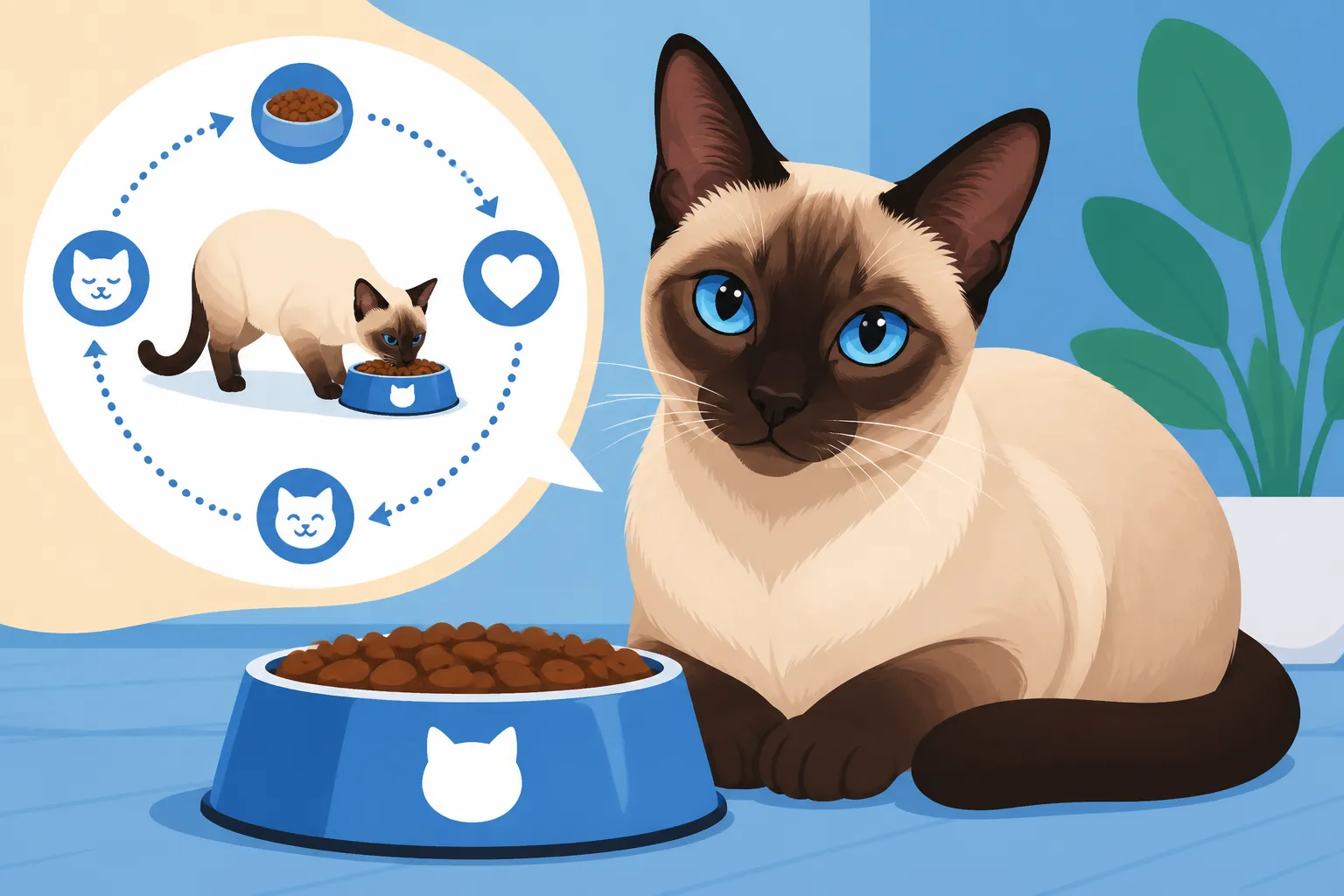
How Free Feeding Works for a Siamese Cat
It’s a familiar scenario for many Siamese cat owners: you’ve just filled the bowl, and before you’ve even turned around, your feline friend is back, seemingly begging for more, with that distinctive, insistent yowl. Their lean, energetic bodies seem to burn through calories at an incredible rate, leaving you constantly wondering if they're truly hungry or just master manipulators. This guide is here to explore the concept of free feeding for Siamese cats, delving into whether it's a suitable approach for their unique needs, how to implement it safely, and what challenges you might encounter along the way.
Understanding Your Siamese Cat's Metabolism and Hunger Cues
Siamese cats are often described as having an "athletic" or "slinky" build, and it's not just for show. Their bodies are finely tuned machines, and their metabolism can be quite different from other, more sedentary cat breeds. This often leads to their seemingly insatiable appetites and an owner's constant concern about whether they are eating enough.
The Siamese Cat's Unique Physiology
Have you ever noticed how your Siamese seems to be in perpetual motion, even when they're "resting"? This high level of activity, coupled with their naturally lean muscle mass, means they typically burn more calories throughout the day than a less active cat. They're like little furry athletes, always ready for action, a game of fetch, or an impromptu zoomie session through the house. Because of this, their bodies are incredibly efficient at utilizing energy. It's why many Siamese owners often wonder, Why a Siamese Cat Stays So Thin, even when they seem to be eating a good amount. It's often not that they're not eating enough, but rather that their bodies are simply processing food differently due to their genetics and activity levels. This lean build is characteristic of the breed and not necessarily a sign of malnourishment, as long as they are healthy and energetic.
Reading Your Cat's Hunger Signals
While most cats will give clear cues when they're hungry – rubbing against your legs, leading you to the food bowl, or a polite meow – a Siamese cat often takes these signals to a whole new, vocal level. Their "meezer yowl" is legendary, and when it comes to food, it can be particularly insistent. It’s easy to misinterpret this powerful vocalization as extreme hunger, even if they've eaten recently. Learning to differentiate between genuine hunger and a Siamese simply demanding attention or expressing boredom is key. True hunger cues might include pacing by the bowl, sniffing around the feeding area, or intense eye contact with you and the food source. However, a Siamese might also use their voice to express displeasure at an empty bowl, even if they're not truly starving, just anticipating their next meal or trying to prompt you into action. This breed is known for its communication, and sometimes, their vocalizations are less about caloric need and more about engaging with their favorite human.
What is Free Feeding and How It Applies to Siamese Cats?
Free feeding, at its core, means leaving dry food out for your cat to graze on throughout the day, allowing them to eat whenever they feel hungry. This approach often appeals to owners who want to mimic a cat's natural eating patterns, as felines in the wild would typically hunt and consume small meals multiple times over a 24-hour period.
The Basics of Free Feeding
For many years, free feeding was the go-to method for cat owners. You simply fill the bowl, and your cat eats when they please. The idea is that cats, unlike dogs, are generally good at self-regulating their food intake, eating only what their bodies need. This method can certainly offer convenience for busy owners who aren't home to offer multiple scheduled meals a day. It means less stress about rushing home for feeding times or worrying if your cat is getting enough to eat while you're out. The food is simply there, a constant source of comfort and sustenance. However, the effectiveness of this method truly depends on the individual cat's temperament, activity level, and tendency toward overeating. It also requires the right type of food, as wet food, for instance, spoils quickly if left out all day.
Advantages and Disadvantages for a Siamese
When we talk about free feeding for a Siamese, there are specific points to consider. Their high metabolism and active nature can make free feeding seem like an ideal solution, but there are definite pros and cons:
| Aspect | Advantages for Siamese Cat Free Feeding | Disadvantages for Siamese Cat Free Feeding |
|---|---|---|
| Metabolism | Supports their fast metabolism, allowing frequent small meals to keep energy levels stable without dramatic blood sugar dips. Can help prevent the intense "hanger" that a Siamese might express if meals are too far apart. | Even with a fast metabolism, highly palatable dry food can lead to overconsumption in some individuals, potentially leading to gradual weight gain over time if not monitored. |
| Behavior | Reduces food-related anxiety and incessant vocal demands if they know food is always available. Mimics their natural grazing instinct, potentially making them feel more secure and less stressed. | Can exacerbate boredom-eating if not paired with sufficient mental and physical enrichment. May lead to constant "snacking" rather than purposeful eating, which can be less satisfying and less easily tracked. |
| Convenience | Offers significant convenience for owners with busy schedules, ensuring the cat always has access to food. No need to worry about being home at specific meal times, reducing stress for both cat and owner. | Difficult to precisely monitor individual intake in multi-cat households, leading to potential underfeeding of one cat and overfeeding of another. Freshness of food can be an issue, especially in humid climates. |
| Health | Potentially reduces stomach upset from eating too quickly or consuming large meals at once. Can help maintain stable energy levels throughout the day, supporting their active lifestyle. | Can make it harder to spot changes in appetite or eating habits, which can be early indicators of health issues. May lead to selective eating if favorite kibble is always available, potentially missing out on a balanced diet. |
Given their energetic personalities, free feeding might seem like a dream come true for a Siamese, allowing them to fuel their endless curiosity. However, it's not a one-size-fits-all solution, and careful consideration of How Much an Adult Siamese Cat Eats on average and monitoring their individual response is crucial.
Implementing Free Feeding Safely and Effectively
Deciding to free feed your Siamese isn't just about pouring kibble into a bowl and walking away. To do it effectively and safely, you need a strategy, especially with a breed as particular and intelligent as the Siamese. The goal is to provide consistent access to food without enabling overeating or neglecting their nutritional needs.
Choosing the Right Food and Portions
The type of food you offer is paramount, particularly when free feeding. For a Siamese, who can be prone to certain health sensitivities, a high-quality, balanced dry kibble is usually the best choice for free feeding. Look for brands that list a high-quality animal protein as the first ingredient and avoid excessive fillers. You might explore reputable brands or consider fresh, tailored options (though these might be better for scheduled feeding due to spoilage).
Even with free feeding, it's still essential to understand how many calories your individual Siamese needs daily. Don't just fill the bowl indefinitely. Instead, measure out your cat's total recommended daily portion and put that amount in the bowl for the day. Once it's gone, it's gone until the next day's portion is served. This isn't "free feeding" in the traditional sense of unlimited access, but it does allow them to graze on their daily allowance at their own pace. This method prevents unintentional overfeeding while still offering the flexibility of self-service. Remember that these sleek, elegant cats have specific dietary needs, so choosing a food formulated for active felines can make a big difference.
Monitoring Weight and Health
This is perhaps the most critical aspect of successful free feeding for a Siamese. Because their lean build can sometimes mask subtle changes, you need to be proactive about monitoring their weight and overall body condition. It’s easy to assume your always-hungry Siamese is just burning everything off, but even they can slowly creep towards an unhealthy weight if calories consistently exceed their output.
Regularly perform a "rib check": gently run your hands along your cat's sides. You should be able to feel their ribs without seeing them prominently, and they should have a discernible waist when viewed from above. Weighing your Siamese every few weeks can also help you catch any upward trends before they become significant. A small digital scale designed for pets can be a worthwhile investment, or you can weigh yourself, then weigh yourself holding your cat, and subtract the difference. Consult your vet to understand What a Healthy Siamese Cat Weighs for your cat's specific age and size. Any sudden weight gain or loss, or a change in their body shape, warrants a veterinary visit. Pay attention to other Signs a Siamese Cat Is Unwell, such as changes in coat condition, energy levels, or litter box habits, as these could indicate that their diet or feeding method isn't working for them.
Common Free-Feeding Challenges and Solutions
While free feeding offers convenience and aligns with a cat's natural grazing instincts, it's not without its hurdles, especially in certain household dynamics. Addressing these challenges proactively ensures your Siamese remains healthy and happy.
Addressing Overeating and Obesity Concerns
Even a naturally lean Siamese can become overweight if food is truly unlimited, especially if they are bored or seeking comfort in food. While their high metabolism helps, it's not a foolproof shield against weight gain. If you notice your Siamese is starting to look less "slinky" and more "sturdy," it's time to re-evaluate. The solution isn't necessarily to stop free feeding entirely but to modify it.
Consider using puzzle feeders or slow-feeder bowls, which can be easily found on platforms like Amazon. These devices make your cat work for their food, slowing down their consumption and engaging their minds. Instead of just dumping the daily allowance into a standard bowl, divide it among several puzzle feeders placed in different locations around the house. This forces your Siamese to "hunt" for their meals, adding mental and physical enrichment to their day. It’s a fantastic way to satisfy their natural instincts and can prevent them from gobbling everything down in one go. You might be surprised at Whether a Puzzle Feeder Occupies a Siamese Cat for hours, turning mealtime into a stimulating activity rather than just a quick chow-down. If your Siamese is still overeating or constantly begging despite these measures, you might need to shift to more structured, timed meals, or at least carefully control the daily amount available for grazing. This can be particularly helpful if you've been struggling with How to Feed a Siamese Cat That Begs Constantly.
Free Feeding in Multi-Cat Households
Free feeding becomes significantly more complicated when you have more than one cat, especially with the strong personalities of Siamese cats. One cat might be a food hog, preventing others from accessing the bowl, or one might overeat while another goes hungry. This can create stress, resource guarding, and ultimately, health issues for your feline family. If you have two Siamese cats, for example, their strong bond might mean they eat together peacefully, but it's not guaranteed, and you still risk one eating more than the other. Whether Two Siamese Cats Are Louder is often a concern, but their feeding dynamics can be equally complex.
The best solution for free feeding in a multi-cat household is often a microchip-activated feeder. These clever devices only open for the specific cat whose microchip (or RFID tag on their collar) they recognize. This ensures that each cat can access only their allocated food, preventing one cat from stealing another's portion or overeating from a communal bowl. While an investment, these feeders provide peace of mind and ensure every cat gets the nutrition they need without conflict. Alternatively, if microchip feeders aren't an option, you might need to revert to scheduled, supervised meals, feeding each cat in a separate, secure location to monitor their intake and prevent food-related skirmishes.
Disclaimer
This article is for general informational purposes only and does not constitute professional advice. Laws, prices and regulations vary by location and change over time. Consult a qualified professional for guidance on your specific situation.